
Discover the revolutionary 40-foot customized double-wing expansion container house – a modern, modular living solution that combines sustainability, flexibility, and aesthetic appeal. Learn how this innovative design is transforming small space living in Australia and beyond, with its expandable wings, rapid deployment, and customizable features.
In recent years, the concept of modern small container house design plans has evolved from a niche alternative into a mainstream housing solution. As urban spaces become more crowded and housing costs continue to rise, innovative architects and designers are turning to shipping containers as the foundation for stylish, sustainable, and surprisingly spacious homes. Among these innovations, the 40-foot customized double-wing expansion room stands out as a game-changer in the world of modular architecture, particularly in Australia where efficient use of space has become paramount.
The Evolution of Container Housing
The journey of shipping containers from mere cargo transport to habitable spaces began in the late 1980s when pioneering architects recognized their potential as building blocks for affordable housing. What started as experimental projects by eco-conscious designers has now blossomed into a global movement, with countries like Australia leading the way in container home innovation.
The appeal of container housing lies in its inherent sustainability – repurposing steel containers that would otherwise sit idle or be scrapped. However, early container homes faced challenges with space limitations and insulation issues. Today’s modern small container house design plans have addressed these concerns through technological advancements and creative engineering, with the double-wing expansion concept representing one of the most significant breakthroughs.
Introducing the 40-Foot Double-Wing Expansion Container House
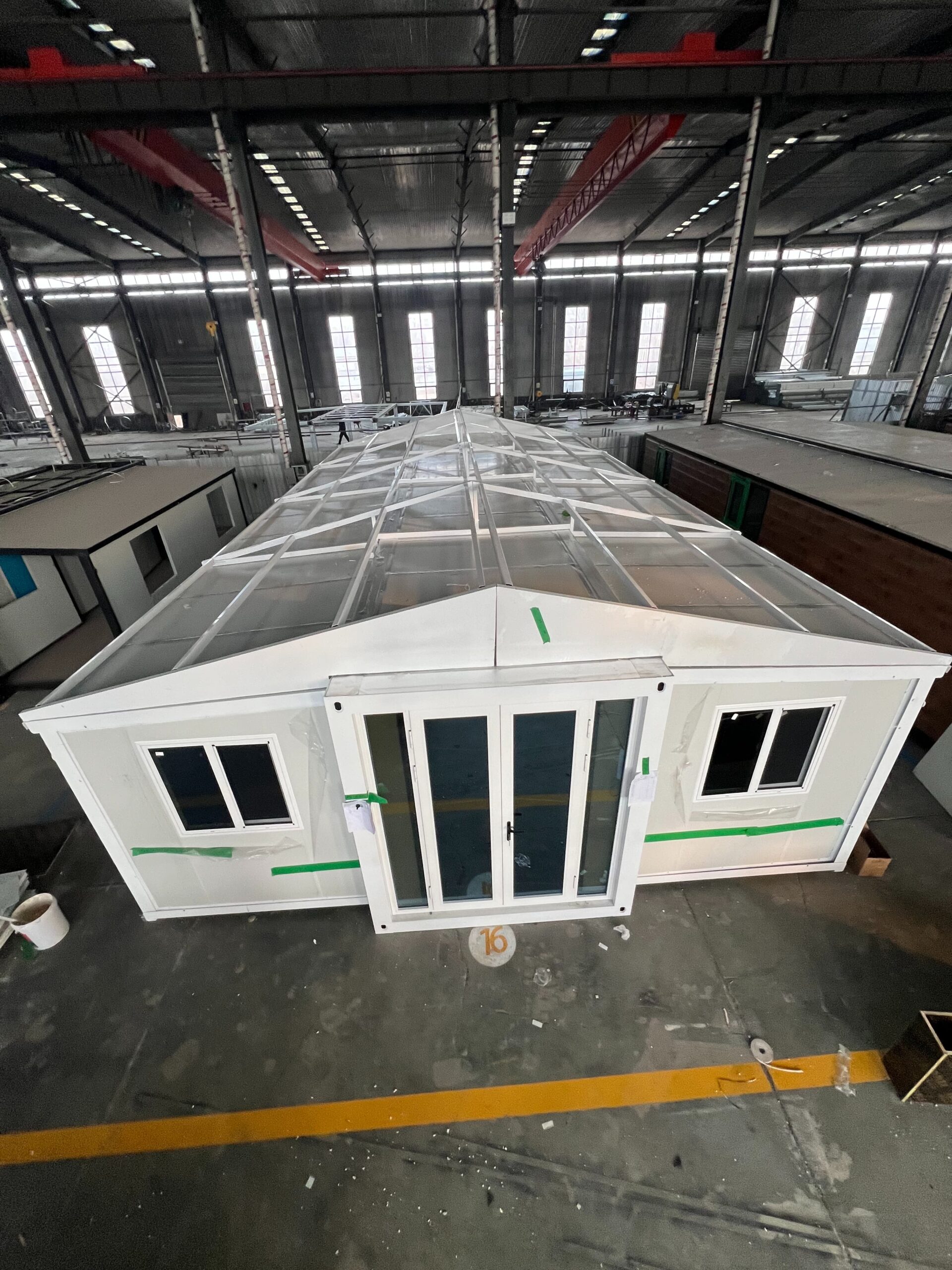
The 40-foot customized double-wing expansion container house represents the pinnacle of modular housing innovation. Unlike traditional container homes that maintain a fixed footprint, this revolutionary design features expandable “wings” that transform the living space from a compact transport unit into a spacious dwelling area.
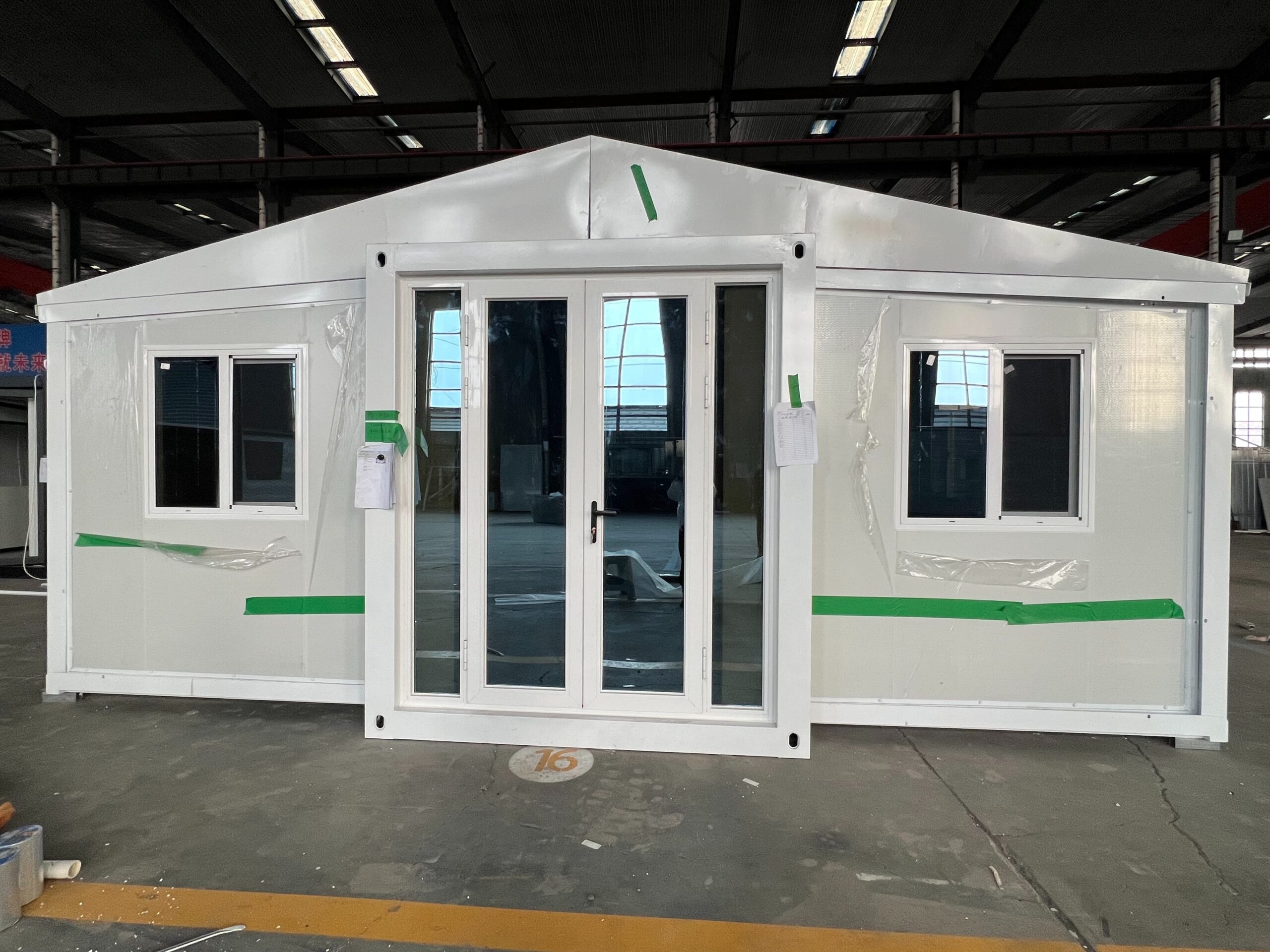
The double-wing expandable folding container house, also known as an “expansion box house,” features a main body with “wing-like” structures on both sides that can expand outward. When deployed, these wings resemble a bird spreading its wings – hence the name “double-wing.” This design allows for a dramatic increase in usable floor area while maintaining the transportability benefits that make container homes so appealing.
For those seeking a more compact solution, the single-wing version offers similar benefits in a smaller package. The single-wing expandable folding container house is a lightweight prefabricated building with a foldable wing on one side. When folded, it adapts to standard transportation dimensions, and when expanded, it increases the space by 1.5-2 times.
Technical Specifications and Design Features
The 40-foot double-wing expansion container house comes with precise dimensions that ensure both structural integrity and optimal use of space:
Double-Wing Standard Dimensions:
– Expanded dimensions: Length 11800mm × Width 6240mm × Height 2480mm
– Internal dimensions: Length 11540mm × Width 6080mm × Height 2200mm
– Folded dimensions: Length 11800mm × Width 2200mm × Height 2480mm
These specifications ensure that when folded, the unit maintains standard container dimensions for easy transport, while when expanded, it provides a generous living space comparable to traditional small homes.
Structural Excellence
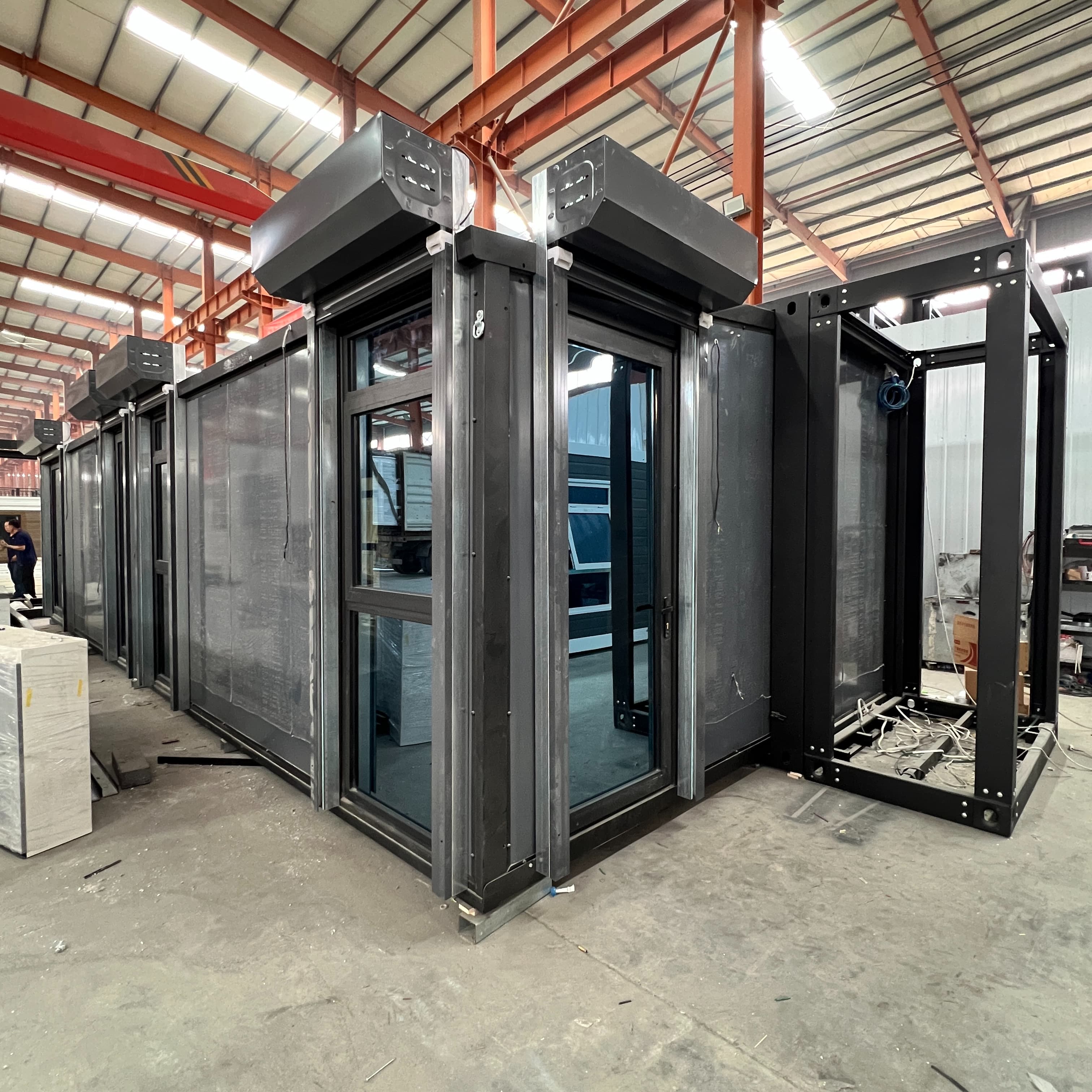
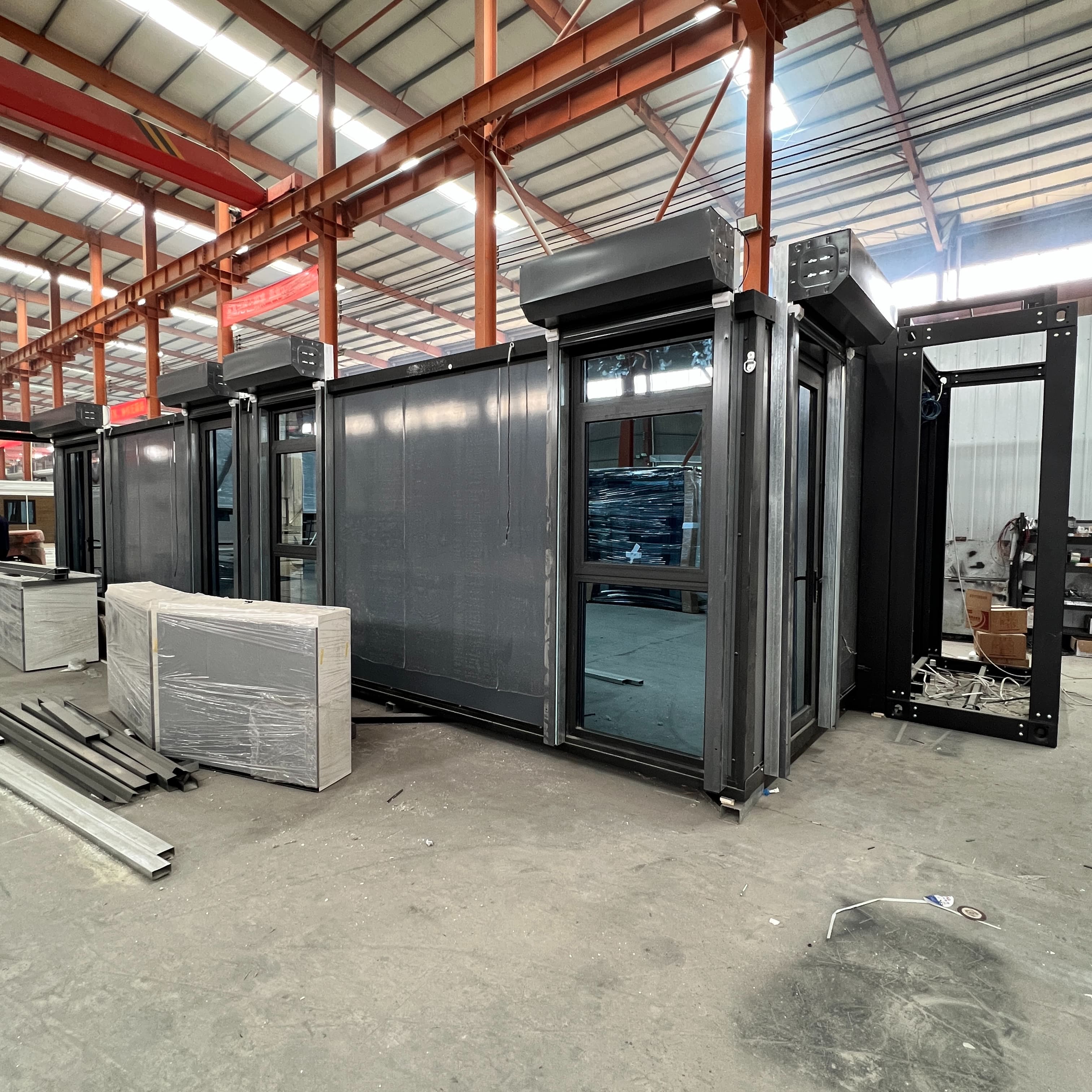
The foundation of this modern small container house design plan is its robust structural framework. Built with high-strength steel (hot-dip galvanized steel or carbon fiber composite materials), the double-wing expansion container house offers exceptional durability while remaining lightweight enough for transport.
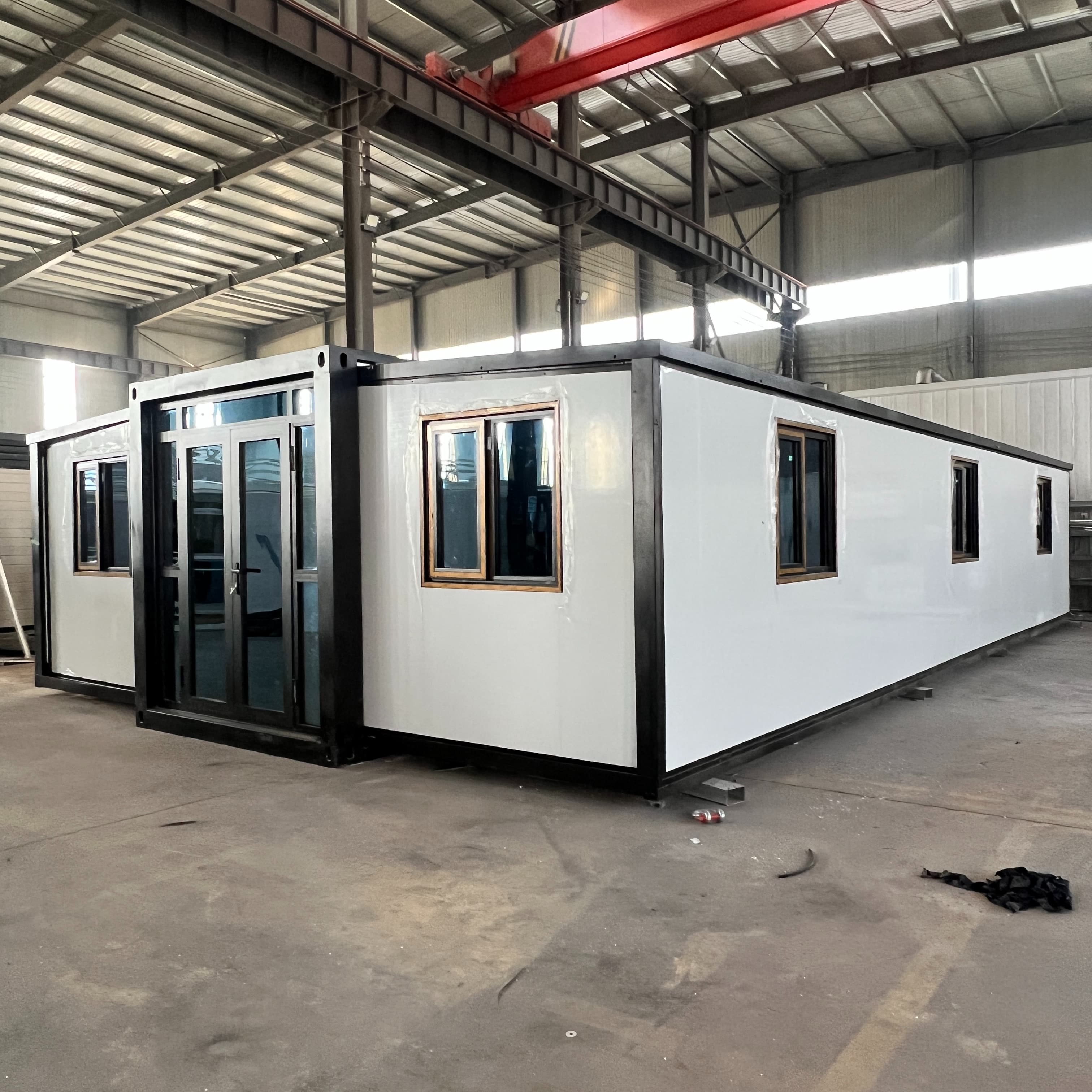
The standard black frame not only provides structural support but also gives the unit a sleek, modern aesthetic that appeals to contemporary design sensibilities. This frame is engineered to meet road transportation regulations, ensuring hassle-free delivery to virtually any location.
Space Transformation Capability
Perhaps the most remarkable feature of the double-wing design is its space transformation capability. During transport and storage, the “wings” fold inward, maintaining the standard container dimensions. Once on-site, these wings expand outward, increasing the usable floor area by 70-80%, and in some configurations, even doubling the available space.
This transformation turns a compact box into a spacious one-bedroom or even two-bedroom layout, complete with living areas that would be impossible in a traditional container of the same size. The result is a living space that feels open and airy despite its modular origins.
Advanced Materials and Construction Techniques
The quality of modern small container house design plans depends significantly on the materials used, and the 40-foot double-wing expansion container house incorporates cutting-edge building materials to ensure comfort, durability, and energy efficiency.
Primary Construction Materials
The main structure utilizes a lightweight steel framework with full galvanization, combined with high-performance insulation panels (polyurethane, rock wool, or other advanced materials). For premium models, carbon fiber composite materials are available, offering even greater strength-to-weight ratios.
These materials provide excellent structural integrity while ensuring the unit remains lightweight enough for transport and installation without heavy machinery in most cases.
Superior Waterproofing and Insulation
One of the challenges historically faced by container homes was proper insulation and waterproofing. The double-wing expansion container house addresses these concerns through:
1. Seamless connection technology that prevents water infiltration at expansion joints
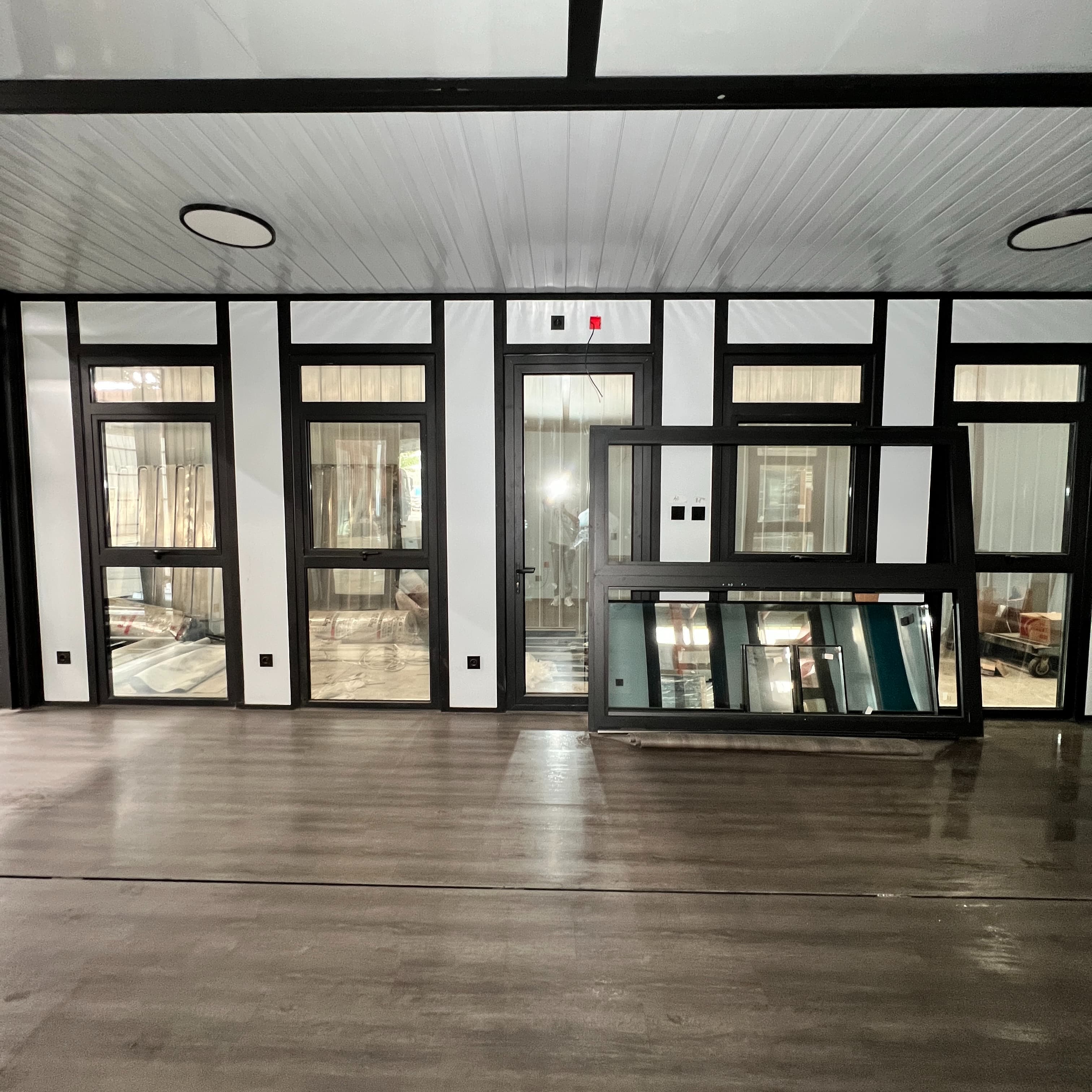
2. High-quality doors and windows using hollow broken bridge aluminum profiles with Low-E glass
3. Comprehensive waterproofing treatments applied during the manufacturing process
These features ensure that the interior remains comfortable and dry regardless of external weather conditions, making the unit suitable for various climates, from the tropical north of Australia to its cooler southern regions.
Prefabrication Excellence
The 40-foot double-wing expansion container house embodies the principles of modern prefabrication, with over 85% of the construction completed in the factory setting. This includes:
– Complete electrical and plumbing systems
– Pre-installed kitchen and bathroom fixtures
– Windows, doors, and finishing elements
– Interior partitions and built-in furniture (in premium configurations)
This level of prefabrication dramatically reduces on-site construction time, minimizes weather-related delays, and ensures consistent quality control that would be difficult to achieve with traditional building methods.
Functional Design Elements
Beyond its structural innovations, the 40-foot double-wing expansion container house incorporates numerous functional design elements that enhance livability and user experience.
Ready-to-Use Installation
One of the most significant advantages of this modern small container house design plan is its “ready-to-use” nature. The factory-completed unit includes integrated water and electrical pipelines, air conditioning systems, lighting fixtures, and even smart home control systems in premium configurations.
This comprehensive approach means that once the unit is delivered and expanded on-site, it requires minimal additional work to become fully functional. In many cases, the unit can be habitable within hours of delivery, compared to weeks or months for traditional construction.
Flexible Interior Layouts
The interior design of the double-wing expansion container house prioritizes flexibility and space efficiency. Key features include:
1. Column-free design that maximizes usable space (achieving over 90% space utilization)
2. Support for various layout configurations, including LOFT designs and one-bedroom layouts
3. Modular interior elements that can be reconfigured as needs change
4. Built-in storage solutions that maximize every available inch
This flexibility allows homeowners to customize their living space according to their specific needs, whether they require a home office, guest accommodation, or permanent residence.
Environmental Sustainability
In line with contemporary environmental concerns, the 40-foot double-wing expansion container house incorporates numerous eco-friendly features:
– Use of environmentally friendly building materials with low formaldehyde emissions
– Recyclable components, with steel framework achieving over 90% recyclability
– Energy-efficient insulation that reduces heating and cooling requirements
– Optional solar power integration for off-grid capability
These features make the unit an attractive option for environmentally conscious consumers seeking sustainable housing solutions.
Practical Advantages of the Double-Wing Design
The 40-foot double-wing expansion container house offers numerous practical advantages that make it an appealing option for various applications.
Rapid Deployment
One of the most significant benefits of this modern small container house design plan is its rapid deployment capability. With 95% of construction completed in the factory, on-site installation is remarkably efficient:
– Single unit installation can be completed in just a few hours
– Combined installations of multiple units typically take 1-3 days
– Minimal site preparation required, with some models needing only simple foundation pads or blocks
This speed of deployment is invaluable for situations requiring immediate housing solutions, such as disaster relief, temporary accommodations for events, or rapid business expansion.
Mobility and Reusability
Unlike traditional structures, the double-wing expansion container house offers exceptional mobility:
– The entire unit can be disassembled, transported, and reassembled at a new location
– Suitable for multiple relocations without significant structural degradation
– Can be easily added to or reconfigured as needs change
This mobility makes the unit ideal for temporary applications, remote locations, or situations where future relocation is anticipated.
Versatile Site Adaptation
The design excels in challenging terrain where traditional construction would be difficult or prohibitively expensive:
– Suitable for installation on slopes, uneven ground, or rocky surfaces
– Minimal ground disturbance compared to traditional foundations
– Can be installed in areas with limited access for heavy equipment
This adaptability opens up possibilities for housing in locations previously considered unsuitable for development, from remote Australian outback stations to coastal properties with challenging soil conditions.
Regulatory Advantages
In many jurisdictions, prefabricated modular structures like the double-wing expansion container house benefit from streamlined regulatory processes:
– Often classified as temporary structures, simplifying approval processes
– Reduced permitting requirements compared to traditional construction
– Compliance with building codes achieved through factory quality control
These regulatory advantages can significantly reduce the time and expense associated with establishing new living or working spaces.
Economic Considerations
The financial aspects of housing decisions are always crucial, and the 40-foot double-wing expansion container house offers compelling economic benefits.
Cost Efficiency
When compared to traditional construction methods, the double-wing expansion container house delivers significant cost savings:
– Overall construction costs reduced by 30-40% compared to conventional buildings of similar size
– Construction time shortened by 60-70%, reducing labor costs and financing expenses
– Factory production minimizes material waste and optimizes resource usage
These cost advantages make the unit an attractive option for budget-conscious homeowners, businesses requiring temporary facilities, or organizations with multiple housing needs.
Reduced Maintenance Requirements
The durable materials and construction techniques used in the double-wing expansion container house result in lower long-term maintenance costs:
– Galvanized steel framework resists corrosion and deterioration
– Modular design allows for easy replacement of individual components
– High-quality finishes and fixtures selected for durability and low maintenance
This reduced maintenance burden translates to lower lifetime ownership costs and less disruption for occupants.
Rapid Return on Investment
For commercial applications, the speed of deployment translates directly to faster return on investment:
– Businesses can begin operations sooner, generating revenue more quickly
– Reduced construction financing costs improve overall project economics
– Flexibility allows for adaptation to changing market conditions
These economic benefits make the double-wing expansion container house particularly attractive for commercial applications such as retail spaces, temporary offices, or hospitality venues.
Design Customization Options
One of the most appealing aspects of modern small container house design plans is the potential for customization, and the 40-foot double-wing expansion container house offers extensive personalization possibilities.
Exterior Customization
The exterior appearance of the double-wing expansion container house can be tailored to suit various aesthetic preferences and environmental contexts:
– Choice between flat-top and pitched roof designs
– Custom exterior finishes, including wood grain, stone patterns, or modern metallic surfaces
– Color options for the frame and exterior panels
– Additional architectural elements such as pergolas, decks, or rainwater collection systems
This customization flexibility allows the unit to harmonize with its surroundings, whether in an urban setting, rural landscape, or natural environment.
Interior Configuration Options
The interior of the double-wing expansion container house can be configured to meet diverse functional requirements:
– Open-plan living spaces for modern lifestyles
– Partitioned layouts for privacy and defined functional areas
– LOFT designs for maximizing vertical space
– Custom kitchen and bathroom configurations to suit specific needs
These options ensure that each unit can be optimized for its intended purpose, whether as a permanent residence, vacation home, office space, or retail environment.
Technology Integration
Modern living increasingly relies on technology, and the double-wing expansion container house can be equipped with various technological enhancements:
– Smart home systems for lighting, climate control, and security
– Renewable energy integration, including solar power systems
– Advanced water management and recycling systems
– High-speed internet connectivity solutions
These technological features enhance comfort, convenience, and sustainability while future-proofing the living space.
Applications and Use Cases
The versatility of the 40-foot double-wing expansion container house makes it suitable for numerous applications across various sectors.
Residential Applications
For individual homeowners, the double-wing expansion container house offers several residential possibilities:
– Primary residence for those seeking affordable, sustainable housing
– Secondary home or vacation property in desirable locations
– Guest accommodation for existing properties
– “Granny flat” or multigenerational housing solution
The ability to customize the interior layout makes these units adaptable to various household sizes and compositions.
Commercial Applications
Businesses can leverage the benefits of the double-wing expansion container house for numerous commercial purposes:
– Temporary or permanent retail spaces and pop-up shops
– Office accommodations for remote or temporary work sites
– Hospitality venues such as boutique hotels or glamping accommodations
– Restaurant or café spaces with unique architectural appeal
The rapid deployment and mobility features make these units particularly valuable for businesses requiring flexible or temporary commercial spaces.
Institutional Applications
Various institutions can benefit from the unique advantages of the double-wing expansion container house:
– Educational facilities requiring additional classroom or administrative space
– Healthcare settings needing temporary clinics or examination rooms
– Government agencies requiring rapidly deployable offices or housing
– Non-profit organizations delivering services in remote or underserved areas
The durability and adaptability of these units make them suitable for both temporary and long-term institutional applications.
Emergency and Disaster Response
The rapid deployment capability of the double-wing expansion container house makes it ideal for emergency situations:
– Temporary housing following natural disasters
– Mobile medical clinics for disaster response
– Command centers for emergency management operations
– Temporary schools and community facilities in affected areas
The ability to transport and install these units quickly in challenging conditions can significantly enhance disaster response effectiveness.
Interior Features and Amenities
The interior of the 40-foot double-wing expansion container house incorporates thoughtful design elements and amenities that enhance comfort and functionality.
Living Spaces
The expanded interior provides ample space for comfortable living areas:
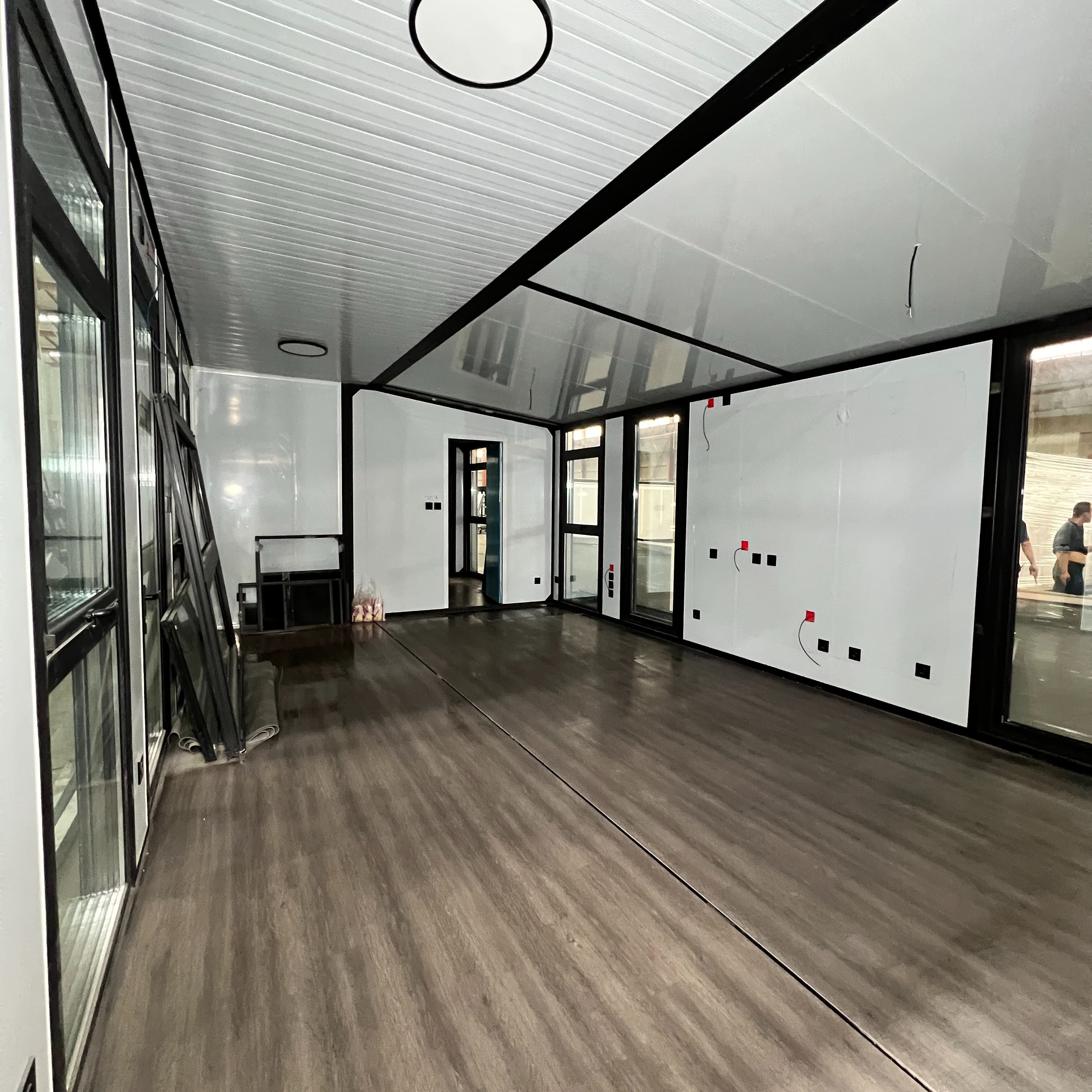
– Open-plan living and dining areas that feel spacious and airy
– Large windows that maximize natural light and provide views
– High-quality finishes that create a warm, inviting atmosphere
– Efficient use of space with built-in storage solutions
These features ensure that the living experience is comparable to or better than traditional housing of similar size.
Kitchen Facilities
The kitchen area combines functionality with modern design:
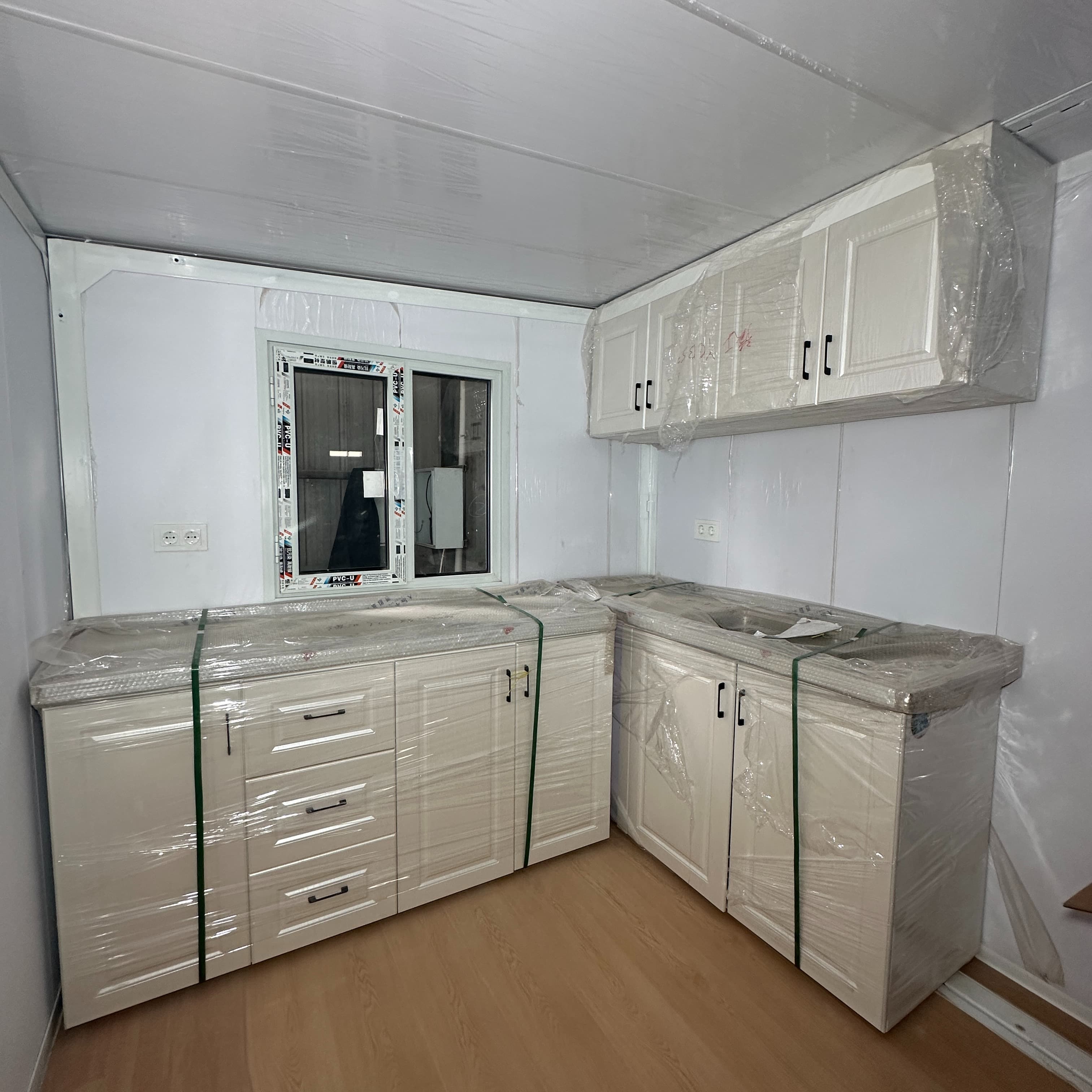
– Full kitchen layouts with appliances, cabinetry, and countertops
– Efficient space utilization with compact yet fully functional designs
– Modern fixtures and finishes that enhance the living experience
– Options for customization based on cooking preferences and needs
The kitchen design prioritizes both practicality and aesthetic appeal, creating a space that is enjoyable to use.
Bathroom Design
The bathroom facilities in the double-wing expansion container house feature:
– Complete bathroom installations with modern fixtures
– Space-efficient layouts that maximize functionality
– Quality finishes and waterproofing for durability
– Options for various configurations based on needs and preferences
These bathroom designs provide the comfort and convenience expected in modern housing while maintaining the space efficiency essential in container living.
Sleeping Areas
The sleeping accommodations in the double-wing expansion container house include:
– Private bedrooms with adequate space for comfortable rest
– Options for built-in storage and wardrobes
– Thoughtful placement away from high-traffic areas for privacy
– Natural lighting and ventilation for comfort
These sleeping areas are designed to provide restful, private spaces within the compact overall footprint.
Utility and Storage
Practical considerations for utility and storage are integrated throughout the design:
– Dedicated utility areas for mechanical systems and storage
– Built-in cabinetry and shelving solutions
– Multipurpose furniture that incorporates storage
– Thoughtful organization systems that maximize space efficiency
These features ensure that daily living remains organized and clutter-free despite the compact nature of the space.
Installation Process and Requirements
Understanding the installation process and requirements is essential for anyone considering the 40-foot double-wing expansion container house.
Site Preparation
Proper site preparation is crucial for successful installation:
– Leveling the ground surface to ensure stability
– Providing appropriate foundation supports (concrete pads, screw piles, or gravel beds)
– Ensuring adequate access for delivery and installation equipment
– Planning for utility connections (water, electricity, sewer/septic)
While the units require less site preparation than traditional buildings, attention to these details ensures optimal performance and longevity.
Transportation and Delivery
The transportation of the double-wing expansion container house requires careful planning:
– Arranging appropriate transport vehicles capable of handling the weight and dimensions
– Securing necessary permits for oversize loads when required
– Planning delivery routes that accommodate the size of the folded unit
– Coordinating with local authorities as needed
Professional handling during transportation ensures that the unit arrives in optimal condition for installation.
Installation Procedure
The installation process for the double-wing expansion container house typically follows these steps:
1. Positioning the folded unit on the prepared foundation
2. Anchoring the unit to ensure stability
3. Expanding the wings and locking them into position
4. Connecting utility systems (water, electricity, sewer)
5. Performing final adjustments and quality checks
This process typically takes just a few hours for a single unit, demonstrating one of the key advantages of this modern small container house design plan.
Utility Connections
Proper utility connections are essential for full functionality:
– Electrical connections that comply with local codes and regulations
– Water supply and drainage systems appropriate for the installation location
– Optional renewable energy systems (solar panels, battery storage)
– Communication and data connectivity solutions
Professional installation of utility systems ensures safety, reliability, and compliance with applicable regulations.
Environmental Considerations
The 40-foot double-wing expansion container house incorporates numerous features that enhance its environmental sustainability.
Energy Efficiency
Energy efficiency is a core consideration in the design:
– High-performance insulation materials that minimize heat transfer
– Energy-efficient windows with appropriate glazing for the climate
– Optional renewable energy systems for reduced grid dependence
– Smart climate control systems that optimize energy usage
These features reduce the environmental impact of the unit while lowering operating costs for occupants.
Sustainable Materials
The selection of materials prioritizes sustainability:
– Recycled steel components that reduce the demand for virgin materials
– Environmentally friendly insulation options with low global warming potential
– Finishes and fixtures selected for low environmental impact
– Materials chosen for durability to minimize replacement needs
These material choices reflect a commitment to reducing the environmental footprint of the construction process.
Waste Reduction
The manufacturing and construction process minimizes waste:
– Factory production with precise material measurements reduces cutting waste
– Modular design allows for disassembly and reuse at end of life
– Packaging materials minimized and recycled where possible
– Construction waste significantly reduced compared to traditional building methods
This waste reduction approach aligns with principles of circular economy and sustainable resource use.
Site Impact
The installation of the double-wing expansion container house minimizes site disturbance:
– Reduced foundation requirements compared to traditional construction
– Minimal excavation and earthmoving during installation
– Preservation of existing vegetation where possible
– Options for elevated installations that reduce ground disturbance
These features make the unit particularly suitable for environmentally sensitive locations where minimal impact is desired.
Maintenance and Longevity
Understanding the maintenance requirements and expected lifespan of the 40-foot double-wing expansion container house is important for potential owners.
Structural Maintenance
The steel framework of the double-wing expansion container house requires minimal maintenance:
– Periodic inspection of the galvanized steel components for signs of damage
– Checking and tightening of connection points as needed
– Inspection of expansion mechanisms to ensure proper operation
– Cleaning of exterior surfaces to remove dirt and debris that could retain moisture
With proper maintenance, the structural framework can last 20-30 years or even longer.
Exterior Maintenance
The exterior of the unit requires regular attention to maintain appearance and function:
– Cleaning of exterior surfaces annually or as needed based on environmental conditions
– Inspection and maintenance of sealants around windows and doors
– Checking and clearing of roof drainage systems
– Touch-up of any paint or finish damage to prevent corrosion
This regular maintenance preserves the appearance and weatherproofing capabilities of the unit.
Interior Maintenance
Interior maintenance focuses on preserving finishes and systems:
– Regular cleaning of surfaces and fixtures
– Inspection of plumbing and electrical systems for proper function
– Maintenance of mechanical systems (HVAC, ventilation) according to manufacturer recommendations
– Prompt repair of any damage to prevent further issues
Consistent interior maintenance ensures a comfortable living environment and extends the lifespan of components.
Component Replacement
The modular nature of the double-wing expansion container house facilitates easy component replacement:
– Individual components can be replaced without affecting the entire structure
– Standardized dimensions allow for easy sourcing of replacement parts
– Upgrade possibilities as technologies and preferences evolve
– End-of-life disassembly for recycling or reuse of materials
This design approach extends the useful life of the unit and reduces long-term maintenance costs.
Considerations for Potential Owners
Those considering the 40-foot double-wing expansion container house should weigh several important factors.
Budget Considerations
Financial planning should account for various cost elements:
– Purchase price of the unit, including desired customizations
– Site preparation and foundation costs
– Utility connection expenses
– Transportation and installation fees
– Ongoing maintenance and operating costs
A comprehensive budget that includes all these elements ensures realistic financial planning for the project.
Location Selection
The choice of location significantly impacts the suitability and enjoyment of the unit:
– Zoning regulations and building code requirements in the intended location
– Site accessibility for delivery and installation
– Environmental factors (flood risk, soil stability, exposure to elements)
– Proximity to necessary services and utilities
Careful site selection ensures that the unit can be installed legally and will perform well in its intended environment.
Customization Planning
Thoughtful planning of customizations ensures that the final product meets specific needs:
– Assessment of spatial requirements for intended use
– Selection of finishes and fixtures that balance aesthetics, durability, and budget
– Planning for future needs and potential changes in use
– Integration of desired technological features
This planning process maximizes the value and enjoyment derived from the customized unit.
Regulatory Compliance
Navigating regulatory requirements is essential for a successful project:
– Research of local building codes and zoning regulations
– Obtaining necessary permits and
本文由人工智能技术生成,基于公开技术资料和厂商官方信息整合撰写,以确保信息的时效性与客观性。我们建议您将所有信息作为决策参考,并最终以各云厂商官方页面的最新公告为准。