
Discover how Canadian-designed 40-foot customized double-wing expansion container houses utilize eco-friendly materials specifically engineered for cold climates. This comprehensive guide explores sustainable insulation solutions, weather-resistant construction techniques, and innovative design features that make these modular homes perfect for harsh winter environments while maintaining environmental responsibility.
In the vast, frozen landscapes of Canada, where temperatures can plummet to bone-chilling lows, traditional housing often struggles to maintain energy efficiency and comfort. However, a revolutionary solution has emerged that combines sustainability with resilience: eco-friendly container houses specifically engineered for cold climates. Today, we’re exploring a groundbreaking innovation in this field—the 40-foot customized double-wing expansion room that’s transforming how we think about sustainable living in harsh environments.
Container houses have gained significant popularity worldwide, but their application in cold climates presents unique challenges. Standard shipping containers, while durable and versatile, weren’t originally designed with thermal efficiency in mind. This is where specialized eco-friendly materials and innovative design come into play, creating living spaces that are not only environmentally responsible but also exceptionally well-suited to withstand freezing temperatures, heavy snow loads, and biting winds.
The Evolution of Eco-Friendly Container Housing for Cold Climates
The journey of container housing in cold regions like Canada, Alaska, and Scandinavia has been one of continuous innovation. Early adopters quickly realized that while the steel structure of shipping containers offers excellent durability, it also presents significant thermal bridging challenges. When exposed to extreme cold, uninsulated container walls can rapidly lose heat, making them impractical for year-round living without significant modifications.
This challenge sparked a revolution in container house design, particularly in countries with harsh winters like Canada. Builders and architects began experimenting with various eco-friendly materials and construction techniques to create container homes that could maintain comfortable interior temperatures while minimizing energy consumption. The result is a new generation of container houses that are not only sustainable but also exceptionally well-adapted to cold climate living.
One of the most exciting developments in this field is the 40-foot customized double-wing expansion room. This innovative design takes the concept of modular container housing to new heights, offering expandable living spaces that can be transported efficiently and then deployed to create spacious, comfortable homes even in the most challenging environments.
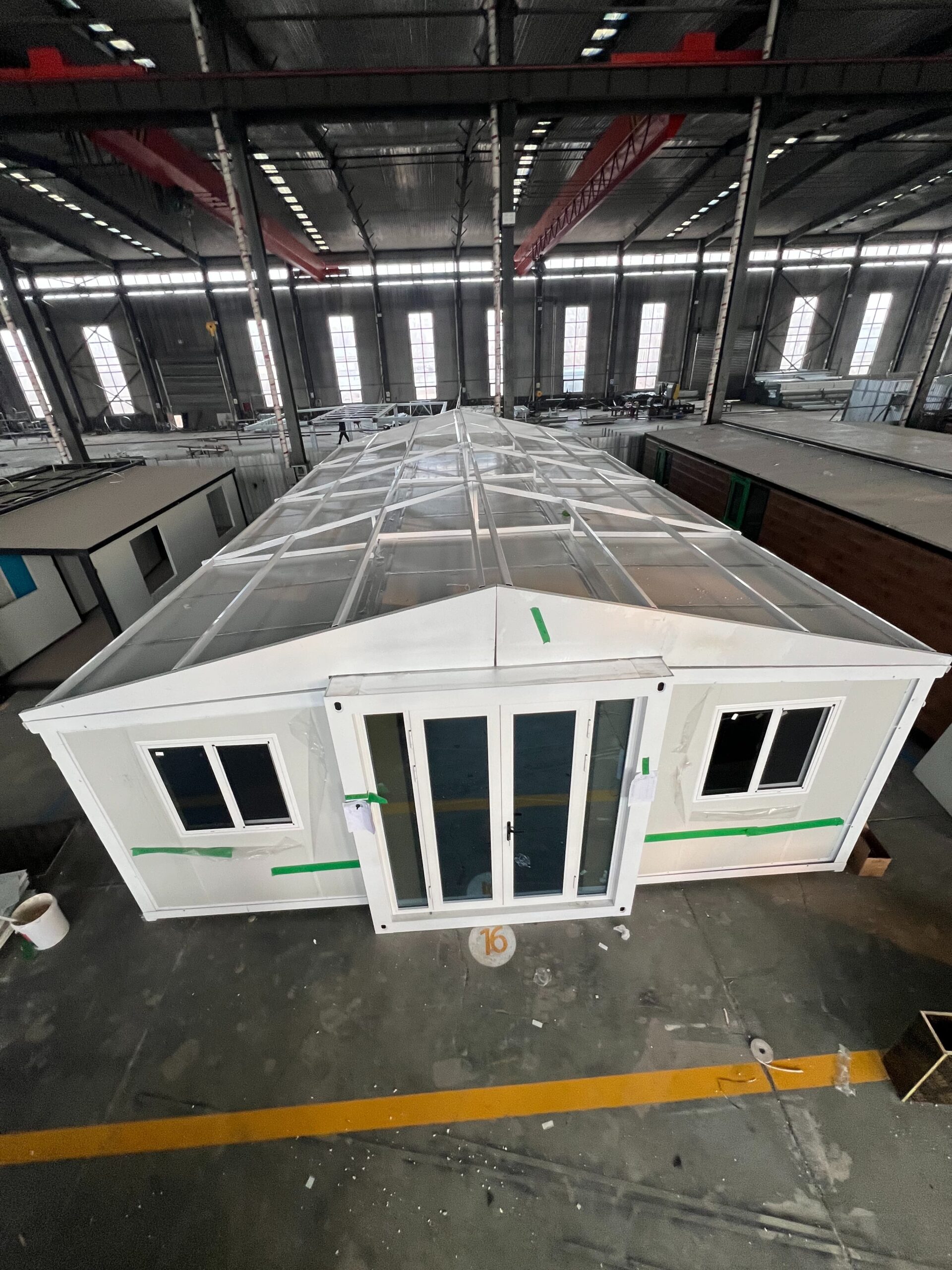
Understanding Eco-Friendly Materials for Cold Climate Container Houses
When constructing container houses for cold climates, the choice of materials is critical. Not only do these materials need to provide excellent insulation, but they must also be environmentally sustainable, durable, and capable of withstanding extreme temperature fluctuations. Let’s explore some of the most effective eco-friendly materials used in cold climate container house construction.
1. Advanced Insulation Solutions
Insulation is perhaps the most crucial component of any cold climate container house. Traditional insulation materials often fall short when faced with extreme cold, which is why innovative eco-friendly alternatives have become the standard for quality construction in regions like Canada.
Polyurethane Foam Insulation
Polyurethane foam has emerged as a leading insulation material for cold climate container houses due to its exceptional thermal performance. With an R-value of approximately R-6 to R-7 per inch, polyurethane provides superior insulation compared to many traditional materials. What makes it particularly eco-friendly is its longevity—once installed, it can maintain its insulating properties for decades without degradation, reducing the need for replacement and associated environmental impacts.
Additionally, modern polyurethane formulations have significantly reduced their environmental footprint. Many manufacturers now use hydrofluoroolefin (HFO) blowing agents with dramatically lower global warming potential than previous hydrofluorocarbon (HFC) formulations. This advancement makes polyurethane foam a more sustainable choice while still delivering the exceptional thermal performance needed in cold climates.
Rock Wool (Mineral Wool) Insulation
Rock wool, also known as mineral wool, is another excellent eco-friendly insulation option for cold climate container houses. Made from natural basalt rock and recycled steel slag, rock wool is inherently fire-resistant, water-repellent, and provides excellent thermal insulation with an R-value of approximately R-3 to R-4 per inch.
What makes rock wool particularly suitable for cold climates is its ability to maintain insulating properties even when exposed to moisture. Unlike some insulation materials that can lose effectiveness when damp, rock wool continues to perform well in humid conditions—a common challenge in container houses where temperature differentials can cause condensation.
From an environmental perspective, rock wool is highly sustainable. It’s made from abundant natural materials, contains up to 75% recycled content, and is fully recyclable at the end of its life. Additionally, it doesn’t contain harmful chemicals or emit volatile organic compounds (VOCs), contributing to better indoor air quality.
2. Sustainable Structural Components
While the shipping container itself forms the primary structure of these homes, additional structural elements are often incorporated to enhance durability and thermal performance. The 40-foot customized double-wing expansion room, for instance, utilizes several eco-friendly structural materials that are specifically designed for cold climate applications.
Lightweight Galvanized Steel Framework
The expansion mechanism of the double-wing design relies on a lightweight galvanized steel framework that provides structural integrity while minimizing environmental impact. Galvanization involves coating steel with a layer of zinc, which not only prevents rust and corrosion—essential in snowy, wet climates—but also extends the material’s lifespan significantly.
From an environmental standpoint, steel is one of the most recycled materials globally, with recycling rates exceeding 90% in many countries. By using galvanized steel in the framework of these container houses, manufacturers ensure that the structural components have a long service life while remaining recyclable at the end of their useful life.
Carbon Fiber Composite Components
Some high-end cold climate container houses incorporate carbon fiber composite materials in their structural design. While carbon fiber production has historically been energy-intensive, new manufacturing techniques have significantly reduced its environmental impact. Carbon fiber offers an excellent strength-to-weight ratio, making it ideal for expanding container components that need to be both lightweight and exceptionally strong.
The use of carbon fiber in the double-wing expansion mechanism allows for larger expansion capabilities while maintaining structural integrity in heavy snow loads and high winds—common challenges in cold climate regions like Canada’s northern territories or the mountainous regions of British Columbia.
3. Eco-Friendly Exterior Finishes
The exterior finish of a cold climate container house must withstand harsh weather conditions while providing additional insulation and aesthetic appeal. Several eco-friendly options have proven particularly effective in these demanding environments.
Sustainable Wood Cladding
Wood cladding remains a popular choice for container houses in cold climates, offering natural beauty and excellent insulation properties. When sourced from sustainably managed forests certified by organizations like the Forest Stewardship Council (FSC), wood cladding provides an environmentally responsible exterior finish that enhances the building’s thermal performance.
Species like cedar, larch, and pine are commonly used for their natural resistance to decay and insects, reducing the need for chemical treatments. Additionally, wood is a carbon-storing material, meaning the carbon dioxide absorbed by the tree during growth remains stored for the life of the product, making it a climate-friendly choice.
Recycled Metal Paneling
For a more modern aesthetic, recycled metal paneling offers an eco-friendly exterior option for cold climate container houses. Made from recycled aluminum or steel, these panels provide excellent durability and weather resistance while minimizing environmental impact.
Recycled metal panels can be finished with eco-friendly coatings that reflect solar radiation, helping to regulate interior temperatures and reduce energy consumption. In cold climates, where temperature regulation is crucial, these reflective properties can contribute to significant energy savings over the lifetime of the building.
The 40-Foot Customized Double-Wing Expansion Room: A Cold Climate Solution
Now that we’ve explored the eco-friendly materials suitable for cold climate container houses, let’s take a closer look at a specific product that embodies these principles: the 40-foot customized double-wing expansion room. This innovative design represents the cutting edge of sustainable, cold-climate modular housing.
Design Concept and Structural Innovation
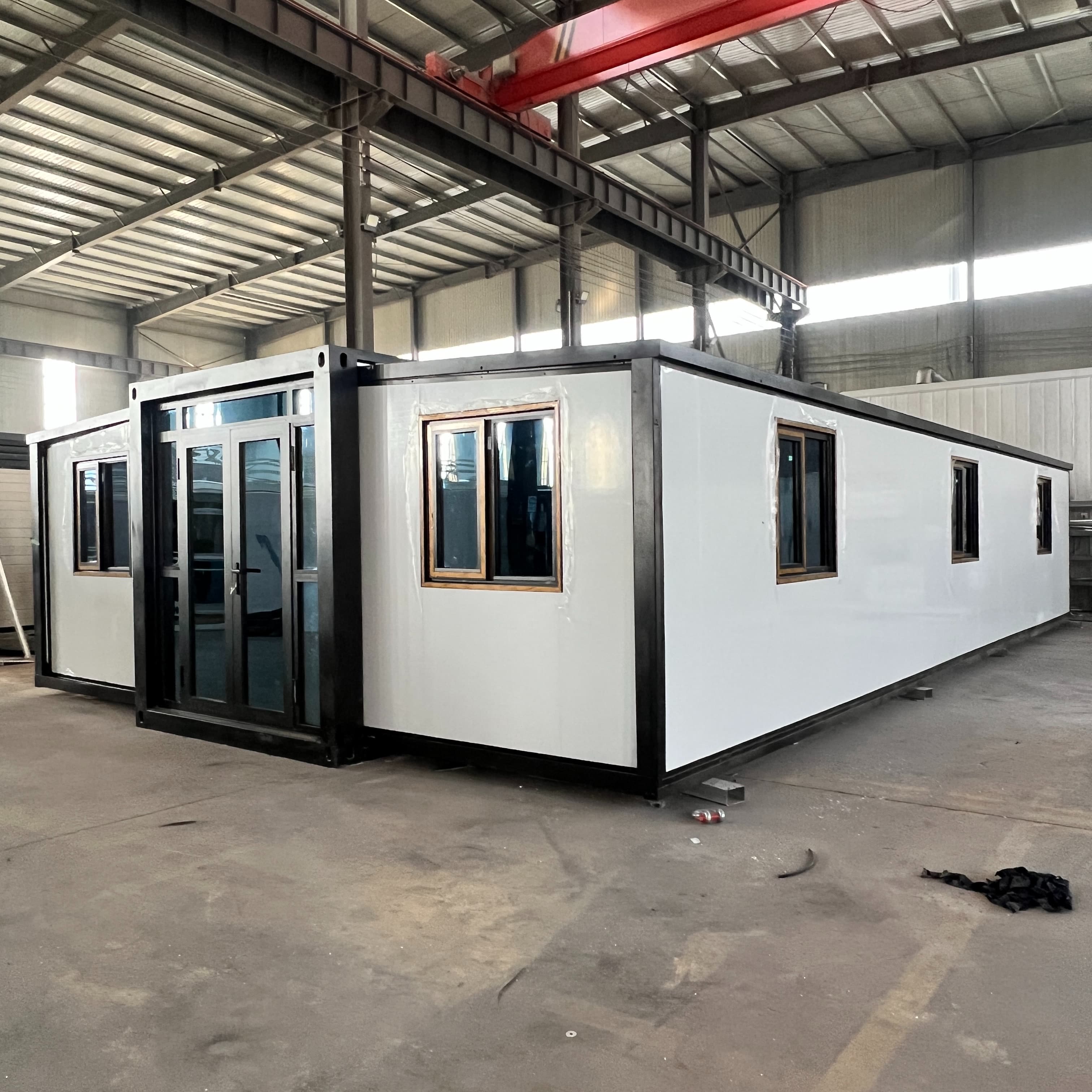
The double-wing expansion container house is a modular, movable building product featuring “wing-like” structures on both sides that can expand outward, much like a bird spreading its wings. This ingenious design allows the structure to maintain standard shipping container dimensions during transport—greatly reducing shipping costs and environmental impact—while providing significantly expanded living space once deployed.
The structural framework of these units utilizes lightweight galvanized steel, providing exceptional strength and durability while minimizing weight. This is particularly important in cold climates where heavy snow loads can exert significant pressure on building structures. The galvanized coating ensures resistance to corrosion from snow, ice, and road salt, extending the lifespan of the structure even in harsh conditions.
Dimensions and Space Configuration
The 40-foot double-wing model offers impressive spatial flexibility, with dimensions specifically designed to maximize living area while maintaining structural integrity:
- Expanded Dimensions: 11,800mm (length) × 6,240mm (width) × 2,480mm (height)
- Internal Dimensions: 11,540mm (length) × 6,080mm (width) × 2,200mm (height)
- Folded Dimensions: 11,800mm (length) × 2,200mm (width) × 2,480mm (height)
These dimensions demonstrate the remarkable space efficiency of the double-wing design. When folded for transport, the unit maintains standard container dimensions, allowing for easy shipping via road, rail, or sea. Once expanded, however, the usable floor area increases by 70-80%, transforming from a compact container into a spacious living environment suitable for year-round occupation even in cold climates.
Single-Wing Alternative
For those requiring a more compact solution or with different spatial needs, a single-wing version is also available. This design features one expandable wing that, when deployed, increases the usable space by 1.5-2 times compared to the folded configuration.
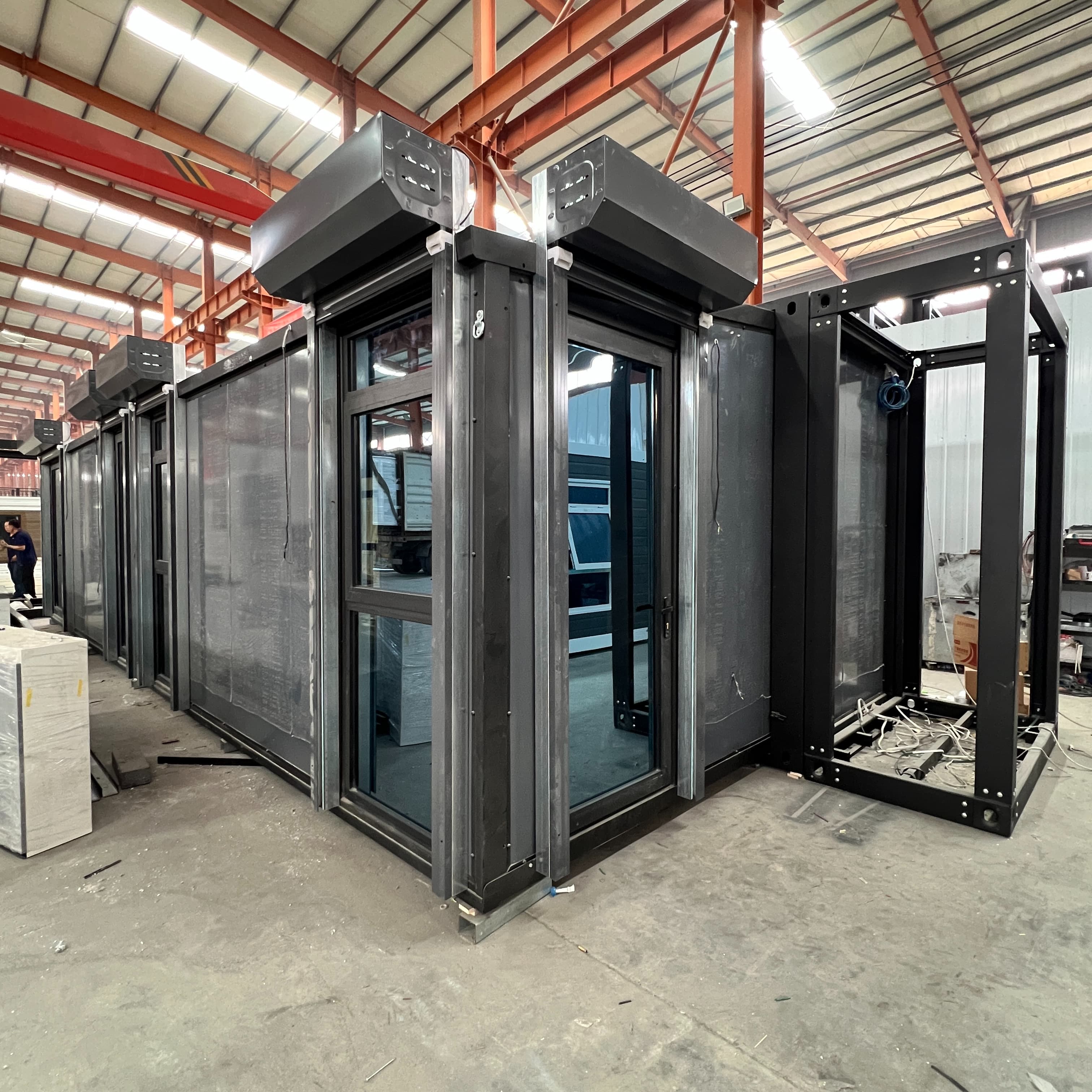
The single-wing model is particularly well-suited for smaller households, individual offices, or temporary accommodation in cold climate research stations, remote work sites, or vacation properties. Like its double-wing counterpart, it maintains the same commitment to eco-friendly materials and cold climate performance.
Material Specifications and Cold Climate Adaptations
The 40-foot customized double-wing expansion room incorporates several specialized materials and design features specifically chosen for their performance in cold climates. Let’s examine these in detail:
Insulation System
The insulation system is perhaps the most critical component of any cold climate dwelling, and the double-wing container house excels in this regard. The units utilize high-performance insulation materials strategically placed to eliminate thermal bridging and maximize energy efficiency:
- Wall Insulation: 100mm thick polyurethane foam with an R-value of R-30 or higher
- Roof Insulation: 120mm thick polyurethane foam with additional reflective barrier
- Floor Insulation: 80mm thick rock wool with vapor barrier to prevent ground moisture infiltration
This comprehensive insulation approach ensures that the interior remains comfortable even when exterior temperatures drop well below freezing. The polyurethane foam in the walls and roof provides continuous insulation without thermal bridges, while the rock wool in the floor offers additional protection against cold ground temperatures—a significant factor in cold climate energy efficiency.
Window and Door Systems
Windows and doors represent potential weak points in any building envelope, particularly in cold climates where heat loss can occur through these elements. The double-wing container house addresses this challenge with high-performance window and door systems designed specifically for cold weather applications:
- Windows: Triple-glazed with Low-E coatings and argon gas fill
- Frames: Thermally broken aluminum with thermal insulation strips
- Doors: Multi-point locking system with double weatherstripping and thermal breaks
These advanced window and door systems significantly reduce heat loss while allowing natural light to enter the living space—essential for maintaining psychological well-being during long, dark winters in regions like northern Canada or Alaska. The Low-E coatings reflect interior heat back into the living space while allowing visible light to pass through, maximizing both energy efficiency and occupant comfort.
Exterior Weatherproofing
In cold climates, buildings must withstand not just low temperatures but also snow, ice, and freeze-thaw cycles that can cause significant damage to less robust structures. The double-wing container house incorporates several exterior weatherproofing features specifically designed to address these challenges:
- Seamless Construction: Advanced panel joining techniques that eliminate gaps and potential water infiltration points
- Snow Load Capacity: Engineered to support heavy snow loads typical of regions like Quebec or the Canadian Rockies
- Drainage System: Integrated gutters and downspouts designed to handle snowmelt and prevent ice dam formation
These features ensure that the structure remains weather-tight and structurally sound even during the most severe winter conditions, providing peace of mind for occupants in remote cold climate locations.
Interior Features and Living Experience
While the exterior and structural elements of the double-wing container house are engineered for cold climate performance, the interior features are designed to create a comfortable, functional living space that feels like home regardless of the weather outside. Let’s explore some of these interior features:
Space Optimization
One of the most impressive aspects of the double-wing design is its ability to create spacious, open interiors despite the compact folded dimensions. The expansion mechanism creates a wide-open living area that can be configured to suit various needs:
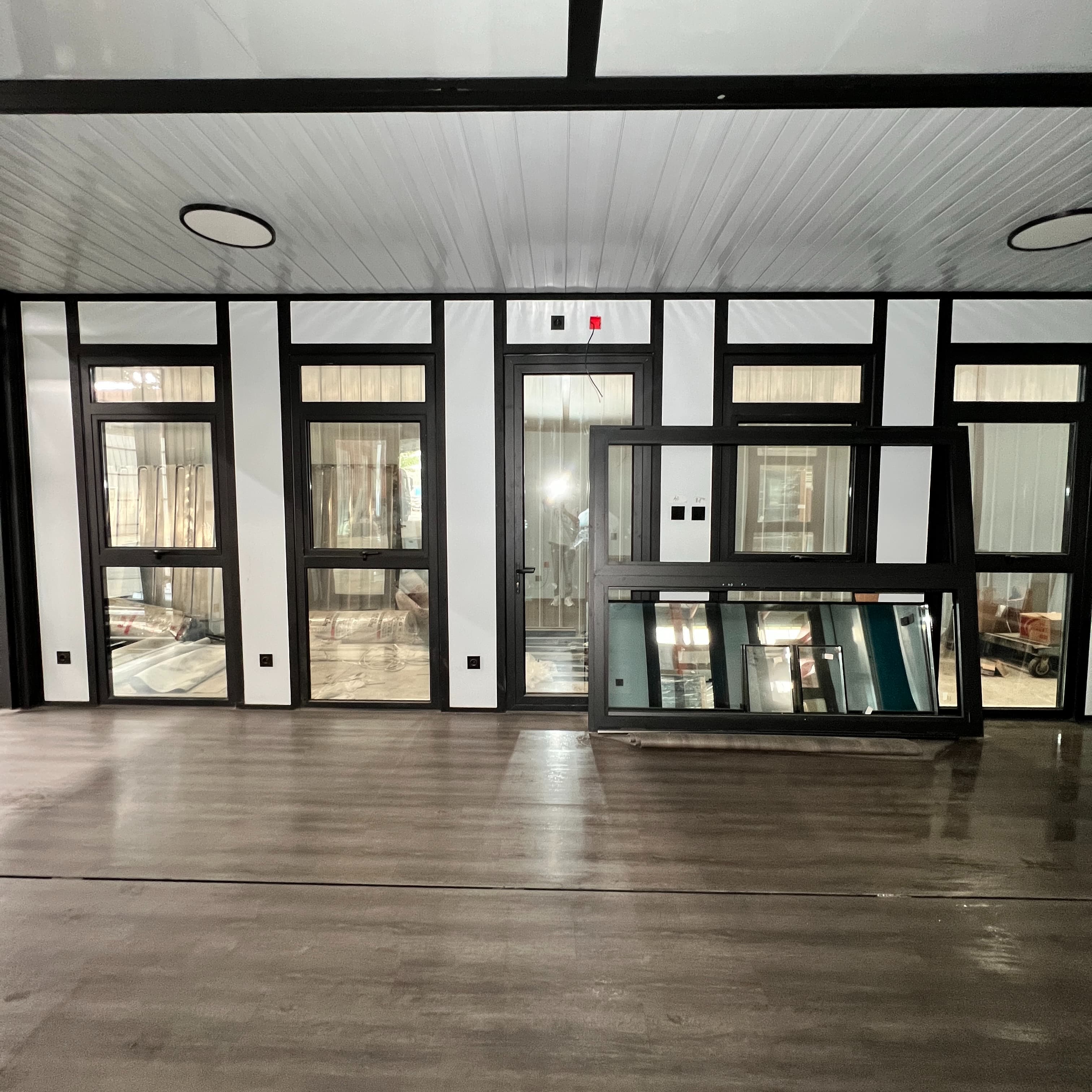
The interior design emphasizes space efficiency without sacrificing comfort. With no internal columns or support beams, the usable space is maximized, allowing for flexible furniture arrangements and room configurations. This open-plan approach is particularly beneficial in cold climates, where occupants may spend extended periods indoors during winter months.
Kitchen and Bathroom Facilities
The double-wing container house comes equipped with fully functional kitchen and bathroom facilities designed for efficiency and durability in cold climates:
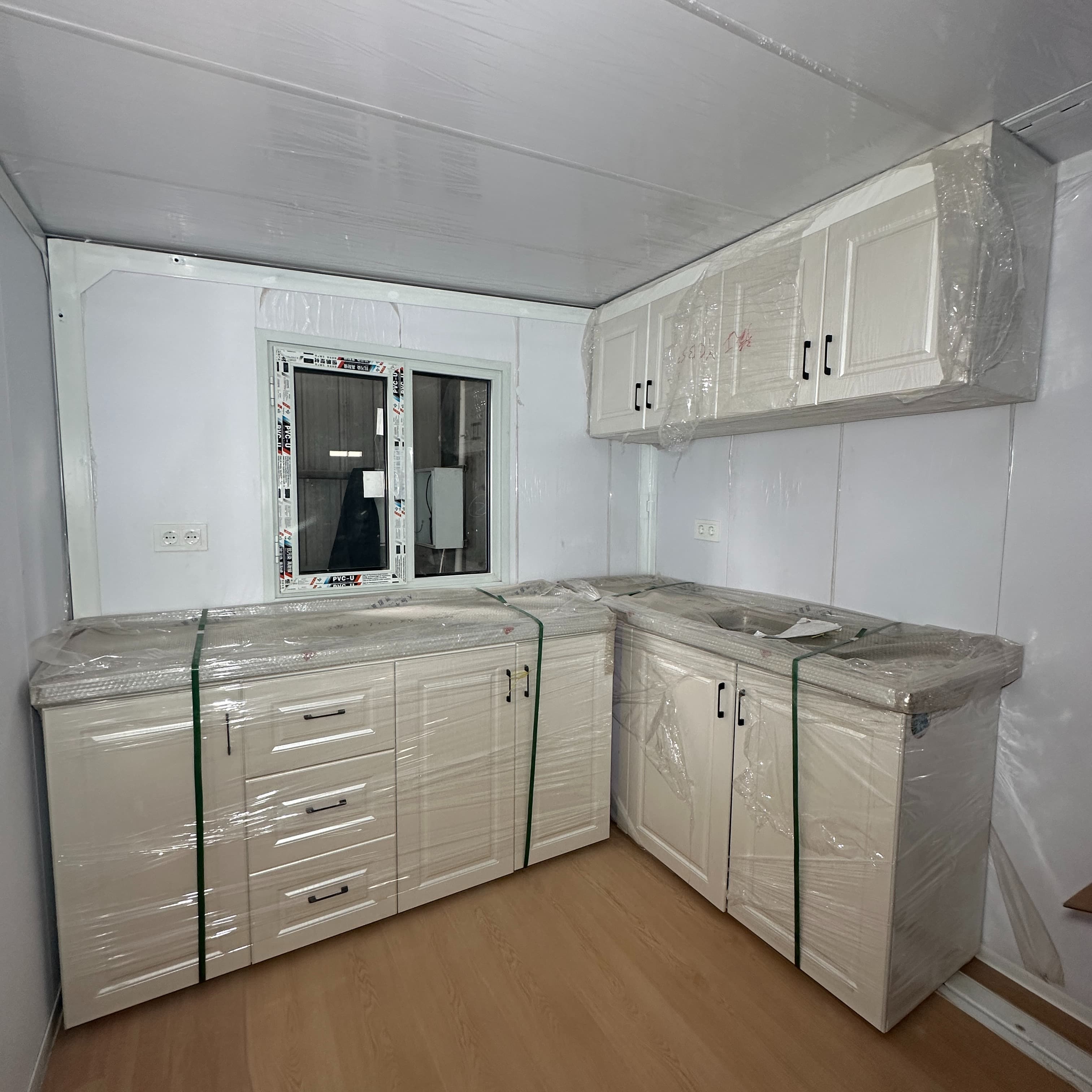
- Kitchen: Compact yet functional with energy-efficient appliances, ample counter space, and storage designed for cold climate living
- Bathroom: Fully equipped with water-saving fixtures, heated flooring, and ventilation systems designed to prevent condensation and mold growth
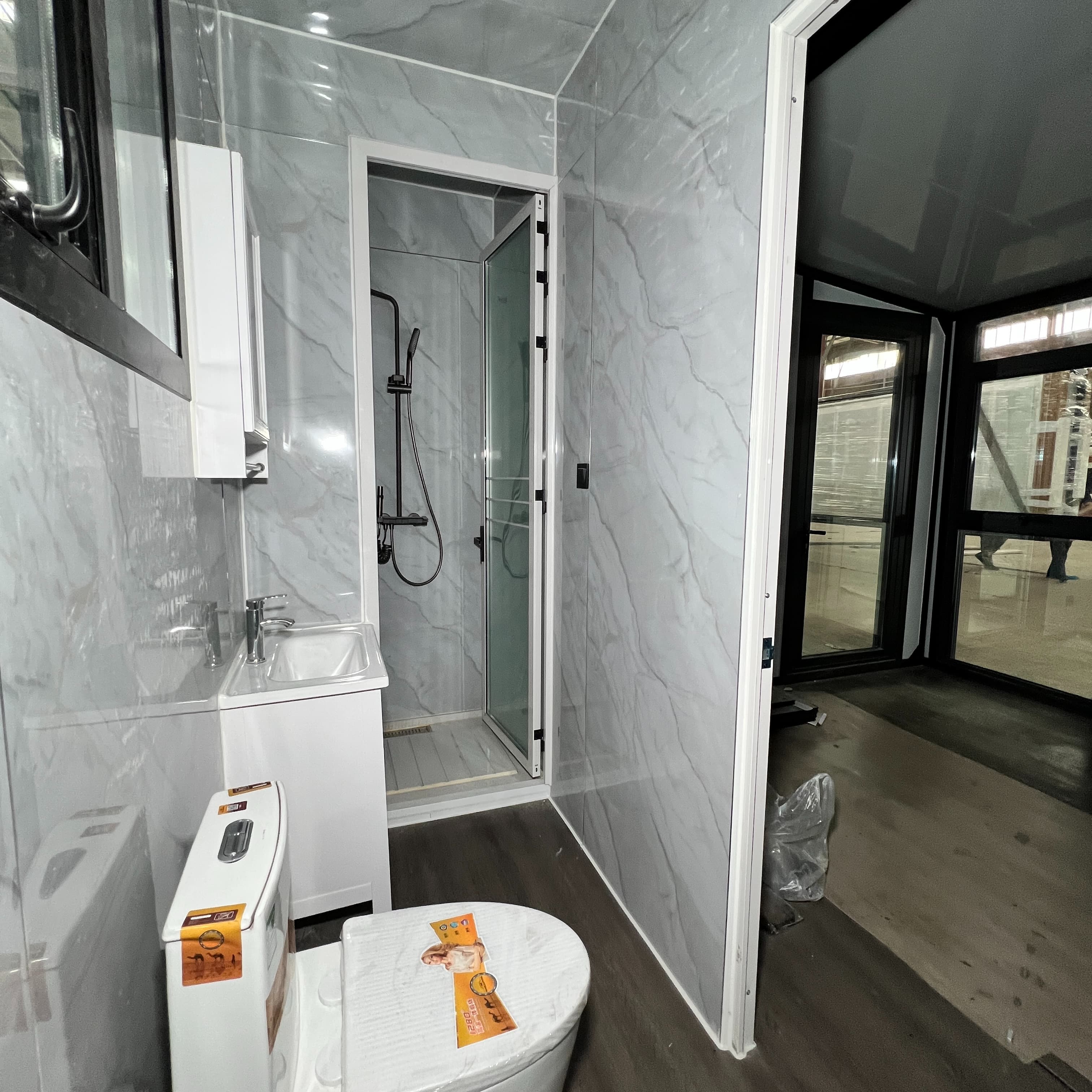
These facilities incorporate water-saving technologies and energy-efficient appliances that reduce environmental impact while maintaining high functionality—a crucial consideration in remote cold climate locations where resources may be limited.
Heating and Energy Systems
Perhaps the most important consideration for any cold climate dwelling is its heating system. The double-wing container house incorporates several innovative heating and energy solutions designed specifically for efficiency and sustainability in cold environments:
- Insulated Underfloor Heating: Radiant heating system embedded in the floor structure for efficient, comfortable warmth
- Heat Recovery Ventilation: Mechanical ventilation system that recovers heat from exhaust air to preheat incoming fresh air
- Solar Compatibility: Roof structure designed to accommodate solar panels for renewable energy generation
These systems work together to create a comfortable interior environment while minimizing energy consumption—a critical factor in both environmental sustainability and operational costs in cold climates where heating demands can be substantial.
Environmental Benefits and Sustainability Features
Beyond their cold climate performance, these container houses offer numerous environmental benefits that make them an excellent choice for environmentally conscious consumers. Let’s examine some of the sustainability features incorporated into the design and construction of these units:
Material Efficiency and Waste Reduction
One of the most significant environmental advantages of container houses is their efficient use of materials. By repurposing shipping containers that might otherwise be discarded, these homes reduce the demand for virgin materials while preventing waste. The double-wing design takes this concept further by:
- Utilizing 95% of the original container structure in the final product
- Incorporating recycled and recyclable materials in additional components
- Minimizing construction waste through precision manufacturing processes
This approach to material efficiency significantly reduces the environmental footprint of each unit compared to traditional construction methods.
Energy Efficiency and Carbon Reduction
The superior insulation and thermal performance of these container houses translate directly into reduced energy consumption for heating—a major factor in their environmental sustainability. In cold climates where heating can account for up to 60% of a building’s energy use, the high-performance insulation and air sealing of these units can result in:
- 30-50% reduction in heating energy compared to conventional buildings
- Corresponding decrease in carbon emissions
- Lower demand on often carbon-intensive energy grids in remote cold climate regions
These energy savings not only benefit the environment but also result in significant cost savings for occupants over the lifetime of the building.
Transportation Efficiency and Reduced Site Impact
The modular nature of these container houses, combined with their ability to fold to standard shipping dimensions, offers significant environmental advantages in terms of transportation and site impact:
- Reduced transportation emissions due to efficient shipping of folded units
- Minimal site disturbance during installation—no extensive excavation or foundation work required
- Ability to be relocated without leaving permanent environmental impact
These features make the double-wing container house particularly well-suited for environmentally sensitive cold climate areas such as national parks, wilderness preserves, or remote research locations where minimizing human impact is a priority.
Installation Process and Speed of Deployment
One of the most compelling advantages of the 40-foot customized double-wing expansion room is the speed and efficiency of its installation process. This rapid deployment capability is particularly valuable in cold climates where construction seasons may be limited and weather conditions can change rapidly.
Factory Preparation and Quality Control
Approximately 85% of the construction process takes place in a controlled factory environment before the unit ever reaches its destination. This approach offers several significant advantages:
- Consistent quality regardless of weather conditions at the installation site
- Precise material usage minimizing waste
- Protected working conditions ensuring optimal assembly of sensitive components
This factory-based construction approach is particularly beneficial for cold climate installations, where on-site construction can be challenging, expensive, and time-consuming due to weather constraints.
On-Site Installation Process
Once transported to its destination, the installation process for the double-wing container house is remarkably efficient:
- Site Preparation: Minimal site preparation required—typically just leveling compacted ground or installing simple foundation pads
- Placement: The folded unit is positioned using standard lifting equipment
- Expansion: The wings are unfolded and locked into position
- Connection: Utility connections (water, electricity, sewer) are established
- Finalization: Interior finishing touches and systems testing
This entire process can typically be completed in a matter of hours for a single unit, or 1-3 days for more complex multi-unit configurations. This rapid deployment capability is invaluable in cold climate scenarios where weather windows for construction may be limited.
Foundation Options for Cold Climates
Proper foundation design is critical in cold climates to prevent frost heave and ensure structural stability. The double-wing container house offers several foundation options specifically designed for cold climate applications:
- Frost-Protected Shallow Foundations: Insulated foundation design that prevents frost penetration without requiring deep excavation
- Adjustable Pier Systems: Allows for leveling on uneven terrain and accommodates ground movement during freeze-thaw cycles
- Helical Piles: Screw-like foundations that can be installed even in frozen ground conditions
These foundation options provide flexibility while ensuring the long-term stability of the structure in challenging cold climate conditions.
Applications in Cold Climate Environments
The versatility and cold climate performance of the 40-foot customized double-wing expansion room make it suitable for a wide range of applications in cold weather environments. Let’s explore some of the most common and innovative uses for these structures:
Residential Applications
As primary residences, vacation homes, or guest houses, these container houses offer an attractive combination of sustainability, comfort, and cold climate performance:
- Full-Time Residences: Ideal for individuals or small families seeking an eco-friendly home in rural or remote cold climate areas
- Vacation Properties: Perfect for ski chalets, hunting lodges, or fishing cabins in wilderness areas
- Guest Accommodations: Expandable guest quarters for existing properties in cold climate regions
The customizable nature of these units allows them to be tailored to specific residential needs while maintaining their cold climate performance characteristics.
Commercial and Research Applications
Beyond residential use, these container houses excel in various commercial and research applications in cold climates:
- Research Stations: Field laboratories and living quarters for scientific research in Arctic or alpine environments
- Remote Work Sites: Offices and accommodations for mining, forestry, or energy exploration in cold regions
- Tourism Facilities: Eco-lodges, visitor centers, or rental accommodations in cold climate tourist destinations
The rapid deployment capability and durability of these units make them particularly valuable for temporary or semi-permanent installations in remote cold climate locations where traditional construction would be impractical or prohibitively expensive.
Emergency and Disaster Response
In cold climate disaster scenarios, providing shelter quickly can be a matter of life and death. The double-wing container house offers several advantages for emergency response:
- Rapid Deployment: Can be transported and installed quickly, even in challenging conditions
- Insulated Comfort: Provides warm, secure shelter immediately upon installation
- Durability: Withstands severe weather conditions that might damage less robust temporary shelters
These characteristics make the units ideal for emergency response in cold climate regions affected by natural disasters or other crises requiring temporary housing solutions.
Cost Considerations and Return on Investment
While the initial cost of a cold climate container house may be comparable to or slightly