
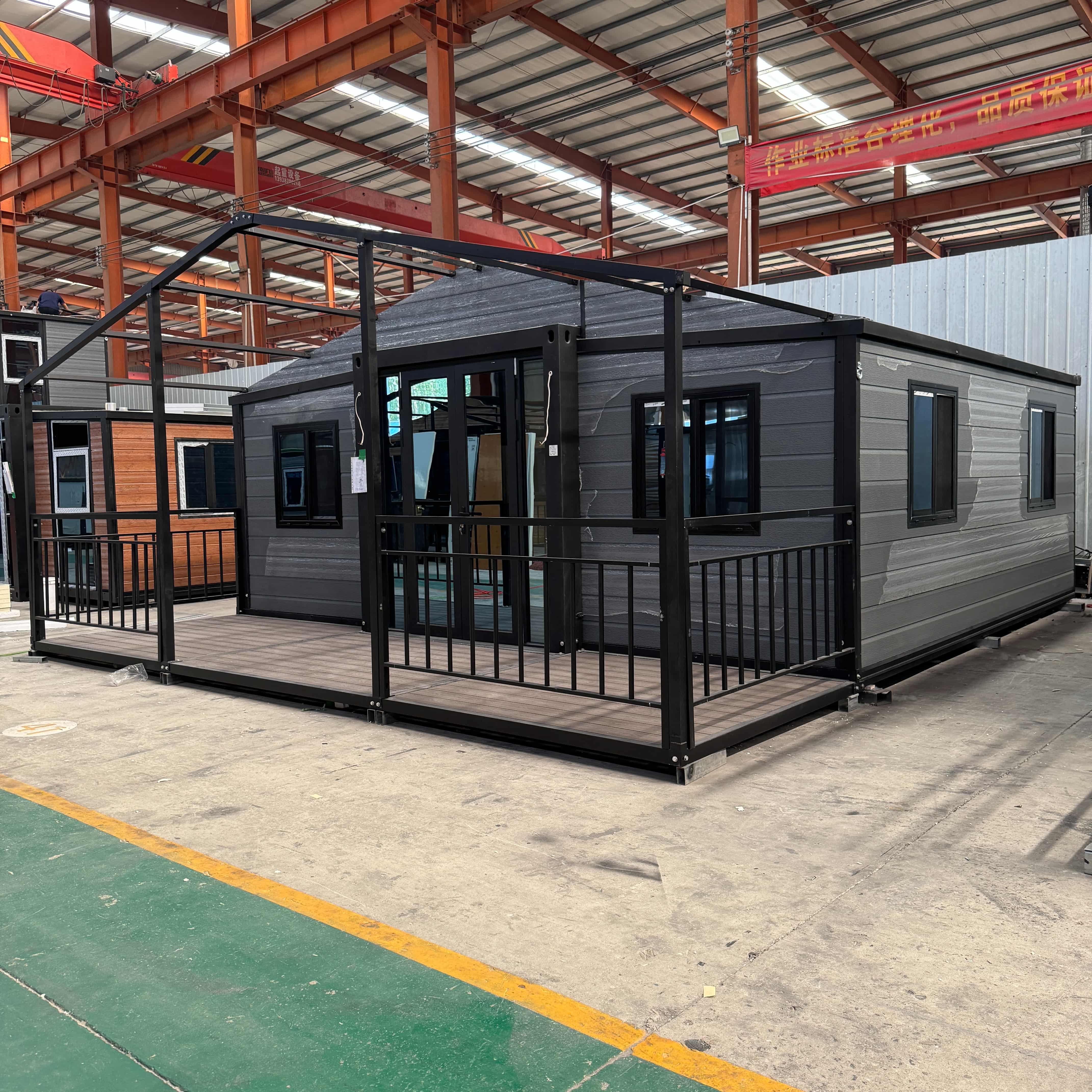
Discover why expandable container houses are rapidly becoming the smart housing solution across Malaysia, India, and Indonesia. This 2026 guide covers factory-direct pricing from China, tropical-climate engineering, JBPM/PBB/IMDA compliance, monsoon durability, and 6 real Southeast Asia and South Asia project case studies. Whether you are a Malaysian homestay operator, an Indian developer building farmhouses, or an Indonesian mining camp manager, this guide shows exactly what to buy, what to pay, and how to ship.
If you have searched for container home malaysia, expandable house India, or prefab house Indonesia and found the answers confusing, you are not alone. South and Southeast Asia are among the fastest-growing prefab housing markets in the world, but most online guides are written for the US or Australia. They ignore the realities of tropical humidity, monsoon rain, cyclone-prone coastlines, and the very different building approval systems in Kuala Lumpur, Bengaluru, or Jakarta.
At HuaYing, we have shipped expandable container houses to 50+ countries since 2013, with growing volumes into Malaysia, India, Indonesia, the Philippines, Thailand, Vietnam, and Sri Lanka. This guide distills that field experience into a single, decision-ready document for Asian buyers in 2026.
Why Expandable Container Houses Work So Well in Asia
The 10ft, 20ft, and 40ft expandable container formats were originally designed for rapid disaster relief and worker accommodation, but their specifications line up almost perfectly with what tropical and subtropical Asian markets actually need:
- Monsoon-ready engineering: Galvanized steel frames, sloped roofs, and integrated drainage handle 200mm+ daily rainfall without leaking.
- Heat and humidity insulation: 50mm rock-wool or EPS sandwich panels keep interior temperatures 6-8°C below outside, slashing air-conditioning costs in 35°C weather.
- Cyclone-rated anchoring: Engineered tie-down kits meet ASCE 7 and local wind-zone codes (Malaysia: 33 m/s; Philippines: 250 kph; India coastal: 50 m/s).
- Termite and pest proof: Steel and concrete board construction eliminates the white-ant and rodent issues that destroy timber-built homes in rural Asia.
- Flat-pack shipping efficiency: A 40ft HQ container can carry two 20ft expandable units or three 10ft units to Port Klang, Chennai, or Tanjung Priok — keeping per-unit freight below USD $1,200.
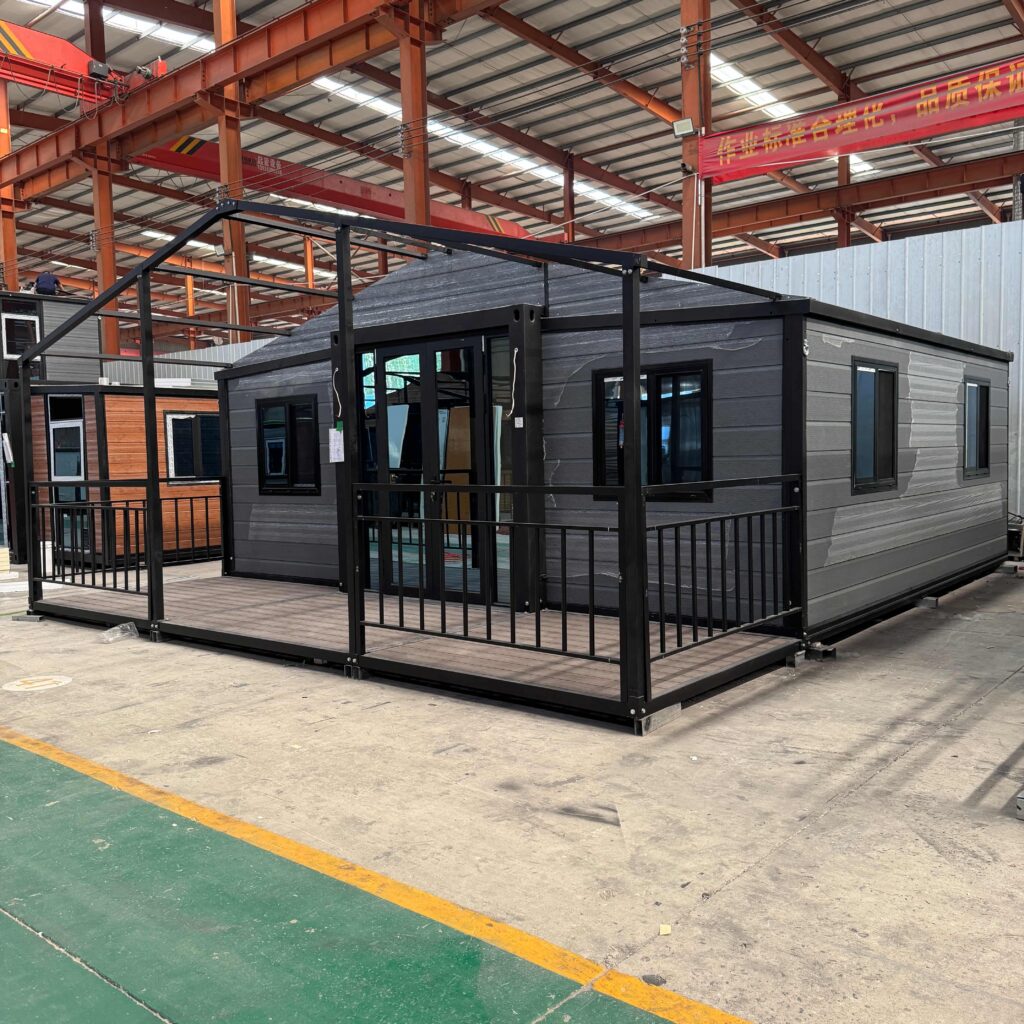
Country-Snapshot: Malaysia, India, Indonesia
Malaysia (Klang Valley, Penang, Johor, Sabah, Sarawak)
Malaysia is currently the largest Southeast Asian buyer of Chinese expandable container houses. The main use cases are:
- Homestay and glamping units in Cameron Highlands, Langkawi, and Tioman — the typical 20ft unit with one bedroom and a small deck delivers 80-90% occupancy at MYR 280-380/night.
- Site offices and worker accommodation for plantation and construction projects.
- Durian and palm oil estate housing, where the 40ft double-wing units serve as full family homes.
Key compliance notes: imports must carry a CIDB Malaysia product certification, and units placed on private land for more than 180 days require local council (PBT) approval. Most homestay operators use the “temporary structure” pathway, which is faster and cheaper.
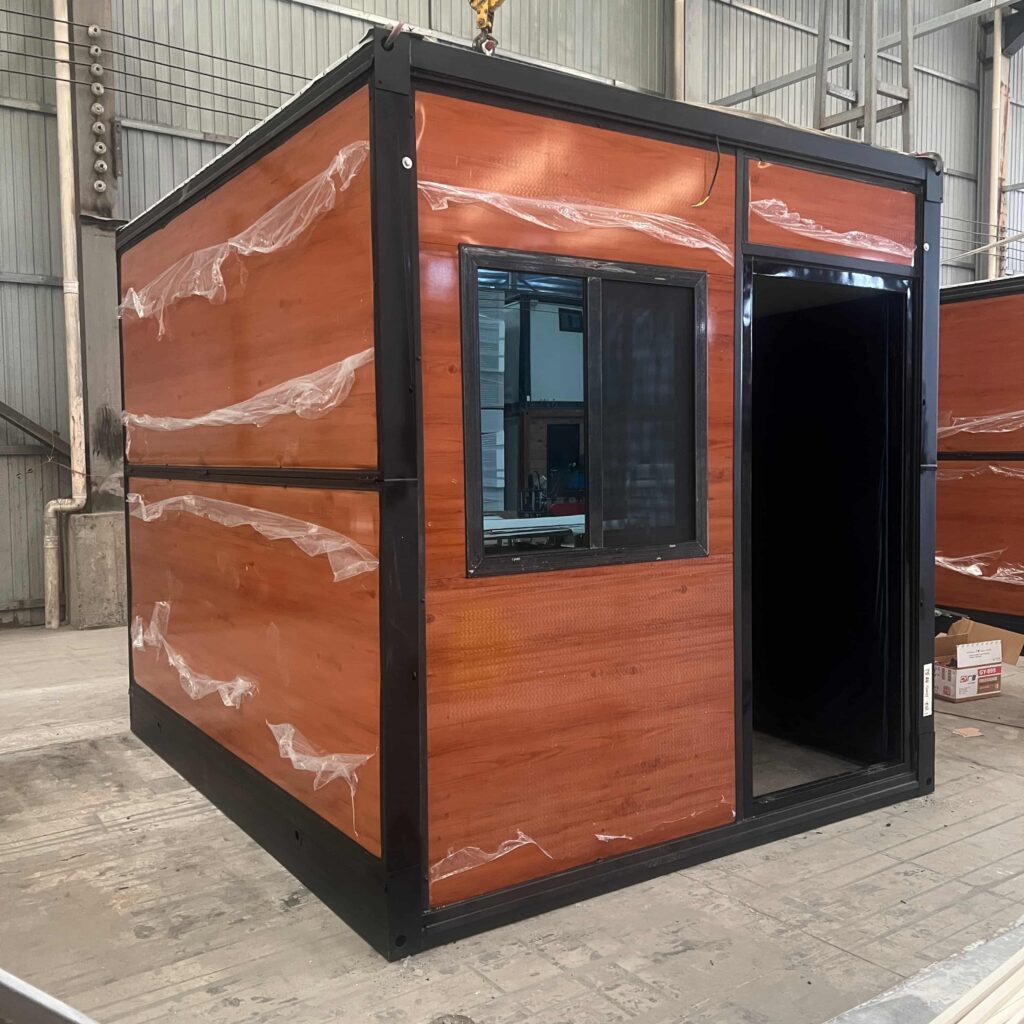
India (Bengaluru, Chennai, Hyderabad, Goa, Kerala)
India represents the highest-growth potential. Drivers include:
- Farmhouse construction under the PM Kisan and state agricultural development schemes.
- Resort and wellness retreat build-outs in Goa, Coorg, Wayanad, and Pondicherry.
- Tier-2 city infill housing for young professionals, where 20ft units fit on 200 sq ft plots.
- Disaster-relief deployments in Assam, Odisha, and Tamil Nadu coastal districts.
Compliance: container-based housing falls outside the purview of the National Building Code (NBC) in most states, but state development authorities (BDA, CMDA, HMDA, DTCP) and panchayat approvals are still required for permanent installation. Units on private agricultural land often qualify as “non-conforming use” with a simple application and nominal fee.
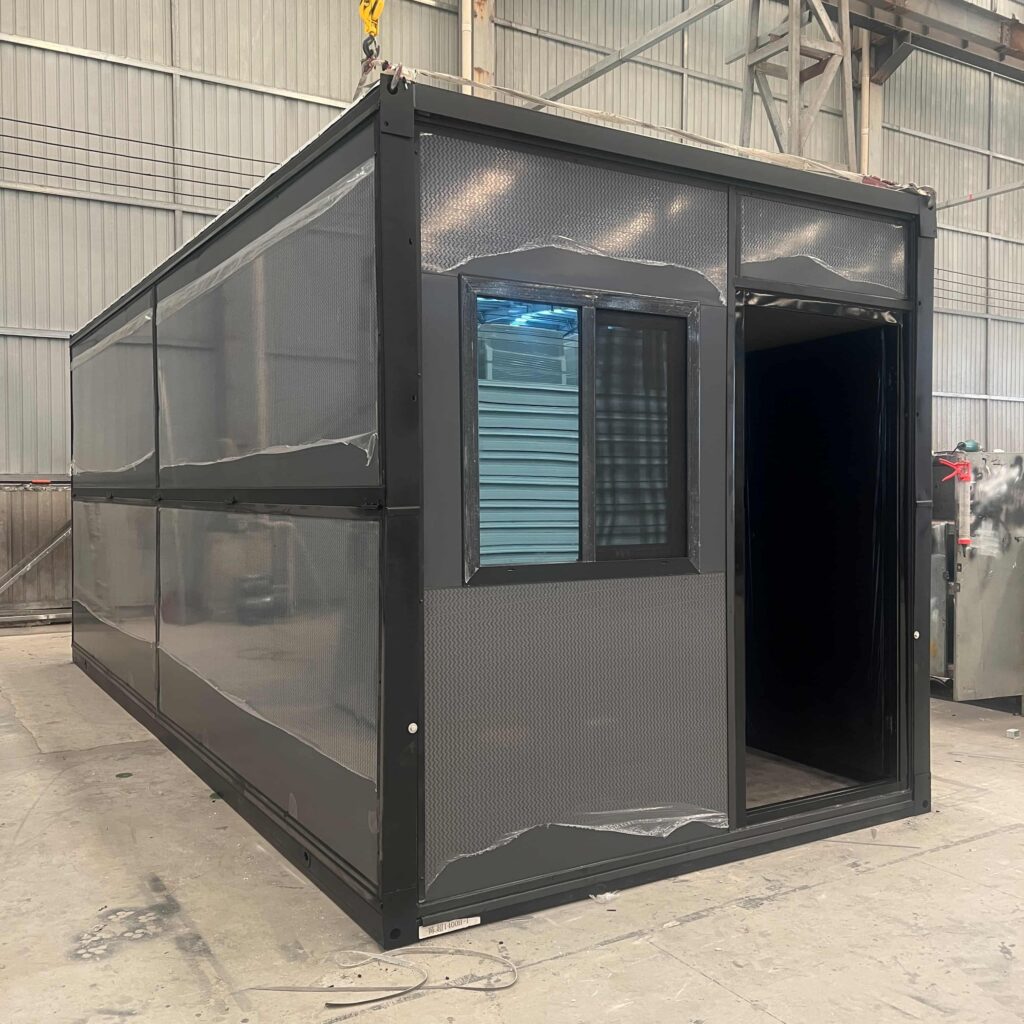
Indonesia (Jakarta, Bali, Surabaya, Kalimantan mining sites, Sulawesi)
Indonesia’s prefab demand splits into two distinct markets:
- Bali and Lombok: boutique villa operators are using 40ft double-wing units as 1-2 bedroom pool villas, with installed costs below USD $25,000 and nightly rates of USD $120-200.
- Mining and palm oil camps in Kalimantan and Sulawesi: the 10ft single-unit format remains the workhorse, with 50-200 unit orders common for FIFO worker housing.
Compliance: IMTA work-permit-linked housing must meet SNI standards and be approved by the local DPMPTSP office. Bali villas fall under the foreign-ownership rules and typically need a local Indonesian nominee structure for land.
2026 Factory-Direct Price List (FOB Shenzhen / Shanghai / Tianjin)
| Model | Footprint (expanded) | Bedrooms | FOB Price (USD) | Best fit |
|---|---|---|---|---|
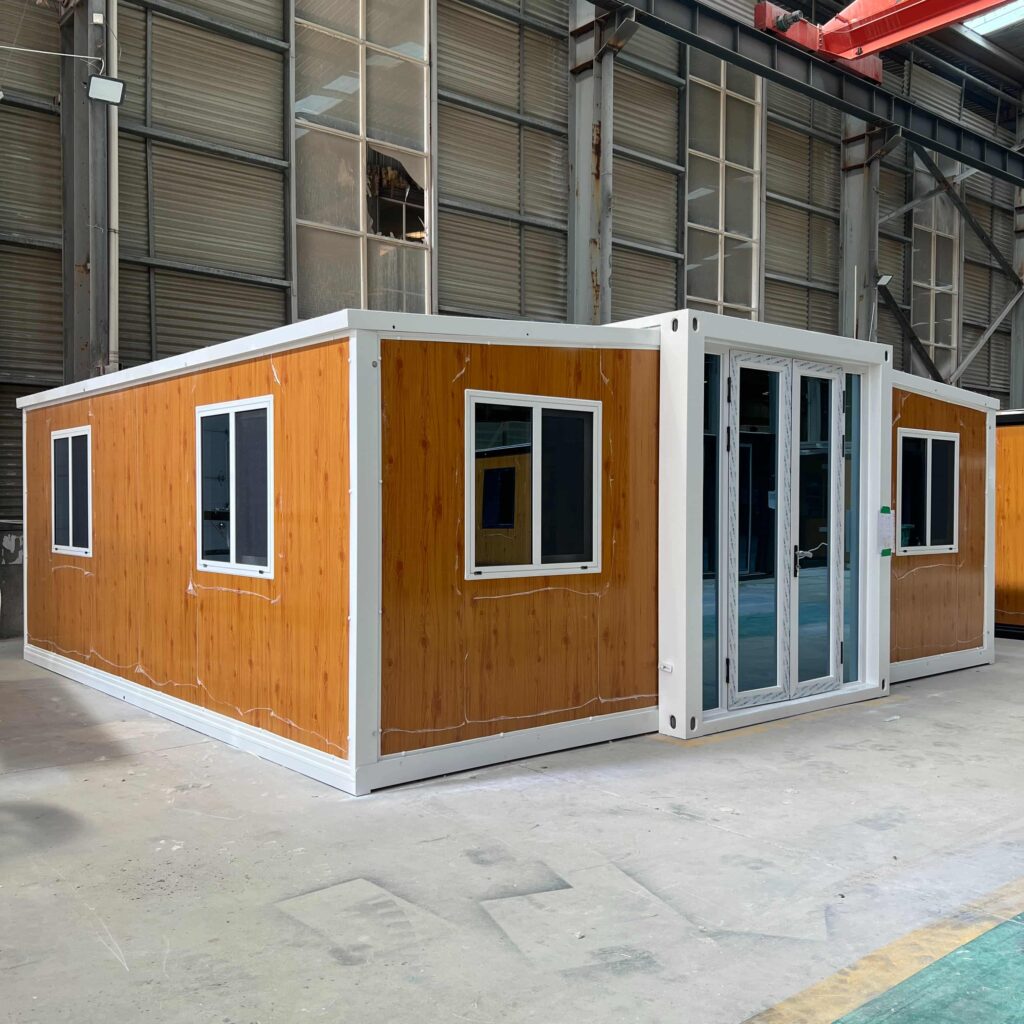
| 10ft single unit | ~19 m² | 1 | $6,500 – $8,200 | Site office, granny flat, single worker |
| 20ft single wing | ~37 m² | 1-2 | $9,800 – $13,500 | Homestay, small villa, B&B |
| 20ft double wing | ~52 m² | 2 | $14,500 – $18,800 | Family home, Bali villa |
| 40ft double wing | ~75 m² | 3 | $22,000 – $28,500 | Resort, family residence, camp dorm |
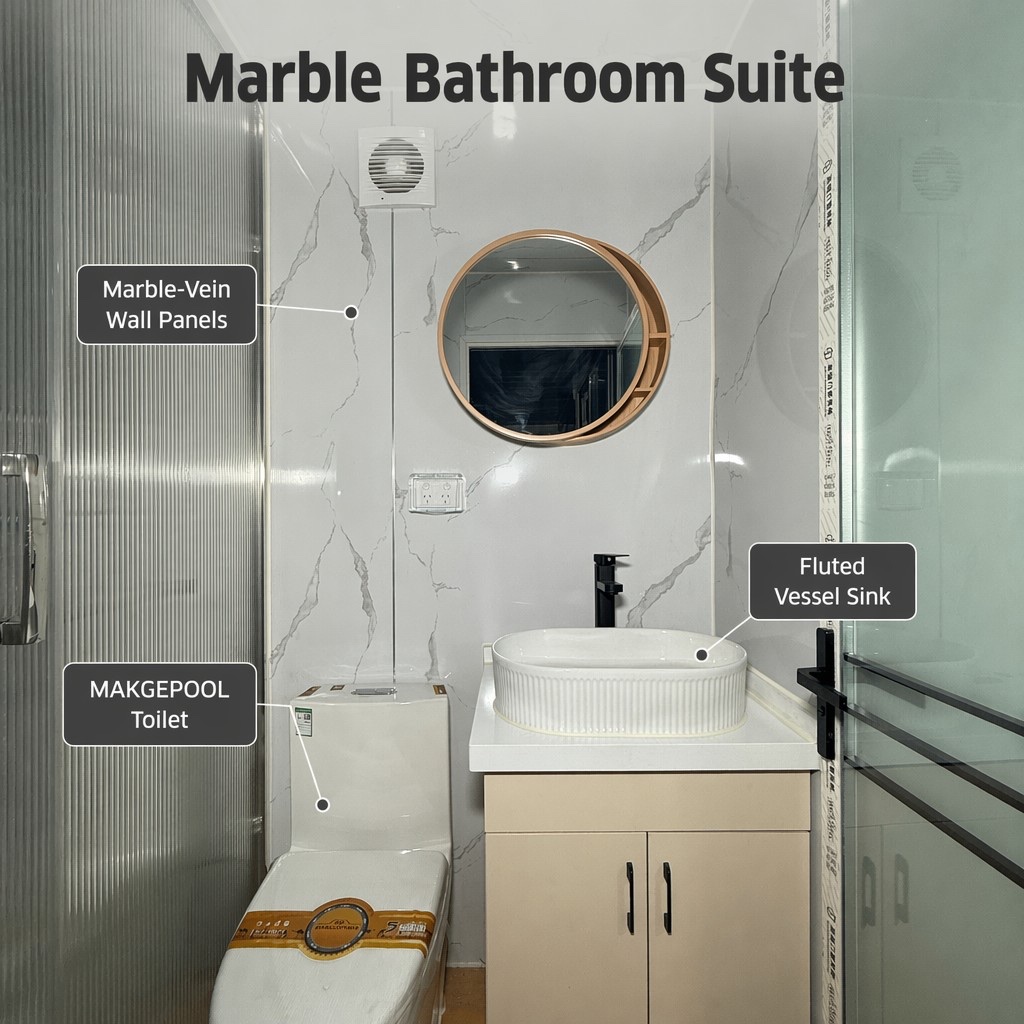
Prices include galvanized steel frame, EPS/rock-wool sandwich wall panels, PVC or aluminum windows, entry door, electrical pre-wiring (Asian-standard 220V/50Hz or 230V/50Hz), and basic interior finish. Bathroom and kitchenette packages add $1,800-$3,500 depending on fittings.
Shipping Costs to Major Asian Ports (2026 estimates)
| Destination port | 20ft unit (USD) | 40ft unit (USD) | Transit time |
|---|---|---|---|
| Port Klang, Malaysia | $850 – $1,100 | $1,400 – $1,800 | 8-12 days |
| Penang, Malaysia | $900 – $1,200 | $1,500 – $1,900 | 10-14 days |
| Tanjung Pelepas, Malaysia | $880 – $1,150 | $1,450 – $1,850 | 9-13 days |
| Chennai, India | $1,100 – $1,500 | $1,800 – $2,400 | 14-20 days |
| Mumbai (Nhava Sheva), India | $1,200 – $1,600 | $1,900 – $2,600 | 18-24 days |
| Tanjung Priok, Jakarta | $950 – $1,300 | $1,600 – $2,100 | 10-14 days |
| Surabaya, Indonesia | $1,000 – $1,400 | $1,700 – $2,200 | 12-16 days |
Customs duties in Asia range from 0% (Indonesia for capital goods) to 10-20% (India BCD + IGST for finished housing modules). Malaysia charges 0-5% under most ASEAN-China HS code classifications. Our team provides a full landed-cost quote based on your specific port and HS code.
Climate Engineering for Tropical Asia
Off-the-shelf expandable container houses from cold-climate suppliers often fail in Asia within 12-18 months. Our Asia-spec units include:
- Upgraded 50mm rock-wool panels instead of 25mm EPS to handle year-round 30-35°C heat.
- Anti-corrosion marine-grade paint for coastal sites (Phuket, Bali, Goa).
- Reflective white roof coating that drops interior temperatures by 4-6°C.
- Stainless-steel fasteners and hinges to prevent rust in 80%+ humidity zones.
- Sealed electrical conduits to keep out monsoon-driven moisture and termites.
Real Asian Project Case Studies
Case 1: Cameron Highlands Homestay, Malaysia (20ft single-wing)
Client: Mr. Lim, strawberry farm operator. Ordered 6 units in 2024. Each unit is set on a 4-point concrete pier foundation on sloped terrain. Occupancy 78% year-round, MYR 320/night. Total delivered cost per unit: USD $13,800. Payback period: 22 months.
Case 2: Goa Beach Resort, India (40ft double-wing)
Client: boutique resort chain. Ordered 12 units in 2025, all sited beachfront on private land. Units feature 2 bedrooms, full kitchen, and 18 m² front deck. Nightly rate INR 9,500, occupancy 65% in season. Delivered cost per unit including site work: USD $32,500.
Case 3: East Kalimantan Mining Camp, Indonesia (10ft single)
Client: coal mining contractor. 180 units deployed in 2025 for FIFO worker housing. Units include bunk-bed configuration, shared bathroom block, and 24/7 power via integrated solar-diesel hybrid. Delivered cost per unit: USD $9,400.
Case 4: Bengaluru Farmhouse, India (20ft double-wing)
Client: tech entrepreneur weekend home. Single unit on 1-acre agricultural plot, used 4-6 days/month. Installed cost USD $21,500 including foundation and utility hookup.
Case 5: Langkawi Glamping Site, Malaysia (10ft and 20ft mix)
Client: hospitality group. 8 x 10ft and 4 x 20ft units sited among rainforest. Solar power, composting toilets, rainwater harvesting. MYR 450/night average. Order placed Q1 2026.
Case 6: Yogyakarta Artist Residency, Indonesia (20ft single-wing)
Client: arts foundation. 5 units used as live-work spaces for visiting artists. Roof terrace and shared garden. Delivered cost USD $15,200 per unit including interior fit-out.
FAQ: Expandable Container Houses in Asia
1. How long does it take to receive an order in Malaysia, India, or Indonesia?
From order confirmation to factory dispatch is typically 25-35 days for standard models. Sea transit adds 8-24 days depending on the destination port. Add 1-3 days for customs clearance and 2-5 days for inland transport. Total door-to-door: 6-10 weeks.
2. Can the units handle typhoons and cyclones?
Yes. Our Asia-spec 20ft and 40ft units are engineered for wind zones up to 60 m/s (216 kph), which covers all historical cyclone landfalls in the Bay of Bengal, South China Sea, and Philippine Sea. For typhoon-prone sites, we add additional ground anchors and steel cable bracing (USD $400-700 per unit).
3. Do I need building permits in Malaysia?
For units placed on private land for less than 180 days, no formal permit is required under most PBT bylaws, but a CIDB-certified installer is mandatory. For permanent placement, full PBT approval is needed — we provide engineering drawings and can refer you to a local consultant.
4. What about India GST and customs duty?
Expandable container houses typically classify under HS 9406 (prefabricated buildings). BCD is 10%, IGST is 18%, and the effective landed cost runs 28-32% above FOB price. We can assist with IGST refund if you re-export or qualify under EPCG scheme.
5. Can you handle Bahasa Malaysia, Bahasa Indonesia, or Hindi-speaking clients?
Our sales team works in English and Mandarin. For Malaysia and Indonesia, we partner with local agents who cover Bahasa. For India, we work with a Chennai-based export partner covering Hindi, Tamil, Telugu, and Kannada.
6. What foundation is needed?
For flat sites: 4-6 concrete pier blocks (300x300x300mm). For sloped sites: helical screw piles or strip footings. We provide a site-prep guide and connect you with a local foundation contractor via WhatsApp.
7. Can the units be stacked or expanded later?
Yes. 20ft and 40ft units are designed for 2-story vertical stacking (with reinforced corner castings) and side-by-side horizontal expansion. We can also supply matching roof and decking modules.
8. Is financing available?
For orders above USD $100,000, we can introduce you to Hong Kong-based trade finance partners who specialize in Chinese exports. For smaller orders, 30% T/T deposit plus 70% before shipping is standard.
How to Order
Send us a WhatsApp message at +86 153-0318-4505 (or email jack@huayinghouse.com) with the following information:
- Country and destination port
- Number of units and preferred model (10ft, 20ft, or 40ft)
- Intended use (homestay, farmhouse, mining camp, villa, site office)
- Special requirements (cyclone rating, solar pre-wiring, custom interior)
- Target delivery date
We reply with a full FOB + shipping + customs landed-cost quote within 24 hours, followed by engineering drawings and a draft sales contract. Sample units can be inspected at our factory in Fucheng, Hebei, China — we provide airport pickup from Beijing Capital International (PEK) or Tianjin Binhai (TSN).
Whether you are building a single homestay in Cameron Highlands or a 200-unit mining camp in Kalimantan, expandable container houses deliver the fastest path to weather-tight, code-compliant, durable housing in tropical Asia. Get in touch today and let us help you plan your 2026 project.
Climate design reference: For the engineering detail behind these recommendations — two annual solar-noon zenith crossings, the limits of night-purge ventilation, latent-load-based air-conditioning sizing, and bimodal rainfall gutter design — see our equatorial climate design guide for Indonesia and Singapore, which includes the full FOB-to-landed cost breakdown and compliance notes.
Compare Container House Costs Across Countries
See how the total landed cost of an expandable container house compares in different markets. Each guide includes FOB pricing, shipping costs, import duties, and local installation expenses.
- Container Homes in Puerto Rico — 2026 Cost Guide
- Container Homes in Lebanon — 2026 Cost Guide
- Container Homes in Australia — 2026 Cost Guide
- Container Homes in Malaysia — 2026 Cost Guide
Explore Our Product Range
Ready to choose a model? Compare the three main expandable container house sizes:
Questions? Contact us at jack@huayinghouse.com or via WhatsApp: +86 153-0318-4505 for a free consultation and customized quotation.