
Discover Australia’s innovative 40-foot double-wing expansion container home designs – a modular, eco-friendly solution transforming modern living. Explore customizable layouts, rapid deployment, and versatile applications from coastal retreats to urban spaces, featuring expandable wings that create spacious, sustainable housing in hours.
In the evolving landscape of sustainable architecture, modern shipping container home designs have emerged as a revolutionary force, particularly in Australia where innovation meets environmental consciousness. Among these groundbreaking solutions, the 40-foot customized double-wing expansion room stands as a testament to human ingenuity – a modular marvel that transforms compact shipping containers into spacious, luxurious living spaces with the simple push of a button. Imagine arriving at a pristine coastal plot in Byron Bay, and within hours, watching your home unfold like origami, revealing a fully-equipped sanctuary that challenges traditional construction norms. This isn’t science fiction; it’s the new reality of container living, where foldable “wings” create up to 80% more usable space while maintaining the rugged durability and eco-credentials that make container homes so appealing.
As we delve into Australia’s most innovative container home designs, we’ll explore how this 40-foot double-wing system is redefining residential possibilities. From its aerospace-inspired engineering to its surprisingly luxurious interiors, this modular solution addresses everything from housing shortages to disaster relief with equal finesse. Whether you’re an architect seeking sustainable solutions, a property investor looking for quick returns, or simply someone dreaming of an off-grid retreat in the Dandenong Ranges, understanding this technology could change how you view modern living spaces forever.
The Double-Wing Phenomenon: Redefining Container Architecture
Traditional shipping container homes have long been celebrated for their industrial aesthetic and structural integrity, but they’ve often faced criticism for limited spatial flexibility. That’s where the double-wing expansion technology – pioneered in Australian modular construction – completely flips the script. Picture a standard 40-foot container during transport: compact, unassuming, easily moved by truck or ship. Yet upon arrival, with minimal equipment, its sides unfold horizontally like wings, transforming into a 6240mm-wide living space that rivals conventional homes in comfort and functionality.
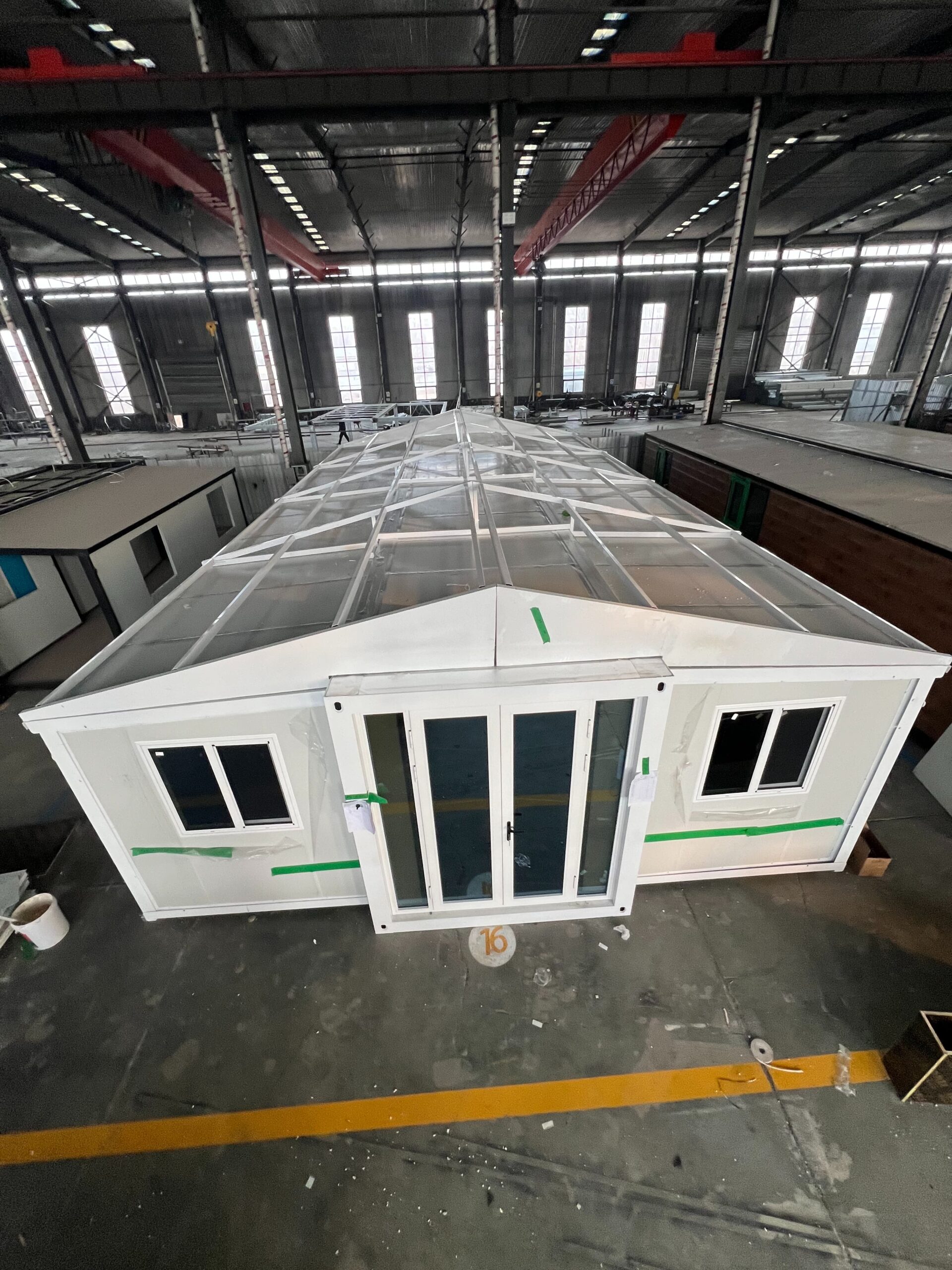
The flat-top double-wing model in its fully expanded configuration, demonstrating how the wings create a generous living area while maintaining clean architectural lines.
This transformation is made possible through precision-engineered hydraulic or mechanical systems integrated into the container’s steel frame. Unlike static container homes that require extensive on-site cutting and welding, these expansion units arrive 85% pre-finished from the factory. The wings – constructed with lightweight yet robust materials – fold flush against the main structure during transit, meeting all standard road transport regulations. Once deployed, they lock securely into place, creating a seamless, weatherproof envelope that’s ready for immediate occupation.
What makes this particularly revolutionary in Australian contexts is its adaptability to diverse environments. From the harsh sun of the Outback to the cyclonic conditions of Northern Queensland, these structures are engineered to withstand extreme weather while providing superior insulation. The standard black steel frame isn’t just an aesthetic choice; it’s thermally broken and galvanized to resist corrosion, ensuring longevity in Australia’s varied climates. This durability, combined with rapid deployment capabilities, makes them ideal for remote mining camps, eco-resorts in Tasmania, or even temporary housing during bushfire recovery efforts.
Single vs. Double-Wing: Choosing Your Expansion Style
While the double-wing model offers maximum space expansion, Australian manufacturers also provide a single-wing variant for different spatial requirements and budget considerations. The single-wing version expands only on one side, increasing usable area by 1.5 times compared to the compact folded state. This makes it perfect for smaller plots, urban infill projects, or as auxiliary units on existing properties.
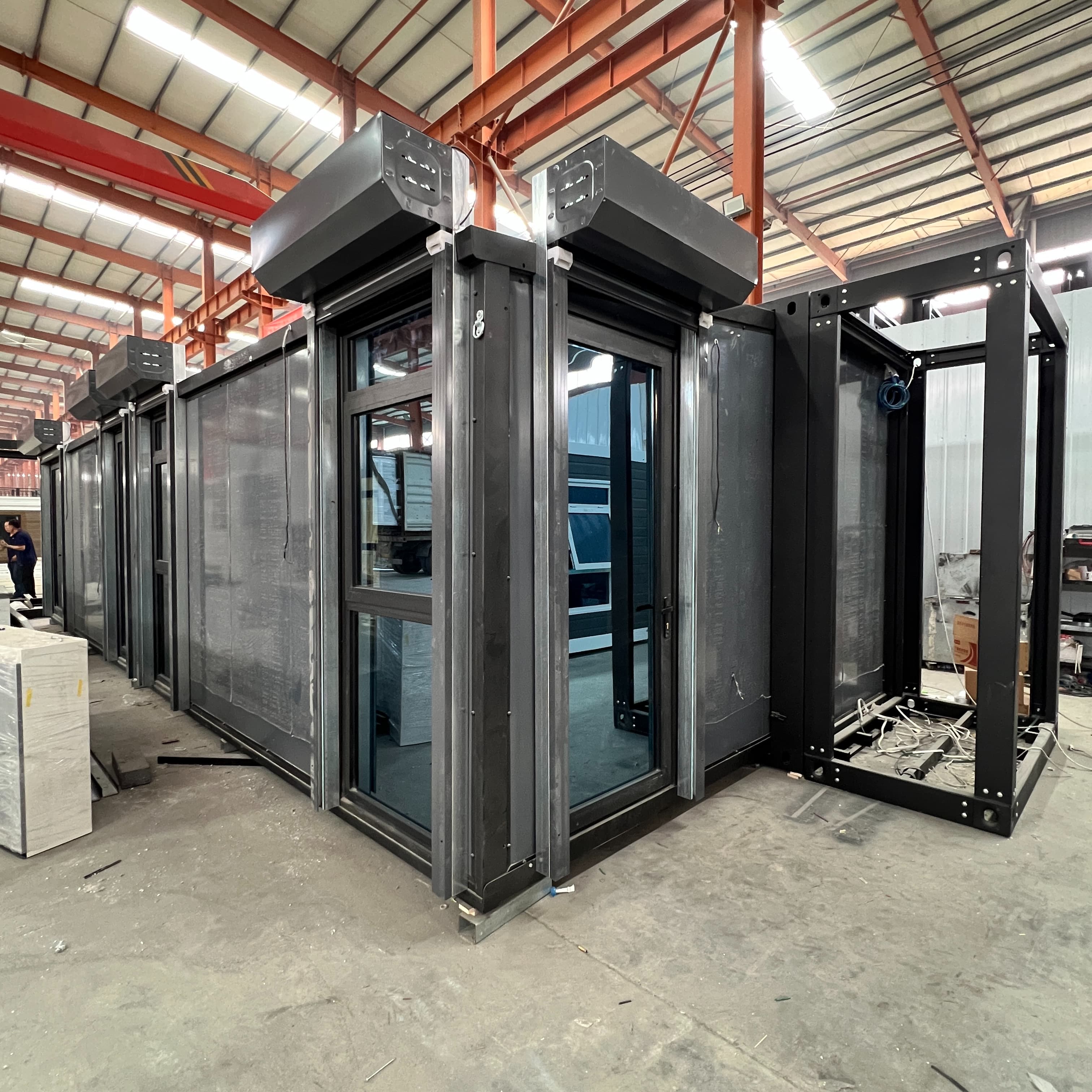
The single-wing model showcases its clean, minimalist profile when partially expanded, demonstrating how even a single extension creates significant additional living space.
Both configurations come with flat-top or peaked roof options. The flat-top design (as shown above) offers a sleek, contemporary look ideal for urban settings, while the peaked version provides additional headroom in the expanded wings and better rainwater runoff – crucial in tropical Australian regions like Cairns or Darwin. The choice ultimately depends on your climate, aesthetic preferences, and intended use. For a permanent residence in Sydney’s suburbs, the peaked roof might add architectural interest, while a flat-top could be preferable for a Melbourne pop-up retail space where modern minimalism is paramount.
Engineering Excellence: Core Features of the 40-Foot Expansion System
At the heart of these Australian-designed container homes lies a sophisticated engineering approach that balances strength, flexibility, and efficiency. The structural framework utilizes hot-dip galvanized steel – the same material used in bridge construction – providing exceptional resistance to Australia’s coastal corrosion and termite threats. This isn’t just recycled industrial material; it’s purpose-engineered architecture with aerospace tolerances.
Structural Dynamics: Safety Meets Innovation
The double-wing system’s expansion mechanism is a marvel of modern engineering. During transport, the unit measures a standard 11800mm x 2200mm x 2480mm – identical to conventional shipping containers. However, once deployed, it expands to an impressive 11800mm x 6240mm footprint, effectively doubling the living area. This transformation occurs through a series of synchronized hydraulic rams or manual crank systems, depending on the model selected.
What’s truly remarkable is how the structure maintains integrity during this transformation. The wings don’t simply unfold; they interlock with the central module through reinforced steel plates and precision bolts, creating a monocoque structure that distributes stress evenly across the entire building. In testing, these units have withstood Australian cyclonic conditions (up to Category 5) and seismic events equivalent to magnitude 8 earthquakes – far exceeding typical residential building standards.
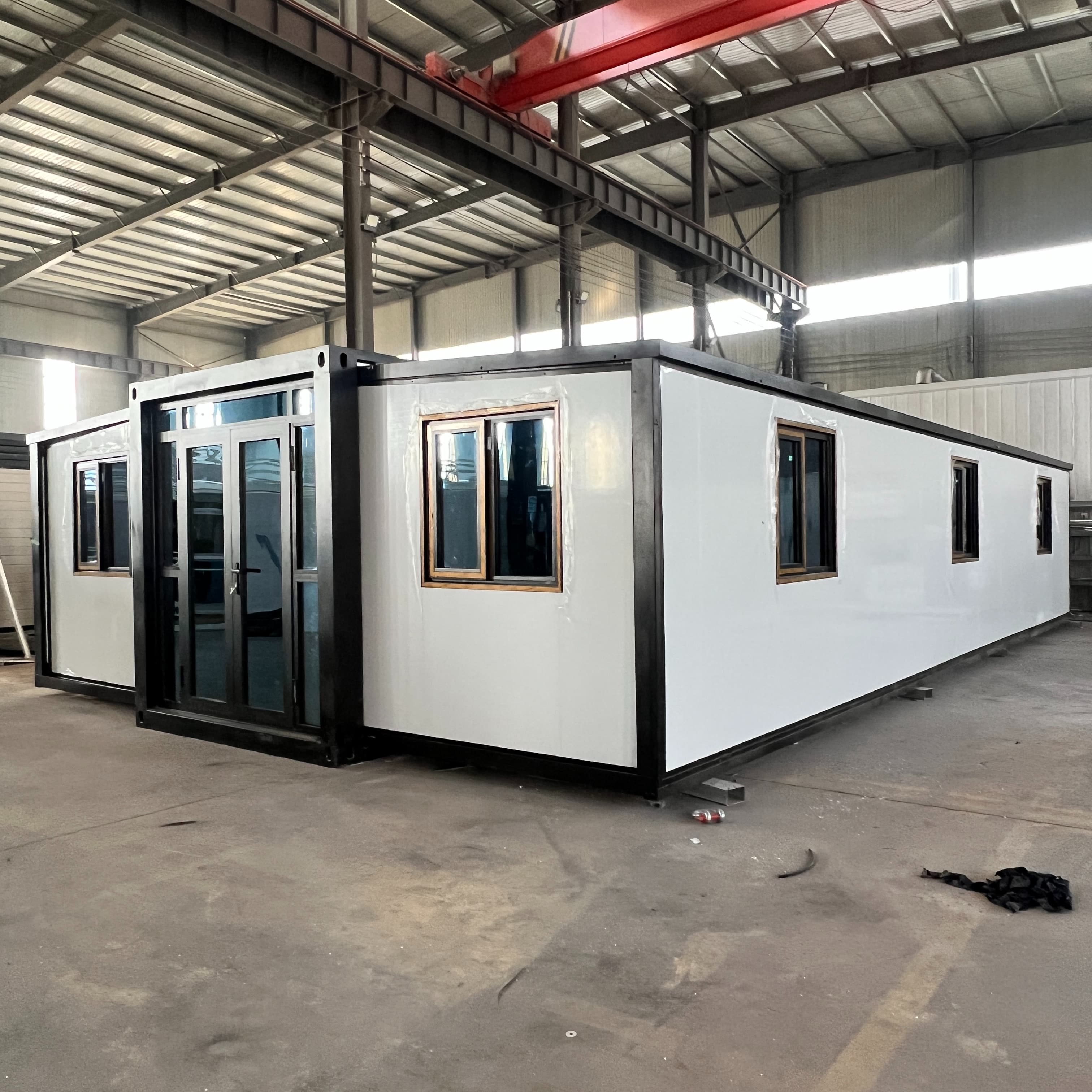
Fully expanded double-wing unit demonstrating its spacious interior potential, with large glazed sections that connect occupants to the surrounding landscape – perfect for Australia’s indoor-outdoor lifestyle.
Materials Science: Sustainability Without Compromise
Australian manufacturers have prioritized sustainable materials throughout these container homes. The wall panels combine structural steel cores with advanced insulation – typically polyurethane foam or rock wool – achieving R-values exceeding conventional brick veneer construction. This thermal efficiency is critical in Australia’s climate extremes, keeping interiors cool in Pilbara summers and warm in Victorian winters without excessive energy consumption.
The exterior cladding options reflect Australia’s diverse architectural preferences. You might choose Colorbond steel in a contemporary coastal palette for a Gold Coast property, or reclaimed timber cladding for a bush retreat near Adelaide. Interior finishes are equally customizable, with options ranging from polished concrete floors for industrial chic to engineered timber for warmer aesthetics. Crucially, all materials are selected for low VOC emissions and minimal environmental impact, aligning with Australia’s Green Star building certification standards.
Integrated Systems: The Smart Home Advantage
Modern Australian container homes incorporate sophisticated building systems that rival conventional houses. Electrical wiring is pre-installed during factory construction, with conduits integrated into the steel frame for protection. Plumbing systems feature PEX piping – flexible, freeze-resistant, and ideal for Australia’s varying temperatures. Solar power integration comes standard in many models, with roof-mounted panels and battery storage systems that can take off-grid properties to near self-sufficiency.
Perhaps most impressive is the climate control technology. Mini-split air conditioning systems are strategically placed to maximize efficiency, often paired with heat recovery ventilation that maintains air quality while minimizing energy loss. In tropical Queensland installations, these systems can reduce cooling costs by up to 40% compared to traditional construction. For desert regions like Alice Springs, passive cooling features like operable louvred windows and reflective roofing materials work in tandem with mechanical systems to maintain comfort.
The Interior Experience: Luxury Within Compact Dimensions
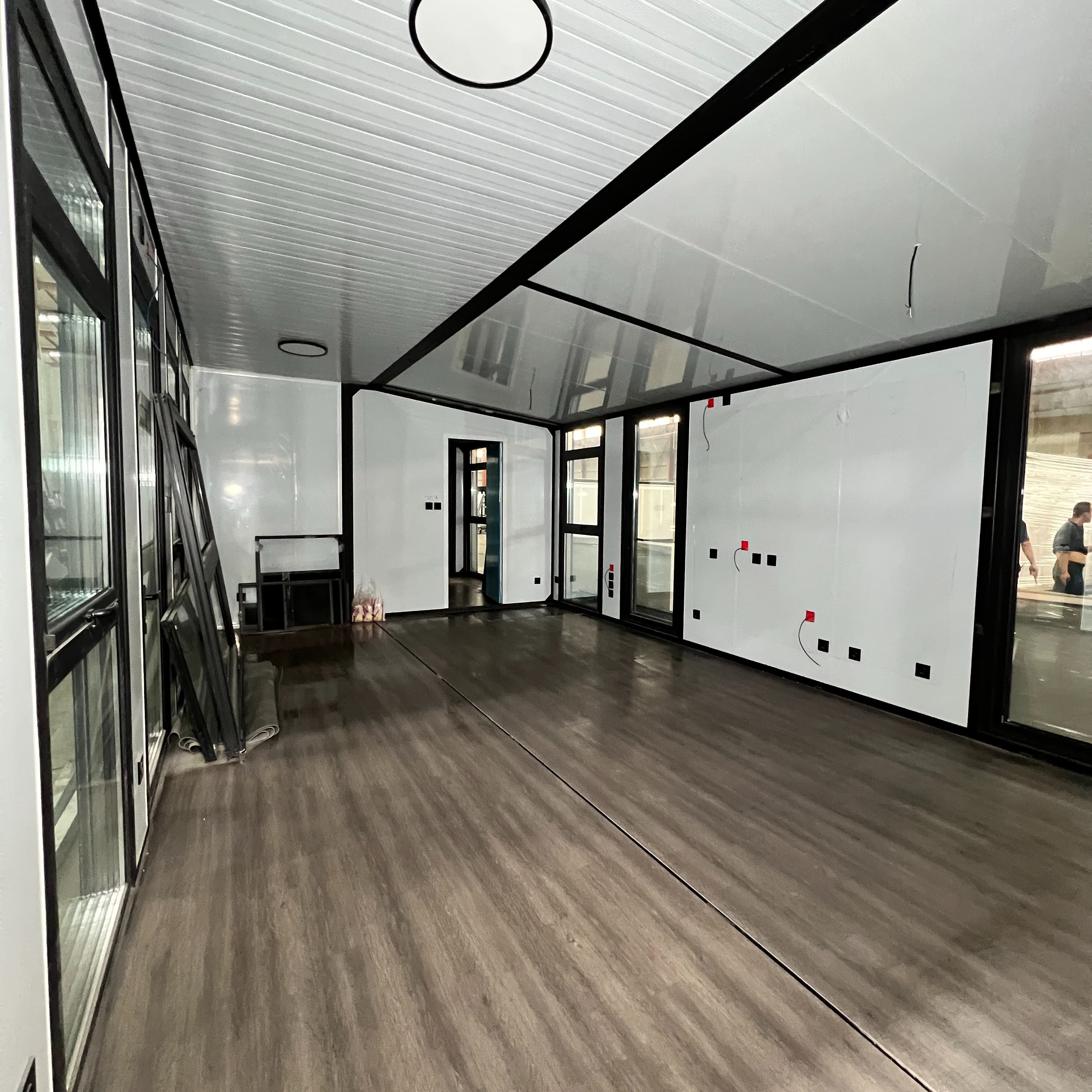
Step inside an expanded 40-foot container home, and you’ll immediately forget its industrial origins. Australian designers have mastered the art of spatial optimization, creating interiors that feel spacious and luxurious despite the compact footprint. The absence of internal columns – made possible by the engineered steel frame – allows for completely open-plan living areas that can be configured to suit any lifestyle.
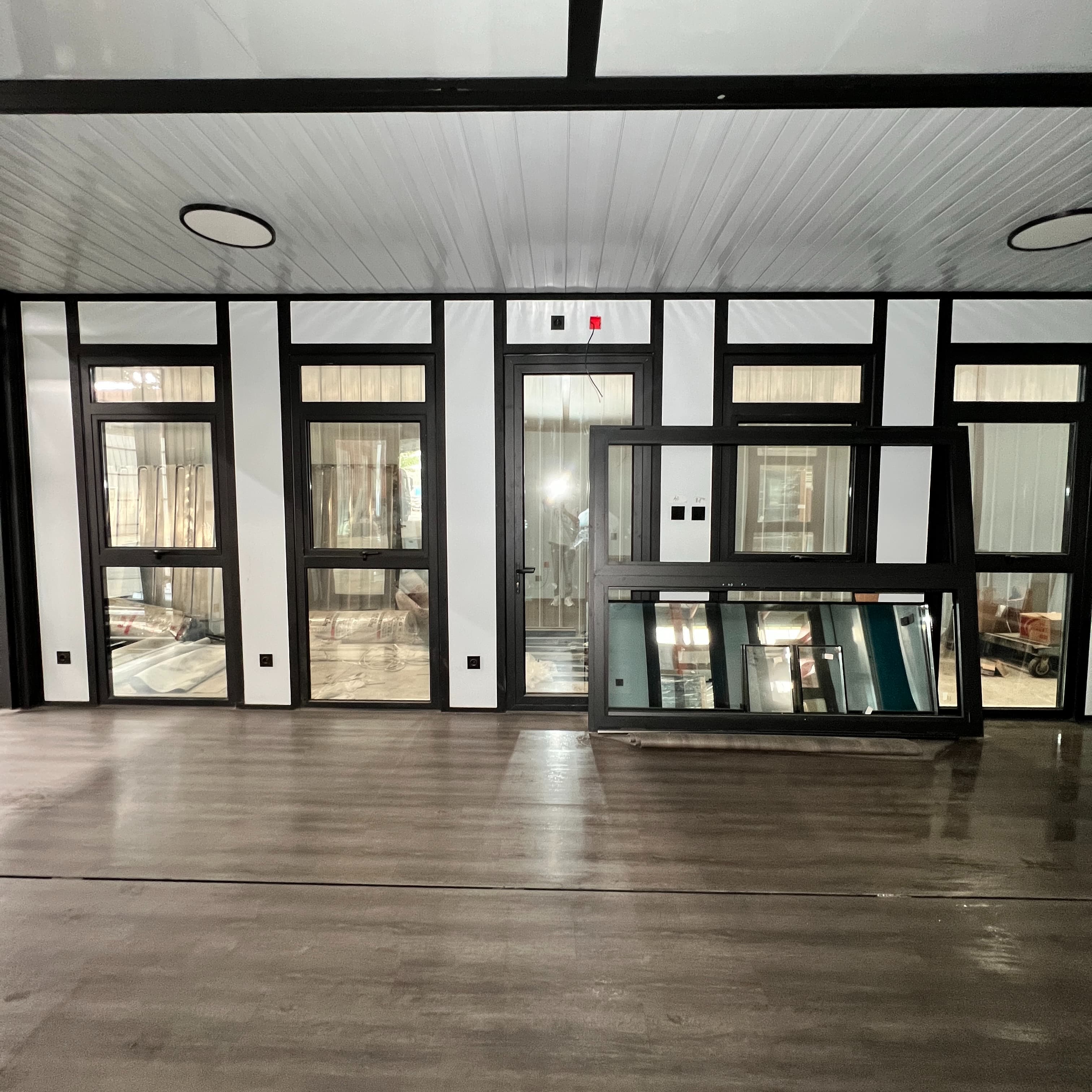
The open-plan living area demonstrates how thoughtful design creates a sense of spaciousness, with large windows flooding the space with natural light – a hallmark of Australian residential design.
Kitchen Design: Functional Elegance
The kitchen modules in these container homes are marvels of space efficiency. Utilizing the same high-end appliances found in luxury Australian homes, they’re configured to maximize every centimeter. Clever storage solutions include pull-out pantries, corner carousels, and integrated appliances that maintain clean sightlines. The galley-style layout – running along one wall of the expanded wing – creates an efficient work triangle while opening to the living area for social interaction.
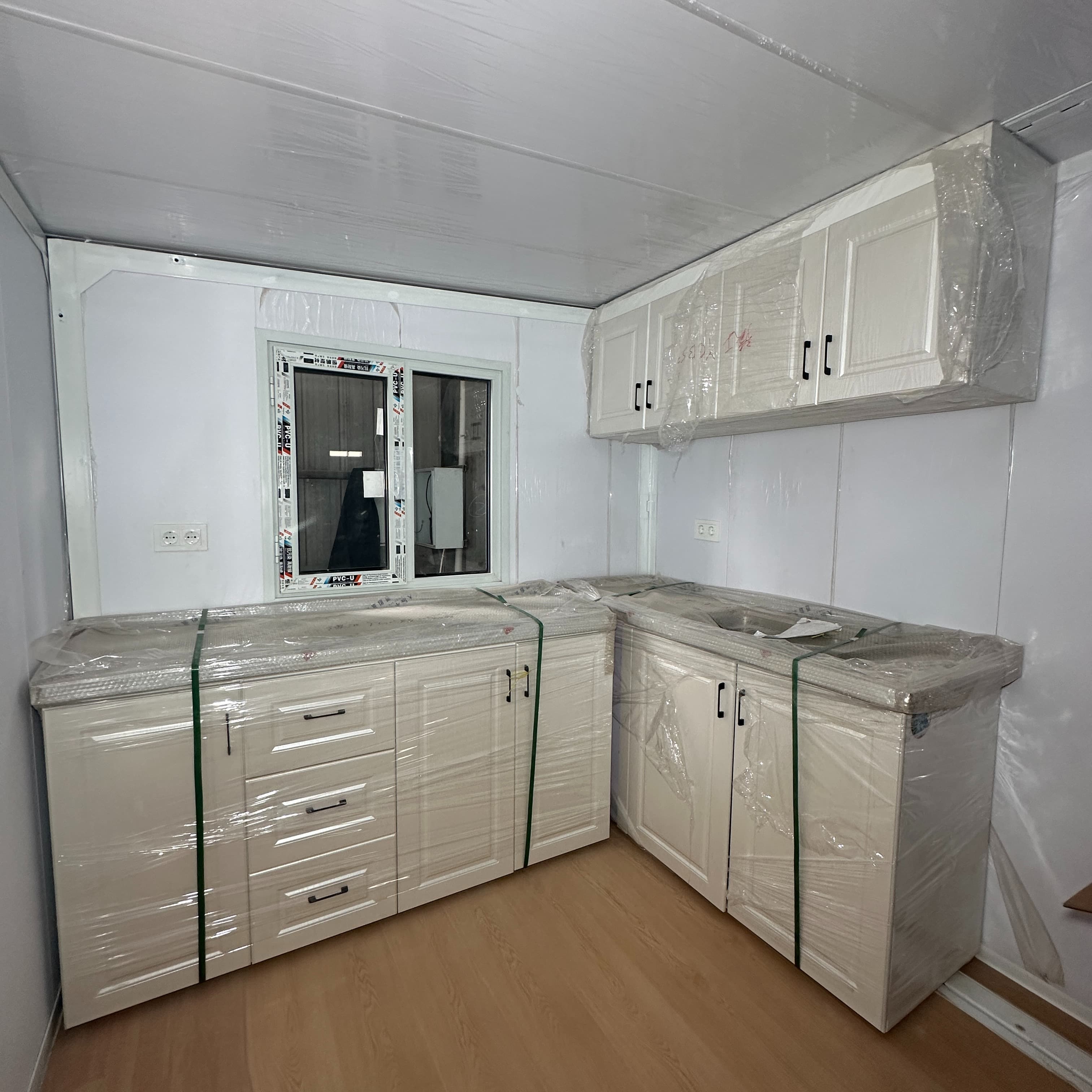
A typical kitchen configuration featuring premium appliances, durable surfaces, and ample storage – designed for both functionality and aesthetic appeal in Australian living environments.
Materials are selected for durability and style, with engineered stone countertops, soft-close cabinetry, and commercial-grade fixtures. Many models incorporate Australian-made products, supporting local manufacturing while ensuring quality. For outdoor enthusiasts, optional outdoor kitchen modules can be added to the extended deck area, perfect for barbecuing in the backyard of a Perth suburb or overlooking the ocean in Bondi.
Bathroom Solutions: Spa-Like Comfort
Bathrooms in these container homes defy expectations, offering full-sized amenities in cleverly designed spaces. The wet-room concept – where the shower area seamlessly integrates with the rest of the bathroom – maximizes usable space while creating a luxurious, open feel. Wall-hung vanities and toilets contribute to the sense of spaciousness, while large-format tiles and frameless glass shower screens enhance the contemporary aesthetic.
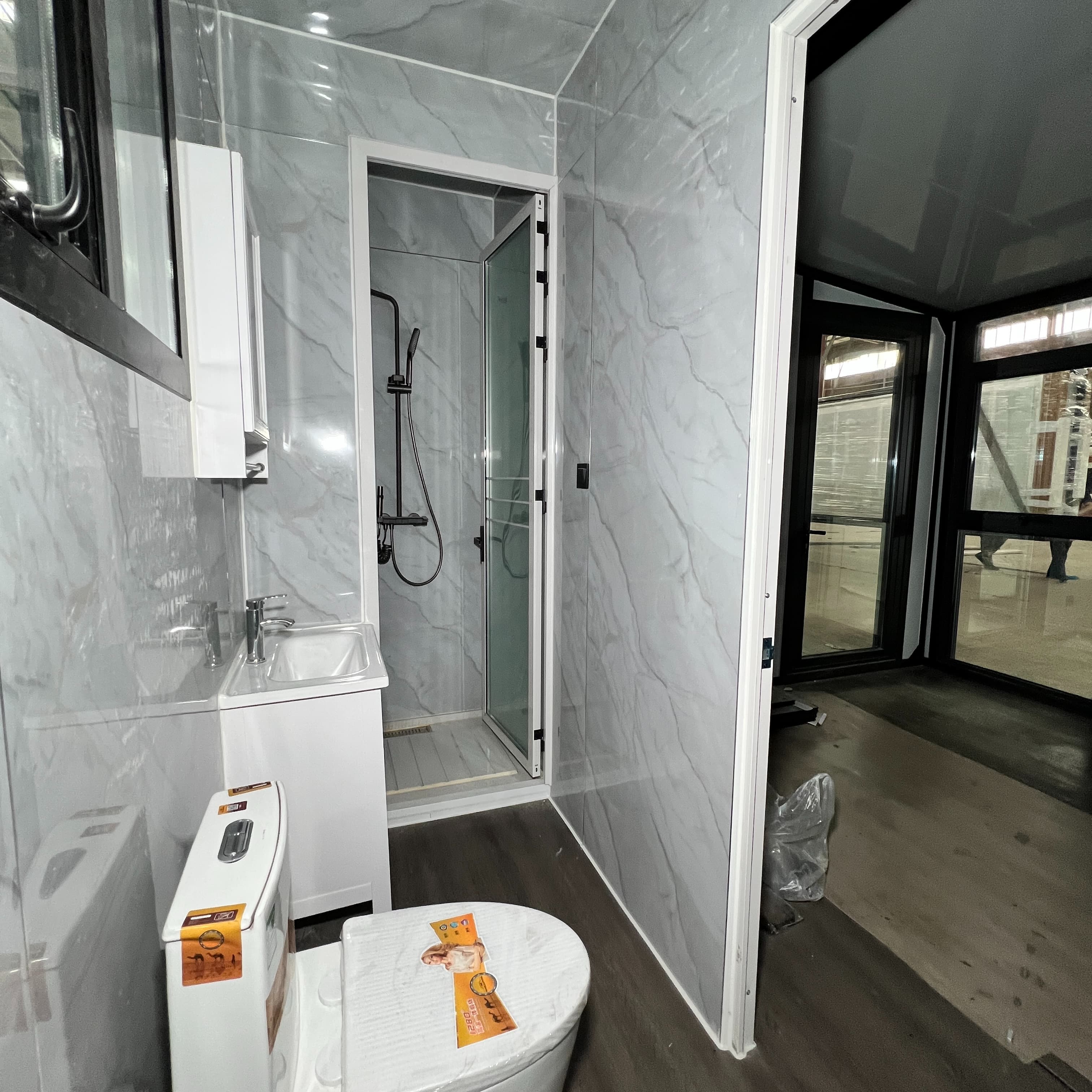
The bathroom showcases premium fixtures, large-format tiles, and efficient layout – proving that compact spaces can deliver luxury experiences comparable to conventional homes.
Water efficiency is a priority, with Australian-standard dual-flush toilets and low-flow fixtures that conserve resources without sacrificing performance. In water-restricted areas like regional New South Wales, optional greywater recycling systems can be installed, further enhancing the home’s sustainability credentials. For those seeking true indulgence, some models offer optional features like heated towel rails, backlit mirrors, and even compact soaking tubs – proving that container living doesn’t mean compromising on comfort.
Sleeping Quarters: Private Sanctuaries
Bedroom configurations in the 40-foot expansion models are surprisingly versatile. The most popular layout features a master bedroom in one wing with a flexible living/sleeping area in the other – perfect for couples or small families. For multi-generational living or guest accommodation, the central module can be configured as a private bedroom while the wings become living spaces.
A serene bedroom space demonstrates how careful planning creates restful environments, with ample storage and thoughtful lighting design – essential for quality Australian living.
Storage is ingeniously integrated into every available space – under-bed drawers, wall-mounted shelving, and built-in wardrobes that utilize the full height of the container. Windows are strategically placed to provide natural light and ventilation while maintaining privacy. In tropical Queensland installations, insect screens are standard, while in cooler Tasmanian locations, double-glazed windows and thermal blinds ensure year-round comfort. Optional loft configurations can even create additional sleeping or storage space above the main living area – a popular choice for properties with limited footprint.
Deployment Advantages: Speed Meets Flexibility
One of the most compelling aspects of these Australian container homes is their rapid deployment capability. Traditional home construction in Australia typically takes 6-12 months from permit to completion, fraught with weather delays and contractor scheduling issues. In contrast, a 40-foot double-wing expansion home can be fully installed and ready for occupation in as little as 48 hours – a game-changer for anyone needing immediate housing or temporary accommodation.
Factory Precision: Quality Control Guaranteed
The manufacturing process occurs in controlled factory environments across Australia, from Brisbane to Perth. This approach offers numerous advantages over on-site construction. First, it eliminates weather-related delays – a significant factor in Australia’s unpredictable climate. Second, it allows for precision engineering that’s difficult to achieve on a construction site. Every cut, weld, and installation happens under ideal conditions with specialized tools, resulting in superior build quality.
The factory completion rate of 85% means that when the container arrives on-site, it’s essentially a finished product requiring only final connections. Interior finishes, fixtures, and even furniture can be pre-installed, reducing on-site labor by up to 90%. For remote Australian properties – whether a cattle station in the Kimberley or a research facility in the Antarctic – this minimizes the need for skilled trades in isolated locations, dramatically reducing logistical challenges and costs.
Site Preparation: Minimal Impact, Maximum Efficiency
Unlike conventional homes that require extensive excavation and concrete foundations, these container homes utilize innovative foundation solutions that respect Australia’s diverse terrains. The most common approach involves adjustable steel piers that can be installed in a single day, creating a level base without major earthworks. For sloping sites common in Australian coastal areas, helical piles can be screwed into the ground with minimal disturbance to vegetation – crucial for environmentally sensitive locations.
This minimal site preparation has several advantages beyond speed. It preserves natural drainage patterns, reduces erosion risks, and maintains the land’s ability to absorb rainfall – increasingly important in Australia’s climate-vulnerable regions. For temporary installations like festival housing or disaster relief shelters, the entire system can be removed with virtually no trace left behind, making it ideal for Australia’s protected conservation areas.
Mobility: The Ultimate in Flexibility
The inherent mobility of these container homes opens possibilities that simply don’t exist with traditional construction. In Australia’s dynamic property market, this flexibility is particularly valuable. A young professional in Melbourne might install one as a “granny flat” for additional income, then move it to their forever home when they start a family. A mining company in Western Australia can relocate entire worker camps as operations shift, avoiding the need to build new infrastructure each time.
Transportation is streamlined thanks to the standard container dimensions. The folded unit can be moved by any licensed container transport company across Australia’s road network, shipped to Tasmania via the Bass Strait ferry, or even transported to remote islands in the Great Barrier Reef. This mobility makes the homes ideal for Australia’s temporary accommodation needs – from major events like the Melbourne Grand Prix to emergency housing during bushfire recovery efforts in New South Wales.
Application Scenarios: Versatility Across Australian Contexts
The adaptability of these 40-foot expansion container homes makes them suitable for an astonishing range of applications across Australia’s diverse landscapes and communities. From urban infill projects to remote Outback stations, these structures are proving their worth in contexts where traditional construction would be impractical, prohibitively expensive, or environmentally unsustainable.
Residential Applications: From Granny Flats to Luxury Retreats
In Australia’s major cities, where housing affordability reaches crisis levels, these container homes offer an innovative solution. As secondary dwellings or “granny flats,” they provide affordable housing options for extended families or rental income streams without the cost and disruption of traditional construction. In Sydney’s congested suburbs, a double-wing unit can be installed in a backyard in days, creating a self-contained apartment that meets all local regulations while adding significant property value.
For rural and regional Australia, these homes offer something even more valuable: immediate, high-quality housing. In farming communities across Victoria or Queensland, they serve as permanent residences, temporary worker accommodation, or even farm offices. Their durability makes them ideal for harsh agricultural environments, while their mobility allows for relocation as property needs change. In Western Australia’s remote mining regions, they’ve become the standard for worker accommodation, providing comfortable living conditions that help attract and retain skilled labor.
Luxury applications are perhaps the most surprising. High-end models feature premium finishes, smart home technology, and designer touches that rival custom-built homes. Positioned on a coastal cliff in Byron Bay or overlooking a vineyard in the Barossa Valley, these homes demonstrate that container living can be synonymous with luxury. The ability to place them in spectacular, often inaccessible locations – from the Kimberley coast to Tasmania’s wilderness – creates unique living experiences impossible with conventional construction.
Commercial and Hospitality: Pop-Up Potential
Australia’s vibrant tourism industry has embraced container architecture for its flexibility and visual impact. In Queensland’s Whitsunday Islands, double-wing units serve as eco-resort accommodations that can be installed with minimal environmental disturbance. In Victoria’s Mornington Peninsula, they function as chic beachside cafes that can be relocated seasonally. Their rapid deployment makes them perfect for Australia’s festival culture – from temporary bars at Splendour in the Grass to VIP accommodations at the Australian Open.
Commercial applications extend beyond hospitality. In urban centers like Melbourne and Sydney, they serve as pop-up retail spaces, allowing brands to test new markets without long-term lease commitments. For construction sites across Australia, they provide high-quality site offices that can be moved as projects progress. Even educational institutions utilize them as temporary classrooms during renovations or permanent additions in growing communities.
Emergency and Humanitarian: Rapid Response Solutions
Australia’s susceptibility to natural disasters – bushfires, floods, cyclones – makes rapid emergency housing a critical need. These container homes have proven invaluable in disaster recovery efforts across the country. After the 2019-2020 bushfires, they provided immediate, dignified housing for displaced families in New South Wales and Victoria, with installation often completed before insurance claims were processed.
Their advantages in emergency scenarios are numerous. They can be stockpiled in strategic locations across Australia and deployed within hours of a disaster. Their durability provides secure shelter in the immediate aftermath when conditions may still be hazardous. For longer-term recovery, they offer transitional housing that’s more comfortable and sustainable than tents or caravans, helping communities rebuild while permanent housing is constructed. In remote Indigenous communities facing housing shortages, they provide culturally appropriate, quickly installed solutions that respect traditional land connections.
Specialized Applications: Tailored Solutions
Beyond residential and commercial uses, these container homes excel in specialized applications across Australia. In the scientific research sector, they serve as mobile laboratories that can be positioned in remote locations like the Australian Antarctic Territory or the arid Outback. For healthcare, they function as temporary clinics during disease outbreaks or as permanent facilities in underserved rural areas.
Agricultural operations utilize them as worker accommodation, equipment storage, or even hydroponic farming units – their controlled environment perfect for growing high-value crops year-round. In Australia’s defense sector, they provide rapidly deployable barracks and command centers for military exercises across the country’s vast training areas. Even artists and creatives embrace them as studios, taking advantage of their mobility to work in inspiring locations from the red center to the southern coastline.
Environmental and Economic Benefits: The Australian Advantage
In a world increasingly focused on sustainability, these Australian container homes offer compelling environmental advantages that align perfectly with the country’s climate challenges and green building aspirations. Their economic benefits are equally impressive, providing solutions to Australia’s housing affordability crisis while creating new opportunities for property development and investment.
Sustainability Credentials: Building Green
The environmental benefits begin with the core material: shipping containers. Australia imports millions of containers annually but exports far fewer, creating a surplus that often ends up in landfills. Repurposing these containers into homes gives them a second life, preventing waste and reducing the demand for virgin steel – which requires enormous energy to produce. Each container home effectively recycles approximately 3,500kg of steel, making a significant contribution to Australia’s circular economy goals.
Energy efficiency is another standout feature. The insulation systems in these homes exceed Australian Building Code requirements, with some models achieving 8-star energy ratings – the highest possible. This translates to dramatically reduced heating and cooling costs, particularly important in Australia’s climate extremes. In tropical Darwin, an 8-star home can use up to 70% less air conditioning than a standard build. In alpine regions like the Snowy Mountains, heating requirements are similarly reduced. For off-grid properties across Australia, this efficiency makes renewable energy systems far more viable and cost-effective.
Water conservation features are equally impressive. Standard installations include rainwater harvesting systems with capacities suitable for Australian rainfall patterns, from the monsoonal north to the Mediterranean south. Greywater recycling options further reduce consumption, crucial in water-scarce regions like South Australia. Combined with water-efficient fixtures, these systems can make container homes nearly self-sufficient for water needs in many Australian climates.
Economic Advantages: Smart Investment
The economic case for these container homes is compelling across Australia’s diverse property markets. Construction costs typically run 30-40% below traditional builds, with savings even greater in remote areas where labor and material transport costs are high. In Sydney or Melbourne, where median house prices exceed $1 million, a container granny flat can provide rental income that significantly improves mortgage affordability. In regional centers like Bendigo or Toowoomba, they offer entry-level housing options at prices young families can actually afford.
Speed to market creates additional economic benefits. For property developers, reducing construction time from months to weeks means faster returns on investment. For businesses, pop-up container structures allow revenue generation while permanent facilities are built. In Australia’s competitive tourism sector, the ability to quickly add accommodation during peak seasons can make the difference between profit and loss.
Depreciation and tax advantages further enhance the economic appeal. In Australia, these structures often qualify as plant and equipment under tax laws, allowing for accelerated depreciation schedules that improve cash flow for investors. Their mobility also provides financial flexibility – a unit can be moved between properties as needs change, protecting the investment regardless of location-specific market fluctuations.
Community and Social Benefits: Beyond Individual Homes
The impact of these container homes extends beyond individual properties to
本文由人工智能技术生成,基于公开技术资料和厂商官方信息整合撰写,以确保信息的时效性与客观性。我们建议您将所有信息作为决策参考,并最终以各云厂商官方页面的最新公告为准。