Explore cutting-edge 40-foot customized double-wing expansion container homes featuring innovative flat roof designs. Discover how these modular structures combine Canadian engineering excellence with rapid deployment capabilities, offering eco-friendly, cost-effective solutions for residential, commercial, and emergency applications. Learn about their expandable architecture, premium materials, and versatile applications in diverse settings from Vancouver’s urban landscapes to Alberta’s wilderness retreats.
The Flat Roof Revolution in Modern Container Architecture
Flat roof designs have emerged as a defining characteristic of contemporary container architecture, particularly in Canada’s evolving housing landscape. Unlike traditional pitched roofs, these horizontal surfaces offer unparalleled versatility for solar panel installations, rooftop gardens, and additional living spaces. In cities like Toronto and Montreal, where urban density meets environmental consciousness, flat-roofed container homes represent the perfect synthesis of form and function. The 40-foot customized double-wing expansion room takes this concept further, transforming standard shipping containers into architectural marvels that challenge conventional building norms.
Introducing Canada’s 40-Foot Double-Wing Expansion Marvel
At the forefront of modular innovation stands the 40-foot customized double-wing expansion container home – a Canadian-engineered solution that redefines portable architecture. Available in both double-wing and single-wing configurations with optional flat roofing, this structure embodies the nation’s commitment to sustainable, adaptable living spaces. The double-wing variant, with its ingenious folding mechanism, expands from a compact transport unit to a spacious dwelling, making it ideal for Canada’s diverse climates from British Columbia’s coastal regions to the prairies of Saskatchewan.
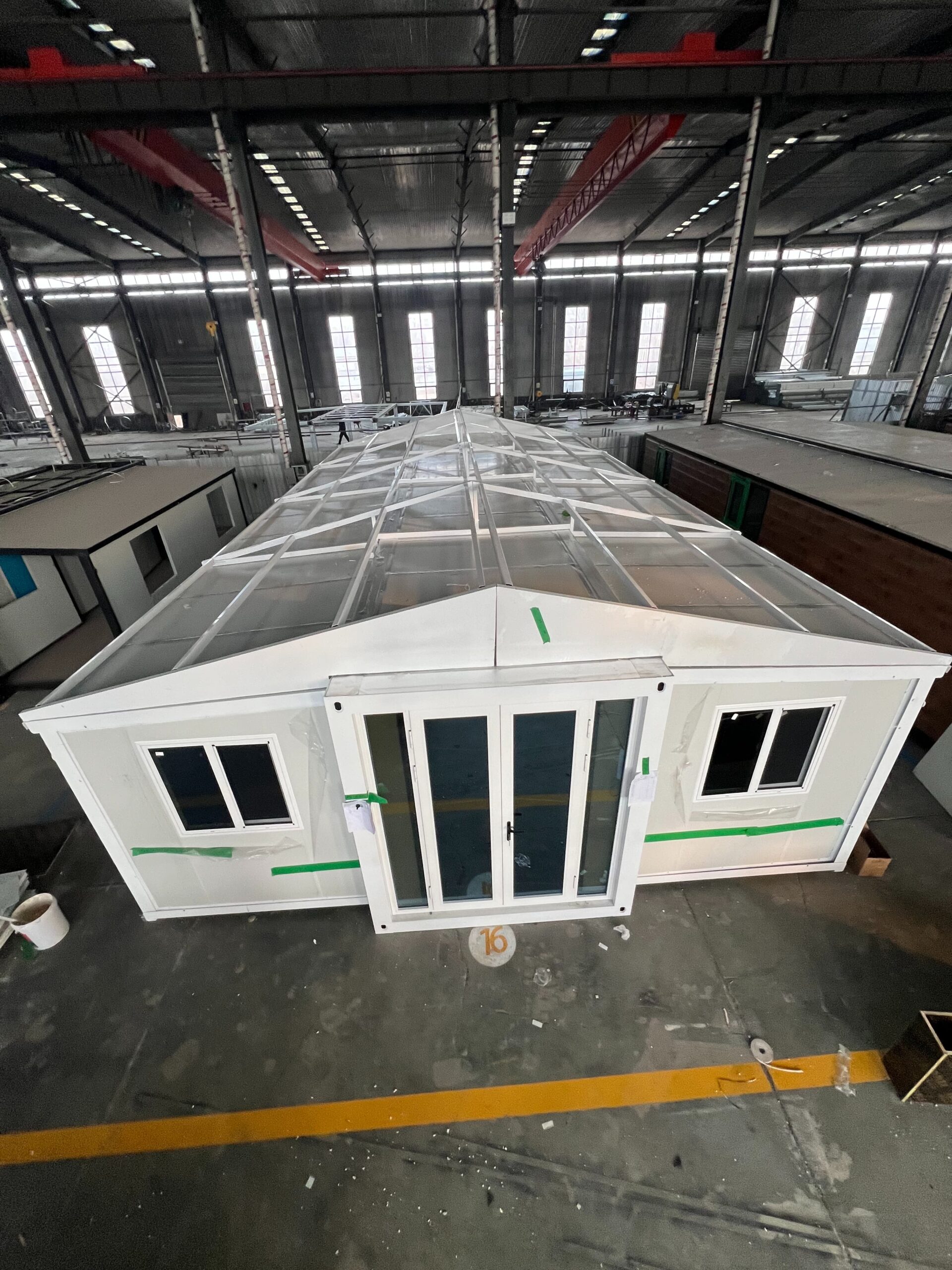
The double-wing flat roof model showcases its expanded form against a stunning Canadian backdrop, demonstrating how modern container homes harmonize with natural landscapes.
Engineering Excellence: Core Technical Specifications
Structural Innovation
The double-wing expansion system operates like mechanical origami – during transport, both “wings” fold inward, maintaining standard container dimensions (L11800×W2200×H2480mm) for effortless road and rail shipping across Canada. Upon arrival, a simple deployment process expands the structure to an impressive L11800×W6240×H2480mm footprint, with interior dimensions reaching L11540×W6080×H2200mm. This 70-80% space increase transforms the container from a compact unit into a comfortable one or two-bedroom dwelling, perfect for Canadian families or remote workers.
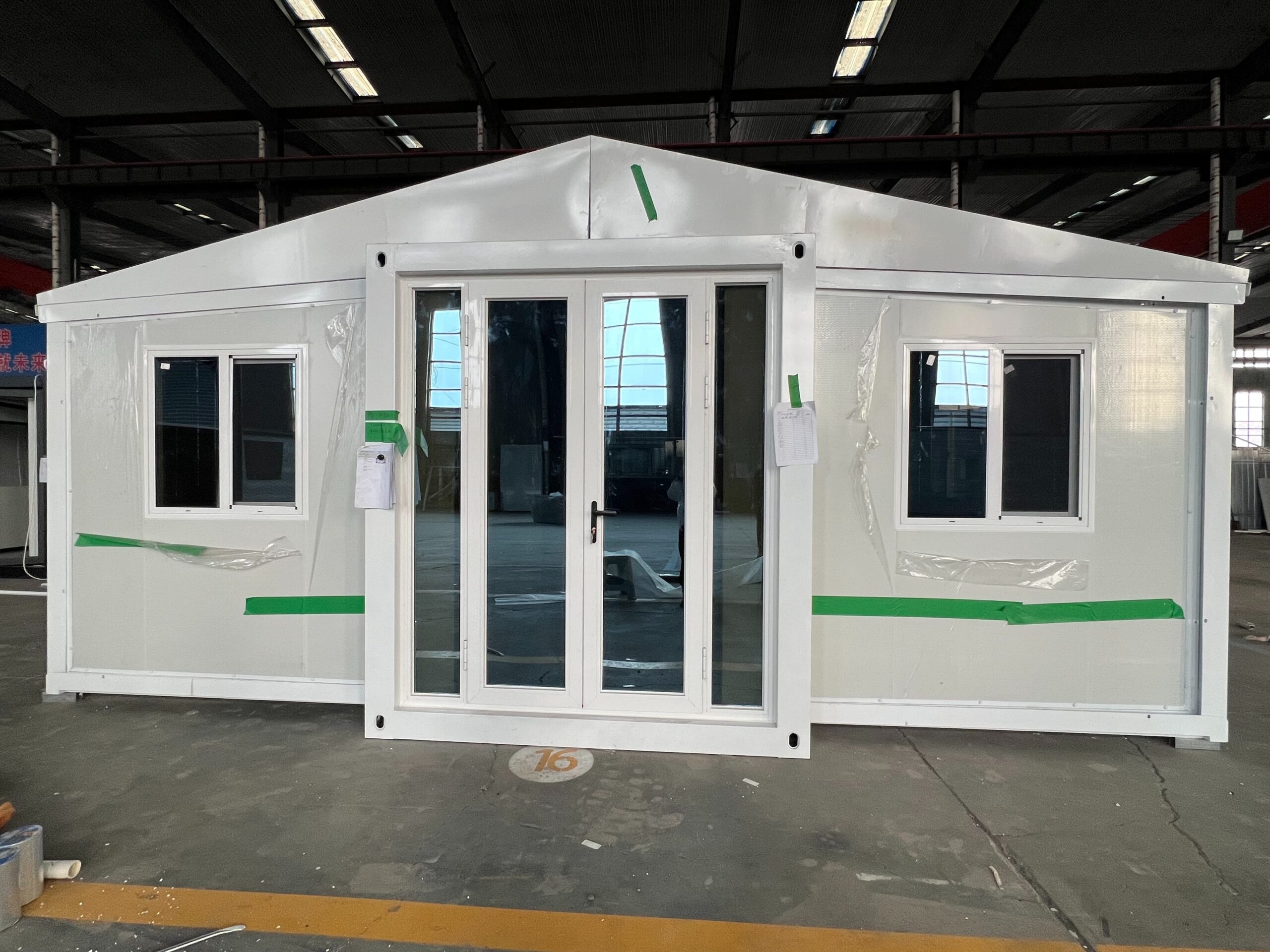
Technical visualization of the expansion mechanism highlighting the flat roof’s structural integrity during deployment.
Premium Materials & Construction
Built for Canada’s harsh conditions, these structures feature hot-dip galvanized steel frameworks that resist corrosion from coastal salt air in Halifax to freezing temperatures in Nunavut. The walls incorporate advanced insulation materials – either high-density polyurethane or mineral wool – providing R-values exceeding building code requirements across all provinces. The flat roof utilizes seamless EPDM roofing technology combined with reinforced steel decking, ensuring watertight performance even during heavy Quebec snowfalls or British Columbia’s rainy seasons.
Smart Functional Integration
Each unit arrives 95% factory-finished, with integrated systems including:
– Electrical wiring with Canadian CSA-approved components
– Plumbing ready for connection to municipal or well systems
– Pre-installed HVAC systems optimized for regional climate zones
– Smart home automation packages with remote monitoring capabilities
– Optional solar panel arrays designed for flat roof installation
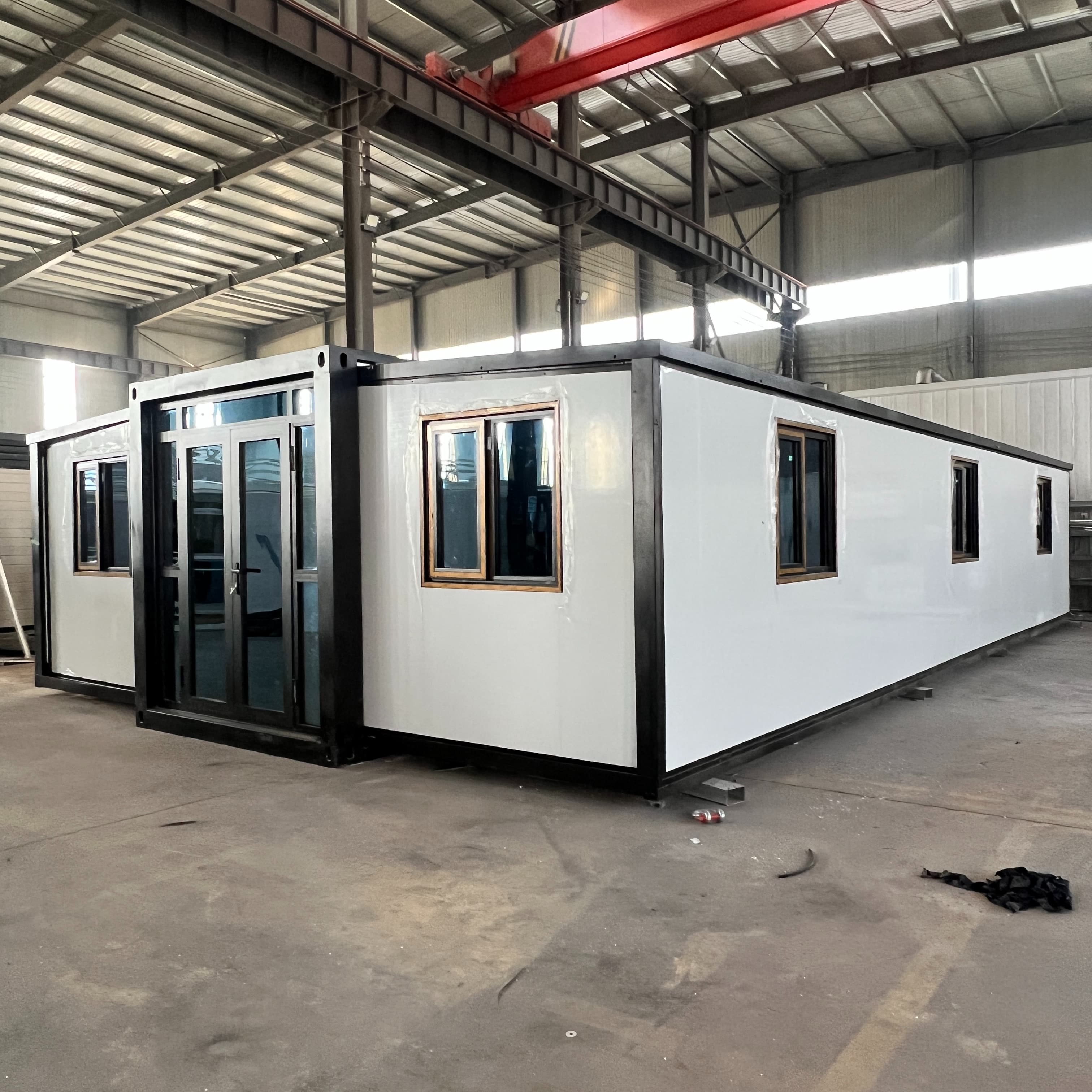
The expanded double-wing configuration creates an open-concept living space with floor-to-ceiling windows maximizing natural light.
The Single-Wing Alternative: Streamlined Simplicity
For projects requiring more modest footprints, the single-wing version offers similar benefits in a compact package. Folding to standard container dimensions during transport, it expands to 1.5-2 times its original size, making it perfect for:
– Urban infill housing in Vancouver
– Remote research stations in the Arctic
– Emergency housing in disaster-prone areas
– Luxury glamping accommodations in Banff National Park
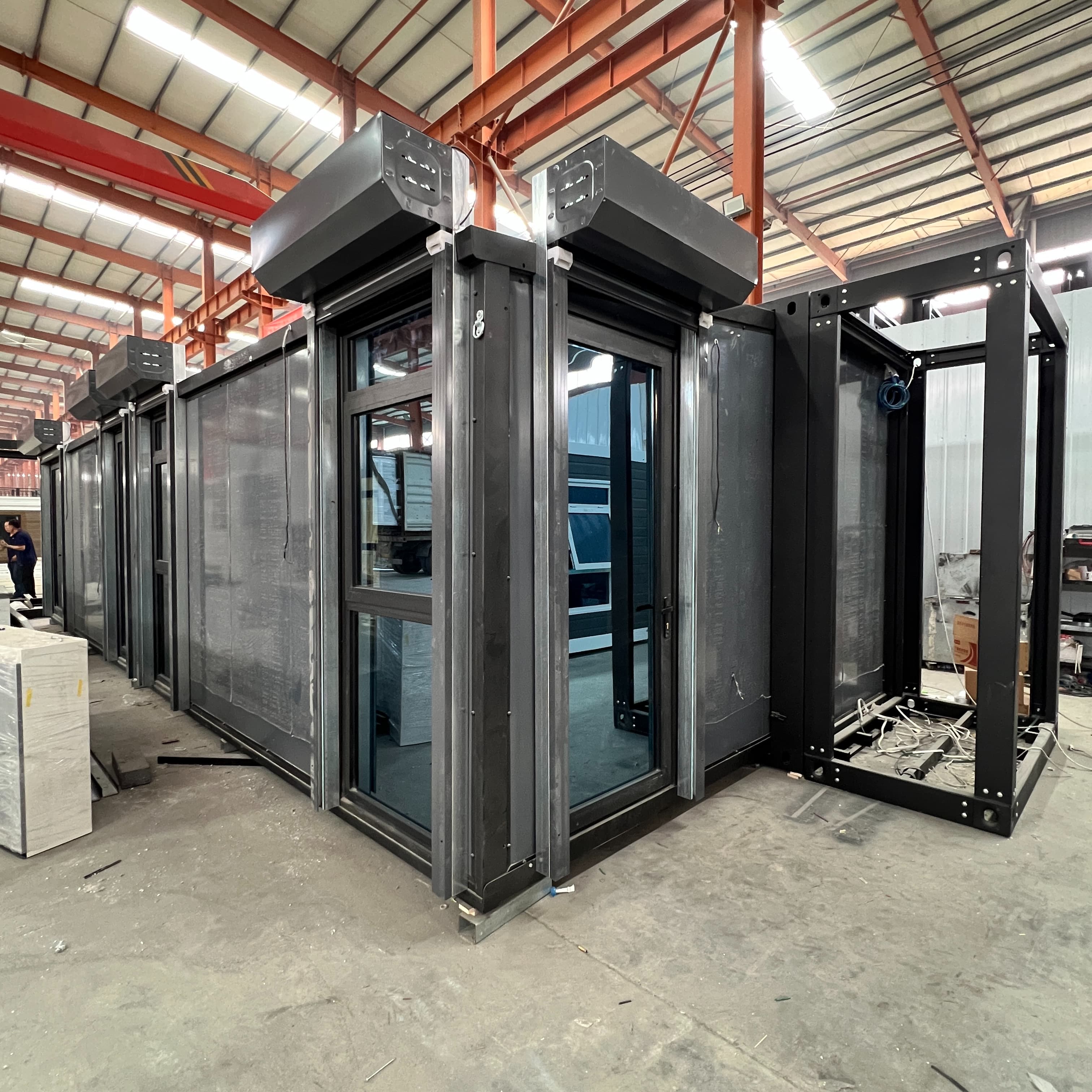
The single-wing model demonstrates how flat roof designs complement natural surroundings while providing efficient living space.
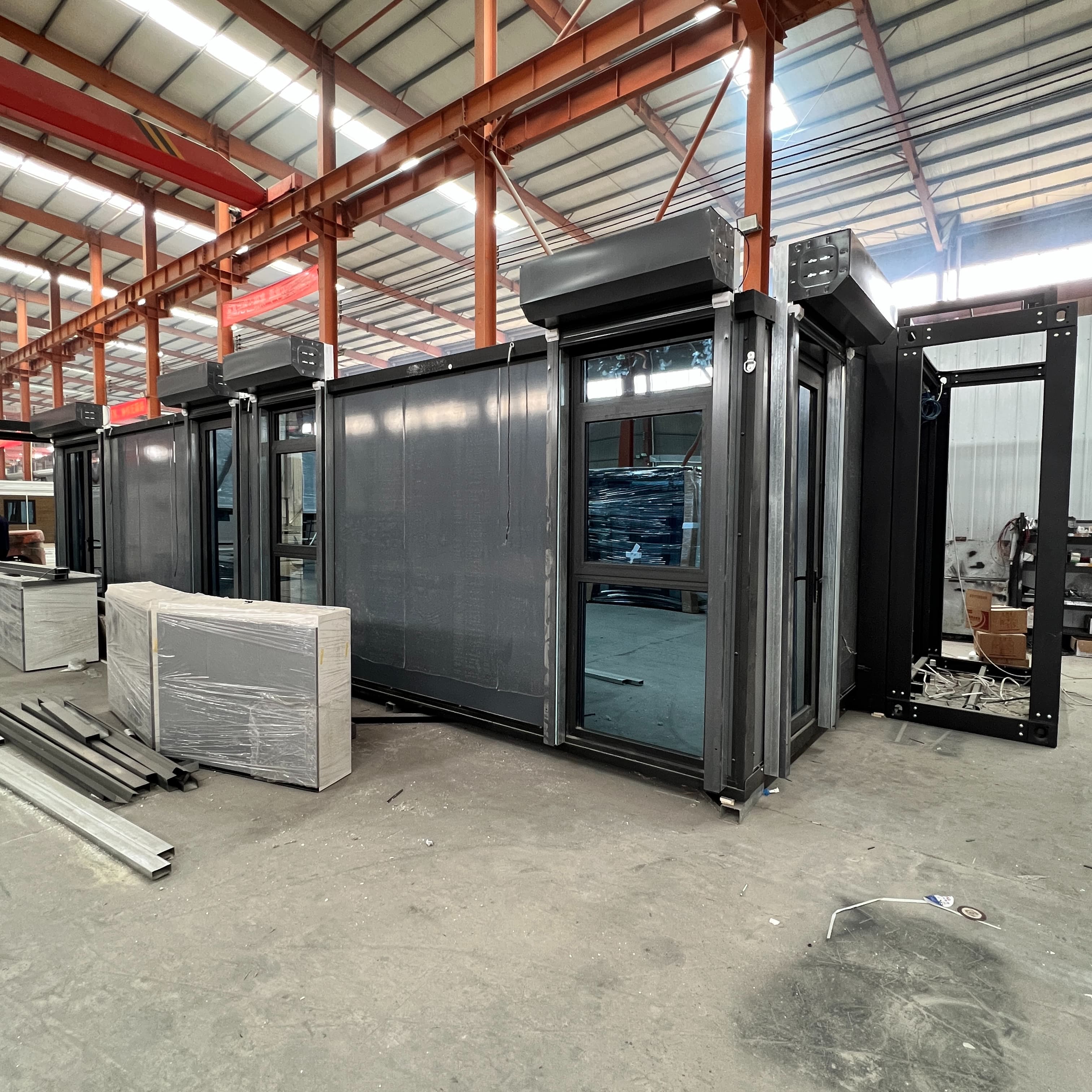
Integration of exterior deck spaces showcases the flat roof’s potential for outdoor living expansion.
Interior Excellence: Designed for Canadian Living
Spacious, Flexible Layouts
The absence of internal support columns creates nearly 90% usable floor space – a stark contrast to traditional construction. Interiors feature:
– Open-concept great rooms perfect for family gatherings
– Modular wall systems allowing reconfiguration as needs change
– Loft options utilizing the high-ceiling design
– Large-format windows framing Canada’s spectacular landscapes
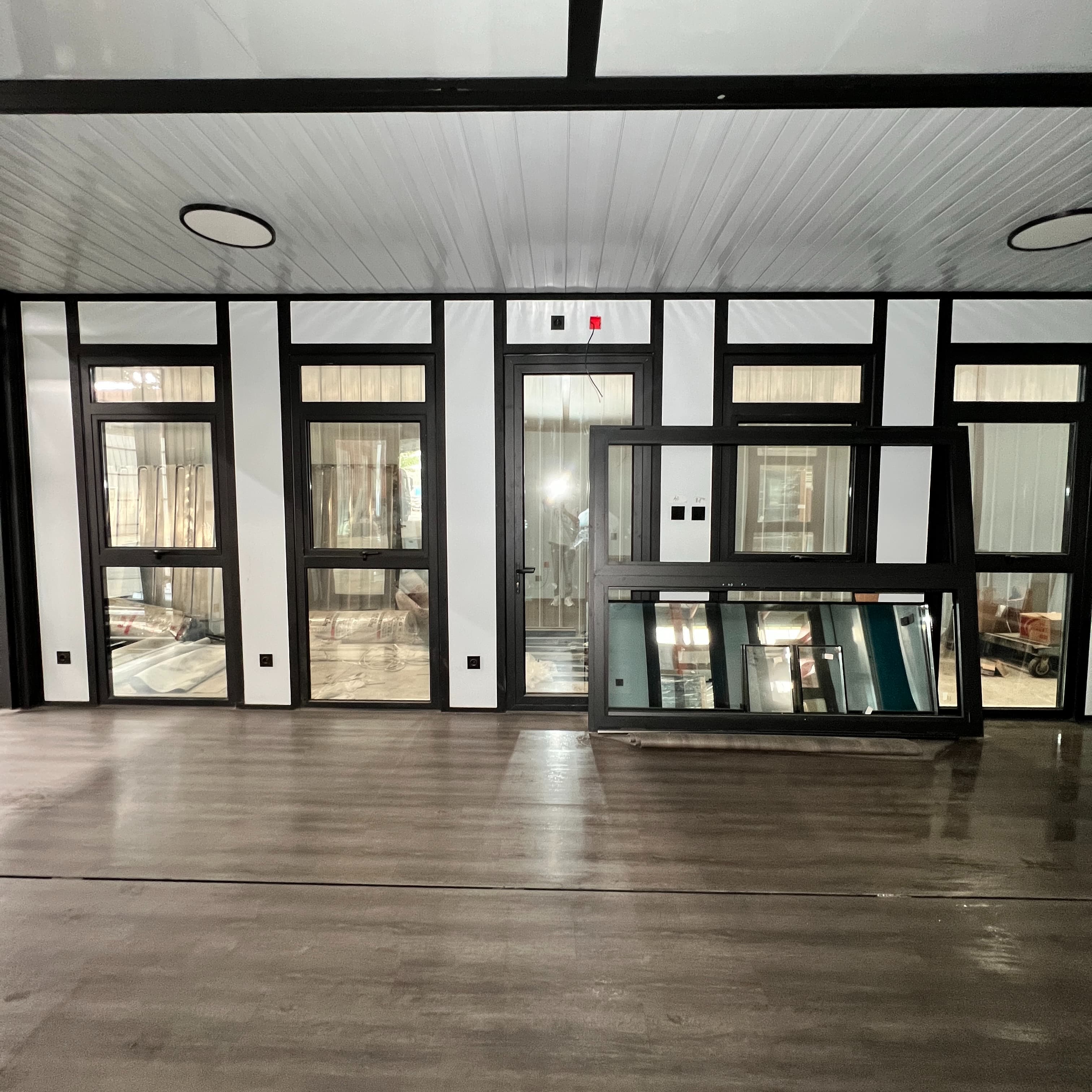
The expansive living area demonstrates how flat roof designs enable bright, airy interiors through strategic window placement.
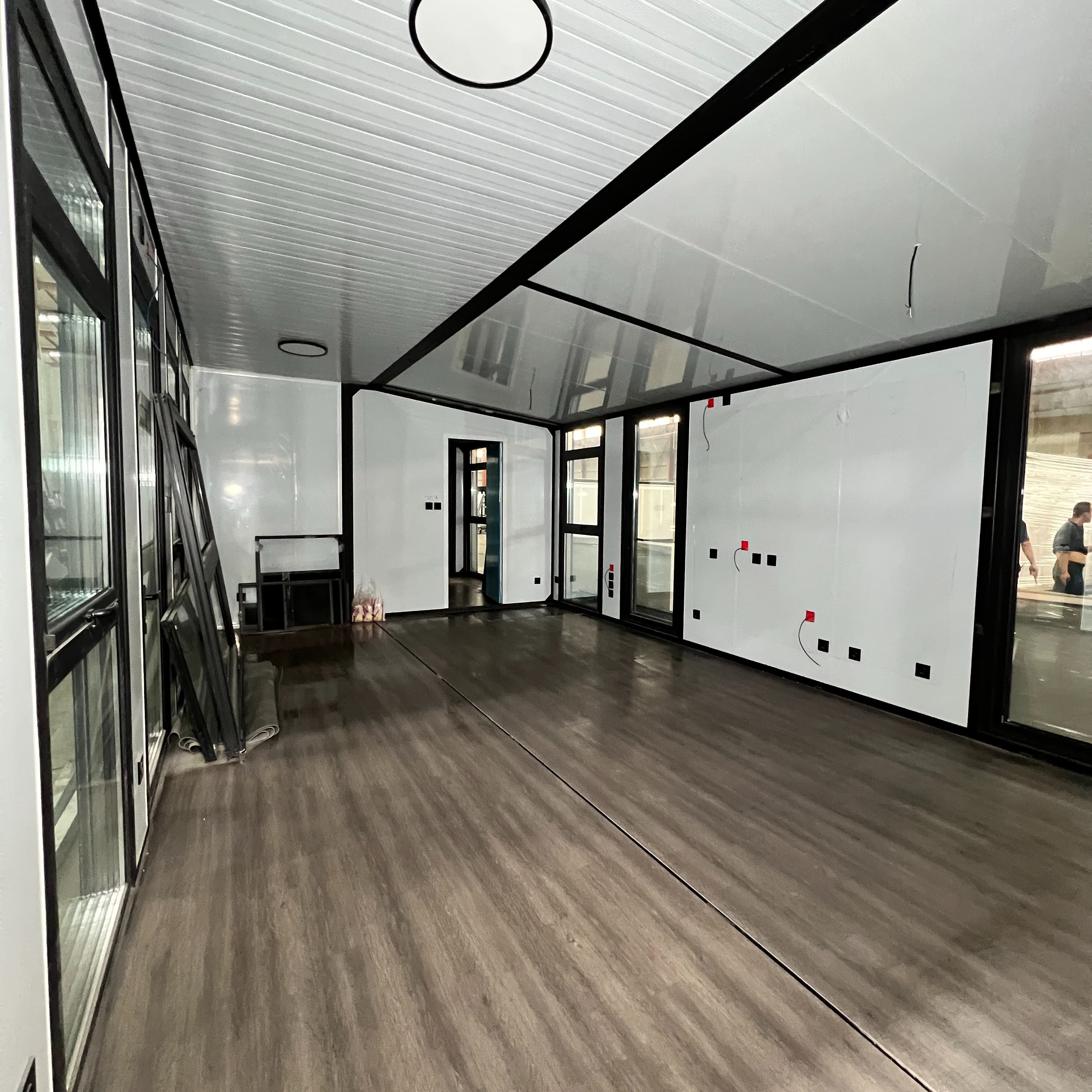
Bedroom spaces feature efficient storage solutions and large windows connecting occupants with the outdoors.
Professional-Grade Kitchens & Bathrooms
Kitchens come equipped with:
– Energy-efficient appliances meeting Canadian efficiency standards
– Quartz countertops with integrated sinks
– Soft-close cabinetry maximizing storage
– Optional induction cooktops and convection ovens
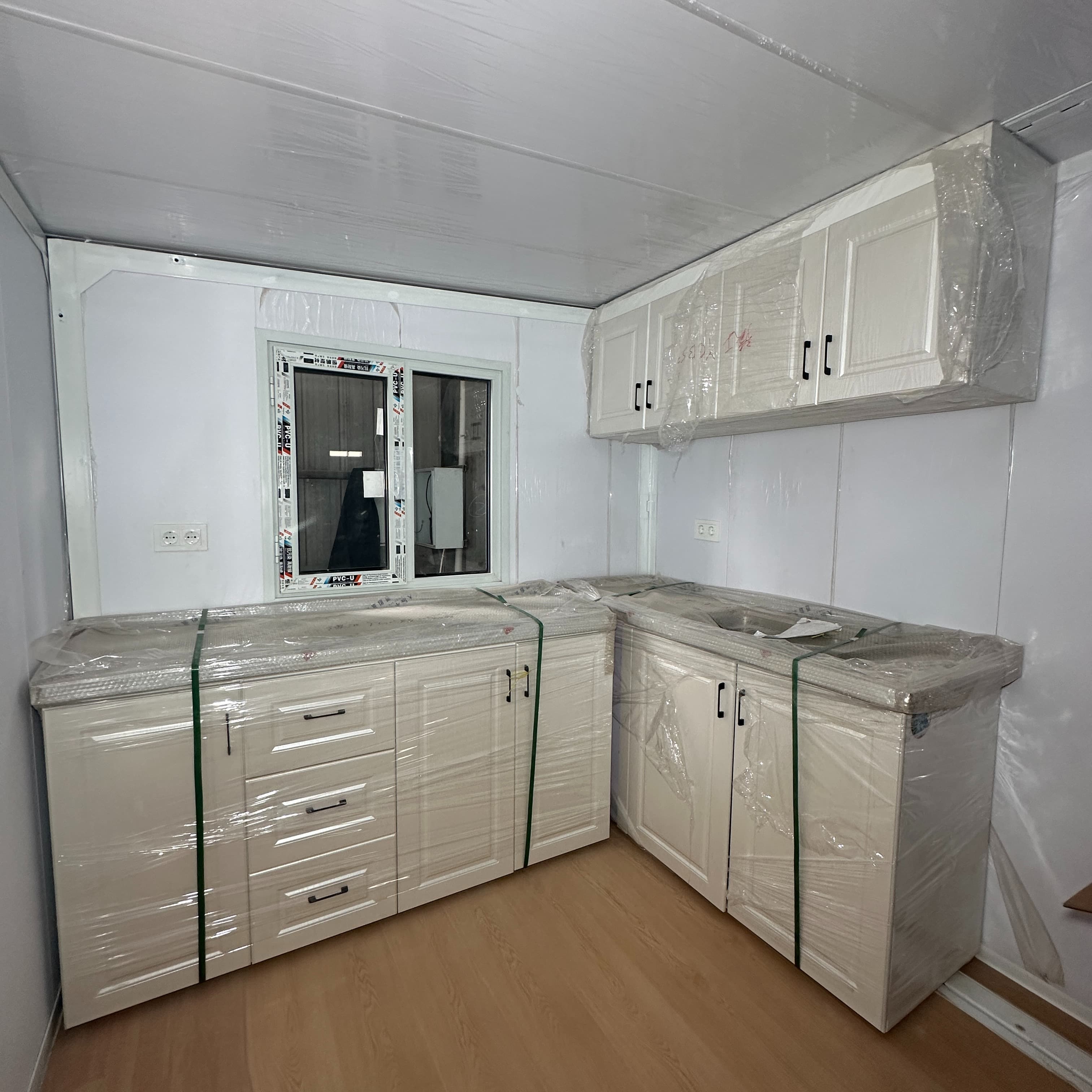
The contemporary kitchen design proves that container homes can match traditional housing in functionality and style.
Bathrooms feature:
– Full-sized showers with rainfall showerheads
– Water-saving fixtures compliant with Canadian conservation codes
– Heated floors for cold climate comfort
– Ventilation systems preventing humidity issues
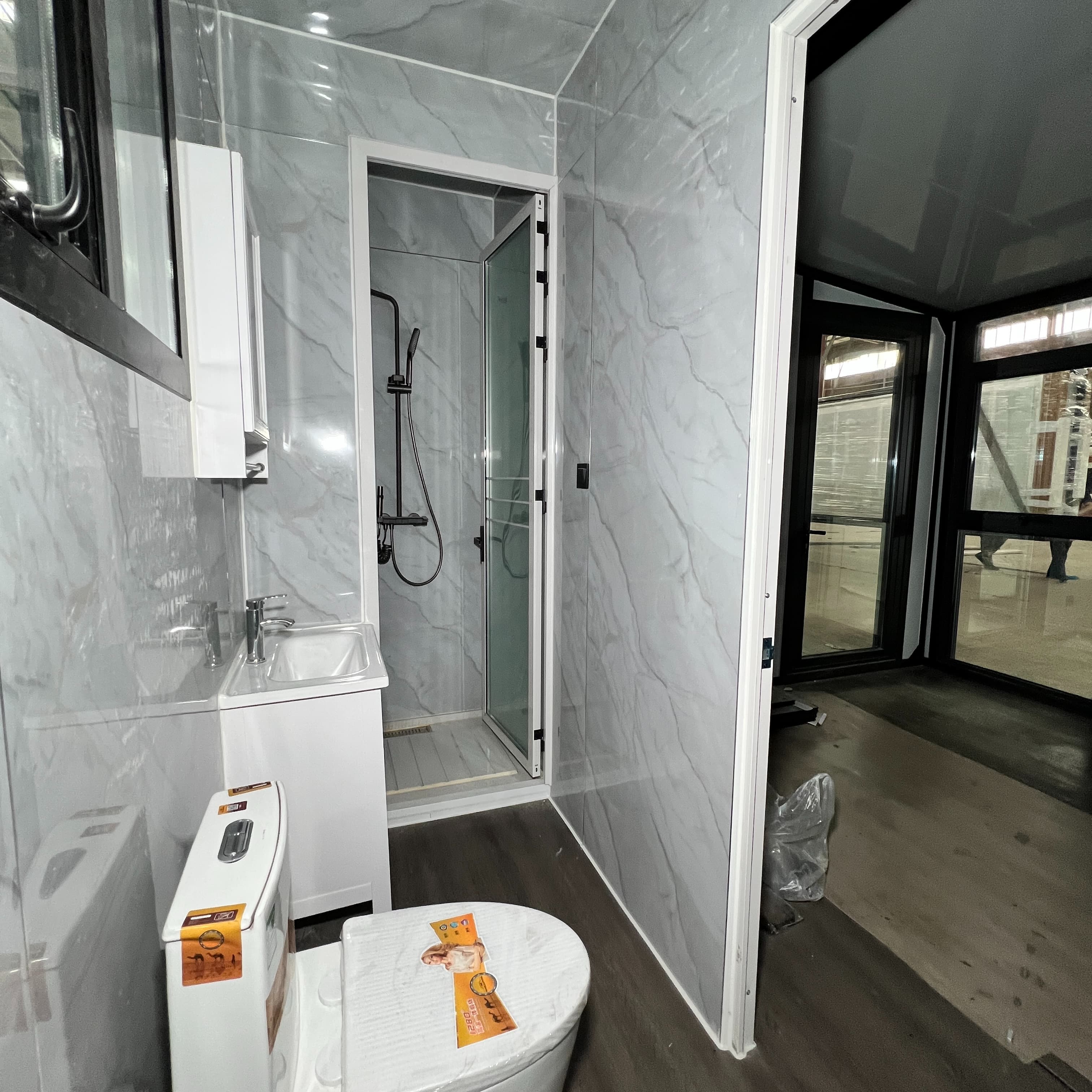
The spa-like bathroom demonstrates how container homes can provide luxury amenities despite their compact footprint.
Unmatched Advantages for Canadian Applications
Rapid Deployment Capabilities
Traditional construction in Canada faces weather-related delays, but these container homes offer:
– Factory completion of 95% of work
– On-site installation in under 8 hours for single units
– Multi-unit complexes ready in days rather than months
– Year-round construction不受季节限制
This speed proved invaluable during recent wildfire evacuations in British Columbia and Ontario, where emergency housing was deployed within 48 hours of order placement.
Superior Mobility & Site Adaptability
Canadian terrain presents unique challenges, but these structures excel:
– Helicopter deployment to remote mountain locations
– Skid placement on uneven ground without poured foundations
– Winter installation on frozen lakes or permafrost
– Urban placement on tight infill lots in cities like Quebec City
The flat roof design particularly shines in snow-heavy regions, as it allows for easy snow removal and prevents dangerous ice dam formation common to pitched roofs.
Environmental Leadership
As Canada commits to net-zero emissions by 2050, these homes contribute through:
– 90% recyclable steel framework
– Energy performance exceeding National Building Code requirements
– Optional net-zero packages with solar arrays and battery storage
– Low-VOC materials ensuring healthy indoor air quality
In Alberta’s oil sands region, these structures serve as eco-friendly worker accommodations, reducing the environmental footprint of temporary housing operations.
Exceptional Durability & Safety
Engineered for Canadian extremes:
– Galvanized steel frames resisting corrosion for 30+ years
– Seismic-rated construction meeting Zone 4 requirements
– Wind resistance to 180km/h (Category 3 hurricane force)
– Fire-rated materials exceeding provincial safety codes
During the 2023 British Columbia floods, these container homes remained intact while traditional structures suffered damage, demonstrating their resilience in extreme weather events.
Financial Advantages
Cost analysis shows significant savings:
– 40-50% lower construction costs versus traditional builds
– 60-70% reduced project timelines
– Minimal site preparation expenses
– Potential for modular expansion as needs evolve
– Higher resale value due to growing demand for sustainable housing
In Toronto’s competitive housing market, these units provide affordable entry points for first-time buyers while offering investment potential as rental properties.
Real-World Applications Across Canada
Residential Solutions
From urban infill to remote retreats:
– Vancouver Laneway Houses: Utilizing flat roofs for rooftop gardens in dense neighborhoods
– Whistler Ski Chalets: Withstanding heavy snow loads while providing efficient mountain living
– Nova Scotia Coastal Properties: Resisting salt air corrosion with marine-grade materials
– Northern Indigenous Communities: Providing culturally appropriate, rapidly deployable housing
A notable project in Banff National Park features cluster developments of these units, replacing traditional RV parks with sustainable, four-season accommodations that minimize environmental impact while maximizing visitor experience.
Commercial Innovations
Business applications include:
– Pop-up Retail: Temporary shops during Toronto’s Fashion Week
– Construction Site Offices: Withstanding harsh conditions in Fort McMurray
– Tourism Infrastructure: Glacier viewing stations in the Rocky Mountains
– Agricultural Worker Housing: Meeting needs in Saskatchewan’s farming regions
The flat roof design particularly benefits commercial applications by providing space for:
– Promotional signage visible from above
– HVAC equipment concealed from ground view
– Green roofs enhancing environmental credentials
– Solar arrays reducing operational costs
Emergency Response Excellence
Recent deployments demonstrate critical capabilities:
– 2023 Alberta Wildfires: 50 units deployed as temporary housing within 72 hours
– British Columbia Floods: Mobile medical clinics with integrated sterilization systems
– Ontario Ice Storms: Warming centers with backup power systems
– Arctic Communities: Rapid housing solutions addressing shortages
The modular nature allows for specialized configurations including medical units with flat roofs designed to accommodate critical equipment ventilation and satellite communications.
Customization: Tailoring to Canadian Needs
Architectural Expression
While maintaining structural integrity, clients can customize:
– Exterior cladding matching regional aesthetics (e.g., wood siding in British Columbia, stone accents in Quebec)
– Color schemes reflecting corporate branding or personal taste
– Window configurations optimizing views and solar gain
– Entry canopy designs complementing the flat roof profile
Functional Adaptations
Specialized configurations include:
– Arctic Packages: Triple-glazed windows, upgraded insulation, heated floors
– Coastal Versions: Enhanced corrosion protection, elevated foundations
– Urban Models: Soundproofing for city environments, compact appliance packages
– Luxury Retreats: High-end finishes, smart home systems, rooftop decks
Technical Upgrades
Advanced options available:
– Off-grid solar systems with battery storage
– Rainwater harvesting integrated into flat roof design
– Geothermal heating/cooling connections
– Advanced security and monitoring systems
Implementation Considerations for Canadian Projects
Regulatory Navigation
Understanding provincial requirements:
– British Columbia: Compliance with Step Code energy requirements
– Ontario: Meeting Building Code requirements for modular structures
– Quebec: French-language documentation and cultural considerations
– Northern Territories: Permafrost adaptation and extreme weather provisions
Working with experienced Canadian manufacturers ensures compliance with:
– National Building Code of Canada
– Provincial/territorial regulations
– Municipal zoning requirements
– Indigenous land use protocols where applicable
Site Preparation & Logistics
Key planning factors:
– Transportation route analysis for oversized loads
– Foundation options (helical piles, concrete pads, skid systems)
– Utility connection planning (power, water, sewer, internet)
– Seasonal timing considerations for northern deployments
The flat roof design simplifies many aspects by:
– Eliminating complex roofing installation timelines
– Providing ideal surface for temporary protective covers during setup
– Allowing easy access for final utility connections
Long-Term Value Management
Maximizing investment:
– Maintenance schedules for flat roof membranes
– Component upgrade paths (e.g., adding solar later)
– Relocation planning for temporary uses
– End-of-life recycling programs
Canadian owners report 20-30 year lifespans with minimal maintenance, significantly outperforming traditional temporary structures.
The Future of Flat Roof Container Living in Canada
As Canada addresses housing affordability and sustainability challenges, these modular structures represent a transformative solution. The combination of flat roof design with expandable container architecture offers unprecedented flexibility for:
– Urban densification without compromising quality of life
– Remote resource development with reduced environmental impact
– Climate resilience in the face of increasing extreme weather events
– Rapid response to humanitarian needs
Emerging trends include integration with:
– Smart grid technology for energy management
– Prefabricated biophilic design elements
– Advanced materials improving thermal performance
– 3D printing for customized interior components
The 40-foot double-wing expansion room with its flat roof design stands at the intersection of Canadian innovation and practical necessity – proving that sustainable, rapid-deployment housing can be both beautiful and functional.
Conclusion: A Canadian Solution for Global Challenges
From the urban centers of Toronto and Vancouver to the remote wilderness of the Yukon, modern container house designs with flat roofs are redefining what’s possible in architecture. The 40-foot customized double-wing expansion room embodies Canada’s spirit of innovation – practical, resilient, and environmentally conscious. As we face global housing shortages and climate challenges, these structures offer a scalable solution that doesn’t force us to choose between quality, sustainability, and affordability. Whether serving as a primary residence, commercial space, or emergency shelter, they demonstrate how thoughtful engineering can create spaces that enhance human life while respecting planetary boundaries. The flat roof isn’t just a design choice – it’s a platform for sustainable living in the 21st century.
本文由人工智能技术生成,基于公开技术资料和厂商官方信息整合撰写,以确保信息的时效性与客观性。我们建议您将所有信息作为决策参考,并最终以各云厂商官方页面的最新公告为准。