
Discover the revolutionary 20-foot customized double-wing expansion container homes that are transforming family living in Australia and beyond. These modern, modular structures offer unparalleled flexibility, sustainability, and cost-effectiveness for growing families seeking alternative housing solutions.
In recent years, the housing landscape has undergone a dramatic transformation, with innovative solutions emerging to address the challenges of affordability, sustainability, and flexibility in modern living. Among these innovations, container homes have risen to prominence as a viable, stylish, and practical alternative to traditional housing. Today, we’re excited to introduce a groundbreaking development in this field: the 20-foot customized double-wing expansion container house that’s making waves across Australian communities and beyond.
Container homes have evolved significantly from their humble beginnings as simple shipping containers repurposed for basic shelter. Modern designs now incorporate cutting-edge technology, sustainable materials, and thoughtful architectural principles to create living spaces that rival traditional homes in comfort, aesthetics, and functionality. For families seeking affordable housing solutions without compromising on quality or style, these innovative structures represent a game-changing opportunity.
At the forefront of this movement is the double-wing expansion container house – a marvel of modular design that transforms from a compact shipping container into a spacious family home with the simple push of a button. Let’s explore this revolutionary housing solution and discover why it’s capturing the imagination of families across Australia and around the world.
The Evolution of Container Housing
Container housing has come a long way since its inception in the mid-20th century. What began as a practical solution for temporary shelter has evolved into a sophisticated architectural movement that embraces sustainability, affordability, and design innovation. The journey from basic shipping container to modern family home represents a remarkable fusion of industrial utility and residential comfort.
In Australia, where housing affordability has become a pressing concern for many families, container homes have emerged as a viable alternative to traditional construction. The appeal lies not only in their cost-effectiveness but also in their adaptability to various environments, from urban settings to rural landscapes. Australian families, in particular, have embraced container homes for their ability to withstand the country’s diverse climate conditions while offering a smaller environmental footprint.
The 20-foot double-wing expansion container house represents the pinnacle of this evolution. By incorporating expandable “wings” that dramatically increase living space when deployed, this design addresses one of the primary limitations of traditional container homes – limited square footage. Families no longer need to choose between affordability and space; with the double-wing design, they can have both.
Understanding the 20-Foot Double-Wing Expansion Design
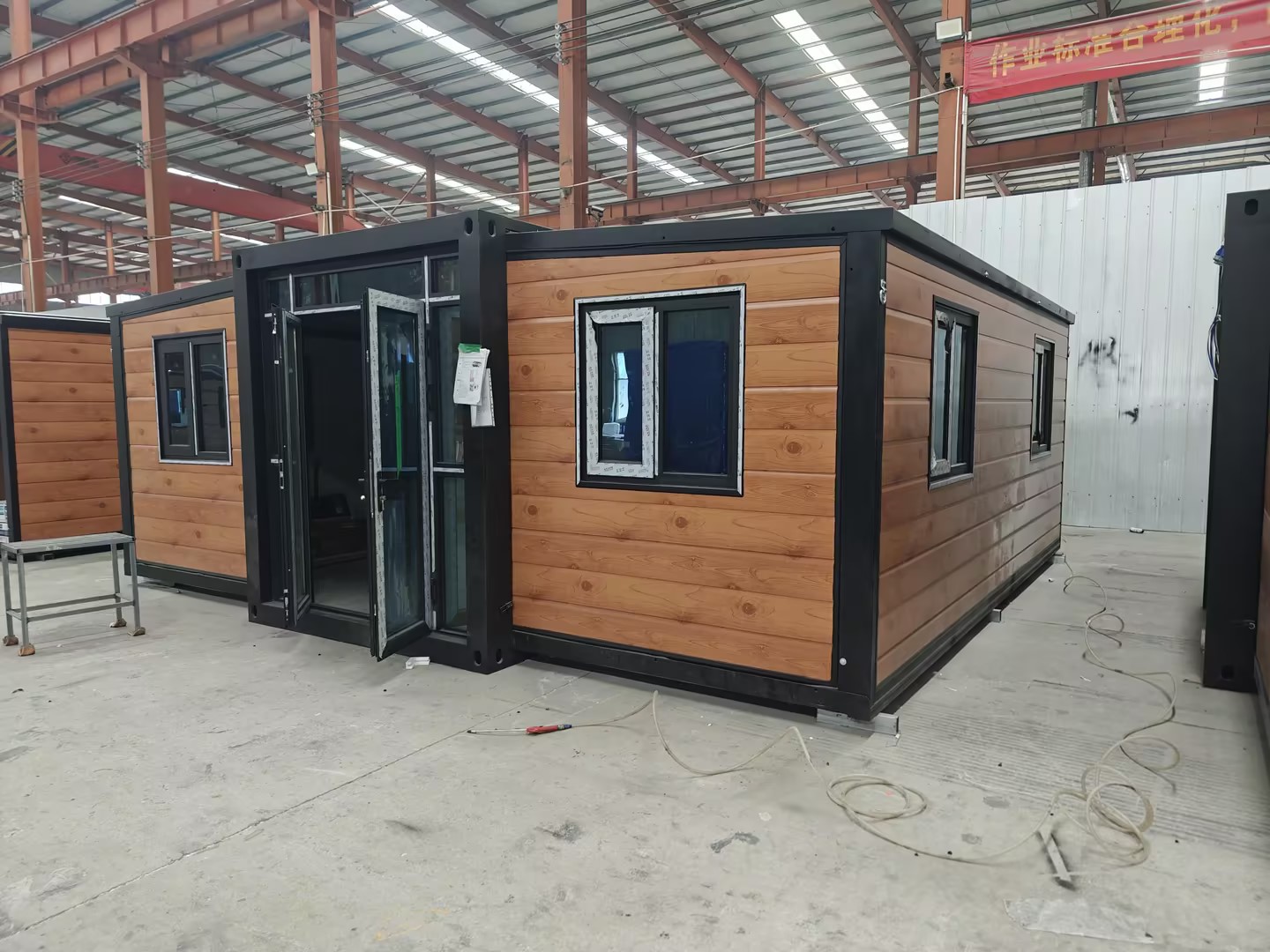
The 20-foot double-wing expansion container house is a modular, movable building product featuring expandable “wing” structures on both sides. When deployed, these wings extend outward, transforming the compact container into a spacious family residence. This innovative design allows the structure to maintain standard container dimensions during transport while providing significantly increased living space when in use.
The core concept behind the double-wing design is simple yet brilliant: much like a bird spreading its wings, the container unfolds to reveal a much larger interior space. This transformation is not only visually impressive but also highly functional, addressing the space constraints that often limit container homes as viable family residences.
When folded for transport, the structure maintains standard container dimensions (W2200L5900H2480mm), making it easy to transport using conventional methods. Once on site, the wings can be deployed within minutes, expanding the living area to W6340L5900H2480mm – an increase of 70-80% or even doubling the usable space. This remarkable transformation turns what appears to be a simple container into a comfortable one-bedroom or even two-bedroom family home.
Key Features and Benefits
The 20-foot double-wing expansion container house incorporates numerous features that make it particularly suitable for families. These design elements address the practical needs of family living while maintaining the sustainability and affordability benefits that make container homes attractive.
Structural Excellence
At the heart of this innovative home is a high-strength steel structure frame, typically constructed from hot-dip galvanized steel or carbon fiber composite materials. This robust framework ensures durability and longevity, with a structural lifespan of 20-30 years when properly maintained. The galvanized steel treatment provides superior corrosion resistance, crucial for withstanding various weather conditions, particularly in Australia’s diverse climate zones.
The modular structure supports both standalone use and multi-cabin combinations, allowing families to expand their living space as their needs change over time. This scalability is particularly valuable for growing families who may require additional space in the future without the expense and disruption of traditional home additions.
Space Optimization
One of the most impressive aspects of the double-wing design is its efficient use of space. The column-free interior design allows for a space utilization rate of over 90%, maximizing every square inch of the expanded footprint. Families can enjoy an open-plan living area that feels spacious and inviting, despite the compact nature of the container when folded.
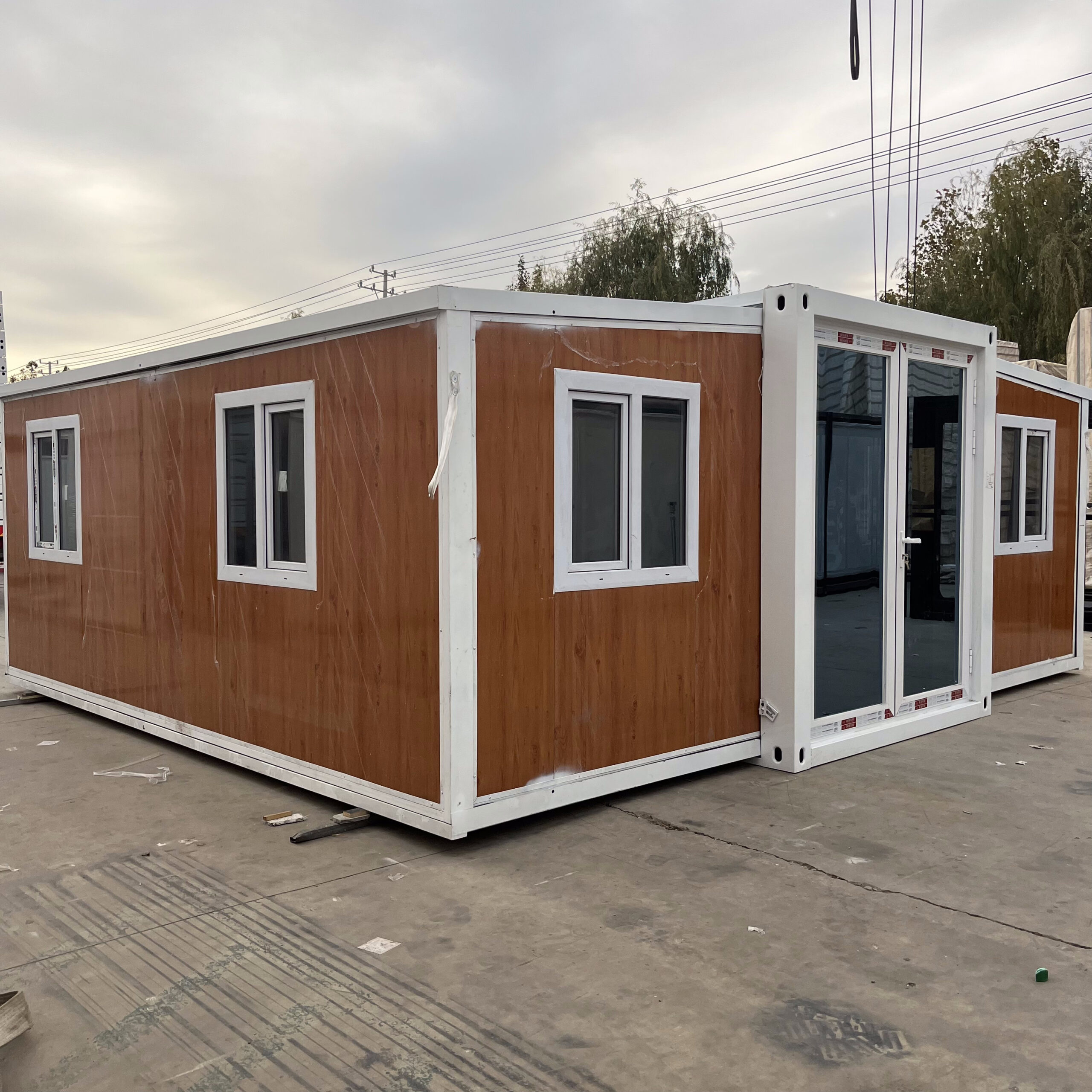
The flexible layout supports various configurations, including loft designs, one-bedroom arrangements, and even two-bedroom setups when the wings are fully extended. This adaptability ensures that the home can accommodate different family structures and living preferences, from couples with young children to multi-generational households.
Quality Materials and Construction
The construction of these container homes emphasizes quality and sustainability. The main structure features a lightweight galvanized steel frame combined with insulating panels made from materials such as polyurethane or rock wool. These materials provide excellent thermal insulation, reducing energy consumption for heating and cooling – a significant consideration for Australian families facing rising energy costs.
Waterproofing is another critical consideration in the design. The container employs seamless connection technology throughout, with doors and windows featuring hollow broken bridge aluminum frames and Low-E glass. These high-quality components ensure superior waterproof and impermeable performance, protecting the interior from moisture infiltration and enhancing overall comfort.
Ready-to-Use Functionality
One of the most appealing aspects of the 20-foot double-wing expansion container house is its ready-to-use nature. The factory prefabrication process completes over 85% of the construction work, including water and electrical pipelines, kitchen and bathroom facilities, doors, windows, and more. This comprehensive approach means that once the container is delivered to its destination, minimal on-site work is required before the family can move in.
The interior comes equipped with essential amenities, including air conditioning, lighting systems, and even smart control options in some models. The kitchen and bathroom are fully functional, featuring modern fixtures and efficient layouts that maximize the available space. This turnkey approach significantly reduces the time and hassle typically associated with moving into a new home.
Environmental Benefits
For environmentally conscious families, the 20-foot double-wing expansion container house offers numerous sustainability advantages. The construction process generates significantly less waste compared to traditional building methods, and many components are made from recycled or recyclable materials.
The steel frame has a recycling rate of over 90%, contributing to the circular economy. Additionally, the use of environmentally friendly panels with low formaldehyde emissions ensures better indoor air quality, creating a healthier living environment for families. The excellent thermal insulation properties also reduce energy consumption for heating and cooling, lowering the home’s carbon footprint over its lifetime.
Practical Advantages for Families
The 20-foot double-wing expansion container house offers several practical advantages that make it particularly well-suited for family living. These benefits address common challenges faced by families when selecting housing options, from affordability to flexibility and beyond.
Rapid Deployment
One of the most significant advantages of this innovative housing solution is its rapid deployment capability. With 95% of the construction work completed in the factory, the on-site installation process is remarkably efficient. A single unit can be installed in just a few hours, while more complex combinations can be completed within 1-3 days. This rapid timeline eliminates the lengthy waiting periods associated with traditional construction, allowing families to move into their new home much sooner.
The minimal foundation requirements further expedite the process. Many models can be installed using independent foundations or support blocks, reducing the need for extensive site preparation and civil engineering work. This simplified approach not only saves time but also reduces costs and environmental impact.
Mobility and Flexibility
Unlike traditional homes, the double-wing expansion container house offers unparalleled mobility and flexibility. The entire structure can be lifted and relocated as needed, making it ideal for families who anticipate moving in the future or those who prefer the flexibility to change their living environment. This mobility also makes these homes excellent for temporary housing needs, such as during home renovations or when transitioning between permanent residences.
The adaptability to various terrains is another significant advantage. These homes can be deployed on mountainsides, slopes, grasslands, and other challenging landscapes where traditional construction would be difficult or impossible. This versatility opens up a world of possibilities for families seeking to live in unique or remote locations.
Cost-Effectiveness
Financial considerations are often paramount for families when selecting housing options. The 20-foot double-wing expansion container house offers substantial cost savings compared to traditional construction methods. The construction timeline is reduced by 60-70%, resulting in overall cost savings of 30-40%. These significant savings make homeownership more accessible for many families who might otherwise be priced out of the housing market.
The maintenance costs are also considerably lower than those associated with traditional homes. The modular design allows for individual components to be replaced or repaired without affecting the entire structure, simplifying maintenance and reducing long-term expenses. Additionally, the energy-efficient design leads to lower utility bills, providing ongoing savings throughout the home’s lifespan.
Resilience and Durability
Families need a home that can stand the test of time and provide a safe, secure environment for their loved ones. The 20-foot double-wing expansion container house excels in this regard, with a hot-dip galvanized steel structure that offers excellent corrosion resistance and durability. These homes are designed to withstand harsh weather conditions, including strong winds up to force 10-12 on the Beaufort scale.
The seismic performance is another critical safety feature. The steel structure’s flexible connections provide excellent earthquake resistance, with seismic ratings reaching level 8. This resilience provides peace of mind for families living in areas prone to seismic activity or extreme weather events.
Design Customization Options
One of the most exciting aspects of the 20-foot double-wing expansion container house is the extensive customization options available. Families can tailor these homes to their specific needs, preferences, and lifestyle requirements, creating a truly personalized living space that reflects their unique identity.
Exterior Customization
The exterior appearance of the container home can be customized to suit various aesthetic preferences. While the standard black frame provides a sleek, modern look, families can choose from a range of exterior finishes, including wood grain, stone patterns, or custom colors. This flexibility allows the home to blend seamlessly with its surroundings or make a bold architectural statement, depending on the family’s vision.
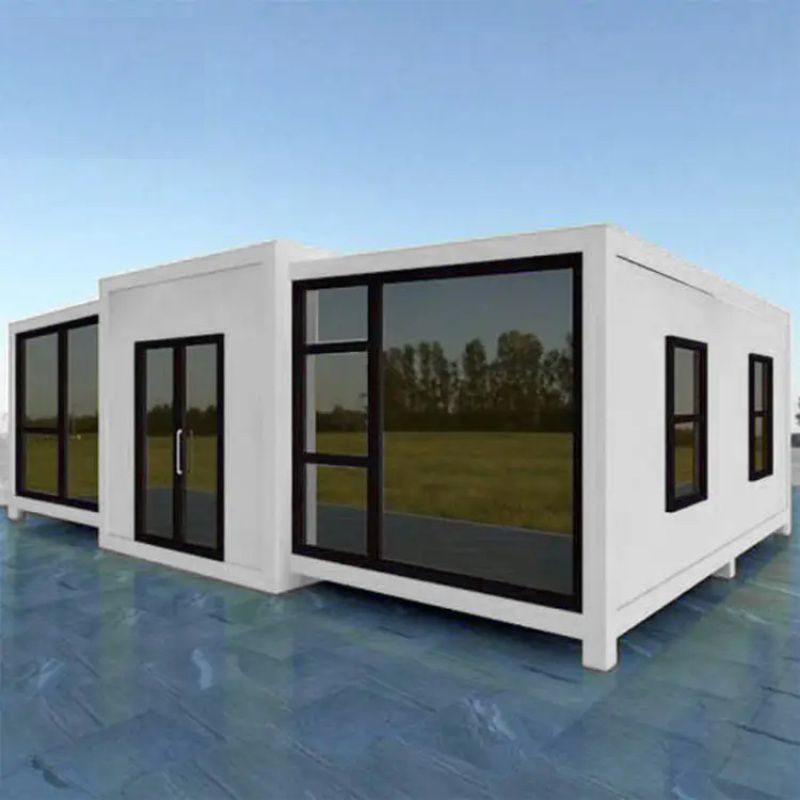
Window and door configurations can also be customized to optimize natural light, views, and ventilation. Large glass panels, sliding doors, and skylights can be incorporated to create a bright, airy interior that connects the living space with the outdoors. These elements are particularly valuable for families who enjoy indoor-outdoor living or have children who benefit from ample natural light.
Interior Layout Options
The interior layout of the double-wing expansion container house can be configured in numerous ways to accommodate different family structures and living preferences. Common configurations include:
- Open-plan living with a separate bedroom
- Two-bedroom layout with shared living space
- Loft design with sleeping area above the main living space
- Home office integration for remote working families
The column-free design allows for maximum flexibility in furniture arrangement and space utilization. Families can work with designers to create a layout that optimizes traffic flow, storage solutions, and multi-functional spaces that adapt to their daily routines and activities.
Kitchen and Bathroom Designs
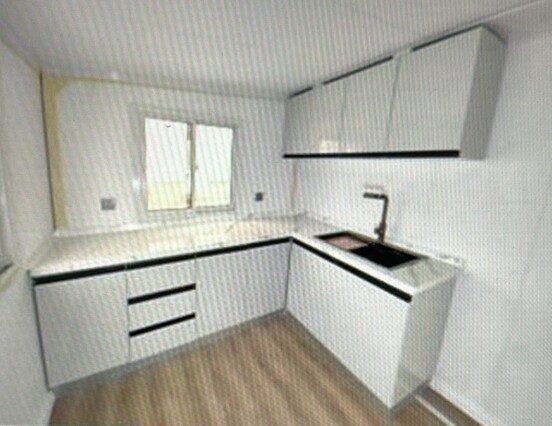
The kitchen and bathroom are essential functional spaces in any family home, and the double-wing expansion container house offers customized solutions for both areas. The kitchen can be designed to maximize efficiency within the compact space, incorporating modern appliances, ample storage, and durable materials that withstand the demands of family life.
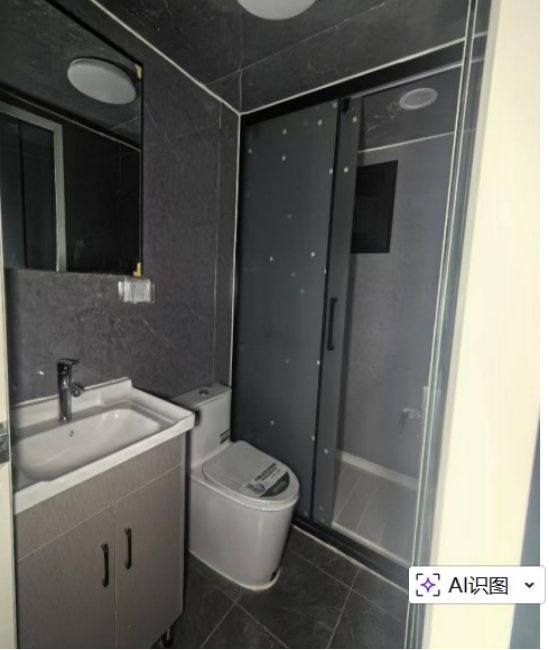
Bathrooms can be equipped with full-size fixtures, including showers, toilets, and vanities, with options for water-saving features that reduce environmental impact and utility costs. The use of high-quality materials and finishes ensures these spaces are not only functional but also aesthetically pleasing and easy to maintain.
Specialized Features for Families
Families with children have specific needs that can be accommodated in the design of these container homes. Child-friendly features might include rounded corners on furniture and fixtures, safety locks on windows and cabinets, and durable, easy-to-clean surfaces throughout the home. Storage solutions can be customized to accommodate toys, books, clothing, and other family essentials, helping to maintain an organized and clutter-free living environment.
For families with members who have mobility challenges, accessibility features can be incorporated into the design, including wider doorways, grab bars in the bathroom, and barrier-free shower options. These adaptations ensure the home can accommodate family members of all ages and abilities, both now and in the future.
Real-World Applications for Families
The 20-foot double-wing expansion container house has numerous applications that make it an attractive option for families in various situations. From permanent residences to temporary solutions, these versatile structures can meet diverse housing needs while providing comfort, security, and style.
Permanent Family Residence
Many families are choosing these container homes as their primary residence, attracted by the combination of affordability, sustainability, and modern design. When properly sited and finished, these homes provide all the comforts and amenities of a traditional house while offering significant cost savings and environmental benefits.
For families looking to enter the property market or downsize without sacrificing quality of life, the double-wing expansion container house represents an ideal solution. The ability to customize the design ensures that the home reflects the family’s personality and meets their specific needs, creating a sense of ownership and pride that rivals traditional homeownership.
Secondary Dwelling or Granny Flat
The compact footprint and rapid installation make these container homes perfect for secondary dwellings on existing properties. Australian families are increasingly utilizing these structures as granny flats for aging parents, providing independent living space while keeping loved ones close by. The self-contained nature of these homes, with their own kitchen and bathroom facilities, ensures privacy and autonomy for all family members.
These secondary dwellings can also serve as accommodation for adult children, home offices, or rental units that provide additional income for the family. The modular design allows for easy integration with existing properties while maintaining the option to relocate the structure if needs change in the future.
Vacation Home or Weekender
For families dreaming of a vacation retreat without the expense and maintenance of a traditional second home, the 20-foot double-wing expansion container house offers an attractive alternative. These homes can be installed in scenic locations, from coastal areas to mountain retreats, providing a comfortable base for family getaways and adventures.
The durability and low maintenance requirements of these structures make them ideal for vacation properties that may be left unoccupied for extended periods. The secure design provides peace of mind when the family is away, while the quick deployment option means the retreat can be ready for use in minimal time.
Temporary Housing During Renovations
Families undertaking major renovations on their primary residence often face the challenge of finding temporary accommodation during construction. The double-wing expansion container house provides an ideal solution, offering comfortable living space on the same property while renovations are underway. This arrangement eliminates the need for families to relocate to hotels or rental properties, reducing both cost and disruption to daily routines.
The mobility of these structures means they can be delivered to the property quickly and removed once the renovation is complete, leaving no permanent impact on the landscape. This temporary housing solution maintains family cohesion during what can otherwise be a stressful period of transition.
Installation Process and Considerations
Understanding the installation process and key considerations is essential for families interested in the 20-foot double-wing expansion container house. While the process is significantly simpler and faster than traditional construction, several important factors must be addressed to ensure a successful outcome.
Site Selection and Preparation
Choosing the right location for the container home is crucial to maximizing its benefits and ensuring long-term satisfaction. Families should consider factors such as access to utilities, sunlight exposure, prevailing winds, views, and privacy when selecting a site. The topography of the land will also influence the installation process and may affect the type of foundation required.
Site preparation typically involves clearing the area of vegetation and debris, leveling the ground, and preparing the foundation. The minimal foundation requirements of these container homes are one of their significant advantages, with options ranging from concrete piers to gravel pads or even specialized ground screws that minimize site disturbance.
Delivery and Placement
Once the site is prepared, the container home can be delivered and placed. The standard folded dimensions (W2200L5900H2480mm) allow for transportation using conventional methods, though families should ensure that access to the site can accommodate delivery vehicles. Professional installation teams typically handle the placement process, using specialized equipment to position the container accurately on the prepared foundation.
Expansion and Connection
After placement, the exciting transformation begins as the wings are expanded to create the full living space. This process typically takes just minutes, as demonstrated in the video below:
Your browser does not support the video tag.
Once expanded, the interior components are secured, and connections to utilities are established. The prefabricated nature of these homes means that most systems are already integrated, requiring only final connections to external power, water, and sewage systems. In some cases, off-grid options are available, including solar power, rainwater harvesting, and composting toilets, providing even greater flexibility in site selection.
Regulatory Considerations
Before proceeding with the installation of a container home, families should research and address any regulatory requirements that may apply. In Australia, building codes and regulations vary by state and territory, and local council requirements may also influence the installation process. Some areas classify these structures as temporary buildings, which can simplify the approval process, while others may require permits similar to those for traditional construction.
Working with experienced suppliers and installation teams can help navigate these regulatory requirements, ensuring compliance while minimizing delays and complications. Many providers offer assistance with permit applications and can advise on specific requirements for different locations.
Cost Analysis and Value Proposition
For families considering the 20-foot double-wing expansion container house, understanding the cost structure and value proposition is essential. While these homes offer significant savings compared to traditional construction, several factors influence the final price, and families should consider both initial costs and long-term value when making their decision.
Initial Investment
The base cost of a 20-foot double-wing expansion container house varies depending on the level of customization, materials selected, and included features. Generally, these homes represent a 30-40% cost savings compared to traditional construction of similar size and quality. The price typically includes the structure itself, basic interior finishes, kitchen and bathroom fixtures, and delivery within a specified radius.
Families should budget for additional costs such as site preparation, foundation work, utility connections, permits, and any desired upgrades or customizations. While these expenses can add to the initial investment, they remain significantly lower than those associated with traditional home construction.
Long-Term Savings
The value proposition of these container homes extends beyond the initial purchase price, with numerous long-term savings that benefit family finances over time. The energy-efficient design reduces utility bills, with some families reporting savings of 30-50% on heating and cooling costs compared to traditional homes of similar size.
Maintenance costs are also substantially lower, with the durable materials and modular design minimizing the need for repairs and replacements. The steel structure requires minimal maintenance, and individual components can be replaced if necessary without affecting the entire home, reducing both the cost and inconvenience of upkeep.
Financing Options
As container homes become more mainstream, financing options have expanded to accommodate families interested in this innovative housing solution. Some lenders now offer specialized loan products for container homes, while others may classify them as manufactured housing or personal property loans. Families should explore various financing options to find the best fit for their financial situation.
For those using the container home as a secondary dwelling or rental property, the potential income generation can offset the initial investment and provide ongoing financial benefits. The versatility of these structures means they can serve multiple purposes over time, adapting to changing family needs and maximizing the return on investment.
Maintenance and Durability
Ensuring the longevity and performance of the 20-foot double-wing expansion container house requires proper maintenance and care. While these structures are designed for durability and low maintenance, following recommended maintenance practices will protect the family’s investment and ensure the home remains comfortable and safe for years to come.
Routine Maintenance
The routine maintenance requirements for these container homes are minimal compared to traditional houses. Regular tasks include cleaning the exterior surfaces, inspecting seals around windows and doors, checking for any signs of corrosion on the steel frame, and ensuring that drainage systems are functioning properly. The interior generally requires only standard household cleaning and maintenance of appliances and fixtures.
The expansion mechanism should be inspected periodically to ensure smooth operation, particularly if the wings are frequently folded and expanded. Lubrication of moving parts may be necessary to maintain optimal performance and prevent wear.
Seasonal Considerations
In Australia’s diverse climate, seasonal maintenance considerations vary by region. In areas with extreme temperature variations, families should pay special attention to insulation and seals to maintain energy efficiency. In coastal regions, more frequent inspections for corrosion may be necessary due to salt exposure in the air.
Before extreme weather events, such as storms or heatwaves, additional precautions may be warranted. These might include securing outdoor items, checking that all expansion panels are locked in place, and verifying that drainage systems are clear to prevent water accumulation.
Long-Term Durability
With proper maintenance, the 20-foot double-wing expansion container house can provide comfortable family housing for 20-30 years or more. The hot-dip galvanized steel frame offers superior corrosion resistance, while the high-quality materials used in construction ensure durability in various environmental conditions.
Should any components require replacement or repair over time, the modular design allows for easy access and minimal disruption to the living space. This feature significantly extends the useful life of the home and reduces the long-term cost of ownership.
Comparing Container Homes to Traditional Construction
For families weighing their housing options, understanding how the 20-foot double-wing expansion container house compares to traditional construction is essential. While both approaches can create comfortable family homes, they differ significantly in terms of cost, timeline, environmental impact, and flexibility.
Cost Comparison
As previously mentioned, container homes typically cost 30-40% less than traditional construction of similar size and quality. This significant savings makes
本文由人工智能技术生成,基于公开技术资料和厂商官方信息整合撰写,以确保信息的时效性与客观性。我们建议您将所有信息作为决策参考,并最终以各云厂商官方页面的最新公告为准。