
Discover the complete guide to building a shipping container house in Australia using innovative double-wing expansion technology. Learn step-by-step construction methods, explore 40-foot customizable units with foldable wings, and unlock rapid, eco-friendly housing solutions for diverse landscapes from Sydney to the Outback.
The Revolutionary Rise of Container Homes in Australia
Australia’s vast landscapes and housing challenges have sparked a growing movement toward alternative construction methods. Among these, shipping container homes have emerged as a game-changer—combining sustainability, affordability, and adaptability like never before. Imagine transforming a standard steel box into a stunning, functional dwelling in days rather than months. That’s the power of modular container architecture, especially when enhanced with cutting-edge double-wing expansion systems.
In Sydney’s urban sprawl or the remote beauty of the Kimberley, these structures solve critical problems: rapid deployment for disaster relief, affordable housing solutions, and eco-friendly builds that minimize environmental disruption. The 40-foot double-wing expansion room we’re featuring today epitomizes this innovation—folding compactly for transport yet unfolding into spacious, livable areas that rival traditional constructions. Let’s explore how to bring this vision to life step by step.
Step 1: Planning Your Container House Project
Every successful build starts with meticulous planning. For container homes in Australia, this involves:
- Regulatory Research: Consult local councils about zoning laws. In Queensland, for example, shipping container dwellings may fall under “caravan and movable dwelling” classifications if transportable. Check permits for permanent vs. temporary installations.
- Site Assessment: Evaluate soil stability, drainage, and accessibility. A flat, well-drained site in Victoria’s Mornington Peninsula requires different prep than a sloping block in Tasmania.
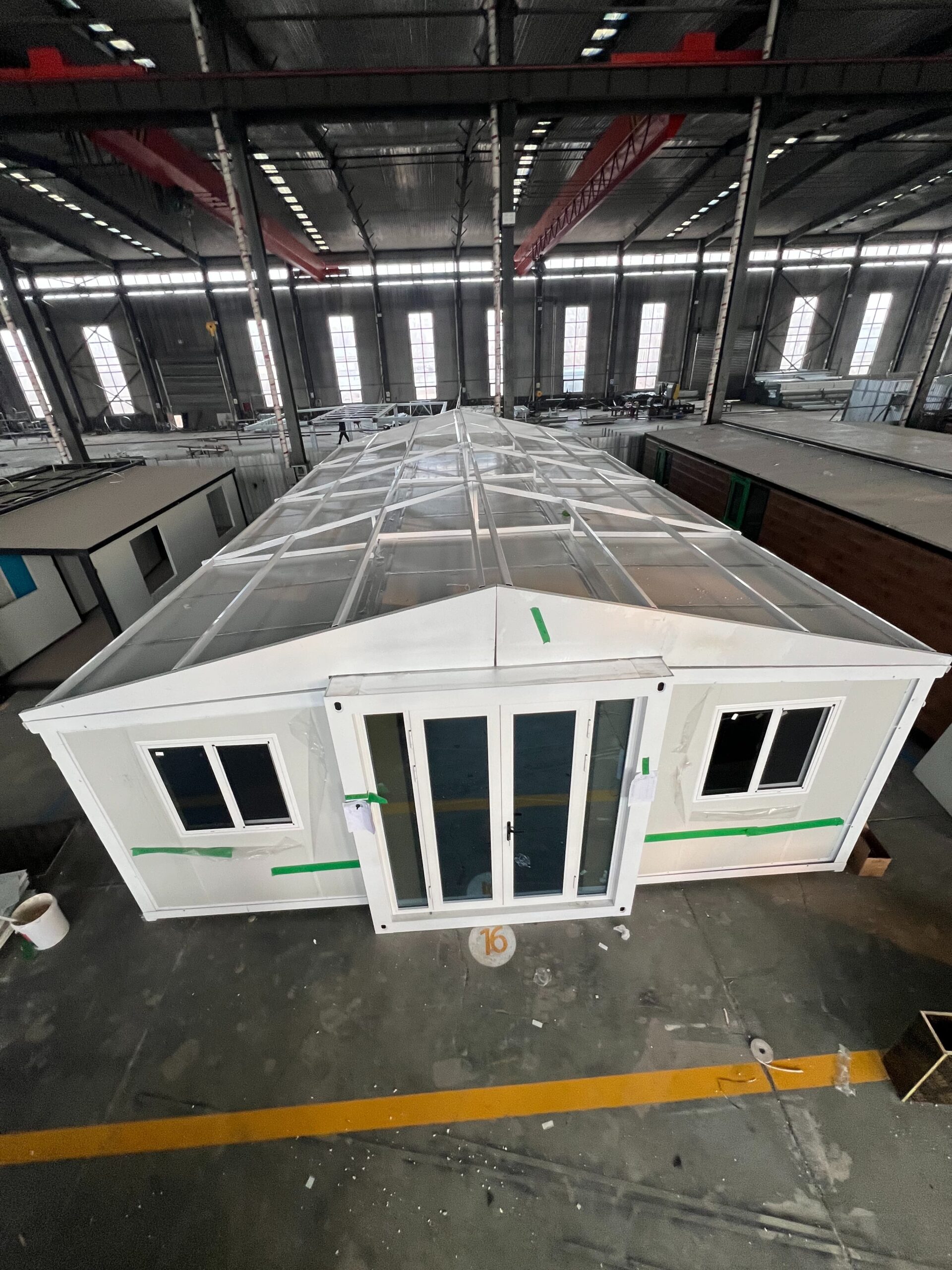
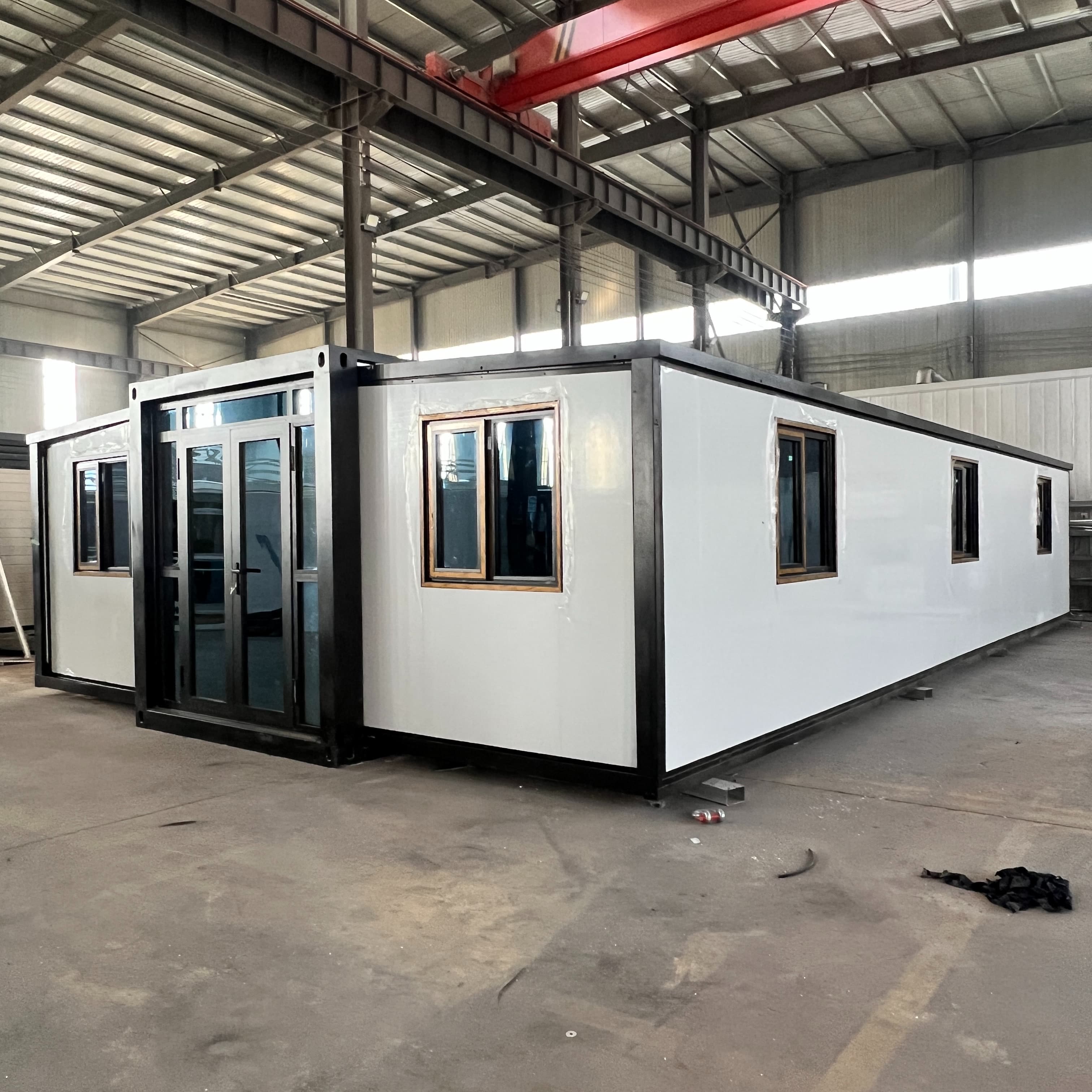
- Design Customization: Choose between single-wing or double-wing configurations. The double-wing model (shown below) expands from standard 40-foot dimensions to an impressive 11.8m x 6.24m footprint—ideal for families or home offices.

- Budgeting: Factor in container costs (~$3,000-$5,000 AUD for used units), modifications, and site work. Double-wing units cost 30-40% less than traditional builds due to factory pre-fabrication.
Step 2: Selecting Your Expansion Container System
Choosing the right container type is crucial. Our featured 40-foot double-wing unit offers unparalleled flexibility:
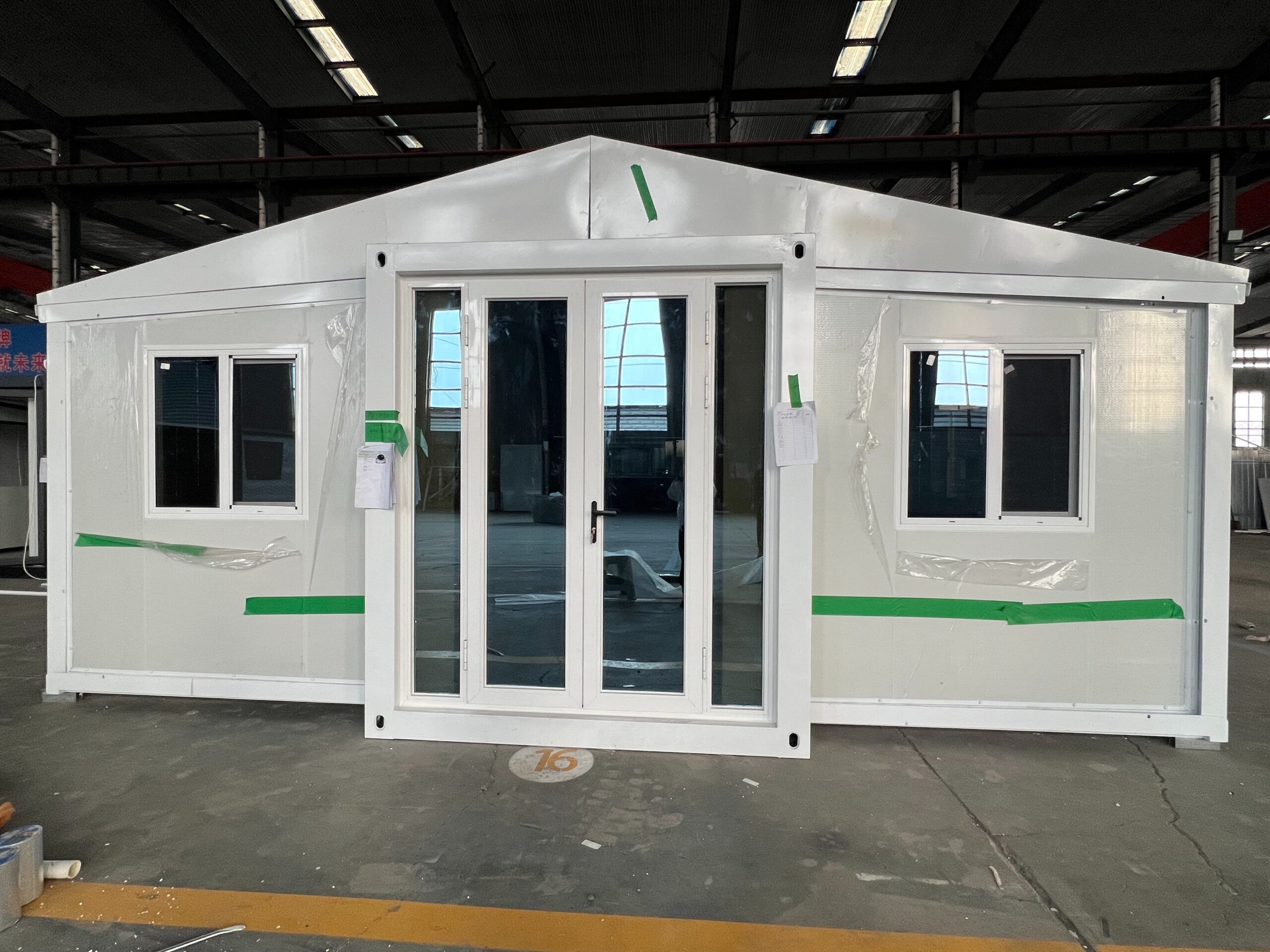
- Single vs. Double Wing: Single-wing models (pictured below) suit smaller spaces like backyard studios, expanding 1.5-2x when unfolded. Double-wings create full living areas with separate zones.

- Material Specifications: Hot-dip galvanized steel frames resist corrosion in coastal areas like Perth. Insulated panels (polyurethane or rock wool) maintain thermal efficiency in both Darwin’s heat and Canberra’s winters.
- Pre-Fabrication Benefits: 85% of construction—including wiring, plumbing, and interior finishes—occurs off-site. This slashes on-site time from weeks to hours.
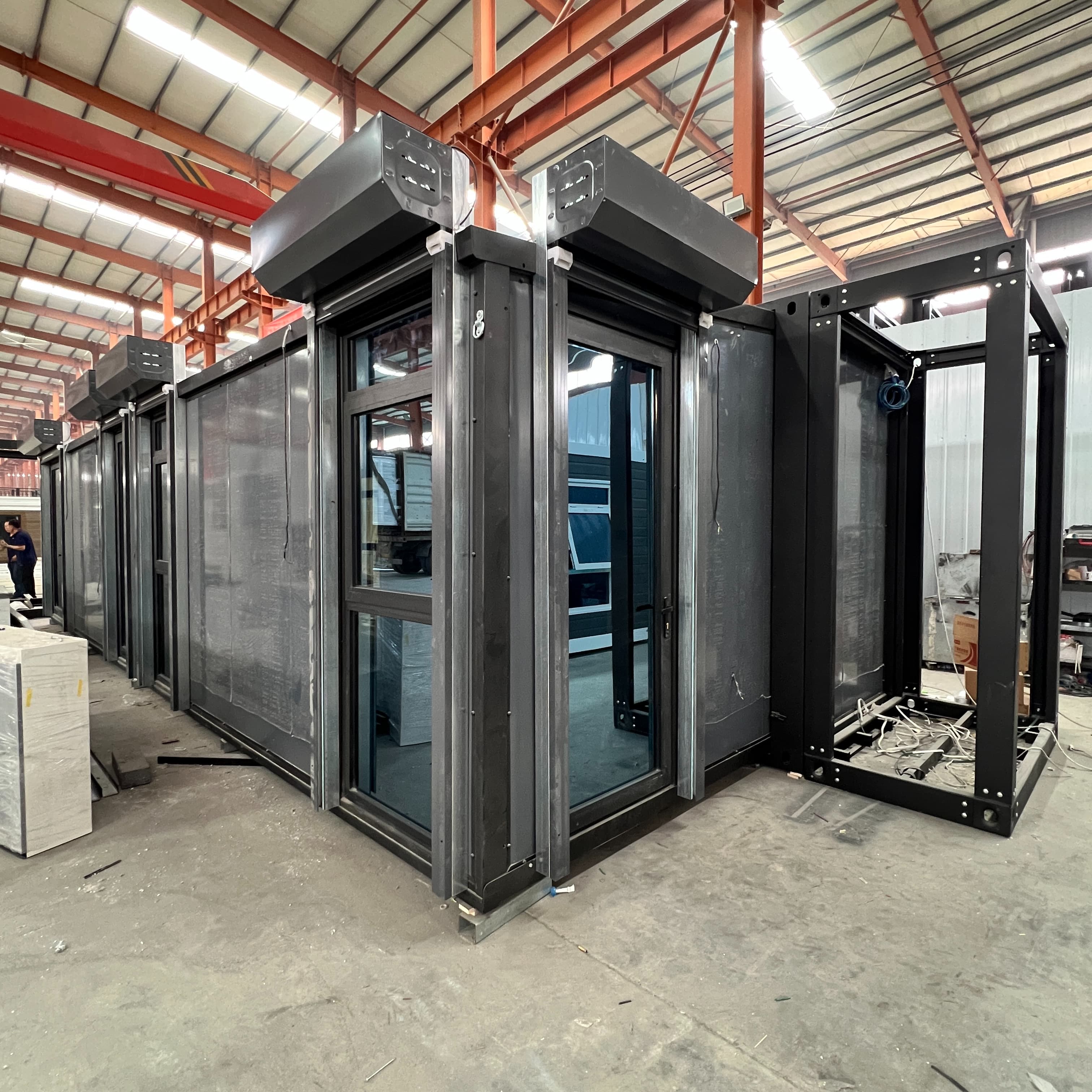
The flat-top design (below) maximizes solar panel integration, while pitched roofs offer rainwater harvesting potential—critical for water-conscious regions like Adelaide.
Step 3: Site Preparation & Foundation Work
Proper foundations ensure longevity and compliance:
- Clearing & Leveling: Remove vegetation and debris. Use laser levels to achieve a 1-2% grade for drainage.
- Foundation Options:
- Concrete Piers: Ideal for permanent builds in Melbourne’s clay soils. Place 6-8 piers per container.
- Steel Helical Piles: Perfect for unstable ground in flood-prone New South Wales regions. Screw into place without excavation.
- Gravel Pads: Budget-friendly for temporary installations. Use compacted road base topped with geotextile fabric.
- Utility Access: Trench for water, electricity, and sewage lines before container placement. In remote Outback locations, consider solar/water tank systems.
Step 4: Delivery & Placement
This stage requires precision coordination:
- Transport Logistics: Folded double-wing units (11.8m x 2.2m x 2.48m) fit standard flatbed trucks. Secure permits for oversized loads if transporting through Brisbane’s CBD.
- Crane Placement: Use a 20-ton crane with certified rigging. Position units within 10mm accuracy to align pre-installed connection points.
- Leveling: Adjust hydraulic jacks until the container is perfectly level. Check diagonals to prevent structural stress during expansion.
Step 5: Expanding the Double-Wing Structure
This transformative step creates your living space:
- Unfolding Mechanism: Release safety locks and manually extend hydraulic arms. Wings unfold like origami, expanding floor space by 70-80%.
- Securing Wings: Engage locking pins at floor and ceiling junctions. These high-tensile steel connectors ensure wind resistance up to 150km/h—critical during cyclone season in Far North Queensland.
- Sealing & Insulation: Apply butyl tape to wing seams before closing. This creates a weatherproof barrier against humidity in tropical Darwin.
Step 6: Interior Installation & Utilities
With the structure expanded, focus shifts to livability:
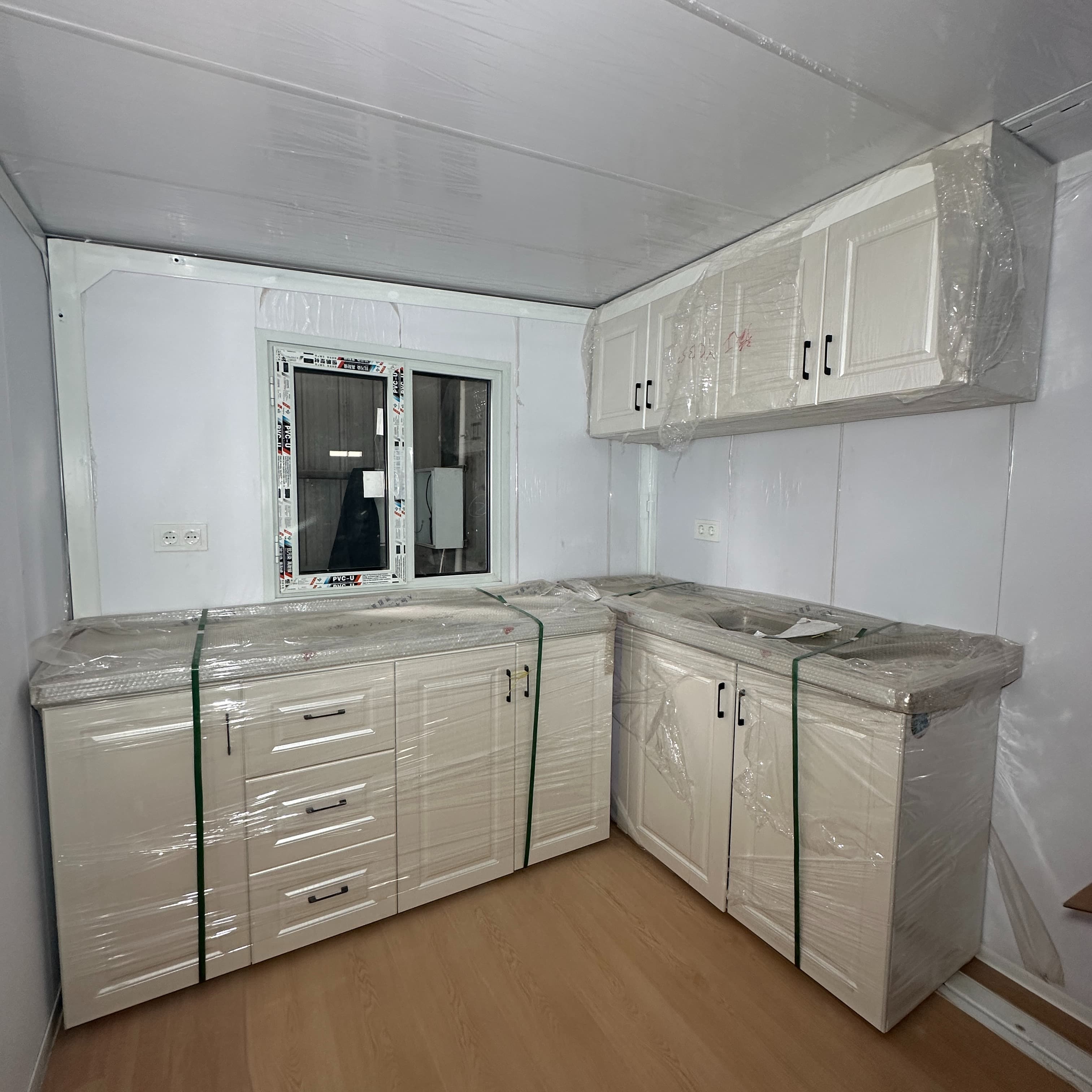
- Kitchen Integration: Pre-fitted modular kitchens (below) include cabinetry, sinks, and induction cooktops. Connect water lines to the factory-installed plumbing manifold.
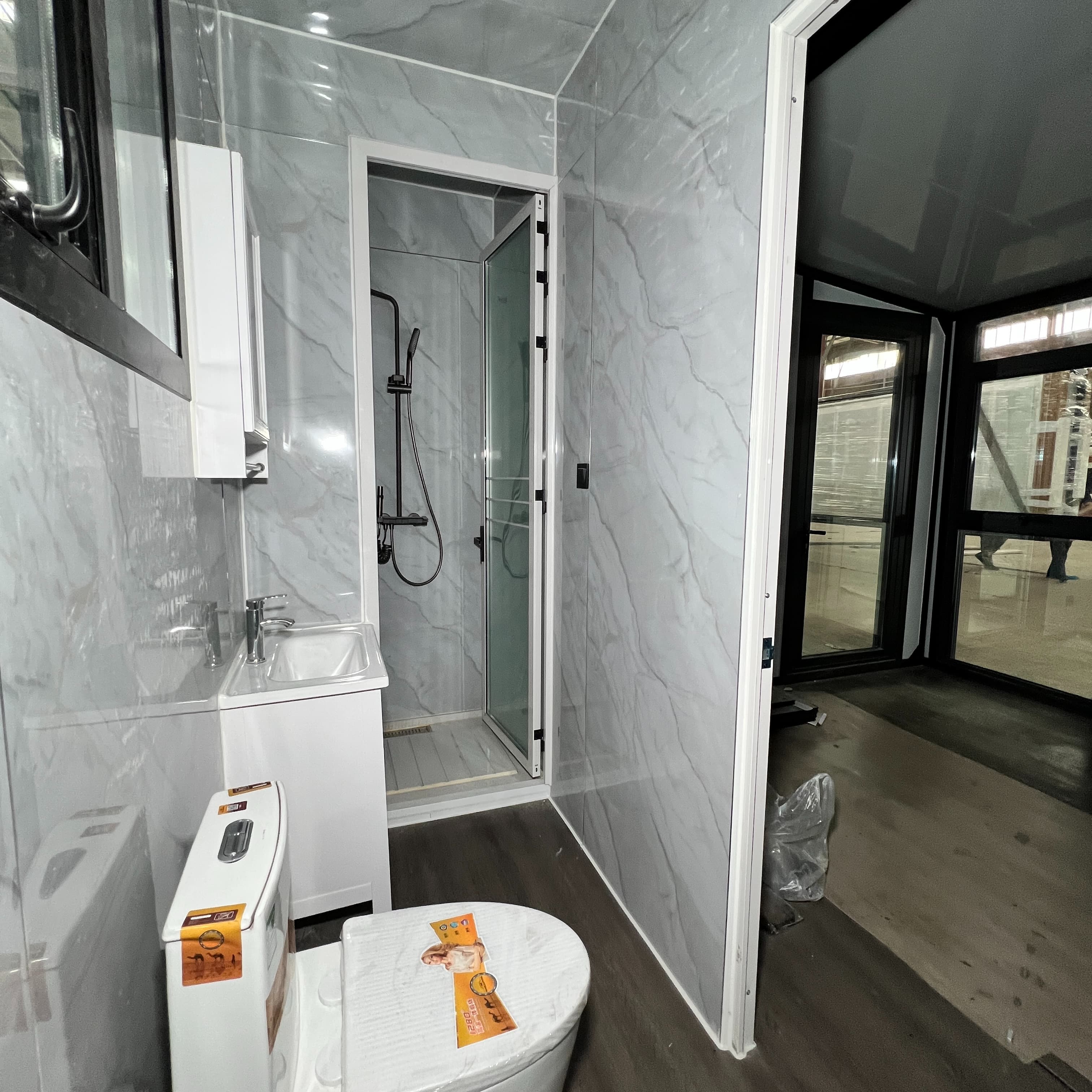
- Bathroom Setup: Complete wet rooms (shown below) feature composting toilets for off-grid use or standard fixtures connected to septic systems. Walls use waterproof PVC panels for easy cleaning.
- Electrical Systems: Plug into pre-wired circuits. Most units include RCD safety switches and solar-ready inverters for renewable energy integration.
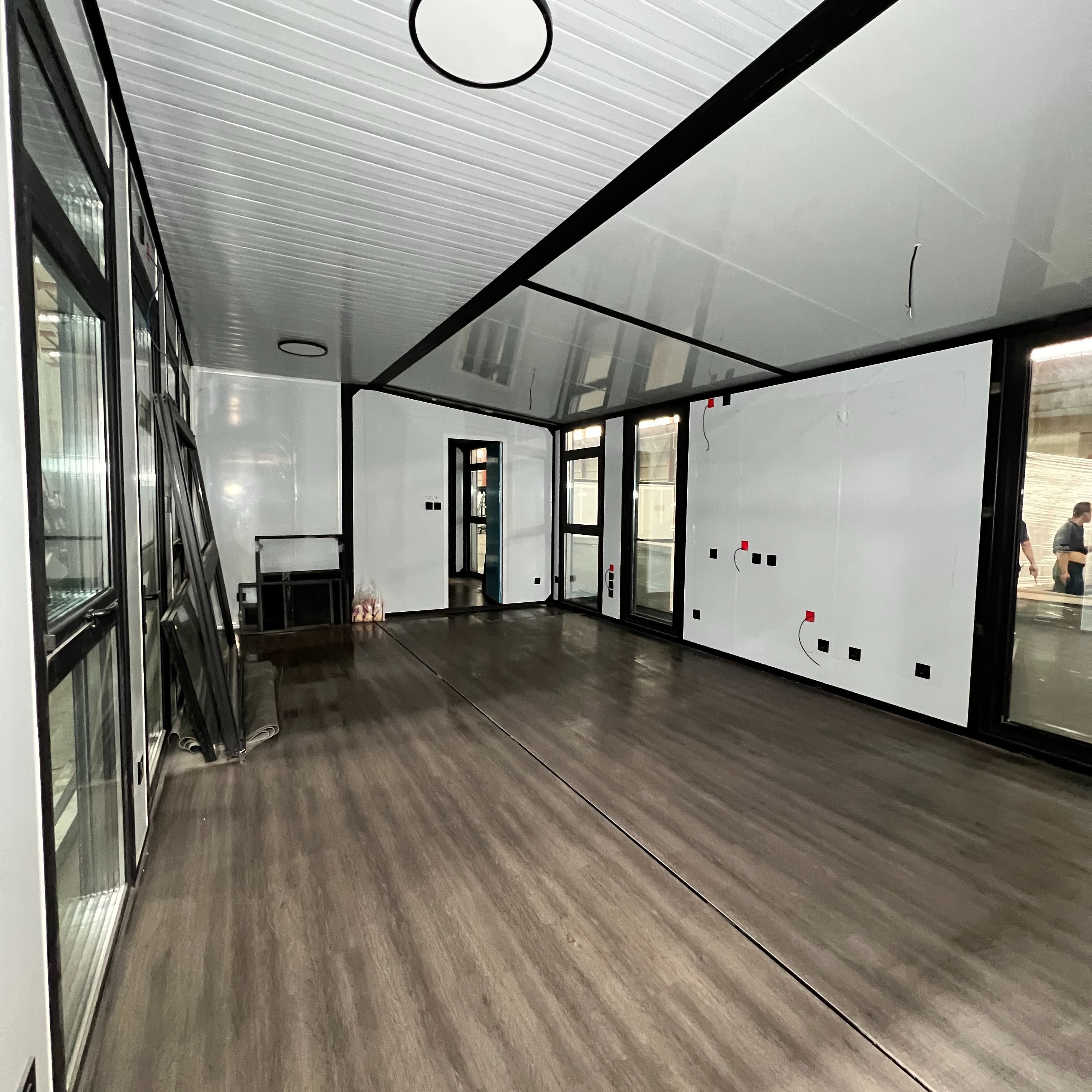
The open-plan living area (below) demonstrates how column-free designs maximize space—perfect for entertaining in coastal properties near Byron Bay.
Step 7: Exterior Finishing & Landscaping
Elevate aesthetics and functionality:
- Cladding & Color: Choose from timber-look composite boards, corrugated metal, or stone veneer finishes. Light colors reflect heat in Western Australia’s Pilbara region.
- Decking & Patios: Attach treated timber decks to create outdoor living spaces. Use adjustable footings for uneven terrain in the Blue Mountains.
- Landscaping: Plant native species like kangaroo paw or bottlebrush for low-maintenance gardens. Install rainwater tanks to collect runoff from metal roofs.
Why Double-Wing Containers Excel in Australian Conditions
These structures outperform traditional builds in key areas:
Climate Resilience
With thermal insulation values up to R-6, they maintain comfortable temperatures year-round. During Adelaide’s 40°C summers, interior temperatures stay 10-15°C cooler than unmodified containers. In alpine regions like Thredbo, double-glazed Low-E windows (standard in all units) prevent heat loss.
Disaster Response
After Victoria’s bushfires or Queensland’s floods, these units deploy in hours. A single team can install 10 units daily—providing immediate shelter when conventional construction is impossible. Their mobility allows relocation as communities rebuild.
Sustainability Credentials
- Recycled Materials: 95% of components are recyclable. Each unit repurposes 3,500kg of steel—equivalent to 75 recycled refrigerators.
- Energy Efficiency: Solar-ready designs reduce grid dependence. Paired with batteries, they achieve net-zero energy in sunny regions like Geraldton.
- Low-Impact Installation: Helical piles minimize ground disturbance, protecting fragile ecosystems in Tasmania’s Tarkine wilderness.
Real-World Applications Across Australia
Outback Tourism
In Uluru-Kata Tjuta National Park, double-wing units serve as eco-lodges. Their flat roofs capture rainwater in arid conditions, while fold-down verandas offer shade without permanent foundations. Tourists enjoy luxury accommodations with minimal environmental footprint.
Urban Infill Housing
Melbourne’s laneways now feature single-wing studios as artist live-work spaces. Their compact footprint (2.2m wide when folded) navigates narrow alleys, expanding into 25m² studios upon arrival. This revitalizes underutilized urban areas.
Agricultural Worker Housing
Cotton farms in Narrabri use modular clusters for seasonal workers. Units connect via covered walkways, creating instant villages. After harvest, they fold and relocate—avoiding permanent structures on agricultural land.
Cost-Benefit Analysis: Container vs. Traditional Builds
| Factor | Double-Wing Container | Traditional Brick Home |
|——–|————————|————————|
| Construction Time | 3-5 days | 6-12 months |
| Cost per m² | $1,200-$1,800 AUD | $2,500-$4,000 AUD |
| Labor Requirements | 2-3 people | 10-15 tradespeople |
| Waste Generated | <5% of materials | 15-30% landfill waste |
| Lifespan | 30+ years with maintenance | 50+ years |
While traditional homes last longer, container units offer 70% faster occupancy and 40% lower upfront costs—critical for Australia’s housing affordability crisis.
Maintenance & Longevity Tips
Ensure your container home thrives for decades:
- Annual Inspections: Check for rust spots around wing hinges. Treat with cold galvanizing spray if needed—especially in coastal areas like Coffs Harbour.
- Sealant Replacement: Reapply silicone seals every 5 years to prevent leaks during Darwin’s wet season.
- Pest Control: Install mesh vents to deter termites in northern New South Wales. Use steel wool around pipe penetrations.
Conclusion: Building Australia’s Sustainable Future
Constructing a shipping container house—especially with double-wing expansion technology—embodies Australian ingenuity. It addresses our continent’s unique challenges: vast distances, climate extremes, and urgent housing needs. From a Sydney granny flat to a Kimberley research station, these structures deliver rapid, resilient, and responsible shelter.
By following this step-by-step guide, you’re not just building a home—you’re pioneering a movement toward adaptable, eco-conscious architecture. As Australia embraces sustainable development, container homes stand as testaments to what’s possible when innovation meets practicality. Start your journey today and transform steel into sanctuary.
本文由人工智能技术生成,基于公开技术资料和厂商官方信息整合撰写,以确保信息的时效性与客观性。我们建议您将所有信息作为决策参考,并最终以各云厂商官方页面的最新公告为准。