
Discover the rise of prefab houses in Spain—affordable, sustainable, and stylish alternatives to traditional homes. Learn about their benefits, installation ease, and structural innovations, plus key considerations for Spanish buyers seeking modern, efficient living solutions.
Spain’s housing landscape is evolving, and prefab houses are stealing the spotlight. Once seen as temporary solutions, these factory-built wonders are now shaping modern living across the country. Whether you’re dreaming of a coastal retreat in Andalusia or a mountain escape in the Pyrenees, prefab houses offer a blend of speed, affordability, and eco-friendliness that’s hard to beat. Let’s dive into why Spain is embracing this shift toward modular construction and how you can join the movement.
Why Prefab Houses Are Booming in Spain
Spain’s unique challenges—like strict building regulations, high construction costs, and a growing demand for sustainable options—make prefab houses a perfect fit. Unlike traditional builds that drag on for months (or years!), prefab homes are constructed off-site in controlled factories. This means fewer weather delays, reduced waste, and predictable timelines. Plus, with Spain’s focus on renewable energy, many prefab designs come equipped with solar panels and rainwater harvesting systems, aligning perfectly with the country’s green goals. And let’s not forget style: from minimalist Mediterranean villas to rustic country cottages, prefab options now rival custom homes in aesthetics.
The Perks of Going Prefab: Speed, Savings, and Sustainability
So, why are Spaniards swapping bricks for prefab panels? First up: speed. A typical prefab house can be installed in just weeks, not months. Imagine turning a plot of land into a fully functional home before the next fiesta season! Cost is another significant advantage. Factory production cuts labor and material expenses, often making prefab homes 20-30% cheaper than conventional builds. Then there’s sustainability. Prefab construction generates up to 50% less waste, and precision engineering ensures superior energy efficiency—keeping those Spanish summers cool without cranking up the AC. It’s a win for your wallet and the planet.
Installation Made Easy: See It in Action
One of the biggest myths about prefab houses is that installation is complicated. In reality, it’s surprisingly straightforward. Homes arrive in modular sections that are assembled on-site like giant building blocks. Don’t just take our word for it—watch this video to see how a prefab house comes together in Spain. From foundation to finish, the process highlights the simplicity and speed that make prefab so appealing.
Your browser does not support the video tag.
Notice how the crew assembles the structure with minimal heavy machinery? That’s the beauty of prefab: precision engineering means fewer headaches on-site. Most installations take just 1-2 weeks, depending on the home’s size and complexity.
Structural Innovation: Built to Last
Worried about durability? Don’t be. Modern prefab houses use engineered materials such as galvanized steel frames, cross-laminated timber (CLT), and high-performance insulation to withstand Spain’s diverse climates—from humid coastal zones to arid inland regions. Take a closer look at this structural diagram to see how these homes are engineered for strength and efficiency.
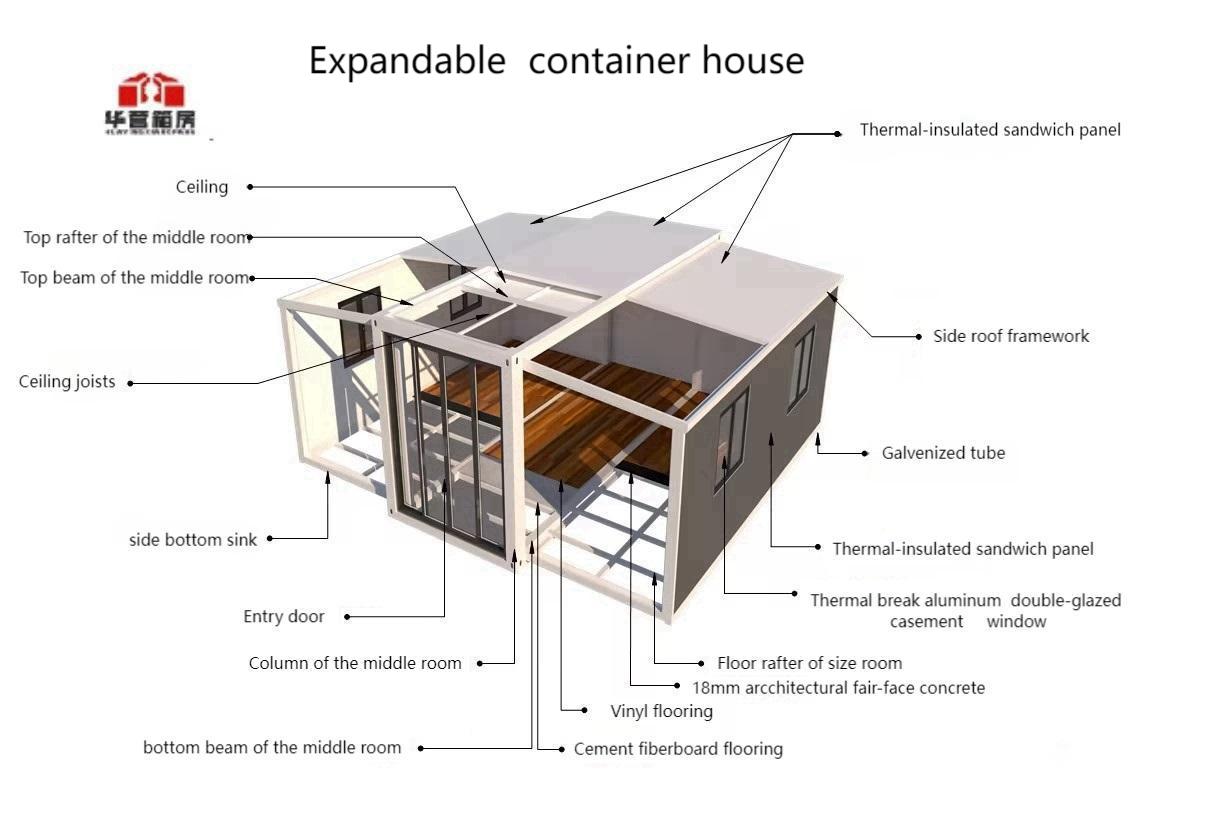
This dual-wing design, for example, maximizes space while ensuring stability. Key features include reinforced foundations, thermal breaks for temperature control, and flexible layouts that adapt to your needs. It’s not just a house; it’s a smart, resilient system designed for Spanish living.
Key Considerations for Spanish Buyers
Before you jump in, keep these Spain-specific tips in mind. First, regulations vary by region—check local building codes (like the Código Técnico de la Edificación) to ensure compliance. Second, choose a manufacturer familiar with Spanish conditions. For instance, homes in areas prone to wildfires need fire-resistant materials, while coastal properties require corrosion-proof components. Finally, think about orientation: positioning your home to maximize natural light and shade can slash energy bills. Partner with a reputable prefab company that handles permits and installations—it’ll save you endless paperwork and stress.
Is a Prefab House Right for You?
If you value speed, sustainability, and style, prefab houses in Spain are a no-brainer. They’re ideal for first-time buyers, eco-conscious families, or anyone tired of construction chaos. Plus, with customization options galore, you can have a home that reflects your personality without the wait. As Spain continues to prioritize green building, prefab isn’t just a trend—it’s the future. So why not explore your options? Your new home could be just a factory away.
FOB to Landed Cost Breakdown: Spain
The table below shows the full cost chain for importing expandable container houses to Spain via the Port of Barcelona. All prices are in USD; Spanish IVA (VAT) is calculated on the CIF value.
| Cost Component | 10ft Expandable | 20ft Expandable | 20ft Apple Capsule | 40ft Expandable |
|---|---|---|---|---|
| FOB Price (China factory) | $9,500 | $12,800 | $15,800 | $18,500 |
| Ocean Freight (China to Barcelona) | $2,300 | $2,900 | $2,900 | $3,600 |
| Marine Insurance | $150 | $200 | $240 | $280 |
| CIF Value | $11,950 | $15,900 | $18,940 | $22,380 |
| EU Import Duty (HS 9406.00, 0%) | $0 | $0 | $0 | $0 |
| Spanish IVA (21% on CIF) | $2,510 | $3,339 | $3,977 | $4,700 |
| Customs Clearance & Documentation | $350 | $350 | $350 | $400 |
| Inland Transport (Barcelona to Madrid) | $500 | $600 | $600 | $800 |
| Foundation / Site Preparation | $1,500 | $2,000 | $2,000 | $2,500 |
| Installation & Hookup | $500 | $700 | $700 | $1,000 |
| Total Landed Cost (USD) | $17,310 | $22,889 | $26,807 | $32,280 |
| Total Landed Cost (EUR approx.) | ~EUR 15,900 | ~EUR 21,100 | ~EUR 24,700 | ~EUR 29,700 |
Note: Exchange rate at 1 USD = 0.92 EUR (August 2026). IVA is recoverable for VAT-registered businesses in Spain.
Spanish Building Regulations
Container houses imported to Spain must comply with the Codigo Tecnico de la Edificacion (CTE) — Spain’s technical building code. Key requirements include:
- Structural safety: Documento Basico SE (DB-SE) — load-bearing capacity for wind and seismic zones
- Energy efficiency: DB-HE — thermal envelope U-values ranging from 0.23 to 0.41 W/m2K depending on climate zone (A1-E1)
- Permitting: Most autonomous communities allow simplified permits for prefabricated structures under 70 sqm
- EU compliance: CE marking required for construction products placed on the Spanish market
Frequently Asked Questions
Do I need a building permit for a prefab house in Spain?
Units under 70 sqm typically qualify for simplified permitting (comunicacion previa) in most autonomous communities. Larger units require a full licencia de obras. Always check with your local town hall (ayuntamiento).
What is the import duty for container houses in Spain?
Under the EU Common Customs Tariff, HS code 9406.00 carries a 0% duty rate. Spanish IVA at 21% applies to the CIF value, recoverable for VAT-registered businesses.
How long does shipping take from China to Spain?
Ocean freight from Chinese ports to Barcelona takes 30-40 days. Customs clearance adds 3-5 days. Total timeline from order to installation is typically 55-76 days.
Can prefab houses withstand Spanish climate zones?
Yes. For northern Spain (climate zones D-E), upgrading to 100mm polyurethane insulation achieves U-values of 0.21-0.24 W/m2K, meeting CTE DB-HE requirements. For coastal and southern zones, standard 75mm panels suffice.
Contact Huaying
Email: jack@huayinghouse.com
WhatsApp: +86 153-0318-4505
Factory Address: Fucheng County, Hengshui City, Hebei Province, China