
Explore the innovative 1400H 14m² sea transportation foldable container house models – standard and enhanced editions. Discover their structural differences, deployment advantages, and applications in Australia’s construction sites, emergency housing, and commercial projects. Learn how these cost-effective, rapidly deployable units solve space challenges while meeting international shipping standards.
Introduction: The Future of Modular Living Down Under
G’day mates! If you’ve been scratching your head over efficient temporary housing solutions in Australia’s booming construction sector or remote mining camps, you’re in the right place. Today, we’re diving deep into the game-changing 1400H 14m² sea transportation foldable container house – a true-blue innovation that’s turning heads from Sydney’s urban development sites to Perth’s resource projects. These compact yet robust units are redefining how we think about temporary structures, offering a brilliant blend of portability, durability, and functionality that’s perfectly suited for Australia’s diverse landscapes and demanding work environments.
What makes these units particularly fascinating is their ingenious foldable design that slashes transportation costs by up to 70% compared to traditional containers. Imagine shipping 12 standard units in a single 40HC container – that’s the kind of efficiency that makes project managers’ hearts skip a beat! But here’s the kicker: despite their compact folded profile, these units unfold into surprisingly spacious 14m² living quarters that can be deployed in minutes, not days. Whether you’re housing workers in the Outback or setting up emergency shelters after cyclones in Queensland, these modular marvels deliver where it counts.
Now, let’s get our hands dirty and explore the two variants – the standard 1400H and its souped-up sibling, the 1400H Pro. Both share the same DNA but come with distinct features that cater to different needs and budgets. We’ll unpack every detail, from their structural specifications to real-world applications across Australia’s harsh environments.
Meet the 1400H Standard: The Workhorse of Temporary Housing
First up, let’s introduce the 1400H 14m² sea transportation standard version – the reliable workhorse that’s been making waves across Australian construction sites and temporary facilities. This model strikes an impressive balance between affordability and functionality, making it the go-to choice for projects where budget constraints are tight without compromising on essential features.
Structural Brilliance: Built for Australian Conditions
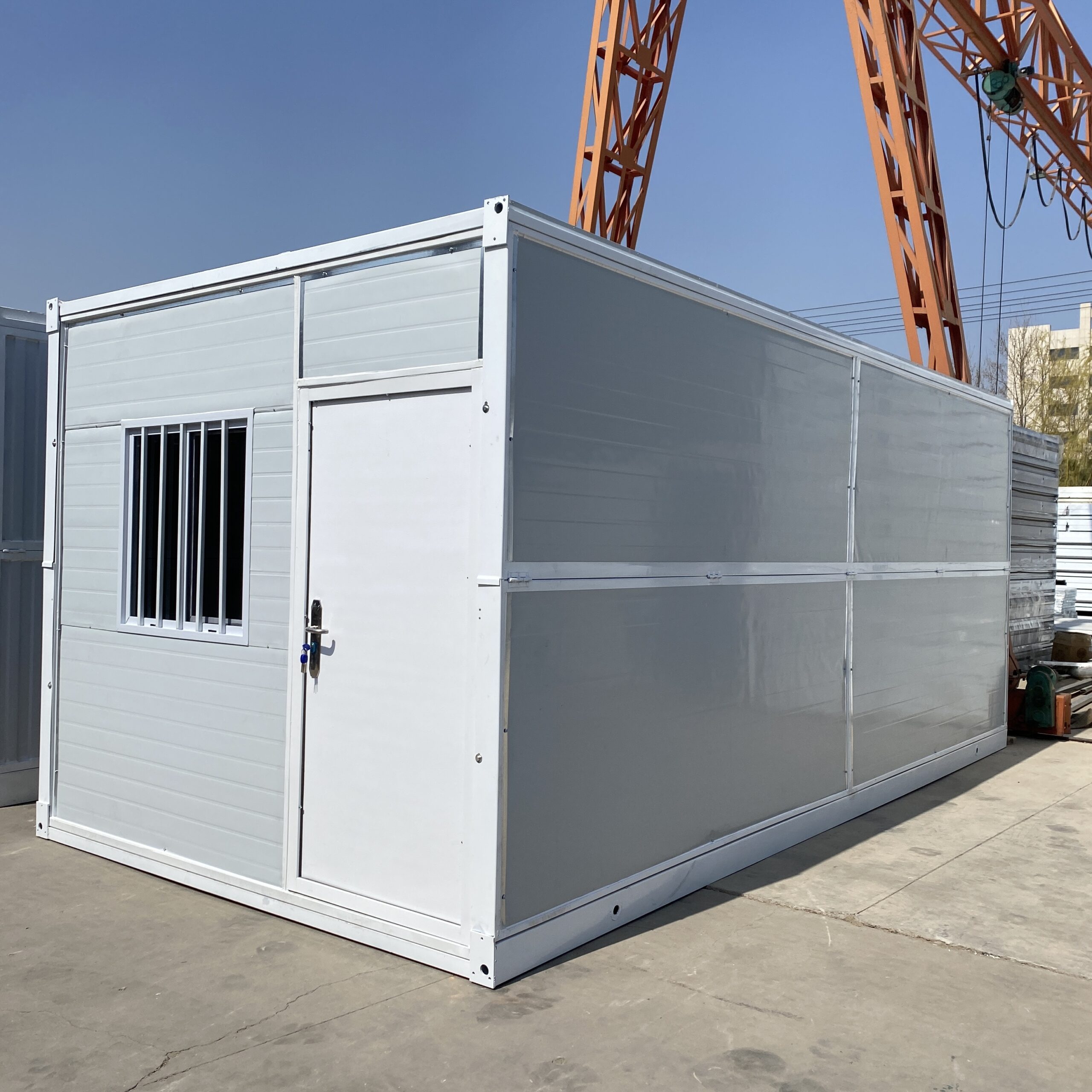
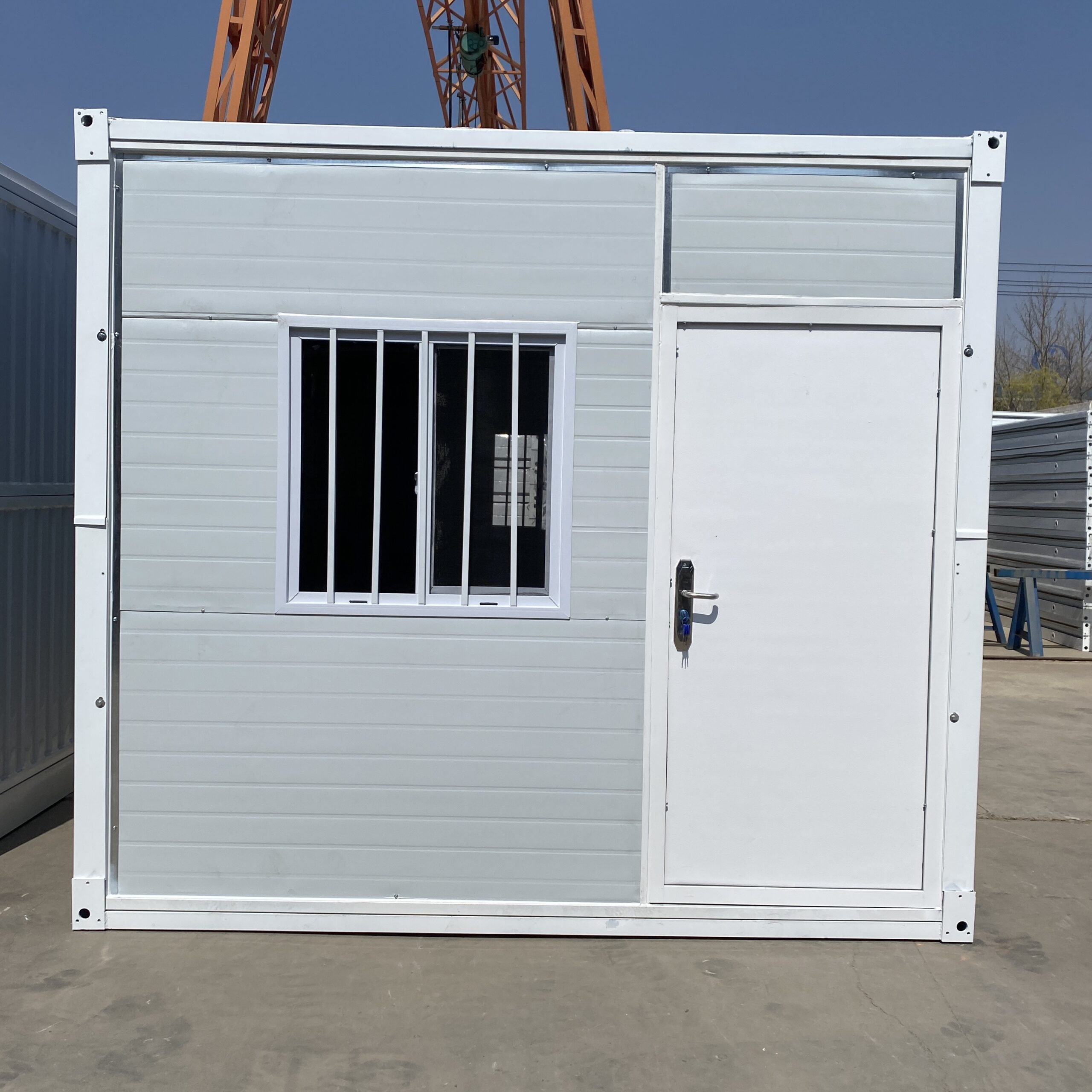
The 1400H Standard features a clean, professional aesthetic with its white frame paired with light gray wall panels – a color scheme that reflects harsh sunlight and blends seamlessly into Australian industrial landscapes. But don’t let its sleek appearance fool you; this unit is engineered tough. The frame utilizes Q235 full galvanized steel pipes with spray plastic baking paint, giving it a solid 10-year lifespan even in Australia’s corrosive coastal environments or dusty desert conditions.
What truly sets this unit apart is its foldable frame design. When folded for transport, it measures just 5900mm (length) × 2480mm (width) × 340mm (height), making it incredibly compact for shipping. Once on-site, it unfolds to an impressive 5900mm × 2480mm × 2540mm externally, with internal dimensions of 5720mm × 2360mm × 2410mm – that’s a proper 14m² of usable space that doesn’t feel cramped. This transformation happens in minutes, requiring minimal labor and no specialized equipment – a critical advantage when setting up remote camps in Australia’s vast interior.
Interior Features: Practicality Meets Efficiency
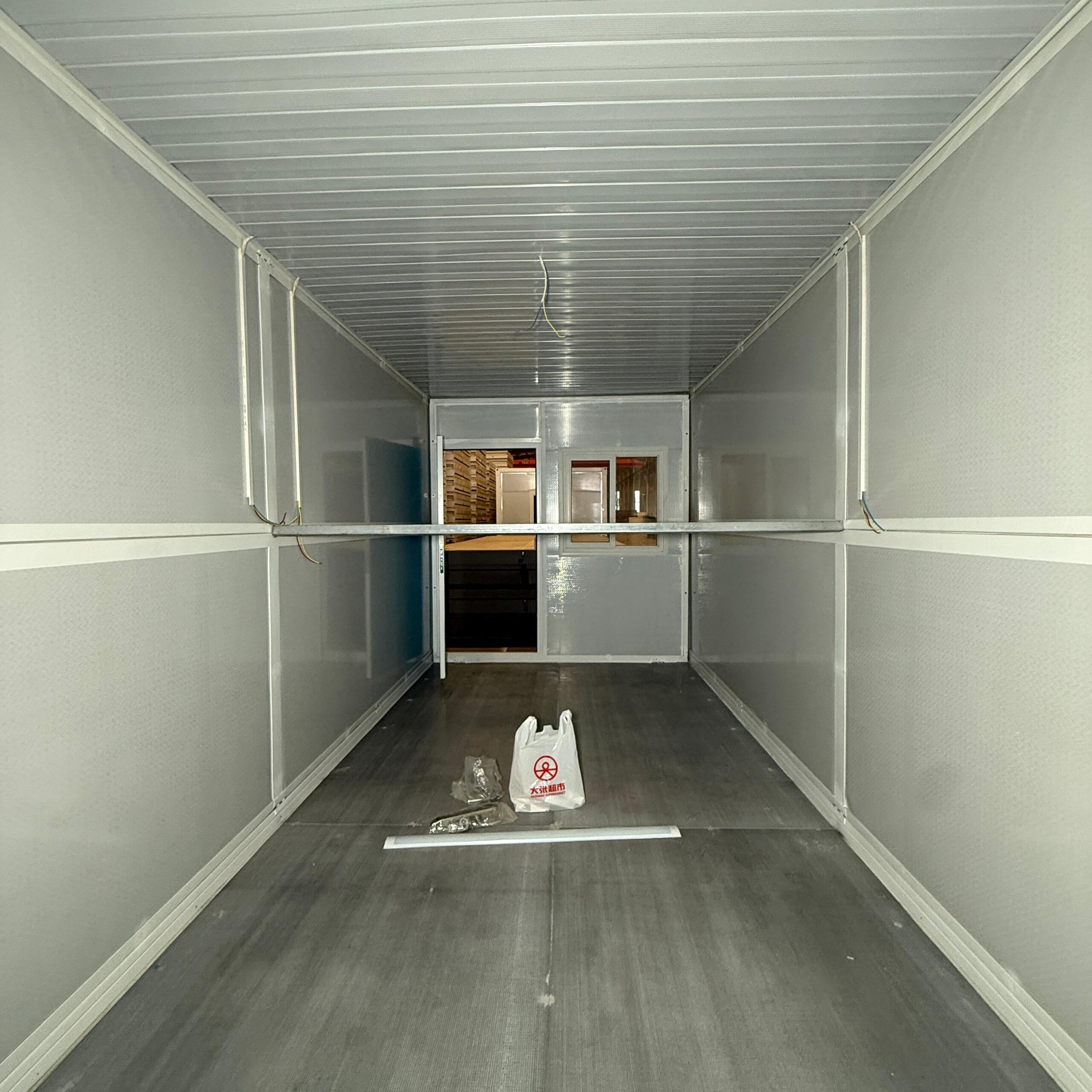
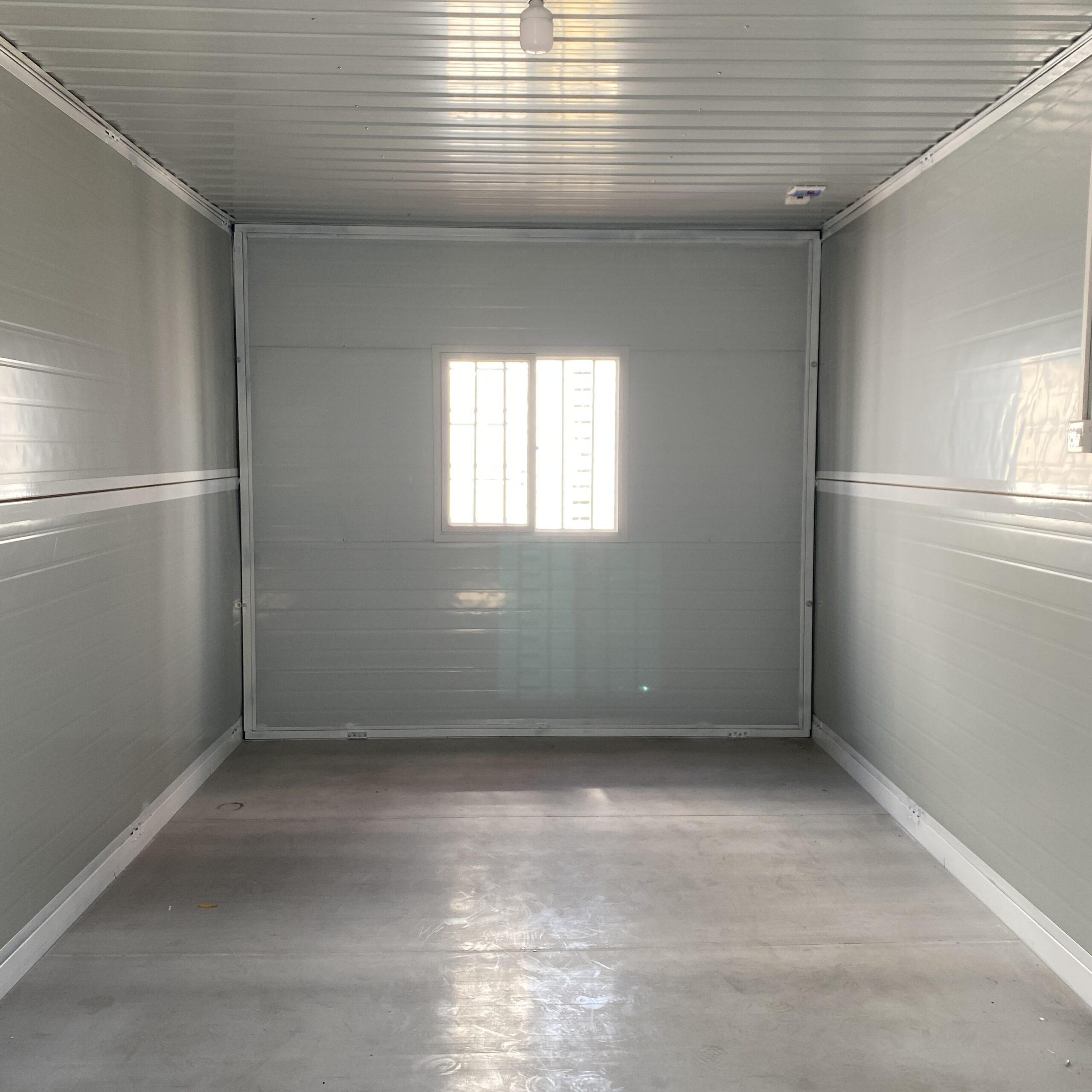
Stepping inside the 1400H Standard, you’ll find a thoughtfully designed space optimized for functionality. The flooring features durable cement surfaces that withstand heavy foot traffic typical in Australian work camps. The electrical system is robust, featuring European standard sockets (perfect for compatibility with Australian worksite equipment) and comprehensive wiring: 4mm² main lines, 1.5mm² lighting circuits, 2.5mm² socket lines, and 1.5mm² grounding lines – all protected by a 32A circuit breaker for safety.
Natural lighting floods the space through two 900×900mm PVC plastic steel windows with double-layer hollow glass, reducing the need for artificial lighting during Australia’s long sunny days. For evening hours, a 21W LED strip light provides ample illumination. The entrance is secured by a W970×H1970 steel anti-theft door – a crucial feature for remote Australian sites where security is paramount.
Climate Control: Standing Up to Australian Extremes
Australia’s climate demands serious insulation, and the 1400H Standard delivers. The front and rear walls feature 65mm thick EPS purified boards (12kg density), while the side walls use 50mm EPS boards. The roof incorporates 14kg/m³ 75mm glass wool rolls – materials specifically chosen to handle temperature swings from Melbourne’s chilly winters to Darwin’s sweltering heat. Combined with D-type rubber strips and structural sealant for dust and waterproofing, these units maintain comfortable interiors regardless of external conditions.
The drainage system employs a simple yet effective natural gravity design without complex piping – ideal for temporary setups where quick deployment matters more than elaborate infrastructure. This straightforward approach aligns perfectly with Australia’s “no-fuss” construction mentality.
Transportation Logistics: Optimized for Australian Shipping
When it comes to moving these units across Australia or internationally, the 1400H Standard shines. Its folded dimensions (5.9×2.48×0.35M) and 5.12 CBM volume allow for efficient sea freight, with 12 units fitting neatly into a single 40HC container. Weighing over 900kg and classified under HS code 9406900090, these units meet all international shipping requirements while keeping transport costs remarkably low – a significant advantage for Australian companies operating in the Asia-Pacific region.
Introducing the 1400H Pro: The Enhanced Powerhouse
Now, let’s turn our attention to the 1400H Pro 14m² sea transportation enhanced version – the big brother that takes everything great about the standard model and supercharges it with premium features. If your project demands superior durability, enhanced insulation, or a more upscale appearance, this is the model that delivers the goods without sacrificing the core benefits of foldability and transport efficiency.
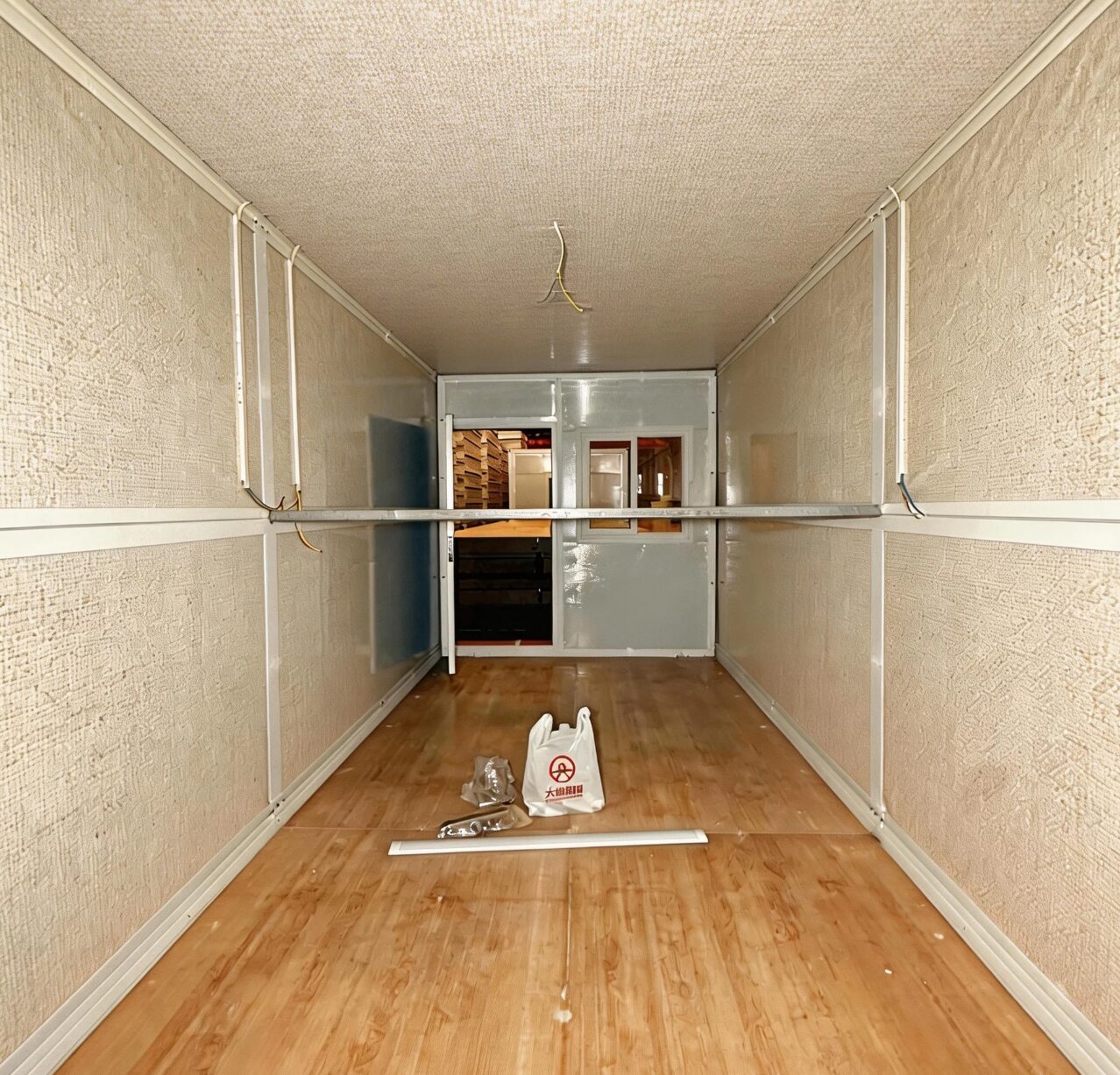
Structural Upgrades: Built to Last Decades
The most significant upgrade in the 1400H Pro is its extended 30-year lifespan – triple that of the standard model. This longevity comes from the same Q235 galvanized steel frame but with the addition of external wall protective panels and enhanced surface treatments. The aesthetic gets a boost too, with the option to add 16mm metal embossed panels (customer-installed) that give the unit a more sophisticated appearance suitable for higher-profile Australian commercial projects or premium temporary accommodations.
The foldable dimensions remain identical to the standard model (5900×2480×340mm folded), preserving all the transportation advantages. However, when unfolded, the Pro model maintains the same external footprint but delivers a more robust structural integrity that withstands Australia’s extreme weather events – from cyclonic conditions in Northern Australia to heavy snow loads in the Alpine regions.
Interior Luxuries: Elevated Comfort and Functionality

Inside the 1400H Pro, you’ll immediately notice the upgraded flooring – durable plastic floor that’s easier on the feet and simpler to clean than the standard cement surface, a welcome feature in Australian environments where dust and mud are constant companions. The electrical system mirrors the standard model’s robust specifications but with enhanced safety features, including the same European standard sockets that work seamlessly with Australian power systems.
The insulation package receives a substantial upgrade in the Pro model. While maintaining the same EPS board specifications as the standard version, the Pro adds 16mm polyurethane insulation metal embossed panels to the exterior walls and Great Wall aluminum tiles to the roof. These additions dramatically improve thermal performance, reducing energy costs for heating and cooling – a critical advantage in Australia’s energy-conscious market. The windows remain the same high-quality PVC plastic steel frames with double glazing, but the overall interior comfort is noticeably enhanced.
Weather Resistance: Superior Protection in Australian Climates
Australia’s diverse climate demands superior building performance, and the 1400H Pro delivers. The enhanced insulation package creates a thermal envelope that maintains stable internal temperatures regardless of external conditions – from the scorching heat of Western Australia’s Pilbara region to the freezing temperatures of Tasmania’s highlands. The additional roof protection from the Great Wall aluminum tiles provides superior waterproofing and longevity, essential for Australia’s intense UV exposure and occasional torrential downpours.
The sealing system uses the same reliable D-type rubber strips and structural sealant as the standard model, ensuring complete dust and water exclusion – vital for Australian mining sites or agricultural applications where fine dust penetration can damage equipment and affect occupant health.
Transportation Efficiency: Premium Features Without Compromise
Despite its enhanced features, the 1400H Pro maintains excellent transportation efficiency. Its folded dimensions (5.9×2.48×0.35M) are identical to the standard model, though the additional features slightly reduce shipping density to 10 units per 40HC container. The weight remains over 900kg, and it shares the same HS code 9406900090, ensuring smooth customs clearance for international projects. For Australian companies operating across the Asia-Pacific, this means they can deploy premium accommodations without prohibitive logistics costs.
Head-to-Head Comparison: Standard vs. Pro Models
Now that we’ve explored both models in detail, let’s put them side by side to see exactly how they stack up against each other. This comparison will help Australian project managers, procurement specialists, and site supervisors make informed decisions based on their specific requirements and budget constraints.
Structural Differences: Longevity vs. Economy
The most striking difference lies in their structural lifespan – the standard model offers a solid 10-year service life, while the Pro version triples that to 30 years. This longevity comes from the Pro’s additional external wall protective panels and enhanced surface treatments, making it the clear choice for Australian long-term projects or permanent temporary facilities. The standard model remains ideal for shorter-term applications like construction phases or seasonal operations.
Aesthetically, both models share the same white frame and light gray wall panels, but the Pro version offers the option to add 16mm metal embossed panels for a more upscale appearance. This feature makes the Pro suitable for Australian commercial applications where visual appeal matters, such as temporary retail spaces or high-end worker accommodations.
Interior Features: Functionality Meets Comfort
Inside, the primary difference is the flooring – the standard model uses durable cement surfaces, while the Pro upgrades to plastic flooring that’s more comfortable underfoot and easier to maintain. For Australian sites where workers may spend extended periods in these units, this comfort upgrade can significantly improve morale and productivity.
The electrical systems are identical in both models, featuring European standard sockets compatible with Australian worksite equipment and comprehensive safety wiring. This consistency is advantageous for Australian companies that might use both models across different sites, as electrical compatibility remains uniform.
Insulation Performance: Energy Efficiency in Australian Climates
Where the Pro model truly shines is in its enhanced insulation package. While both models use the same EPS purified boards and glass wool insulation in their core structure, the Pro adds 16mm polyurethane insulation metal embossed panels to the exterior walls and Great Wall aluminum tiles to the roof. These additions provide superior thermal performance, reducing heating and cooling costs – a critical factor in Australia’s extreme climate zones.
For Australian operations in energy-intensive industries like mining or remote construction, the Pro’s enhanced insulation can lead to significant operational savings over time, potentially offsetting its higher initial cost. The standard model’s insulation remains robust and suitable for most Australian conditions, but the Pro offers premium performance for harsh environments or energy-conscious projects.
Transportation Efficiency: Balancing Features and Logistics
Both models share identical folded dimensions (5900×2480×340mm), but the Pro’s additional features reduce shipping density from 12 to 10 units per 40HC container. This 17% reduction in shipping efficiency is the trade-off for the Pro’s enhanced features. Australian project managers must weigh this against the longer lifespan and improved performance of the Pro model when calculating total cost of ownership.
For international projects originating from Australia, both models maintain the same HS code (9406900090) and similar packaging specifications, ensuring consistent customs clearance procedures regardless of which model is chosen.
Real-World Applications Across Australia
Theoretical specifications are one thing, but how do these units actually perform in Australia’s diverse and demanding environments? Let’s explore some real-world applications where the 1400H models have proven their worth, from the red center to the coastal cities.
Emergency Response: When Every Minute Counts
Australia’s susceptibility to bushfires, floods, and cyclones makes rapid emergency housing solutions critical. The 1400H models have been deployed in disaster response scenarios across Queensland and New South Wales, where their minute-level deployment capability has provided immediate shelter for displaced families. The foldable design allows emergency services to transport dozens of units to affected areas quickly, unfolding them into functional living spaces within hours of arrival – a true lifesaver when traditional construction would take weeks or months.
In the aftermath of Cyclone Yasi, these units served as temporary housing for emergency workers and displaced residents in North Queensland. Their robust construction withstood residual weather conditions, while the enhanced insulation in Pro models provided much-needed comfort during the region’s hot, humid recovery period.
Construction Sites: Boosting Productivity in Remote Locations
Australia’s mining and resource projects often operate in some of the most remote locations on earth, from the Pilbara in Western Australia to the Cooper Basin in South Australia. The 1400H models have become fixtures at these sites, providing comfortable, secure accommodation for workers who would otherwise face lengthy commutes or substandard living conditions.
At a recent iron ore expansion project in the Pilbara, the standard 1400H units housed over 200 workers in a modular camp that was fully operational within three days of arrival – a timeline impossible with traditional construction methods. The units’ durability withstood the region’s extreme temperatures and abrasive red dust, while the European-standard electrical systems seamlessly integrated with Australian worksite equipment.
Commercial Ventures: Temporary Spaces with Permanent Appeal
Beyond industrial applications, the 1400H Pro models have found their way into Australian commercial ventures requiring temporary but premium spaces. In Melbourne’s Docklands precinct, a pop-up retail village utilized Pro units with customized metal embossed panels, creating an attractive temporary shopping destination during a major redevelopment project. The enhanced insulation kept these spaces comfortable during Melbourne’s unpredictable weather, while the professional appearance maintained the area’s upscale aesthetic.
Similarly, at the Gold Coast’s annual surfing competitions, Pro units served as VIP hospitality areas, media centers, and athlete facilities. Their quick deployment allowed organizers to create professional-grade infrastructure that appeared virtually overnight, then disappear just as quickly once the event concluded – perfect for Australia’s vibrant event industry.
Agricultural Applications: Supporting Australia’s Farming Sector
Australia’s vast agricultural regions often require temporary accommodation during peak seasons or for specialist workers. The 1400H models have proven invaluable in Western Australia’s wheat belt and Queensland’s cattle stations, providing comfortable living quarters for seasonal workers, agronomists, and veterinarians.
At a large-scale cotton farm in New South Wales, standard 1400H units house international agronomists during the growing season. The units’ portability allows the farm to relocate accommodations as needed across its 50,000-hectare property, while the robust construction withstands the region’s dust storms and temperature extremes. The enhanced Pro models serve as on-site offices and laboratories, where their superior insulation protects sensitive equipment and provides comfortable working environments.
Key Advantages of the 1400H Foldable System
After examining both models and their applications, it’s clear that the 1400H foldable container house system offers numerous advantages that make it particularly well-suited to Australian conditions and project requirements. Let’s summarize the key benefits that set these units apart from traditional temporary structures.
Unmatched Transportation Efficiency
The most significant advantage of the 1400H system is its revolutionary foldable design that dramatically reduces transportation costs and logistics complexity. By folding to just 340mm in height, these units maximize shipping container space – 12 standard units or 10 Pro units fit into a single 40HC container. This efficiency translates to substantial savings for Australian companies operating remote projects or international ventures, where transportation costs can easily exceed the value of the structures themselves.
For Australian mining companies with operations across the Asia-Pacific, this shipping efficiency means they can deploy standardized accommodations across multiple countries without prohibitive logistics expenses. The uniform HS code (9406900090) and packaging specifications further streamline international shipping processes.
Rapid Deployment: From Arrival to Occupation in Minutes
In Australia’s fast-paced project environments, time is literally money. The 1400H units unfold from their compact transport state to fully functional structures in minutes rather than days or weeks required for traditional construction. This rapid deployment capability is invaluable for emergency response situations, where immediate shelter can save lives, and for commercial projects where early occupancy generates revenue.
At a recent infrastructure project in Adelaide, contractors installed 40 standard 1400H units into a fully functional worker camp in just three days – a timeline that would have been impossible with traditional building methods. This speed allowed the project to commence work two weeks ahead of schedule, generating significant cost savings and competitive advantages.
Exceptional Durability in Australian Conditions
Australia’s harsh climate demands robust construction, and both 1400H models deliver. The galvanized steel frames with spray plastic baking paint resist corrosion from coastal salt spray and outback dust alike. The enhanced Pro model’s 30-year lifespan makes it suitable for long-term installations in Australia’s most demanding environments, from the corrosive atmospheres of industrial sites to the UV-intense regions of Northern Australia.
The insulation packages in both models maintain comfortable internal temperatures despite external extremes – a critical feature given Australia’s reputation for temperature swings that can exceed 40°C in a single day. The D-type rubber seals and structural sealants ensure complete dust and water exclusion, protecting contents and occupants from Australia’s fine red dust and occasional torrential rains.
Cost-Effective Without Compromising Quality
The 1400H system delivers exceptional value by balancing cost-effectiveness with quality construction. The standard model provides all essential features at an accessible price point, making it ideal for budget-conscious Australian projects like government infrastructure or resource development. The Pro model, while initially more expensive, offers superior longevity and performance that reduces long-term operational costs – particularly valuable for Australian commercial applications where image and comfort impact customer experience and employee retention.
When calculating total cost of ownership, including transportation, deployment, maintenance, and eventual relocation, the 1400H system often proves more economical than traditional temporary structures or permanent buildings for Australian projects with defined lifespans of 2-10 years.
Environmental Sustainability: A Growing Priority in Australia
As Australia increasingly focuses on sustainable development, the 1400H system offers environmental advantages. The foldable design reduces the carbon footprint associated with transportation by maximizing shipping efficiency. The units’ reusability across multiple projects minimizes construction waste compared to temporary structures designed for single use. The enhanced insulation in Pro models reduces energy consumption for heating and cooling – a significant factor in Australia’s energy-conscious market.
For Australian companies pursuing sustainability certifications or government projects with green requirements, the 1400H system provides a temporary building solution that aligns with environmental objectives without sacrificing functionality or budget considerations.
Important Considerations Before Purchasing
While the 1400H foldable container houses offer numerous advantages, making an informed purchasing decision requires careful consideration of several factors. Let’s explore the key considerations Australian buyers should keep in mind when selecting between the standard and Pro models or evaluating this system against alternatives.
Budget Constraints: Balancing Initial Cost vs. Long-Term Value
Price variations between manufacturers and configurations can be significant in the Australian market. The standard 1400H model typically costs 20-30% less than the Pro version, making it attractive for budget-limited projects. However, Australian buyers should consider total cost of ownership rather than just initial purchase price. The Pro model’s triple lifespan (30 years vs. 10 years) and enhanced insulation may deliver better long-term value for projects extending beyond 5 years, particularly in Australia’s harsh climate zones where energy costs are substantial.
When budgeting, Australian buyers should also factor in transportation costs, which vary depending on destination remoteness. While both models offer excellent shipping efficiency, the Pro’s reduced density (10 vs. 12 units per container) increases per-unit transport costs by approximately 20% – a consideration that may influence the decision for large-scale deployments.
Customization Requirements: Tailoring to Australian Needs
While both 1400H models offer excellent standard features, Australian projects often require specific customizations. Common requests include reinforced flooring for heavy equipment installations, additional windows for natural ventilation in tropical regions, or specialized electrical configurations for mining operations. Such customizations typically increase costs by 15-40% and may extend delivery times by 4-8 weeks – critical considerations for Australian projects with tight timelines.
For Australian buyers requiring extensive modifications, it’s worth noting that the Pro model’s enhanced structural capacity accommodates more substantial customizations than the standard version. The additional external wall protective panels provide better attachment points for specialized equipment or climate control systems often needed in Australian remote operations.
Transportation Limitations: Navigating Australian Logistics
Despite their compact folded design, transporting 1400H units to extremely remote Australian locations may present challenges. While standard road transport handles delivery to most regional centers, reaching isolated mine sites or Aboriginal communities in the Outback may require specialized vehicles or permits. Australian buyers should confirm delivery logistics with suppliers, particularly for destinations beyond major cities like Perth, Darwin, or Alice Springs.
For international projects originating from Australia, buyers should verify that destination countries’ customs authorities accept the HS code 9406900090 without additional inspections or duties. While this code is widely recognized, some countries may have specific requirements for temporary structures that could affect delivery timelines.
Regulatory Compliance: Meeting Australian Standards
Australian building regulations vary between states and territories, with specific requirements for temporary structures. The 1400H models generally comply with Australian Standards for transportable buildings, but local authorities may impose additional conditions regarding fire safety, accessibility, or connection to utilities. Australian buyers should consult with local building authorities before finalizing purchases, particularly for long-term installations or public facility applications.
For Australian projects in cyclonic regions (Northern Australia) or alpine areas (Tasmania, Victorian Alps), enhanced models with additional structural reinforcement may be required to meet local building codes. The Pro model’s superior specifications often provide a better starting point for compliance in these demanding Australian environments.
Long-Term Usage: Planning for Australian Conditions
If Australian buyers plan to use these units for extended periods (5+ years), maintenance requirements and durability become critical considerations. The standard model’s 10-year lifespan is suitable for medium-term use but may require more frequent maintenance in Australia’s harsh conditions. The Pro model’s 30-year lifespan with enhanced protective features offers better long-term value for permanent temporary installations like Australian mining camps or defense facilities.
Australian buyers should also consider relocation plans – one of the 1400H system’s key advantages is its reusability across multiple projects. Units should be inspected and refurbished between deployments to maintain their structural integrity and appearance, particularly when moving between Australia’s diverse climate zones.
Conclusion: The Smart Choice for Australian Projects
As we’ve explored throughout this comprehensive analysis, the 1400H 14m² sea transportation foldable container house – in both standard and Pro versions – represents a significant leap forward in temporary building solutions for the Australian market. These ingeniously designed units address the unique challenges of Australia’s vast geography, harsh climate, and demanding project requirements while delivering exceptional value, speed, and versatility.
For Australian project managers facing the pressures of tight timelines, remote locations, and budget constraints, the 1400H system offers a compelling solution that traditional construction methods simply cannot match. The ability to transport dozens of units in a single container, deploy them in minutes, and provide comfortable, durable accommodations or workspaces transforms how we approach temporary infrastructure across Australia – from emergency response in cyclone-prone Queensland to resource development in the Pilbara.
The choice between the standard and Pro models ultimately comes down to specific project requirements. The standard 1400H delivers exceptional value for budget-conscious Australian projects with medium-term needs, while the Pro version justifies its premium with superior longevity, enhanced insulation, and more sophisticated appearance suitable for high-profile Australian commercial applications. Both models share the revolutionary foldable design that makes them true game-changers in the Australian temporary building market.
As Australia continues to develop its infrastructure, resources, and emergency response capabilities, the 1400H foldable container house system stands ready to meet the challenge – providing rapid, reliable, and cost-effective solutions that don’t compromise on quality or comfort. For Australian companies looking to optimize their temporary building strategies, these innovative units represent not just a purchase, but a smart investment in efficiency, flexibility, and future-proofed infrastructure.
Whether you’re planning a mining camp in Western Australia, setting up emergency shelters in New South Wales, or creating temporary commercial spaces in Melbourne, the 1400H foldable container house offers a proven solution that’s been tested and trusted in Australia’s most demanding conditions. It’s time to embrace the future of temporary buildings – compact when transported, spacious when deployed, and always ready to meet Australia’s unique challenges head-on.