
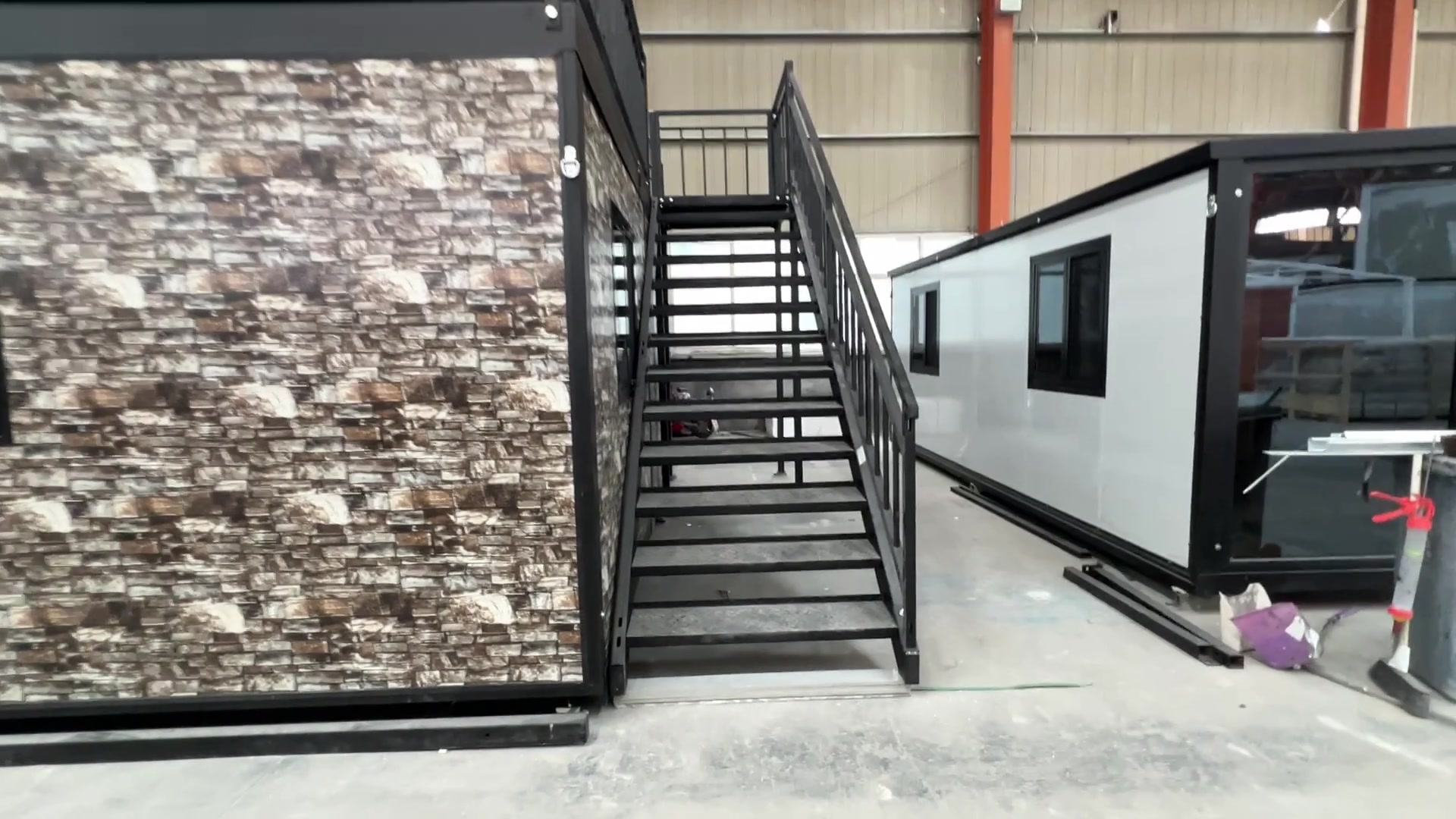
see how compact 10ft expandable container house – a compact, sustainable, and versatile housing solution suited to Guam’s tropical climate. Learn how this transformable unit maximizes space, withstands typhoons, and offers eco-friendly living with quick installation.
When you think of Guam, you picture pristine beaches, vibrant culture, and challenging real estate constraints. But what if I told you there’s a housing solution that tackles space limitations head-on while embracing sustainability? Enter the 10ft expandable container house – a engineered design that’s transforming how Guamanians live, work, and play.
)
Why Guam Needs prefabricated housing Solutions
Guam’s unique challenges – limited land, high construction costs, and vulnerability to typhoons – demand compact thinking. Traditional housing often struggles with these constraints, but container houses flip the script. They’re built to withstand harsh weather, cost significantly less than conventional builds, and can be installed in days rather than months. For islanders seeking affordable, resilient homes, this isn’t just an option; it’s a necessity.
)
The benefits of Expandable Design
At first glance, the 10ft container looks deceptively simple – a compact steel box measuring just 10×8 feet. But here’s where the engineering genius kicks in: with the push of a button or manual cranking, the unit expands to nearly triple its original size! This “transformer” approach maximizes usable space without compromising structural integrity.
The expansion mechanism reveals a full living area, complete with fold-down furniture, integrated storage, and even space for a compact kitchenette. It’s like watching a puzzle solve itself – walls slide out, floors lock into place, and suddenly you’re standing in a cozy, functional home. suited to Guam’s smaller lots or as an accessory dwelling unit (ADU) for multigenerational families.
Built for Guam’s Toughest Conditions
Let’s talk durability. These aren’t your average shipping containers repurposed as homes. They’re engineered with:
- Corrosion-resistant steel to withstand salty air and humidity
- Reinforced frames rated for Category 5 typhoon winds
- Insulated panels that keep interiors cool without excessive AC use
- Elevated foundations to prevent flooding during heavy rains
One Tumon Bay resident shared how her container home emerged unscathed after Typhoon Mawar, while neighboring structures suffered significant damage. “It felt like being in a safe vault,” she recalled. That peace of mind? Priceless.
Practical Applications in Guam
Don’t let the “house” label fool you – these units shine in multiple roles across Guam:
- Tiny Homes: Affordable starter homes for young professionals
- Vacation Rentals: Low-maintenance units for Guam’s tourism industry
- Home Offices: Quiet, dedicated workspaces separate from main living areas
- Emergency Shelters: Rapidly deployable housing after natural disasters
The Eco-Friendly Edge
In an island paradise like Guam, sustainability isn’t just trendy – it’s essential. These container houses score major eco-points:
- Repurposing industrial containers reduces manufacturing waste
- Solar-ready designs pair well with Guam’s abundant sunshine
- Rainwater harvesting systems can be easily added
- Smaller footprint means less land disturbance
One Hagåtña family cut their energy bills by 60% after adding solar panels to their container home. “We’re living lighter on the land without sacrificing comfort,” they told us.
Getting Started in Guam
Ready to explore this housing shift? Here’s the quick-start guide:
- Consult Local Experts: Work with Guam-based suppliers familiar with building codes
- Site Preparation: Ensure proper grading and utility connections
- Customization: Choose layouts, finishes, and eco-features
- Delivery & Setup: Most installations take just 1-3 days
With prices starting around $25,000 (fully installed), it’s an investment that pays for itself through durability and energy savings. Many Guam banks now offer specialized loans for container housing, recognizing their growing legitimacy.
Guam Landed-Cost Breakdown
Guam sits inside the United States customs territory, so a shipment from Tianjin is treated as a US import rather than a small-island consignment. The table below models one 10ft expandable unit with standard fit-out, shipped FOB Tianjin and delivered to a site within 20 km of Apra Harbor. Duty treatment for prefabricated buildings under HTSUS 9406.90 should be confirmed with a licensed customs broker at the time of booking, because Section 301 measures have been revised repeatedly.
| Cost item | Basis | Amount (USD) |
|---|---|---|
| Container house, 10ft expandable, standard fit-out | Ex-works Tianjin | 5,800 |
| Inland haulage, factory to Tianjin port | Per unit | 180 |
| Export documentation and customs clearance | Per shipment | 95 |
| Ocean freight, Tianjin to Apra Harbor | Per unit, shared container | 1,250 |
| Marine insurance | 0.3% of CIF | 22 |
| CIF Apra Harbor | 7,347 | |
| US import duty, HTSUS 9406.90 | Rate varies; confirm with broker | 3% to 28% of CIF |
| Terminal handling and port charges, Apra | Per unit | 210 |
| Drayage, Apra Harbor to site (within 20 km) | Per unit | 160 |
| Guam Business Privilege Tax | 4% of landed value | approx. 245 |
| Landed on site, before installation | 8,000 to 10,700 |
Two variables move the total more than anything else. The first is duty classification: a broker who files 9406.90 correctly as a prefabricated building will not pay the same rate as one who files the panels as separate steel sections. The second is freight consolidation. A single 10ft unit cannot fill a container efficiently on its own; combining two or three units in one booking typically reduces the per-unit ocean cost by 30 to 40 percent.
Compact Expandable Housing: Outlook
As Guam navigates population growth and climate challenges, compact housing like the 10ft expandable container house isn’t just convenient – it’s crucial. By combining typhoon resilience, space efficiency, and sustainable design, these units offer a blueprint for modern island living.
Whether you’re a first-time homebuyer, an investor, or simply someone who values smart design, this expandable unit proves that big things do come in small packages. In Guam’s dynamic landscape, that is a meaningful shift for island housing.
Guam Container House FAQ
What import duty applies to a container house entering Guam?
Guam sits inside the US customs territory, so an imported container house is entered under HTSUS 9406.90 and attracts the 2.9% general duty rate, plus Section 301 List 3 at 25% on Chinese-origin goods, for an effective 27.9%. Guam also levies a 4% Business Privilege Tax on the landed value at import. Confirm the eight-digit classification with a licensed broker before the unit ships.
Does a 10ft expandable container house meet Guam’s typhoon wind requirements?
Guam falls in a high-wind zone where design wind speeds reach roughly 170-200 mph for critical structures. A standard 10ft unit should be specified with documented anchorage to a concrete foundation, continuous load path from the corner castings, and a roof detail rated for uplift. Without certified anchorage the shell alone does not determine performance.
How much does a 10ft expandable container house cost landed in Guam?
A 10ft expandable unit starts around USD 8,500 FOB Tianjin. With ocean freight to Apra Harbor, duty, the Guam BPT and local delivery, budget roughly USD 8,000-10,700 on top of the FOB price depending on consolidation. Putting two or three units in one booking typically cuts per-unit ocean cost by 30-40%.
How long does shipping to Guam take?
Manufacturing is 15-25 days. Ocean transit from Tianjin to Apra Harbor is typically 25-40 days depending on transshipment, so plan for 45-65 days door to door.
Is a container house suitable for Guam’s humidity and salt air?
Yes, provided the corrosion grade matches the site. Guam is a marine environment, so specify C4 or C5-M under ISO 12944 with hot-dip galvanising at cut edges and fixings. A lighter inland specification is the usual cause of early corrosion on tropical islands.
FOB to landed cost: a 20ft expandable unit to Guam
Guam is a United States territory, so goods move under US customs rules rather than through an independent tariff regime. The island sits outside the US customs territory for some purposes but imports are entered through US Customs and Border Protection, and the Section 301 tariff on Chinese-origin goods applies. Confirm the classification with a broker before booking.
| Cost line | Basis | 20ft expandable |
|---|---|---|
| FOB Tianjin | factory-direct, base unit | 12,800 |
| Ocean freight | Tianjin to Apra Harbor | 1,950 |
| Marine insurance | 0.3 % of CIF | 45 |
| CIF value | 14,795 | |
| US base duty | HTSUS 9406.20.00 at 2.9 % | 429 |
| Section 301 List 3 | 25 % of CIF, Chinese origin | 3,699 |
| Guam use tax / local charges | territorial, confirm with broker | 620 |
| Inland transport and cranage | Apra Harbor to site | 480 |
| Typhoon anchorage package | uplift anchors, impact shutters | 1,080 |
| Foundation | pad or pier, coral-limestone ground | 900 |
| Installation and hookup | 2–3 days, two technicians | 550 |
| Total landed and installed | 23,353 |
Two lines on this table are specific to Guam rather than to the mainland United States. The first is the typhoon anchorage package: Guam lies in a direct typhoon track and its building code contemplates design wind speeds in the range of 180–200 mph for critical exposure, so uplift anchorage and impact protection are structural requirements rather than optional upgrades. The second is the ground: coral limestone and volcanic soils vary sharply across the island, so a site-specific foundation check is worth more than a generic pad allowance.
Frequently asked questions
Does the Section 301 tariff apply to a container house shipped to Guam?
Yes, for goods of Chinese origin. Guam is a US territory and imports are entered under US customs procedures, so the same HTSUS classification (9406.20.00) and the same Section 301 List 3 additional duty of 25 % apply as for a mainland shipment. Duty is assessed on the CIF value, which makes the ocean freight and insurance figures part of the duty base.
What wind speed should a container house in Guam be designed for?
Guam is in a direct typhoon track and local practice follows US code provisions for high-wind regions, with design wind speeds far above mainland coastal values. In practice that means cast-in uplift anchorage rather than reliance on the unit mass, increased fastener density on wall and roof panels, and impact-rated openings or protective shutters for anything within reach of wind-borne debris.
How long does shipping take from Tianjin to Guam?
Plan on four to six weeks of transit to Apra Harbor once the container is loaded, plus one to two weeks for booking and documentation. Add a week for customs entry and local delivery. Delivery dates should be set from the vessel schedule rather than from an estimate, because Guam is served by a limited number of services.
Is a container house legal as a permanent dwelling in Guam?
It can be, but it is reviewed as a structure and must satisfy the local building code, including wind and seismic provisions, and obtain a permit from the territorial building authority. Confirm the zoning for the parcel and the intended occupancy first, because the review path for a permanent dwelling differs from a temporary or auxiliary structure.
For pricing and lead times, contact Jack at jack@huayinghouse.com or WhatsApp +86 153-0318-4505.
Typhoon wind loading on Guam, in numbers
Guam sits in one of the most active typhoon basins in the world, and the design wind speed that governs a structure there is far above what most container house specifications assume. The island falls in the ASCE 7 risk category for essential and hazardous facilities in several districts, and the basic wind speed used for residential structures is in the range of 250–270 km/h (about 70–75 m/s) for a 3-second gust, depending on the exposure category and the risk category assigned by the engineer of record.
The consequence for a light steel module is that uplift, not lateral push, governs the connection design. Wind pressure scales with the square of velocity, so a structure designed for 50 m/s experiences roughly 2.4 times the pressure at 70 m/s. For a module weighing a fraction of a concrete building, the net uplift on the roof can exceed the dead load, which means the foundation must be designed as a hold-down system rather than a bearing system. Screw piles with a specified pull-out capacity, or a concrete ring beam with cast-in anchors, are the two configurations that satisfy this; simple concrete pads do not.
Two further details matter in a typhoon zone. The roof edge and corners carry the highest pressure coefficients, so the fixing pattern there must be denser than the field of the roof — a detail that is cheap at the factory and expensive to retrofit. And every opening has to be either impact-rated or protected by a shutter system, because a breached window turns the module into a pressurised box and the failure moves from the cladding to the structure.
Guam duty, tax and shipping
Guam is a United States territory with its own customs territory, which means the Section 301 measures that apply to goods entering the US mainland do not apply in the same way. Goods entering Guam are subject to Guam’s own customs duty under its tariff schedule, and the territory levies a business privilege tax rather than a sales tax. The practical effect is that the landed cost build-up for Guam is materially different from the Los Angeles build-up, and a quotation that reuses a US mainland duty calculation will overstate the tax line while potentially missing the local one.
Guam is a US territory, so the import file that applies is the federal one: HTS 9406.20.00 at 2.9 per cent plus the Section 301 List 3 addition, with no state-level amendment and no free trade agreement to fall back on. The duty stack and the entry documentation are worked through in container houses in Texas: landed costs and building codes, which uses the same federal tariff schedule. Read it for the entry mechanics rather than the state-specific code chapter.
What is specific to Guam is freight and termite risk. The island sits off the main Transpacific rotations, so a single 10ft unit is usually consolidated rather than shipped as a full container, and the local building permit is issued under Guam Building Code rather than a US state code.
Freight is the other variable. Guam is served by transhipment rather than direct service from North China, and the routing adds both transit time and cost compared with a mainland US port. Budget 30–45 days door to door, and confirm with the forwarder whether the container is routed via Japan, Korea or the Philippines, because the transhipment port determines which documentation checks apply.