
摘要: Discover cutting-edge container house office design ideas for commercial spaces with Australia’s 20-foot customized double-wing expansion room. Explore rapid deployment solutions, modular versatility, and sustainable architecture transforming temporary offices, pop-up stores, and mobile workspaces across Sydney, Melbourne, and beyond.
In the evolving landscape of commercial architecture, container house office design ideas are revolutionizing how businesses approach temporary and permanent workspaces. Australia, with its forward-thinking approach to sustainable building practices, has embraced modular construction innovations that blend functionality with aesthetic appeal. At the forefront of this movement is the 20-foot customized double-wing expansion room – a transformative solution for businesses seeking flexible, eco-friendly, and rapidly deployable commercial spaces.
The Rise of Container Architecture in Commercial Design
Container architecture has transcended its industrial origins to become a cornerstone of modern commercial design. From bustling Sydney business districts to remote mining operations in Western Australia, shipping containers are being repurposed into sophisticated office environments that challenge traditional construction norms. This shift reflects a growing demand for sustainable building practices, accelerated project timelines, and adaptable spatial solutions that can evolve with business needs.
The 20-foot double-wing expansion room represents the pinnacle of this evolution. Unlike static container conversions, this innovative design features retractable “wings” that expand the usable space by up to 80%, transforming a compact transport unit into a spacious commercial environment within minutes. This functionality addresses critical pain points in commercial design: the need for rapid deployment, spatial efficiency, and architectural versatility without compromising structural integrity or aesthetic quality.
Anatomy of the Double-Wing Expansion System
The genius of the 20-foot double-wing expansion room lies in its biomechanical design. Drawing inspiration from avian anatomy, the structure features two wing-like extensions that fold flush against the main container body during transport, maintaining standard 20-foot ISO dimensions (2200×5900×2480mm). Upon deployment, these wings extend outward, creating an expanded footprint of 6340×5900×2480mm – nearly doubling the functional area while preserving structural coherence.
This transformation is powered by a precision-engineered hydraulic system that unfolds the wings in under 90 seconds, as demonstrated in the deployment video. The mechanism operates with remarkable efficiency, allowing a single operator to prepare the space for occupancy without specialized tools or extensive labor. This rapid deployment capability makes it ideal for time-sensitive commercial applications such as pop-up retail events, disaster response coordination centers, or temporary project offices on construction sites.
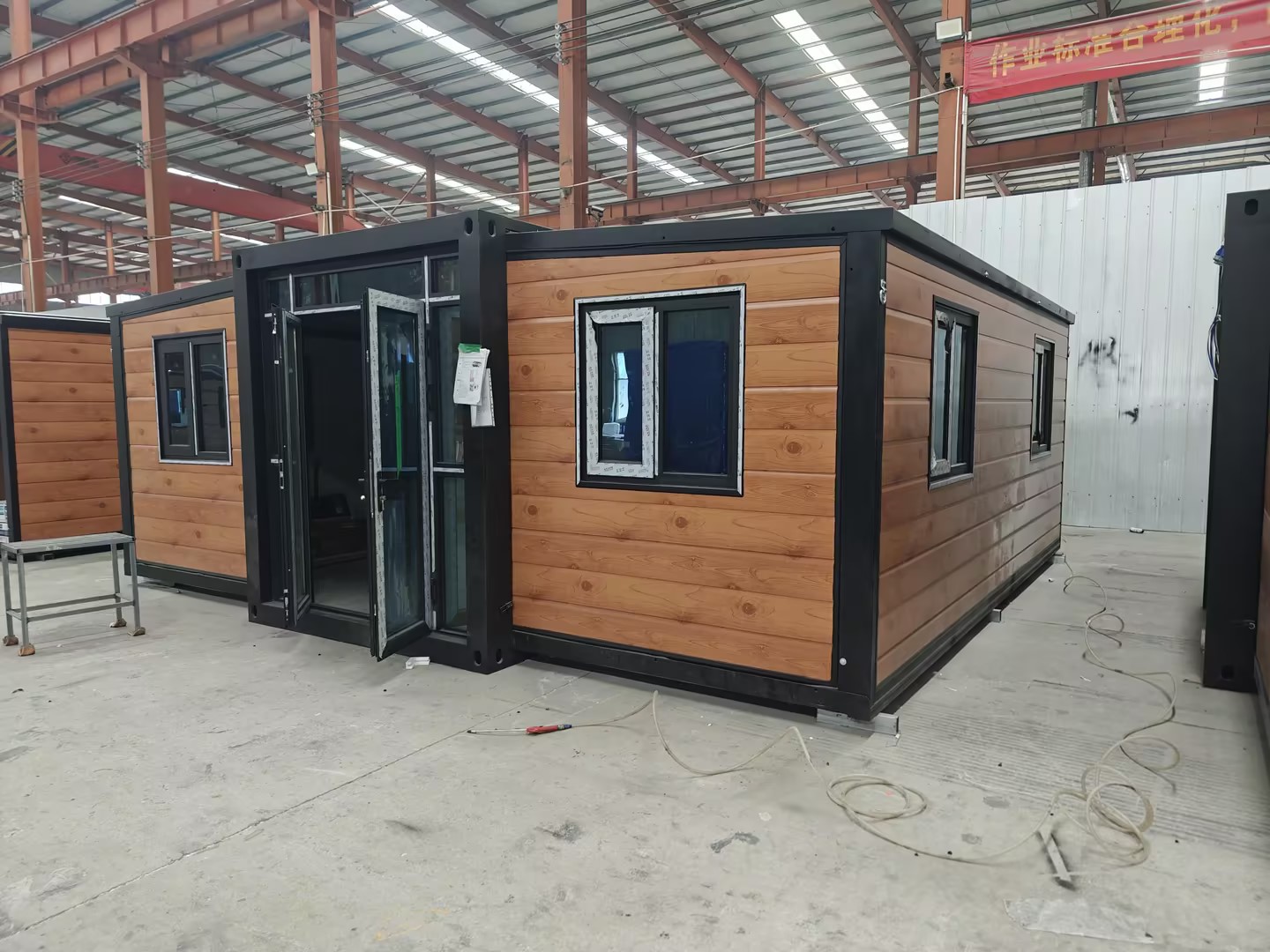
The double-wing design transforms from a compact shipping unit to a spacious commercial environment within minutes
Structural Innovation: Engineering Meets Aesthetics
Beyond its mechanical ingenuity, the double-wing expansion room showcases advanced structural engineering. The frame utilizes hot-dip galvanized steel with carbon fiber reinforcement in critical stress points, creating a robust skeleton that withstands Australia’s diverse climatic challenges – from cyclonic conditions in Queensland to seismic activity in Adelaide. This structural integrity supports an impressive lifespan of 20-30 years, making it a sound long-term investment for commercial enterprises.
The exterior cladding combines functionality with visual appeal. Standard configurations feature weather-resistant steel panels with optional wood-grain or stone-textured finishes that blend seamlessly into both urban and natural environments. For premium applications, the system accommodates full glass curtain walls that flood interior spaces with natural light – a feature particularly valuable for office environments where employee wellbeing and productivity are priorities.
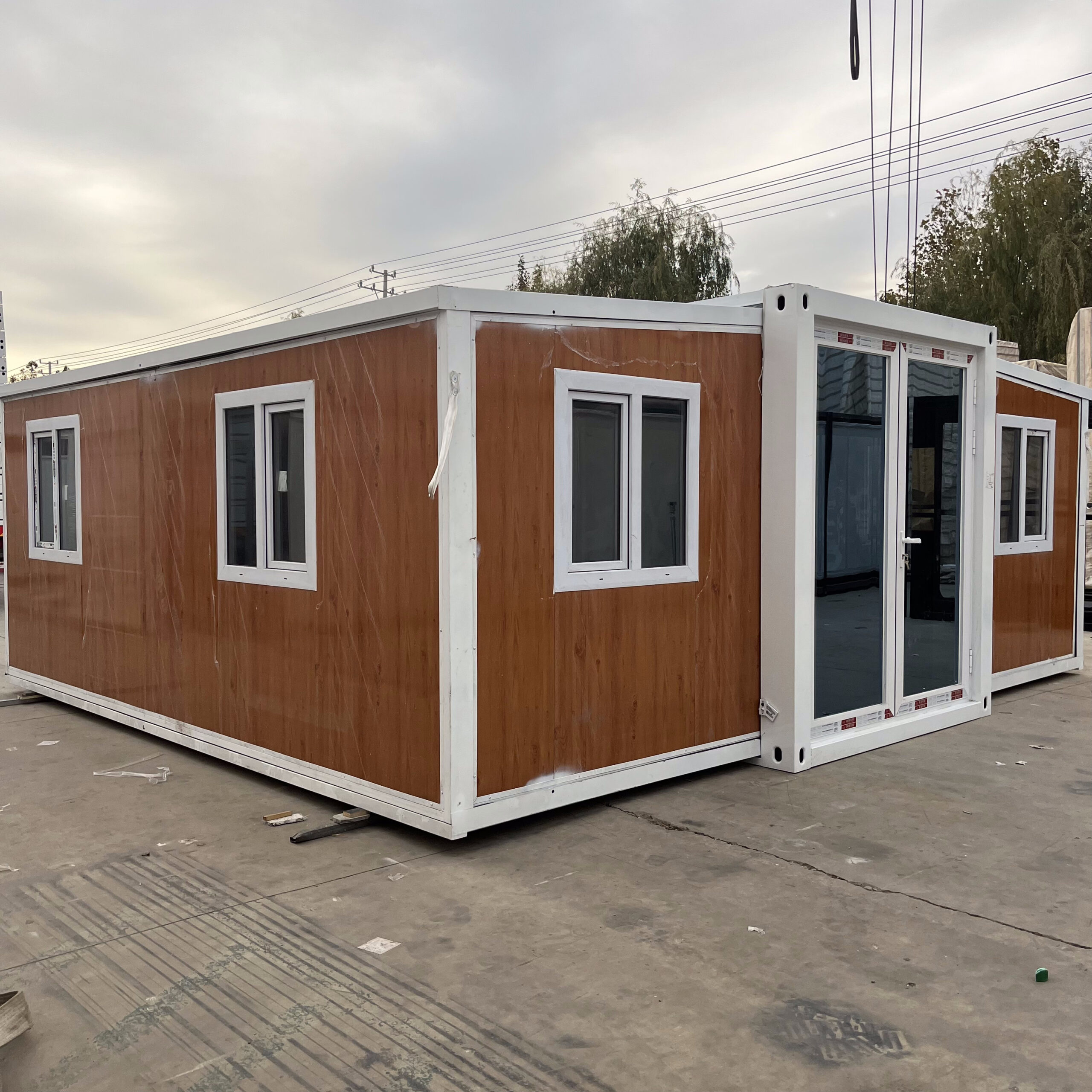
Wood-grain finish options create warmth and sophistication for professional environments
Interior Design Excellence: Maximizing Commercial Functionality
Step inside the expanded container, and you’ll discover a thoughtfully designed commercial space optimized for productivity and comfort. The interior layout eliminates internal support columns, achieving over 90% space utilization efficiency – a stark contrast to traditional construction where structural elements often fragment usable areas. This open-plan flexibility allows for diverse configurations ranging from collaborative work zones to private meeting spaces.
The factory-integrated systems approach ensures complete functionality upon deployment. Electrical wiring, data cabling, HVAC ducts, and plumbing are pre-installed during manufacturing, eliminating the need for on-site trades and reducing setup time to hours rather than weeks. The standard configuration includes:
- Energy-efficient LED lighting with daylight sensors
- Climate control systems with zone-specific temperature regulation
- High-speed data ports and wireless connectivity infrastructure
- Acoustic insulation for sound privacy between work areas
- Fire-rated materials and emergency exit systems
Specialized Commercial Configurations
The true versatility of the double-wing system emerges in its customized commercial applications. Each unit can be tailored to specific business requirements through modular components:
Executive Office Suite
For corporate leadership needing temporary headquarters during renovations or expansion projects, the executive configuration features a private office with panoramic windows, a small conference area, and a reception zone. The expanded wing space accommodates a meeting table for six, while integrated storage solutions maintain an uncluttered professional aesthetic.
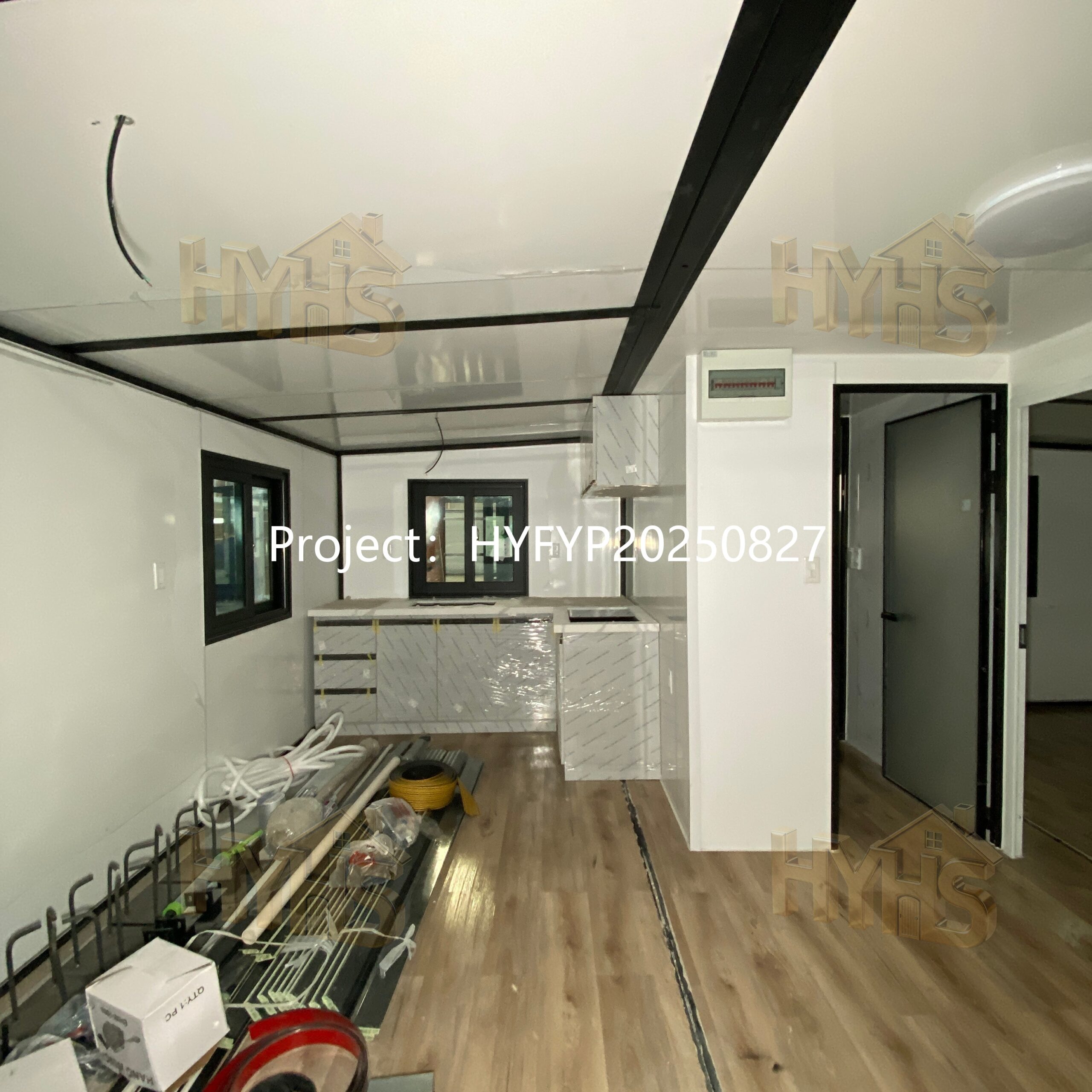
Expanded wing area creates a sophisticated meeting space within the container structure
Retail Pop-Up Store
Retail brands leverage the double-wing system for temporary stores during festivals or market events. The wings unfold to create display walls and customer circulation areas, while integrated lighting showcases merchandise effectively. The container’s mobility allows brands to test new markets without long-term lease commitments, making it ideal for product launches or seasonal retail operations.
Remote Work Hub
In Australia’s mining and resource sectors, remote work hubs provide essential office facilities in isolated locations. These configurations include robust satellite communication systems, climate control for extreme environments, and durable finishes resistant to dust and moisture. The rapid deployment capability minimizes operational downtime during project setup.
Healthcare Clinic
Healthcare organizations utilize these units as mobile clinics for rural communities or disaster response. The expanded space allows for separate consultation and treatment areas, with integrated medical gas lines and biohazard waste management systems. The quick deployment capability is critical during public health emergencies.
Kitchen and Sanitation Solutions
Commercial functionality extends to essential service areas. The integrated kitchen module features commercial-grade appliances including energy-efficient refrigeration, induction cooktops, and stainless steel work surfaces. The design prioritizes both functionality and safety, with fire suppression systems and non-slip flooring as standard features.
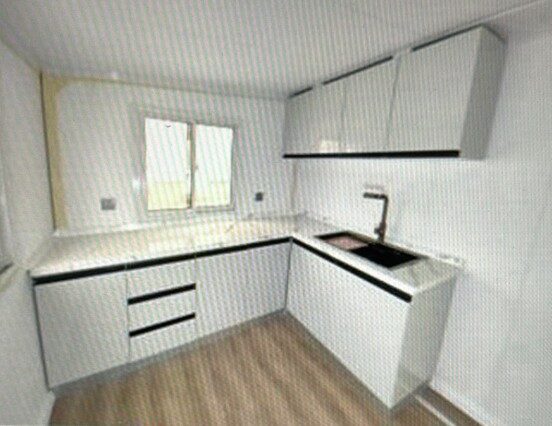
Commercial kitchen module with durable stainless steel surfaces and efficient appliance layout
Similarly, the sanitation module meets rigorous commercial standards with ADA-compliant fixtures, water-saving toilets, and hands-free faucets. The modular design allows for easy maintenance and component replacement, ensuring long-term hygiene and functionality in high-traffic environments.
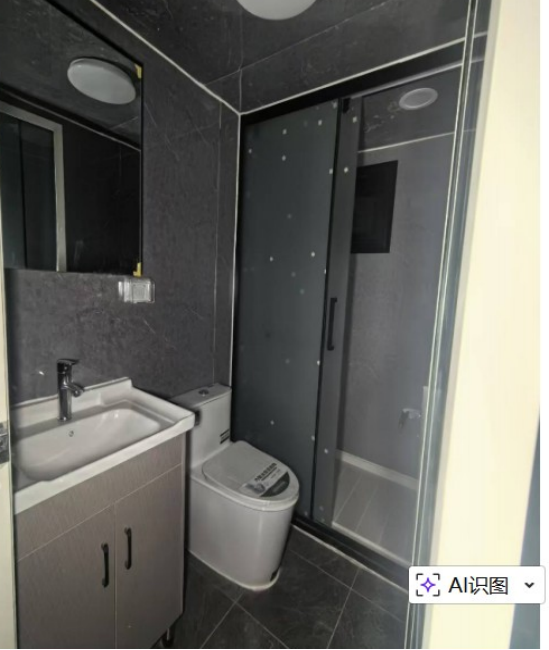
Sanitation module with commercial-grade fixtures and accessibility features
Sustainability Credentials: Beyond Greenwashing
Environmental responsibility is embedded in every aspect of the double-wing expansion room’s design. The modular construction process generates 70% less waste compared to traditional building methods, while the steel frame contains 95% recycled content. During its operational life, the building achieves impressive energy efficiency through:
- Polyurethane insulation with R-values exceeding Australian Building Code requirements
- Low-E glazing that reduces solar heat gain by up to 40%
- Photovoltaic panel integration capability for off-grid energy independence
- Rainwater harvesting systems with filtration for non-potable water use
At end-of-life, over 90% of materials can be recycled or repurposed, creating a circular economy lifecycle that minimizes environmental impact. This sustainability profile makes the system particularly attractive to organizations with corporate social responsibility commitments or projects seeking Green Star certification in Australia.
Deployment Advantages: Speed Meets Flexibility
The most compelling aspect of the double-wing expansion room is its deployment efficiency. Traditional commercial construction often requires months of planning and execution, whereas this system delivers fully functional spaces in days. The deployment process exemplifies this efficiency:
- Site Preparation: Minimal site work required – often just compacted gravel or concrete pads
- Delivery: Standard container transport methods using existing logistics networks
- Positioning: Single crane placement with no specialized rigging needed
- Expansion: Hydraulic wing deployment in under 90 seconds
- Connection: Pre-fabricated utility hookups enable immediate functionality
This streamlined process reduces project timelines by 60-70% compared to conventional construction, allowing businesses to generate revenue or operational capacity almost immediately. The mobility aspect adds another dimension of flexibility – units can be relocated as business needs evolve, protecting the initial investment through adaptability.
Your browser does not support the video tag.
Watch the 90-second deployment process of the double-wing expansion system
Customization Capabilities: Tailored Commercial Solutions
While standard configurations serve many applications, the true value emerges through customization. The modular architecture allows for extensive personalization to match brand identity and functional requirements:
Exterior Branding Opportunities
The container’s exterior serves as a powerful branding canvas. Options include:
- Company logo integration through architectural lighting
- Custom color schemes matching corporate identity
- Digital signage integration for dynamic messaging
- Architectural elements like cantilevered roofs or terraced decks
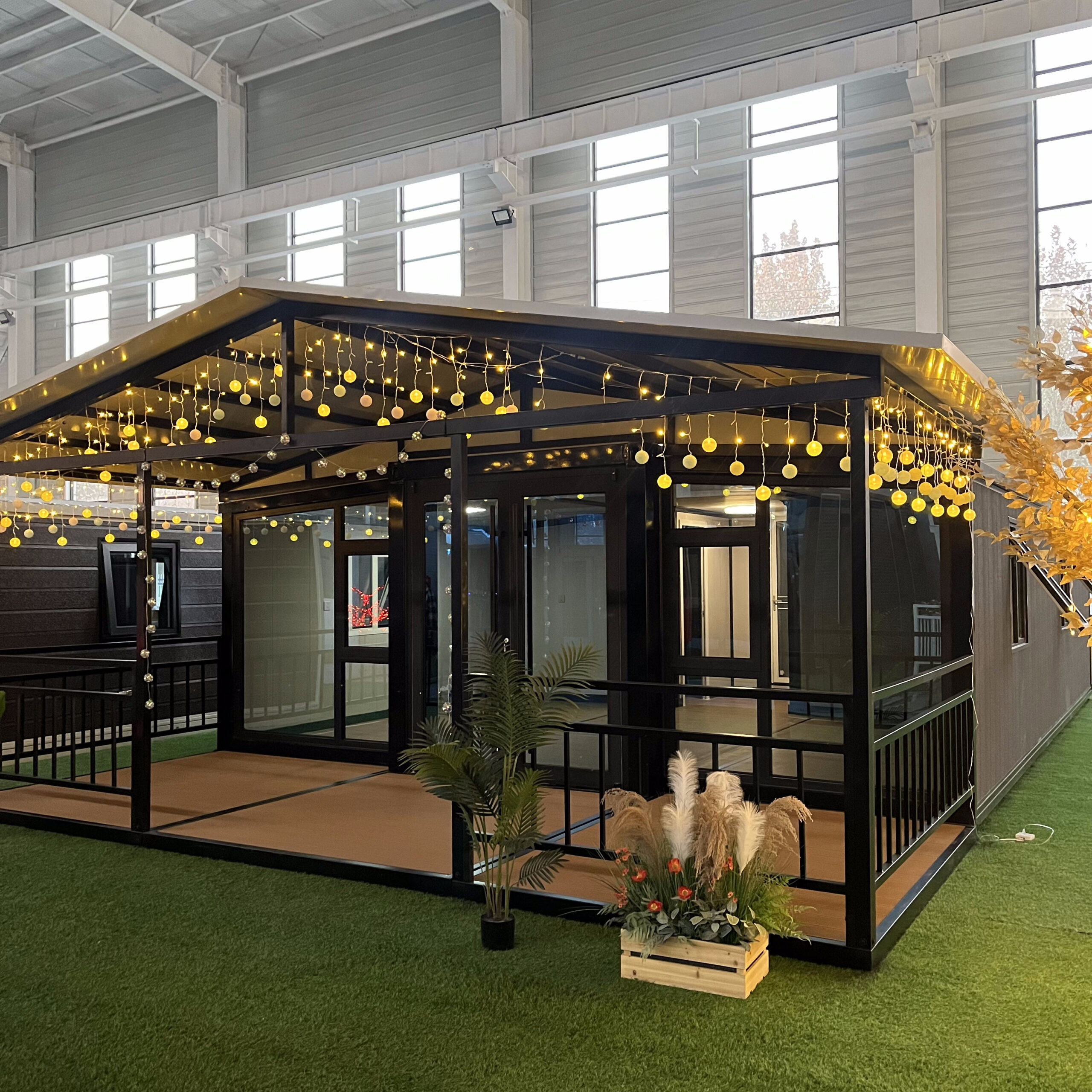
Custom branding and architectural features transform the container into a distinctive commercial presence
Interior Functional Customization
Interior layouts adapt to specific operational needs through modular components:
- Partially demountable walls for reconfigurable spaces
- Integrated technology systems (smart building controls, AV equipment)
- Specialized work surfaces (ESD-safe for electronics, chemical-resistant for labs)
- Ergonomic furniture packages designed for extended use
This customization extends to environmental systems tailored to specific operational requirements – from enhanced air filtration for healthcare applications to vibration damping for precision manufacturing environments.
Commercial Applications Across Industries
The versatility of the double-wing expansion room enables applications across diverse commercial sectors:
Construction and Project Management
On major infrastructure projects across Australia, these units serve as sophisticated site offices that move with the project progress. The expanded configuration provides space for project managers, engineers, and administrative staff, while integrated communication systems maintain connectivity with headquarters and remote teams.
Events and Hospitality
Event management companies utilize these structures as VIP lounges, ticketing centers, or hospitality suites. The rapid deployment allows for last-minute venue adjustments, while the premium finishes create memorable guest experiences at festivals, sporting events, or corporate functions.
Education and Training
Educational institutions deploy these units as temporary classrooms or training centers during renovations or enrollment surges. The integrated technology infrastructure supports modern teaching methods, and the quick installation minimizes disruption to academic schedules.
Healthcare Outreach
Healthcare organizations create mobile clinics for rural health initiatives or disaster response. The expanded space allows for multiple consultation rooms, while integrated medical systems enable comprehensive care delivery in remote or underserved communities.
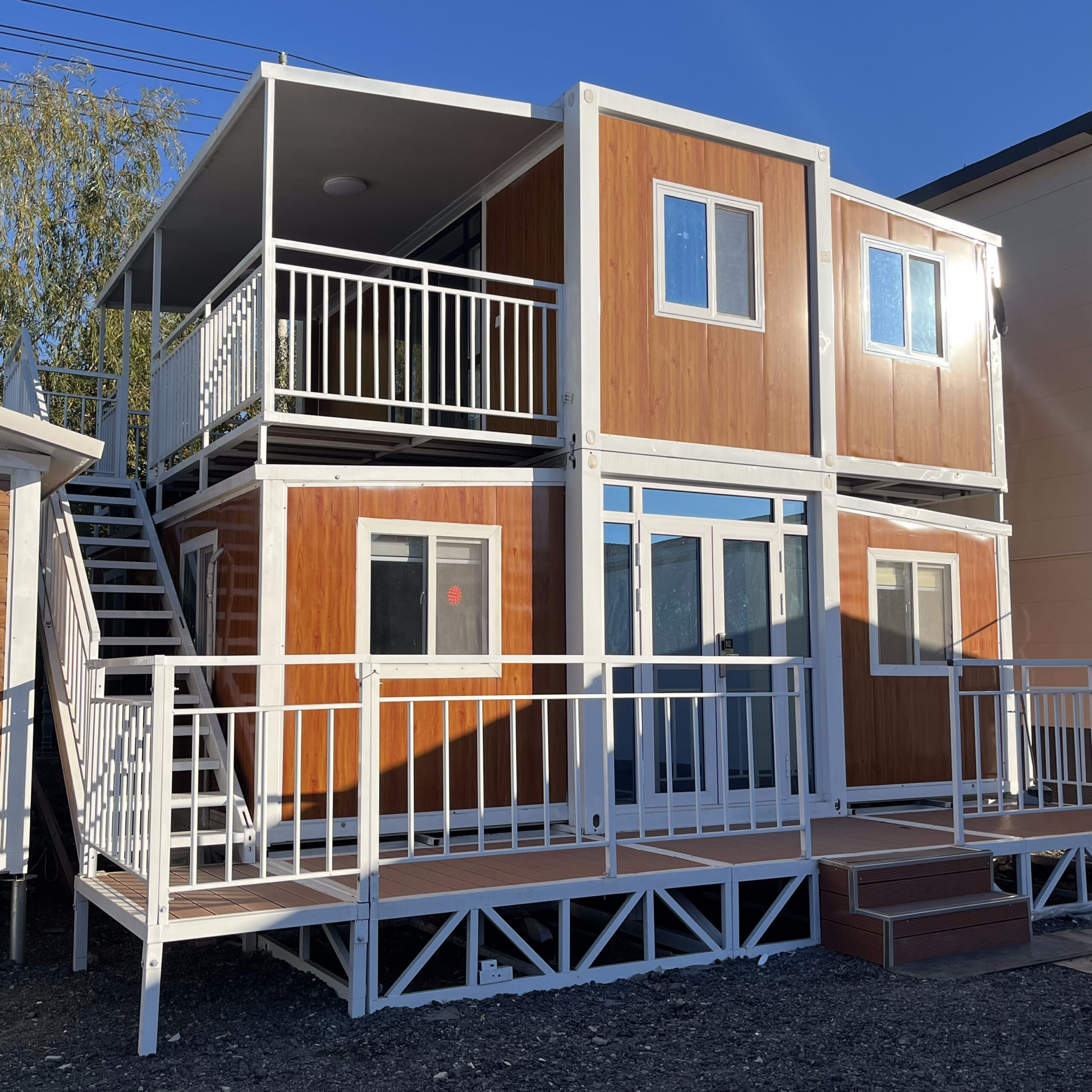
Healthcare-specific customization with integrated medical systems
Economic Advantages: Beyond Initial Cost
While the initial investment in a double-wing expansion room compares favorably to traditional construction, the true economic benefits emerge through total cost of ownership considerations:
Reduced Capital Expenditure
The modular approach eliminates many traditional construction costs including extensive site preparation, prolonged labor expenses, and material waste. The 30-40% overall cost savings compared to conventional buildings frees capital for core business investments.
Operational Efficiency Gains
Rapid deployment translates directly to faster revenue generation or operational capacity. For retail applications, this means capturing seasonal market opportunities; for industrial projects, it enables accelerated production timelines.
Asset Appreciation Through Reusability
Unlike temporary structures designed for single use, the double-wing system maintains value through multiple deployment cycles. When no longer needed at one location, it can be relocated to serve another purpose, protecting the initial investment.
Maintenance Cost Advantages
Modular design simplifies maintenance – individual components can be replaced without dismantling entire systems. Predictable maintenance schedules and readily available spare parts minimize unexpected repair costs and operational downtime.
Regulatory Compliance and Safety
Commercial spaces must meet rigorous regulatory standards, and the double-wing expansion room is engineered to comply with Australian building codes including:
- National Construction Code (NCC) requirements for commercial buildings
- Work Health and Safety (WHS) regulations for workplace environments
- Disability access provisions under the Disability Discrimination Act
- Fire safety standards including sprinkler systems and fire-rated materials
Third-party certifications provide additional assurance of quality and compliance, including:
- Engineered design certification for structural integrity
- Electrical safety compliance through accredited testing
- Environmental certification for sustainable materials and processes
Global Inspiration: International Adaptations
While Australian innovations drive this design evolution, the concept has global relevance. Similar systems have been deployed in diverse international contexts:
New Zealand’s Eco-Tourism Sector
In Queenstown, luxury eco-resorts utilize double-wing units as premium guest accommodations that minimize environmental impact while providing sophisticated amenities. The units blend into natural landscapes with timber cladding and green roof systems.
Canadian Arctic Research Stations
Scientific research teams in Canada’s northern territories employ these structures as mobile laboratories with enhanced insulation and specialized environmental controls. The rapid deployment capability is crucial during short Arctic construction seasons.
French Urban Regeneration Projects
Parisian developers incorporate these units as temporary commercial spaces during urban renewal projects. The architectural flexibility allows for creative placemaking while permanent structures are under development.
American Disaster Response
Emergency management agencies in the United States deploy these units as mobile command centers during natural disasters. The integrated communication systems and rapid deployment capabilities establish operational headquarters within hours of an event.
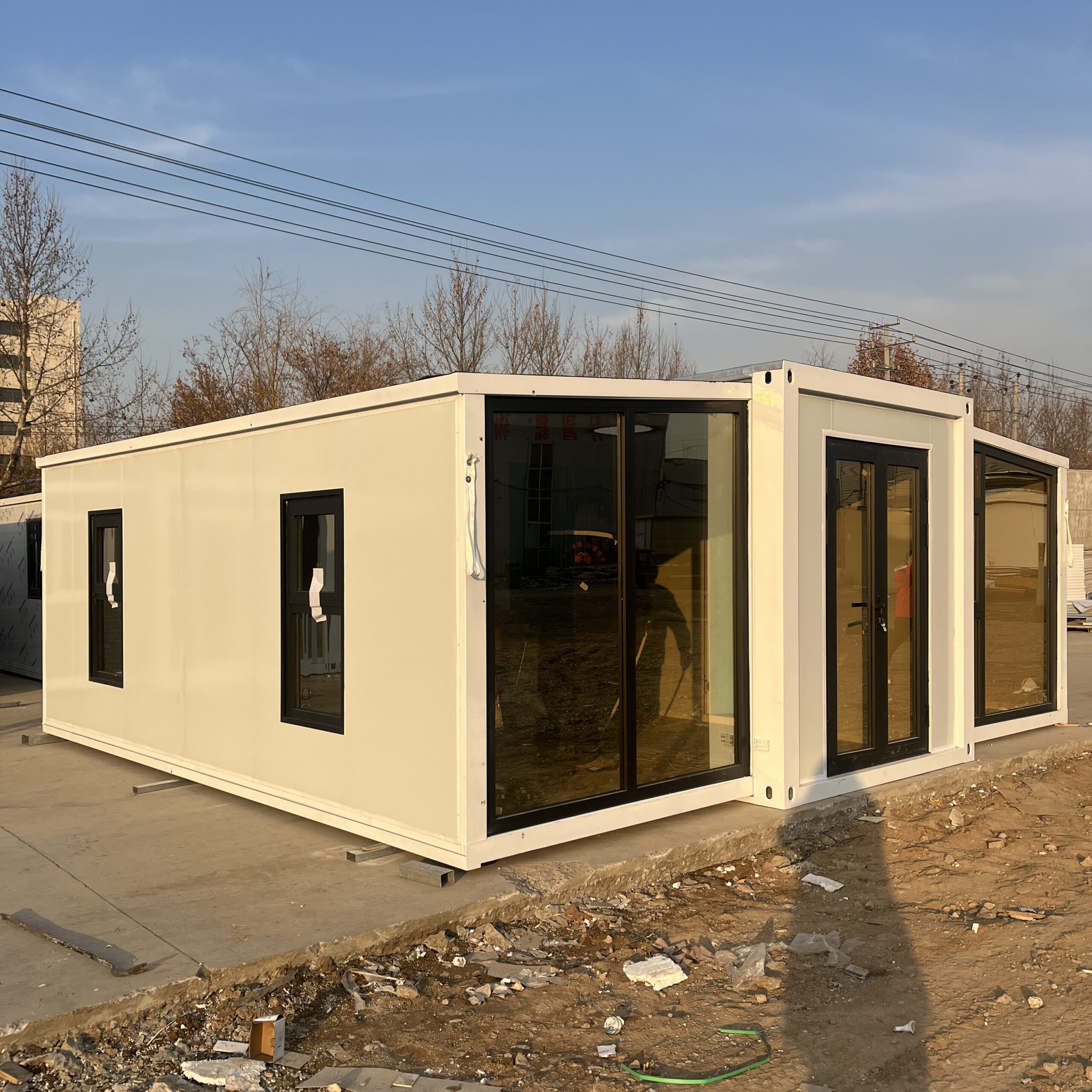
Premium glass curtain wall configuration creates sophisticated commercial environments
Future-Proofing Commercial Spaces
In an era of rapid business transformation, commercial spaces must adapt to changing needs. The double-wing expansion room incorporates several future-proofing elements:
Technological Integration Framework
Conduits and connection points are integrated for future technology upgrades including:
- 5G and satellite communication systems
- Building automation and IoT device integration
- Renewable energy system additions
- Advanced security and access control systems
Adaptable Spatial Design
The open-plan interior with demountable partitions allows spaces to evolve with organizational changes. What begins as an open-plan workspace can be reconfigured into private offices or collaborative zones as business needs dictate.
Scalability Through Modular Combination
Multiple units can be interconnected to create larger commercial complexes. This scalability allows businesses to start small and expand as operations grow, without the disruption of major construction projects.
Implementation Considerations
While the double-wing expansion room offers compelling advantages, successful implementation requires careful consideration of several factors:
Site Assessment and Preparation
Though minimal site work is required, proper evaluation ensures optimal performance:
- Soil bearing capacity assessment for foundation requirements
- Utility access points for water, electricity, and data connections
- Access route planning for delivery and placement equipment
- Environmental considerations including drainage and wind exposure
Regulatory and Permitting Navigation
Temporary and permanent commercial structures require various approvals:
- Building permits based on intended use and duration
- Zoning compliance for commercial activities
- Utility connection approvals
- Environmental impact assessments for sensitive locations
Customization Planning
Effective customization requires thorough needs assessment:
- Operational workflow analysis to optimize spatial layout
- Technology requirements mapping for integrated systems
- Brand identity translation into architectural elements
- Budget allocation for premium features versus essential functions
Case Study: Sydney Tech Startup Expansion
A Sydney-based technology startup utilized two double-wing expansion units during their rapid growth phase. Facing the challenge of scaling operations quickly while maintaining capital efficiency, they deployed the units as:
- A headquarters facility during office renovation
- A dedicated product development space
- A client demonstration center
The implementation delivered significant advantages:
- Operational continuity during permanent construction
- Enhanced brand perception through innovative workspace design
- Cost savings of AUD 180,000 compared to traditional temporary solutions
- Deployment completed in 3 days versus 8 weeks for conventional construction
The success of this implementation demonstrates how container house office design ideas can directly support business growth objectives while delivering substantial economic benefits.
Conclusion: The Future of Commercial Space
The 20-foot customized double-wing expansion room represents more than just an alternative building method – it embodies a fundamental shift in how commercial spaces are conceived, deployed, and utilized. By combining architectural innovation with practical functionality, this system addresses contemporary business challenges including rapid market changes, sustainability imperatives, and operational flexibility.
As Australian businesses continue to embrace these container house office design ideas, we’re witnessing the emergence of a new commercial architecture paradigm – one that values adaptability, efficiency, and environmental responsibility without sacrificing quality or aesthetic appeal. The double-wing expansion room stands at the vanguard of this movement, offering a glimpse into the future of commercial space where buildings adapt to business needs rather than constraining them.
For organizations seeking to transform their approach to commercial space – whether for temporary projects, permanent facilities, or mobile operations – the double-wing expansion room provides a compelling solution that delivers immediate functionality while positioning businesses for future success in an ever-changing commercial landscape.