摘要: Discover Australia’s leading prefabricated container house manufacturers specializing in innovative 40-foot customized double-wing expansion rooms. Explore rapid-deployment modular solutions with unparalleled space efficiency, weather-resistant construction, and versatile applications for residential, commercial, and emergency use.
Redefining Modular Living: The Evolution of Prefabricated Container Housing
In the dynamic landscape of modern construction, prefabricated container house manufacturers have revolutionized sustainable building practices across Australia and beyond. These pioneers blend cutting-edge engineering with eco-conscious design, delivering structures that challenge traditional construction paradigms. At the forefront stands the 40-foot customized double-wing expansion room – an architectural marvel that embodies adaptability, efficiency, and sophistication. This ingenious solution addresses critical needs in Australia’s diverse environments, from Sydney’s urban developments to Perth’s remote mining camps, demonstrating how modular innovation meets real-world demands.
The concept isn’t merely about repurposing shipping containers; it’s about reimagining spatial dynamics through intelligent engineering. Leading manufacturers have transformed basic steel boxes into sophisticated habitats where functionality meets aesthetics. The double-wing mechanism represents a quantum leap in modular design, solving the eternal paradox of transportability versus livable space. When folded for transit, it maintains standard container dimensions for effortless road, rail, or sea transport. Upon arrival, its “wings” unfold like origami, expanding usable floor area by 70-80% – sometimes even doubling it – creating surprisingly spacious interiors that defy their compact origins.
This evolution reflects broader trends in Australian construction: accelerated urbanization, increasing environmental awareness, and demand for rapid-deployment solutions. As climate change intensifies weather events from Queensland’s cyclones to Victoria’s bushfires, the resilience of these structures becomes paramount. Manufacturers now integrate advanced materials science with modular precision, creating buildings that withstand 12-force winds, endure 8-magnitude seismic activity, and maintain thermal efficiency across Australia’s extreme temperature ranges. The 40-foot double-wing exemplifies this resilience while offering customization possibilities that traditional construction simply cannot match in speed or flexibility.
Meet the Game-Changer: 40-Foot Customized Double-Wing Expansion Room
Imagine a structure that arrives as a compact steel unit yet transforms within hours into a spacious, fully-functional habitat. This is the essence of the 40-foot customized double-wing expansion room – a flagship innovation from Australia’s premier prefabricated container house manufacturers. Its genius lies in the biomimetic design:两侧的 “翅膀” (wings) fold inward during transport, creating a streamlined profile perfect for logistics. Upon deployment, these wings extend outward, dramatically expanding the footprint while maintaining structural integrity through a sophisticated hinge-and-lock system.
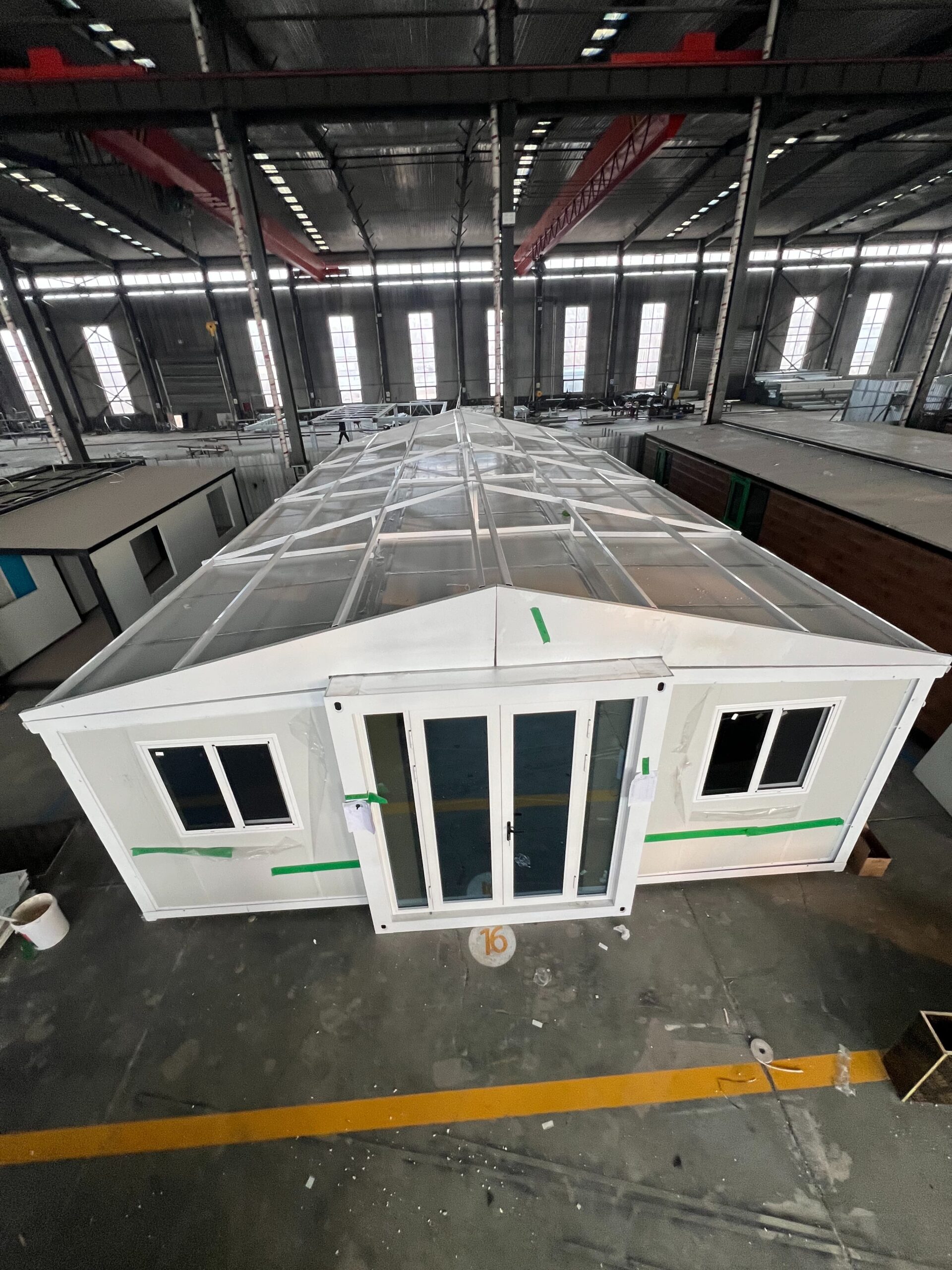
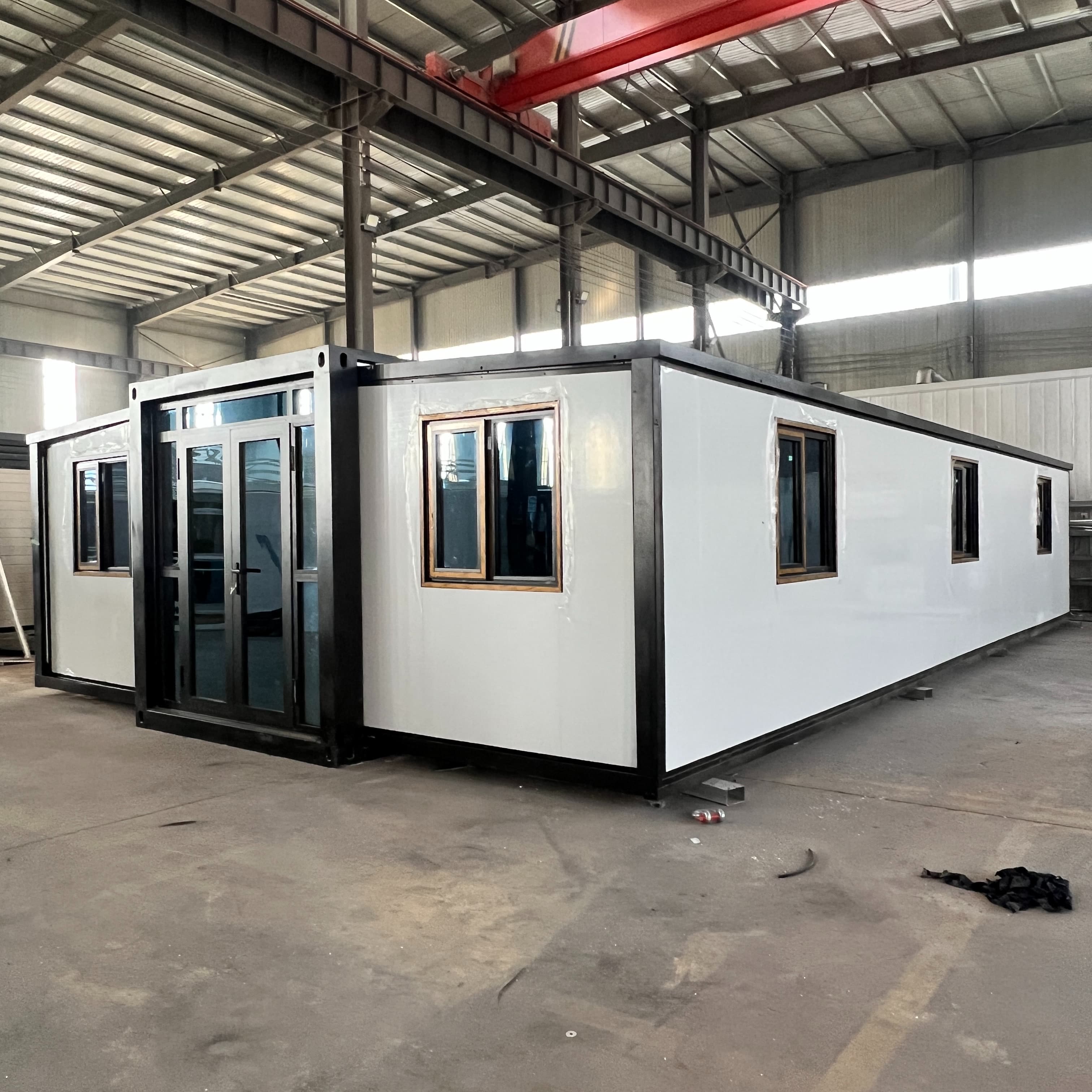
The double-wing flat-top model showcases clean lines and modern aesthetics, ideal for Australian urban settings.
Standard specifications reveal remarkable engineering precision:
– Unfolded Dimensions: 11,800mm (L) x 6,240mm (W) x 2,480mm (H)
– Interior Space: 11,540mm (L) x 6,080mm (W) x 2,200mm (H) – offering approximately 70m² of floor area
– Folded Transport Size: 11,800mm (L) x 2,200mm (W) x 2,480mm (H) – conforming to ISO container standards
– Frame: Hot-dip galvanized steel with corrosion-resistant black powder coating
This dimensional mastery enables seamless integration into existing infrastructure while maximizing spatial utility. The absence of internal columns creates unobstructed living spaces, a stark contrast to conventional modular designs. Manufacturers achieve this through advanced load distribution calculations, transferring forces to the reinforced corner castings and perimeter frame – a critical feature for Australia’s varied terrains, from Darwin’s floodplains to Adelaide’s rocky outcrops.
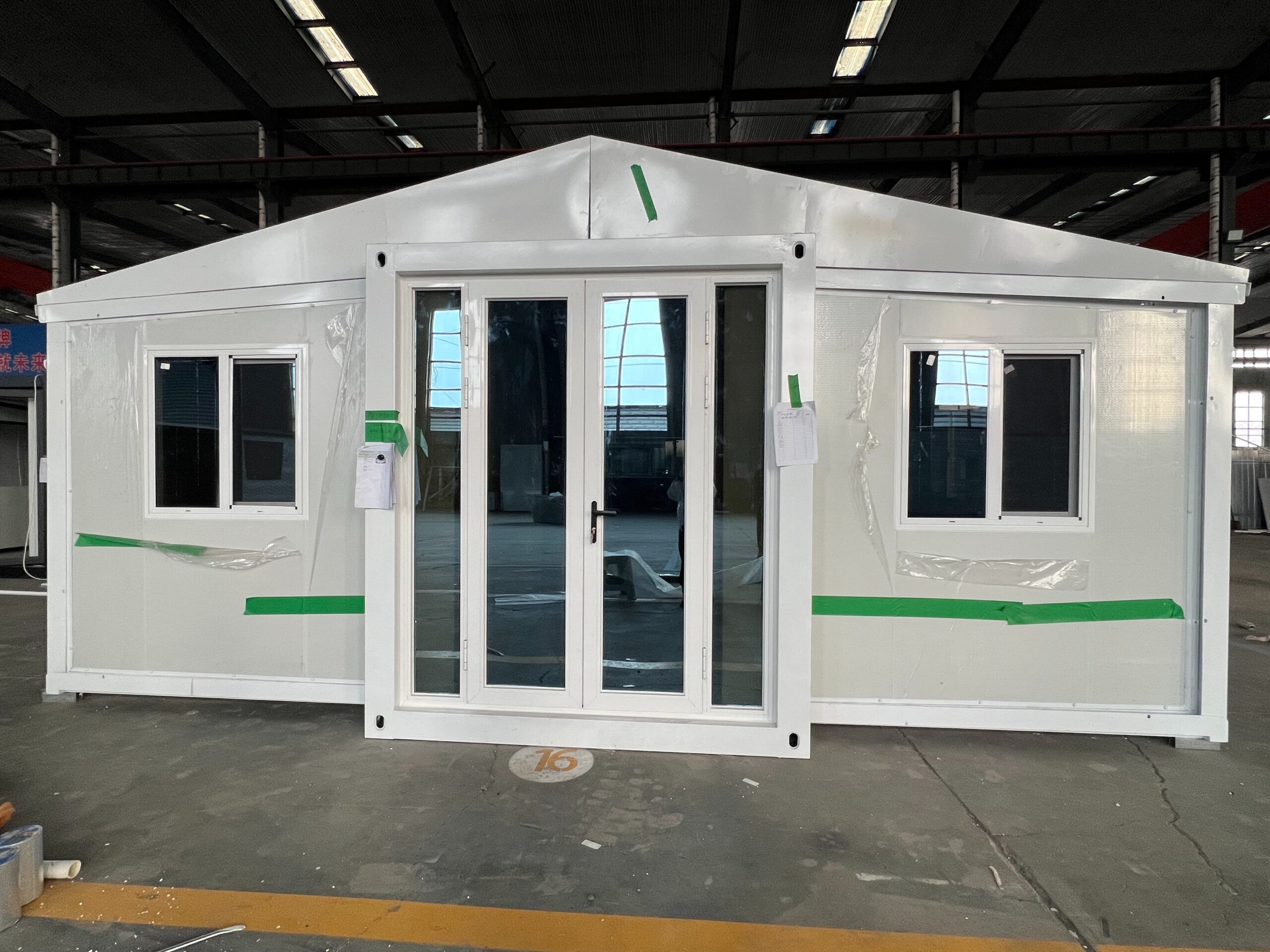
Expanded configuration demonstrates the dramatic space transformation, featuring expansive glazing for natural light.
For clients requiring different configurations, manufacturers offer the single-wing variant – a streamlined solution ideal for tighter spaces or specific applications. While slightly smaller in expanded form, it retains all core advantages:
– Space Expansion: 1.5-2x increase from folded state
– Quick Deployment: Single-person installation possible in under 2 hours
– Modular Compatibility: Can connect to double-wing units or other modules
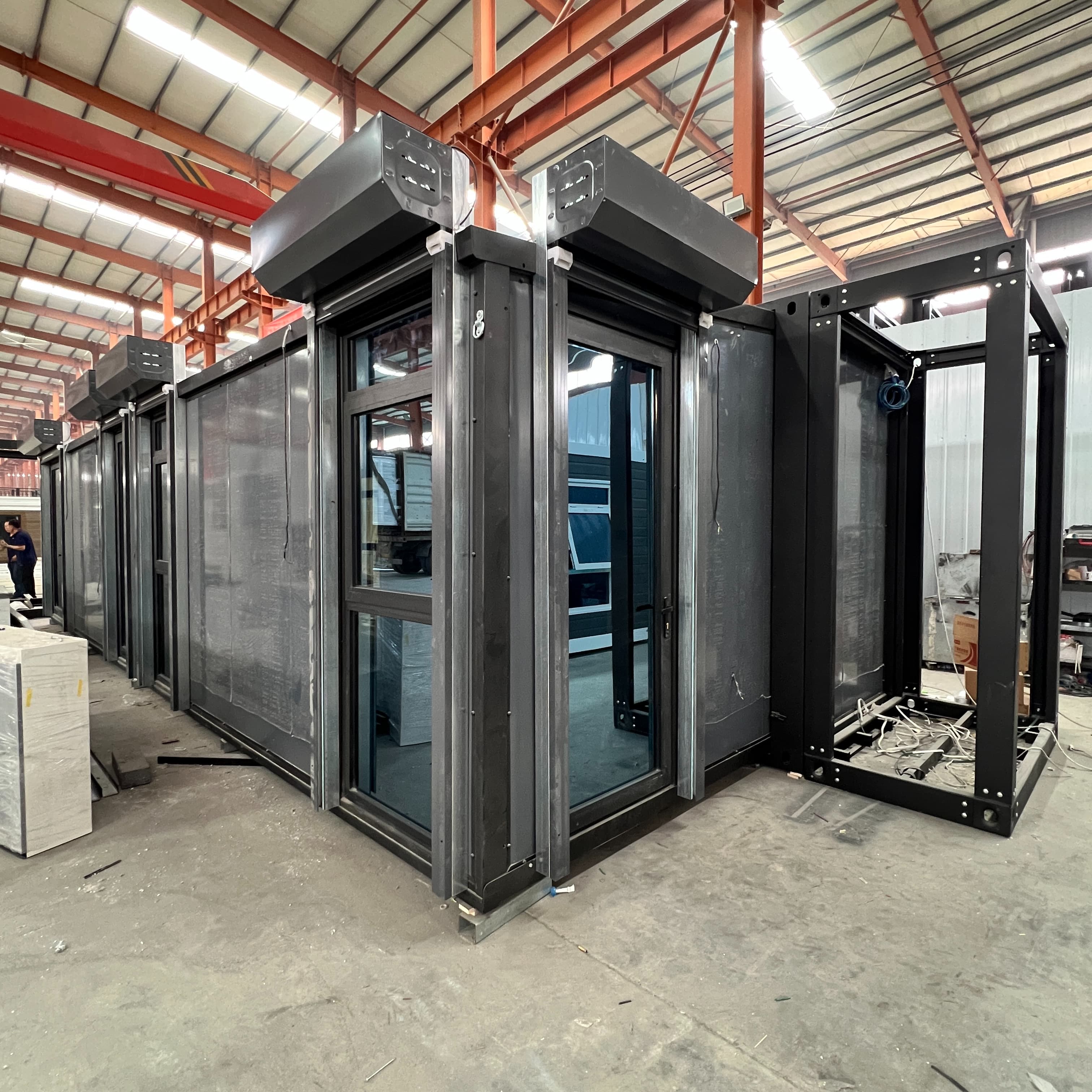
The single-wing model in transport configuration, highlighting its compact footprint for efficient logistics.
Engineering Excellence: Core Features & Materials Science
Structural Innovation & Space Dynamics
The double-wing mechanism represents a triumph of mechanical engineering. Manufacturers employ aerospace-grade hinges with self-lubricating bearings, ensuring smooth operation even after years of use in Australia’s harsh conditions. The expansion sequence is meticulously designed: first, the roof panels elevate hydraulically, then the sidewalls extend outward, and finally, the floor sections slide into position, creating a perfectly level surface without ramps or transitions. This synchronized movement eliminates pinch points and structural stress points, contributing to the system’s exceptional durability.
Mid-expansion view revealing the sophisticated hinge mechanism and structural framework.
Material selection reflects deep understanding of environmental challenges:
– Framework: Hot-dip galvanized Q345B steel (yield strength 345MPa) with sacrificial zinc coating (≥85μm) for corrosion resistance
– Insulation: Closed-cell polyurethane foam (density 40kg/m³, thermal conductivity 0.022W/m·K) or rock wool (density 100kg/m³, fire rating A2)
– Exterior Cladding: Colorbond steel (0.7mm thickness) with PVDF coating for UV resistance, or可选 wood-grain aluminum composite panels
– Windows: Thermally broken aluminum frames with double-glazed Low-E argon-filled units (U-value ≤1.8W/m²K)
This combination creates an envelope that maintains comfortable interiors across Australia’s temperature extremes – from Western Australia’s 45°C summers to Tasmania’s -5°C winters. Thermal bridging is eliminated through continuous insulation layers and thermal breaks, reducing energy consumption by up to 60% compared to traditional construction.
Integrated Systems & Smart Technology
Modern prefabricated container house manufacturers integrate building systems during factory production, achieving 85% completion before delivery. This approach minimizes on-site work and ensures quality control impossible in field conditions. Key integrated systems include:
Electrical & Lighting:
– Pre-installed copper wiring with flame-retardant PVC conduits
– LED lighting system with motion sensors and dimmable controls
– Optional solar-ready wiring with inverter preparation
– Australian Standard AS/NZS 3000 compliance
Plumbing & Sanitation:
– PEX piping with quick-connect fittings for freeze resistance
– High-efficiency fixtures (3L/flush toilets, 1.5GPM faucets)
– Greywater recycling system option
– Compliant with AS/NZS 3500 standards
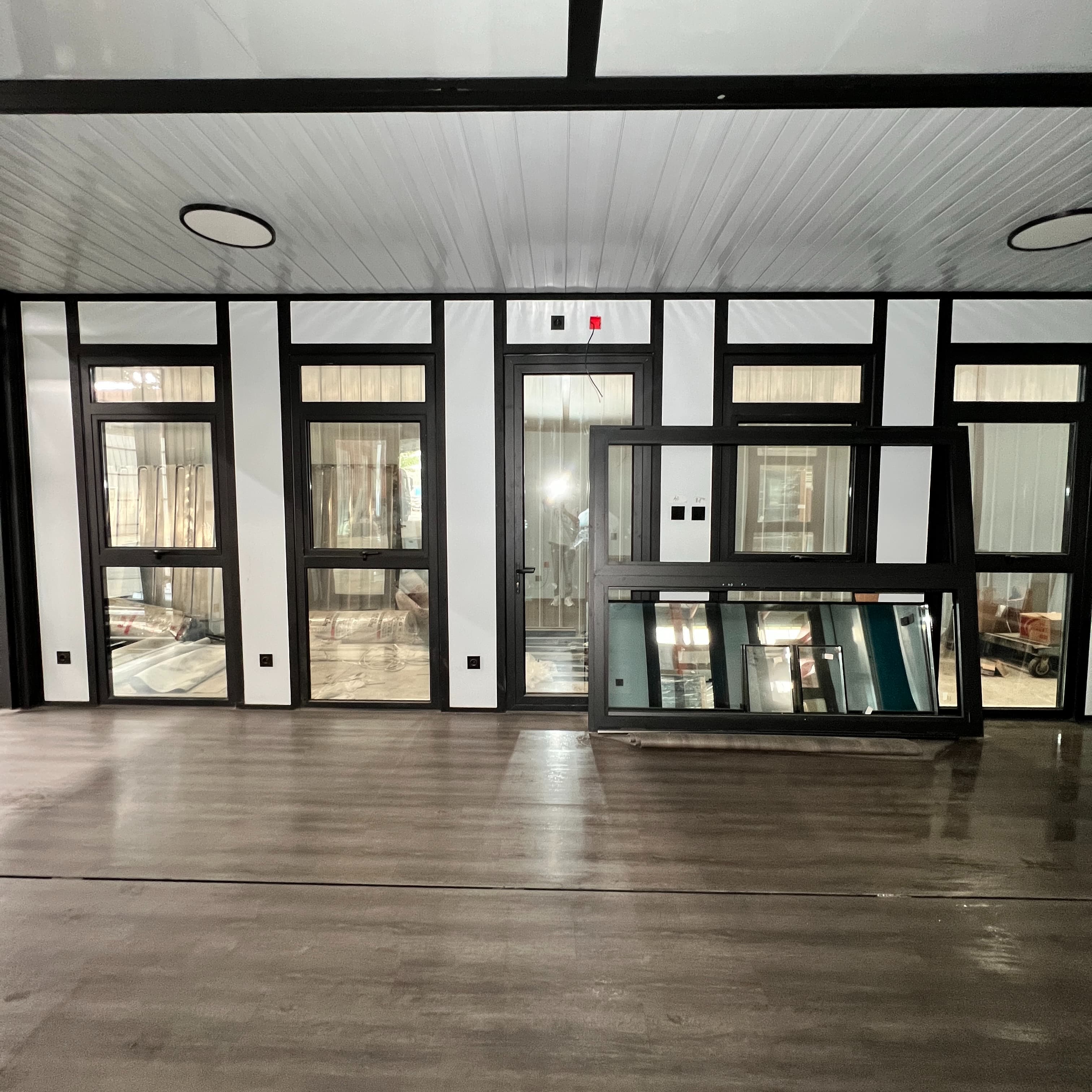
Open-plan interior showcasing the seamless integration of kitchen, living, and dining areas.
Kitchen Configuration:
– Modular cabinetry with soft-close hinges and drawer glides
– Engineered stone countertops (20mm thickness)
– Stainless steel undermount sink with gooseneck faucet
– Space for standard appliances (fridge, cooktop, microwave)
– Optional induction cooktop and convection microwave
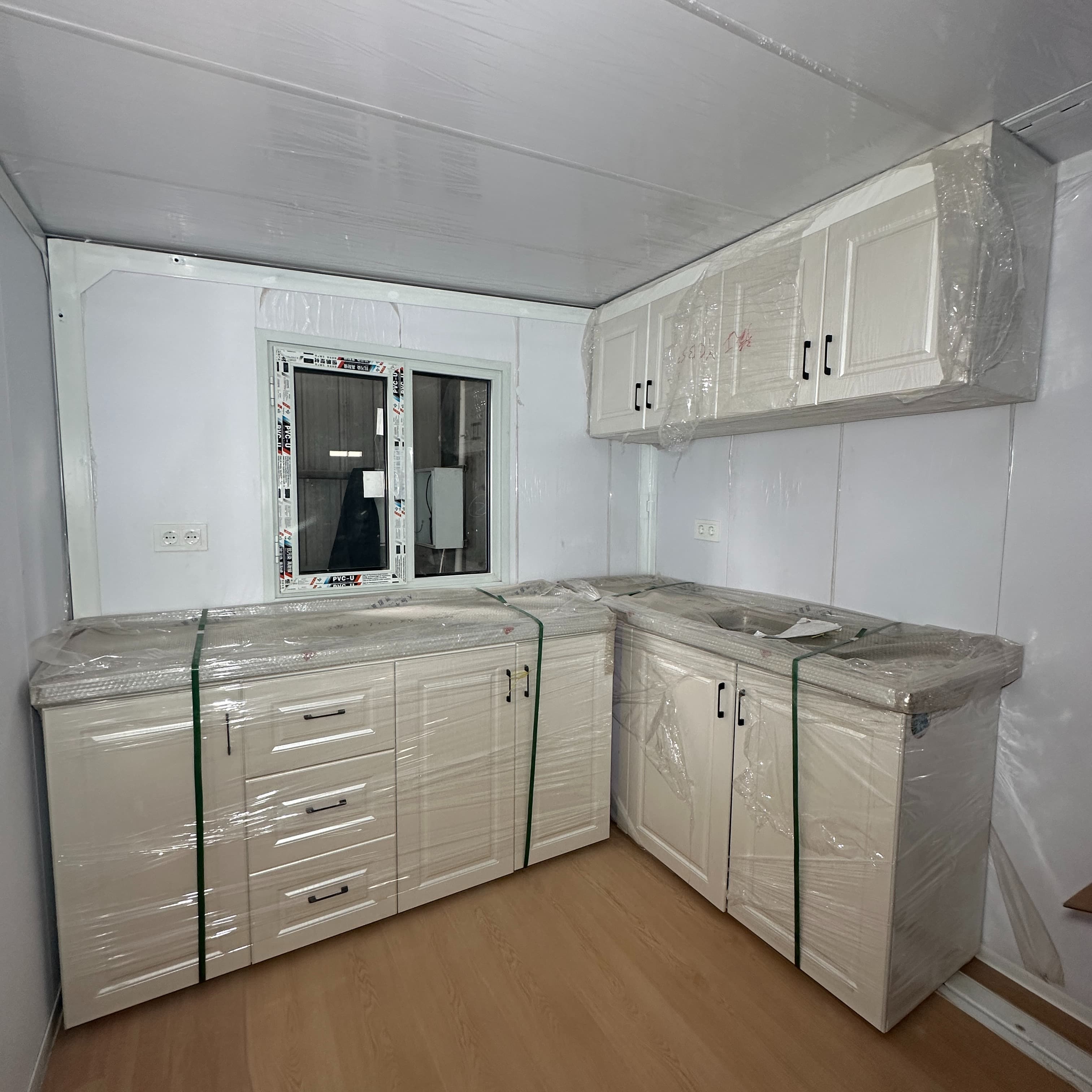
Premium kitchen module demonstrating high-end finishes and efficient space utilization.
Bathroom Integration:
– Wet-room design with waterproofing membrane (AS 3740 compliant)
– Wall-hung vanity with LED mirror and shaver socket
– Glass shower enclosure with thermostatic mixer
– Exhaust fan with humidity sensor
– Optional composting or incinerating toilet for off-grid applications
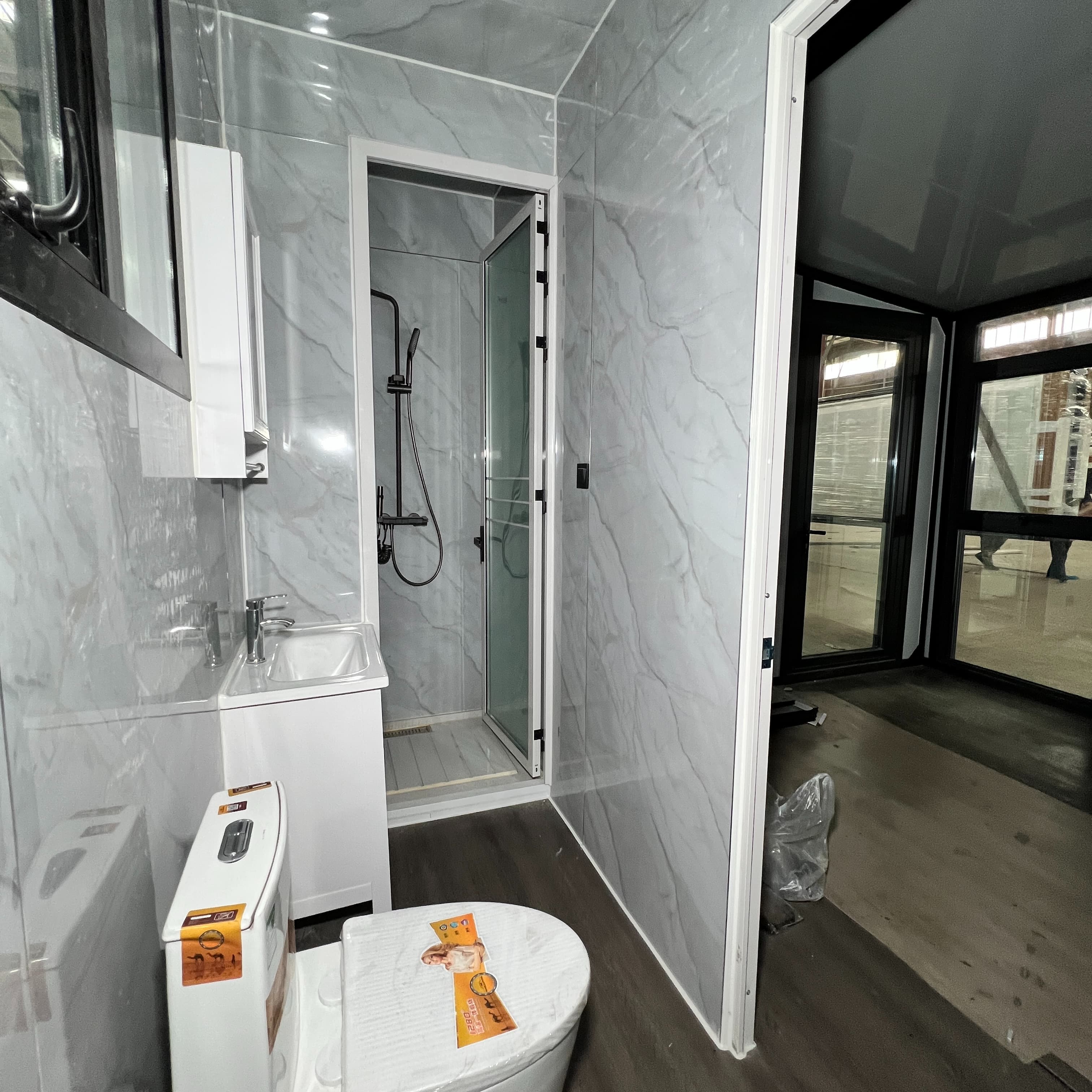
Contemporary bathroom featuring space-efficient design and premium fixtures.
Smart Home Integration:
Manufacturers offer IoT connectivity packages including:
– Remote monitoring via smartphone app (temperature, security, energy)
– Automated climate control with geofencing
– Leak detection and automatic water shutoff
– Solar battery management system
– Emergency power backup with auto-transfer switch
Weather Resilience & Environmental Performance
Australia’s diverse climate demands exceptional building performance. The 40-foot double-wing addresses this through:
– Wind Resistance: Engineered for 12-force winds (up to 370km/h) using computational fluid dynamics modeling and physical wind tunnel testing
– Seismic Performance: Base isolation systems and flexible connections allow movement during earthquakes (up to Richter 8.0)
– Flood Resilience: Elevated foundation options and waterproof materials allow installation in flood-prone areas like Queensland’s coastal regions
– Fire Resistance: Class 1A fire rating with intumescent coatings on structural steel and fire-rated partition walls
Environmental sustainability extends beyond resilience:
– Embodied Carbon: 40% lower than traditional construction through material optimization and recycled content
– Water Efficiency: Rainwater harvesting systems (up to 5,000L storage) and greywater recycling
– Renewable Energy: Solar-ready design with integrated mounting points for 6-10kW PV systems
– Material Circularity: 90%+ recyclable content and disassembly design for end-of-life repurposing
Unmatched Advantages: Why Choose Double-Wing Expansion?
Deployment Speed & Operational Efficiency
The most compelling advantage lies in unprecedented deployment velocity. Traditional construction in Australia faces chronic delays due to weather, labor shortages, and regulatory hurdles. The 40-foot double-wing eliminates these bottlenecks:
– Factory Production: 95% completion in controlled environment (typical timeline: 2-3 weeks)
– Site Preparation: Minimal foundation requirements – crushed stone pads or screw foundations suffice
– Installation: Single unit deployment in 4-6 hours; complex combinations in 1-3 days
– Occupancy: Immediate habitation after utility connection
This speed translates directly to economic benefits. For mining operations in Western Australia’s Pilbara region, reducing camp setup time from months to weeks accelerates production commencement. For disaster response in New South Wales’ bushfire zones, emergency shelters become operational within 24 hours of arrival rather than weeks.
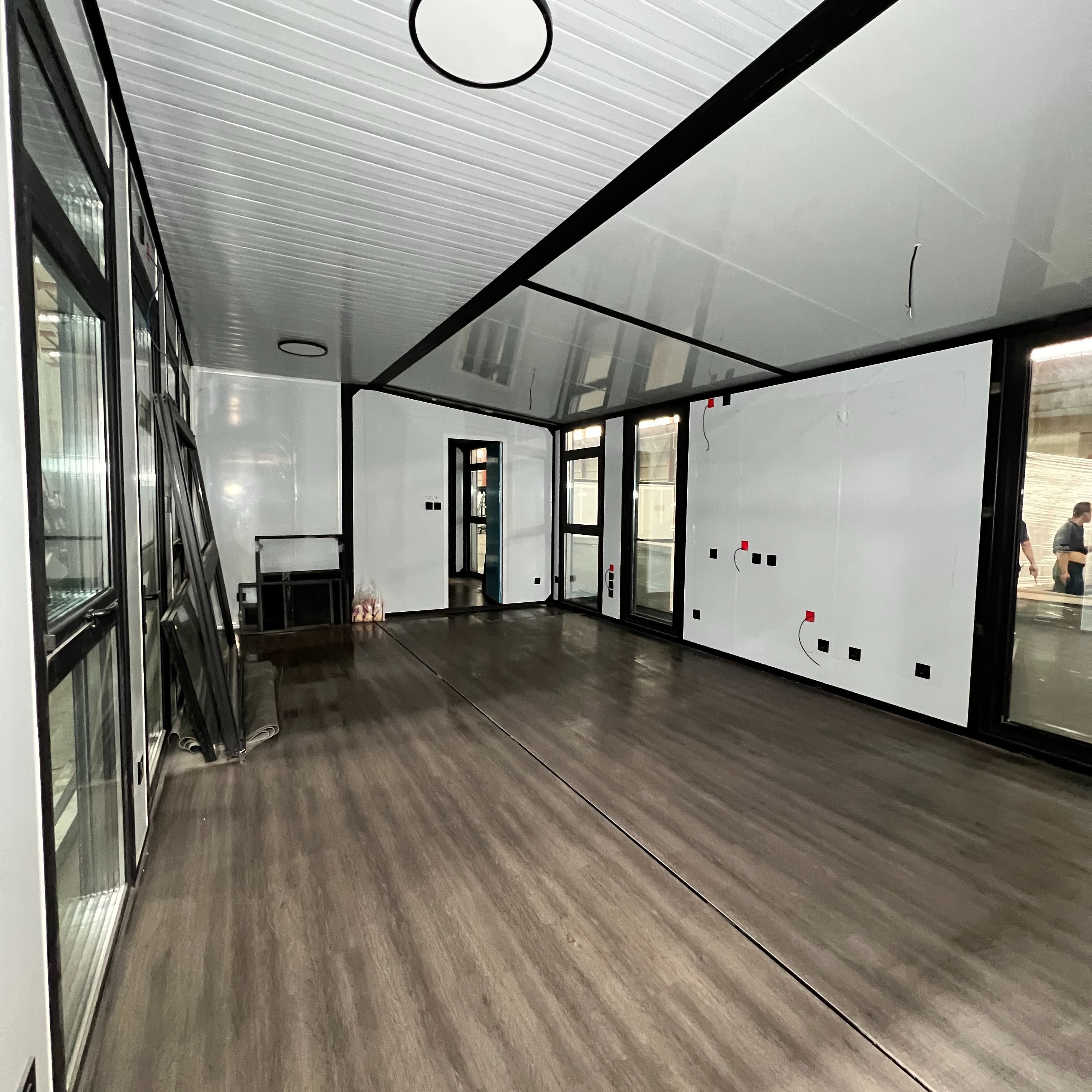
Expansive interior flooded with natural light, demonstrating the unit’s livability and comfort.
Financial Advantages & Lifecycle Economics
Cost analysis reveals compelling economic benefits:
– Capital Expenditure: 30-40% lower than site-built construction of equivalent quality
– Soft Savings: Reduced financing costs, earlier revenue generation, lower insurance premiums
– Operational Costs: 50-60% reduction in energy expenses through superior insulation
– Residual Value: 70-80% retention after 10 years with proper maintenance
– Tax Benefits: Accelerated depreciation schedules for movable assets
Consider a Melbourne-based construction company needing temporary site offices: Traditional construction would cost approximately $2,800/m² with 6-month timeline. The double-wing solution delivers at $1,650/m² within 2 weeks – a 41% cost saving with 12-week earlier occupancy. For a 120m² complex, this translates to $138,000 savings plus 3 months of operational advantage.
Adaptability & Reconfigurability
Unlike static structures, the double-wing system evolves with changing needs:
– Expansion: Additional modules connect seamlessly via proprietary interlocking system
– Reconfiguration: Interior partitions can be repositioned without structural modification
– Relocation: Entire complexes disassemble and relocate to new sites with minimal disruption
– Repurposing: Office-to-residential or commercial-to-educational conversions achievable
This flexibility proved invaluable during Brisbane’s 2032 Olympics preparation, where athlete villages transitioned to permanent housing post-Games. Similarly, Adelaide’s renewable energy projects use these units as construction offices, later converting to permanent maintenance facilities.
Real-World Applications Across Australia
Residential Solutions: From Urban to Remote
In Australia’s housing-challenged markets, the 40-foot double-wing offers immediate solutions:
– Affordable Housing: Sydney’s Western Sydney Aerotropolis project utilizes these units for key worker housing, delivering 120 units in 8 weeks versus 18 months traditionally
– Luxury Retreats: Blue Mountains eco-resorts feature premium double-wing suites with panoramic glazing and sustainable features
– Multi-Generational Living: Backyard “granny flats” in Melbourne suburbs provide independent living for elderly relatives
– Remote Housing: FIFO (Fly-In/Fly-Out) accommodations in Queensland’s Bowen Basin improve worker retention through superior living conditions
Customization possibilities are virtually limitless:
– Façade options include timber-look cladding, corten steel, or vibrant Colorbond finishes
– Interior finishes range from industrial chic to luxury resort aesthetics
– Accessibility features include ramps, wider doorways, and roll-in showers
– Climate packages include enhanced insulation for alpine regions or heat-reflective coatings for tropical areas
Commercial & Industrial Applications
Business sectors leverage the system’s advantages:
– Construction: Site offices in Perth’s mining camps with integrated meeting rooms and welfare facilities
– Retail: Pop-up stores in Melbourne’s laneways with customizable branding and quick setup
– Healthcare: Remote clinics in Northern Territory’s Outback with telemedicine capabilities
– Education: Temporary classrooms during school renovations in Canberra with rapid deployment
A notable success story involves a Tasmanian winery that doubled its tasting room capacity seasonally using double-wing units. The expandable configuration allows winter storage and summer operation, maximizing return on investment while preserving the estate’s historic character.
Emergency Response & Disaster Relief
When disaster strikes, speed saves lives. The 40-foot double-wing excels in emergency scenarios:
– Shelter Provision: Deployed within 24 hours to New South Wales flood zones, providing housing for 50 families
– Medical Facilities: Field hospitals in Victoria’s bushfire areas with isolation wards and sterilization capabilities
– Command Centers: Emergency coordination hubs during Cyclone Yasi with satellite communications
– Restoration Camps: Housing for reconstruction workers after Queensland’s floods
Units feature emergency-specific enhancements:
– Reinforced foundations for unstable ground
– Backup power systems with automatic generators
– Water purification systems
– Secure storage for supplies and equipment
– Rapid-connect utilities for quick deployment
Selecting Your Manufacturer: Critical Considerations
Evaluating Technical Capabilities
Not all prefabricated container house manufacturers deliver equal quality. Key evaluation criteria include:
– Engineering Credentials: Look for NATA-accredited testing and compliance with Australian Standards (AS/NZS 1170, AS/NZS 3610)
– Manufacturing Facilities: ISO 9001 certified factories with automated production lines
– Material Specifications: Demand full disclosure of steel grades, insulation properties, and component origins
– Warranty Provisions: Comprehensive 10-20 year structural warranties with service network coverage
Australian manufacturers must demonstrate understanding of local conditions. For instance, units deployed in cyclonic regions require additional tie-down systems and reinforced roofing. Similarly, alpine applications need specialized insulation and heating solutions.
Customization vs. Standardization
Balance your need for uniqueness with practical considerations:
– Standard Units: Lower cost, faster delivery (2-4 weeks), proven performance
– Custom Modifications: Higher investment (20-40% premium), longer lead times (8-12 weeks), potential performance unknowns
Manufacturers typically offer customization tiers:
– Level 1: Color and finish selection (minimal cost impact)
– Level 2: Layout modifications and appliance upgrades (moderate cost increase)
– Level 3: Structural changes and specialized systems (significant investment)
For most applications, Level 1 and 2 modifications provide sufficient personalization without compromising efficiency or budget. Reserve Level 3 for truly unique requirements where standard solutions won’t suffice.