
Canada’s housing affordability crisis has reached historic levels. The national average home price stands at CAD $716,000 (CREA, Q2 2026), while Toronto and Vancouver exceed CAD $1.1 million. For first-time buyers, young families, and remote workers, container houses shipped from China offer a viable path to home ownership at a fraction of traditional construction costs — with a full 3-bedroom home landed for under CAD $70,000.
This comprehensive 2026 guide covers everything Canadian buyers need to know: FOB factory pricing, shipping costs to Vancouver and Halifax, Canadian customs duty and GST/HST, National Building Code compliance, provincial variations across all 10 provinces, cold-climate insulation requirements, and complete landed cost breakdowns. Whether you’re building in Ontario, BC, Alberta, or the Maritimes, expandable container homes from Huaying deliver year-round comfort in Canada’s demanding climate.
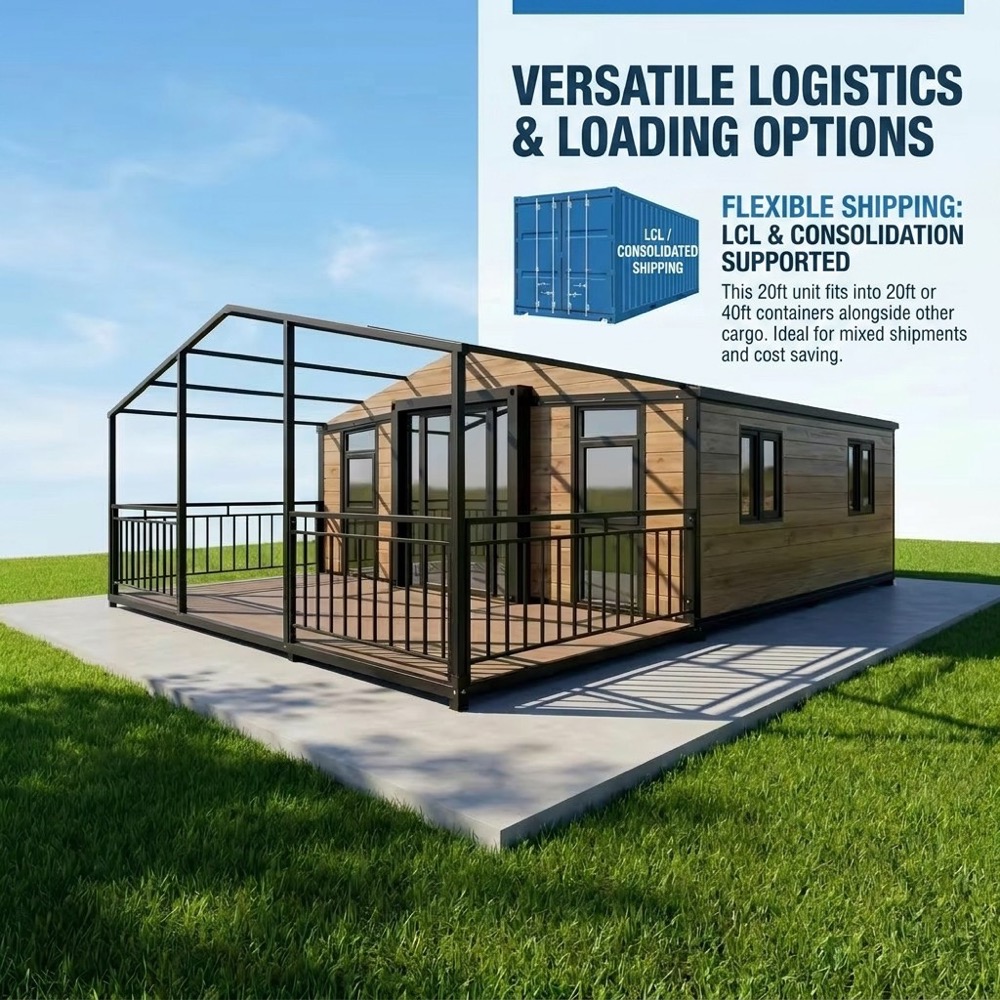
Why Container Houses Make Sense in Canada
Canada presents unique challenges and opportunities for container-based housing:
- Construction costs: Traditional Canadian build costs average CAD $250-$400/sq ft. A 60m² (646 sq ft) container home landed at CAD $55,000–$75,000 delivers at CAD $85-$116/sq ft — a 65-75% saving.
- Build speed: Factory production in China (2-3 weeks) + shipping (25-35 days) means your home arrives in 6-8 weeks. Traditional Canadian construction takes 8-18 months, further constrained by a national skilled labour shortage.
- Climate adaptability: Huaying container homes ship with cold-climate insulation packages (R-30 walls, R-40 roofs) that meet or exceed NBC requirements for all Canadian climate zones, including Zone 8 (Yukon, NWT, Nunavut).
- Remote and rural suitability: Container homes are self-contained units that can be transported to fly-in communities, mining camps, and remote properties where conventional construction is prohibitively expensive.
- ADU and laneway housing: Canadian municipalities from Vancouver to Toronto are actively encouraging accessory dwelling units (ADUs) to address the housing shortage. A 10ft or 20ft container home is ideal for this purpose.
2026 FOB Price Guide: Container Houses for the Canadian Market
All prices below are FOB China (factory-direct) — exclusive of shipping to Canada, customs clearance, GST/HST, and local installation. Prices are in USD.
| Model | Size (Expanded) | Bedrooms | Bathrooms | FOB Price (USD) | Best For |
|---|---|---|---|---|---|
| 10ft Expandable | 20m² | 1 | 1 | $8,500 | Studio, cabin, hunting camp, ADU |
| 20ft Expandable | 40m² | 2 | 1 | $12,500 | Small family home, laneway house, rental unit |
| 30ft Expandable | 60m² | 2-3 | 1 | $17,500 | Family home, two-generation living |
| 40ft Expandable | 80m² | 3 | 2 | $22,800 | Large family home |
| 20ft Apple Capsule | 29.7m² | 1 | 1 | $11,500 | Premium tiny home, Airbnb, cottage |
| Folding Container House | Variable | 1-2 | 1 | $9,500-$15,500 | Quick-deploy housing, site offices, workforce camps |
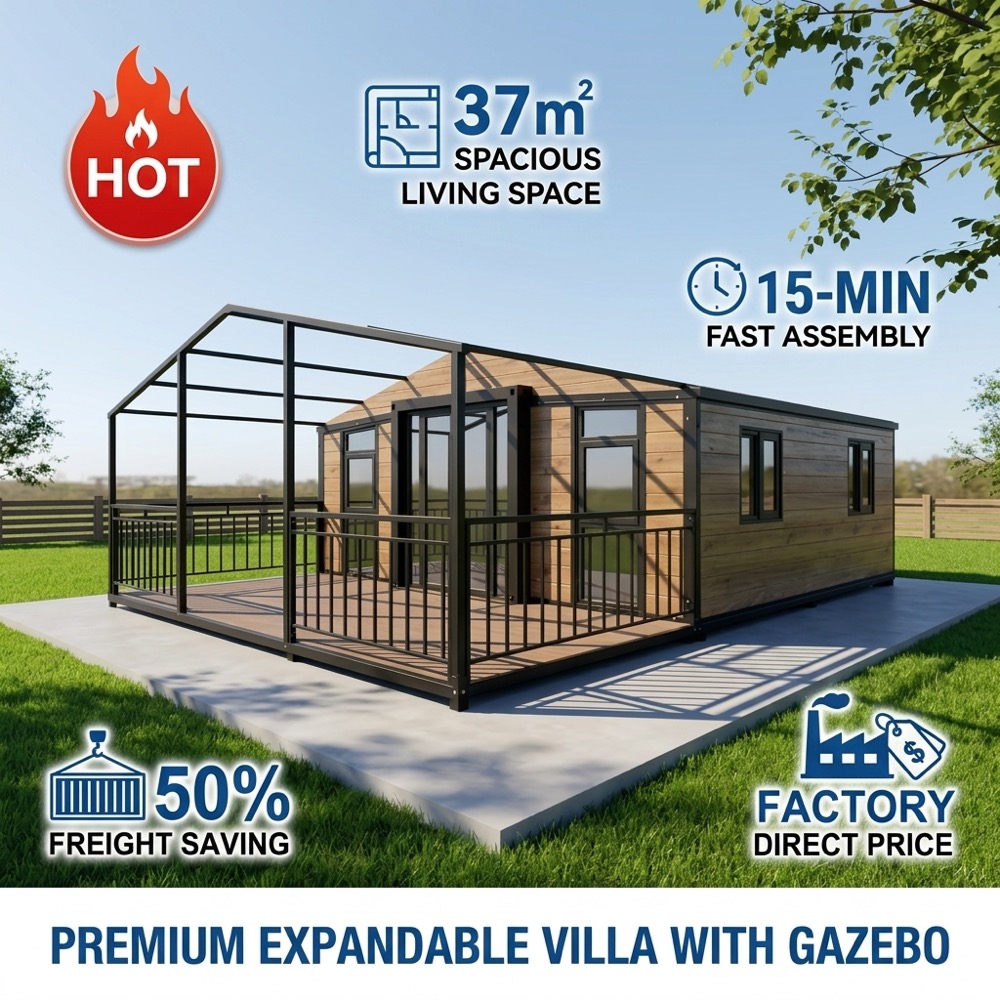
FOB to Landed Cost Breakdown — Canada
Understanding the total landed cost is essential for Canadian buyers. The table below breaks down the full cost chain from Huaying’s factory to your prepared site. Canada applies a 6% customs duty on steel modular buildings under HS 9406.20.00.00 (MFN rate; China does not have a preferential trade agreement with Canada)., but provincial sales tax (PST) or Harmonized Sales Tax (HST) applies depending on your province.
| Cost Component | 10ft (20m²) | 20ft (40m²) | 40ft (80m²) | Notes |
|---|---|---|---|---|
| FOB China Price (USD) | $8,500 | $12,500 | $22,800 | Factory-direct, ISO 9001 |
| Sea Freight to Vancouver | $1,500–$2,000 | $2,000–$2,500 | $2,800–$3,500 | 18–25 days via Tianjin/Shanghai |
| Marine Insurance (~1%) | $85–$100 | $125–$150 | $228–$280 | Cargo insurance, all-risk coverage |
| CIF Value (USD) | $10,085–$10,600 | $14,625–$15,150 | $25,828–$26,580 | Cost + Insurance + Freight |
| Canadian Customs Duty (6%) | $756 | $1,048 | $1,848 | 6% MFN on CIF; no China FTA |
| GST (5% Federal) | $504–$530 | $731–$758 | $1,291–$1,329 | Federal portion, all provinces |
| Provincial Tax (PST/HST) | $0–$807 | $0–$1,169 | $0–$2,063 | Varies by province (see table below) |
| Customs Clearance & Broker | $350–$500 | $450–$600 | $600–$800 | Customs broker + CBSA fees |
| Inland Transport | $500–$3,000 | $800–$4,500 | $1,200–$6,500 | Port to site — varies greatly by distance |
| Foundation (Screw Piles or Concrete) | $3,000–$6,000 | $5,000–$8,000 | $7,000–$12,000 | Frost-depth compliance per NBC |
| On-Site Assembly & Hookup | $2,500–$4,500 | $3,500–$6,000 | $5,000–$9,000 | Unfolding, electrical, plumbing, HVAC |
| TOTAL LANDED (USD) | $16,939–$25,570 | $25,506–$36,177 | $40,919–$57,069 | Turnkey — ready to occupy |
| TOTAL LANDED (CAD) | CAD $22,870–$34,520 | CAD $34,433–$48,839 | CAD $55,241–$77,043 | 1 USD ≈ 1.35 CAD |
Provincial Sales Tax by Province
| Province | Tax Type | Federal GST | Provincial Portion | Total Tax Rate |
|---|---|---|---|---|
| Alberta | GST only | 5% | 0% | 5% |
| British Columbia | GST + PST | 5% | 7% PST | 12% |
| Ontario | HST | 5% | 8% | 13% |
| Quebec | GST + QST | 5% | 9.975% QST | 14.975% |
| Nova Scotia/PEI/NB/NL | HST | 5% | 10% | 15% |
| Manitoba/Saskatchewan | GST + PST | 5% | 6% PST (MB) / 6% PST (SK) | 11% |
| Yukon/NWT/Nunavut | GST only | 5% | 0% | 5% |
Shipping from China to Canada
Container houses ship via standard shipping containers to two primary Canadian gateways:
| Route | Transit Time | Est. Freight (USD) | Best For |
|---|---|---|---|
| Tianjin → Vancouver | 18–22 days | $1,500–$2,200 | BC, Alberta, Saskatchewan, Yukon |
| Shanghai → Vancouver | 16–20 days | $1,700–$2,500 | Western Canada |
| Tianjin → Halifax | 28–35 days | $2,200–$3,200 | Ontario, Quebec, Maritimes |
| Shanghai → Montreal (via Halifax rail) | 30–38 days | $2,500–$3,500 | Quebec, Eastern Ontario |
| Guangzhou → Vancouver | 20–28 days | $1,800–$2,600 | Western Canada |
| Tianjin → Churchill (seasonal Jul-Oct) | 22–28 days | $2,000–$3,000 | Manitoba, Saskatchewan, NWT |
Canadian Building Code Compliance
Container homes in Canada must comply with the National Building Code of Canada (NBC 2020) and applicable provincial building codes. Each province adopts the NBC with amendments — Ontario has the Ontario Building Code (OBC), BC has the BC Building Code, and Quebec has the Code de construction du Québec. Huaying container homes are engineered to meet NBC requirements with documentation suitable for submission to your local authority having jurisdiction (AHJ).
Part 9 — Housing and Small Buildings
Most container homes fall under Part 9 of the NBC (buildings under 600 m² and 3 storeys). Key requirements include:
- Structural design (Part 4 / 9.4): Snow load design per NBC climatic data (1.0-5.0 kPa ground snow load depending on location). Wind load per NBC Appendix C. Corten steel frame provides inherent structural strength exceeding these requirements.
- Fire safety (Part 9.10): 45-minute fire separation between dwelling units, smoke alarms in each bedroom and on every storey (hardwired with battery backup).
- Radon (Part 9.13 / NBC Section 9.13.4): Radon rough-in required in areas with known radon (much of Canada). A sub-slab depressurization system can be incorporated into the foundation design.
Cold Climate Insulation Requirements
Canada’s climate demands superior thermal performance. The NBC specifies minimum effective thermal resistance (RSI/R-values) by heating degree-day zone:
| Climate Zone | Locations | Wall R-value (min) | Ceiling R-value (min) | Basement R-value |
|---|---|---|---|---|
| Zone 5 (< 4000 HDD) | Vancouver, Victoria, Lower Mainland BC | R-22 (RSI 3.87) | R-40 (RSI 7.04) | R-12 (RSI 2.11) |
| Zone 6 (4000–4999 HDD) | Toronto, Ottawa, Montreal, Halifax | R-24 (RSI 4.23) | R-50 (RSI 8.81) | R-20 (RSI 3.52) |
| Zone 7A (5000–5999 HDD) | Calgary, Edmonton, Winnipeg, Saskatoon | R-28 (RSI 4.93) | R-60 (RSI 10.57) | R-22 (RSI 3.87) |
| Zone 8 (6000+ HDD) | Whitehorse, Yellowknife, Iqaluit | R-31 (RSI 5.46) | R-60+ (RSI 10.57+) | R-28 (RSI 4.93) |
Foundations in Canadian Climate
Foundation depth must extend below the frost line, which varies from 0.45m in coastal BC to 3.5m in northern Manitoba. Common foundation options for container homes in Canada:
- Helical screw piles: Quick installation, minimal excavation, ideal for remote sites and permafrost regions. Installed to below frost line. CAD $8,000–$15,000 for a typical 40ft unit.
- Concrete slab-on-grade: Standard for southern Canada (Zones 5-6). Requires 100mm rigid insulation below slab and 600mm frost wing insulation. CAD $7,000–$12,000.
- Crawl space / full basement: Common in Central and Eastern Canada. Frost walls to 1.2-1.8m depth. CAD $15,000–$30,000.
- Adjustable steel piers: For seasonal or temporary installations. Lower cost but requires skirting for freeze protection. CAD $5,000–$9,000.
HVAC Considerations for Canadian Winters
Heating is the largest operational consideration for container homes in Canada. Huaying pre-wires for 120/240V split-phase electrical (CSA C22.1 compliant) and offers the following heating configurations:
- Electric baseboard + heat pump mini-split: Cold-climate mini-splits (Mitsubishi Zuba or equivalent) operate efficiently to -30°C. Electric baseboards provide backup. Best for Zones 5-7.
- Hydronic in-floor heating: Gas or electric boiler with PEX tubing in floor assembly. Superior comfort, higher installation cost. Ideal for Zones 7-8.
- Wood stove: Popular in rural and off-grid installations. Requires WETT certification and compliance with CSA B365. Supplemental heat source.
- ERV/HRV: Heat recovery ventilator required by NBC for airtight homes. Prevents condensation and maintains indoor air quality during winter when windows are sealed.
Permits and Approvals in Canada
The regulatory pathway for a container home varies by province and municipality:
- Building permit: Required in virtually all Canadian jurisdictions. Submission package typically includes: site plan, foundation design stamped by a Canadian professional engineer, structural calculations for the container module, energy compliance documentation (HOT2000 or equivalent), and mechanical/electrical plans.
- Development permit / zoning: Required if the home does not conform to zoning bylaw requirements for minimum dwelling size, setbacks, or height. Some rural municipalities have no zoning — check with your local planning department.
- CSA A277 certification: Some provinces (notably Ontario and Quebec) require factory-built housing to carry CSA A277 certification. Huaying provides equivalent ISO 9001 documentation accepted by most AHJs. For Ontario, an alternative pathway is registration as a “modular home” under the Ontario New Home Warranties Plan Act (Tarion).
- Septic and well permits: Required for rural properties. Septic system must meet provincial standards (Ontario Building Code Part 8, BC Sewerage System Regulation, etc.).
- CSA electrical approval: All electrical components must carry CSA, cUL, or equivalent certification recognized by the Standards Council of Canada. A licensed electrician must complete final connection and obtain an Electrical Safety Authority (ESA) inspection in Ontario, Technical Safety BC inspection in BC, etc.
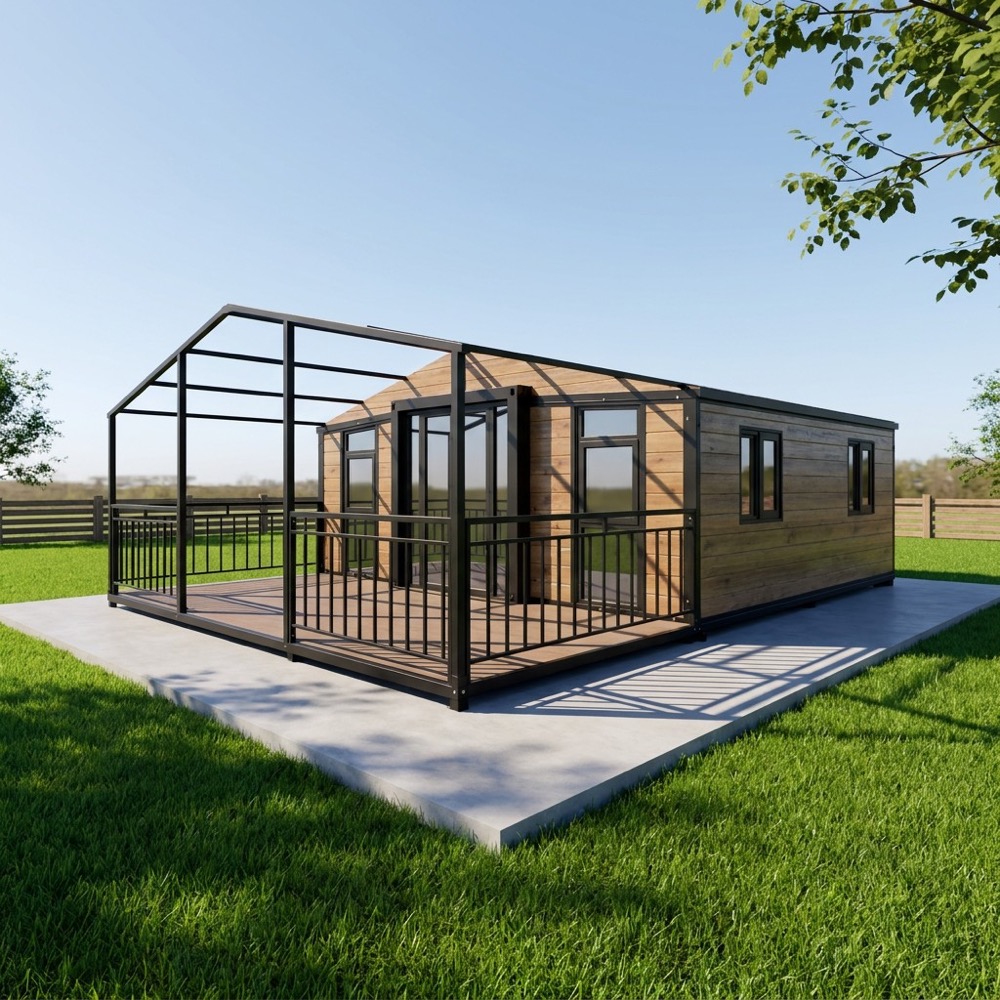
Best Uses for Container Houses in Canada
1. Affordable Home Ownership
A 40ft expandable container home (80m², 3 bedrooms) landed for CAD $55,000–$77,000 plus land offers a genuine entry point to home ownership for Canadians priced out of the conventional market. In Ontario’s secondary markets (Sudbury, Thunder Bay, Windsor), a container home on a small lot can deliver total project cost under CAD $150,000 — compared to CAD $500,000+ for an equivalent traditional build.
2. Laneway Houses and Garden Suites (BC & Ontario)
Vancouver’s laneway house program and Toronto’s garden suite bylaw allow accessory dwelling units on properties zoned for single-family residential. A 20ft expandable container house (40m²) serves as a fully self-contained rental unit generating CAD $1,500–$2,500/month in rental income. The City of Vancouver processed over 4,000 laneway house permits since 2009, and container homes are increasingly accepted under these programs.
3. Workforce Housing (Alberta & Northern Canada)
Oil sands operations, mining camps, and pipeline projects require thousands of housing units across Northern Alberta, BC, Saskatchewan, and the territories. Container homes offer fast-deploy, insulated accommodation that withstands extreme cold. Multiple units can be configured as workforce villages with shared kitchen and recreation facilities. A 10ft folding unit serves as a single-occupancy room for under CAD $25,000 landed.
4. Indigenous Community Housing
First Nations, Métis, and Inuit communities face acute housing shortages with overcrowding rates 6x the national average. Container homes offer culturally appropriate, energy-efficient housing that can be transported to remote communities via winter roads or sealift. The CBSA waives customs duty for goods destined for reserve lands under certain conditions.
5. Cottage and Recreational Properties
Canada’s cottage country — Muskoka, Kawarthas, Laurentians, Okanagan, Cape Breton — sees extreme seasonal price pressure. A 20ft Apple Capsule container house delivered to a waterfront lot for under CAD $50,000 creates a four-season cottage that can be winterized and left unattended. The compact footprint also minimizes site disturbance, appealing to conservation authorities and lake associations.
6. Accessory Dwelling Units for Multi-Generational Living
As Canada’s population ages, demand for self-contained secondary suites on family properties is growing. A 10ft or 20ft container house provides a private living space for aging parents or adult children at a fraction of the cost of a conventional addition. Under recent provincial legislation (e.g., Ontario’s Bill 23, BC’s Bill 44), municipalities must allow up to three units per single-family lot in many urban areas.
Frequently Asked Questions
Are container homes legal in Canada?
Yes. Container homes are legal in all Canadian provinces and territories, provided they meet the National Building Code (or provincial equivalent), local zoning bylaws, and receive the required building permits. Thousands of container-based structures are in use across Canada as homes, offices, and commercial spaces. The regulatory pathway is well-established — the key is engaging a local architect or engineer familiar with your AHJ’s specific requirements.
Can container homes survive Canadian winters?
Yes, with proper insulation. Huaying’s Arctic insulation package (150mm closed-cell PIR, R-31 walls / R-60+ ceiling, triple-glazed windows) has been field-tested in climates reaching -50°C. The steel frame’s thermal bridging is mitigated by a thermal break layer. Key design features for Canadian winters include: raised foundation (prevents ground freeze adhesion), insulated and heated water supply line, ERV/HRV for condensation control, and roof design with a minimum 4:12 slope for snow shedding. We have delivered units to customers in Winnipeg (Zone 7A) and Whitehorse (Zone 8) who report comfortable winter living.
What about shipping container homes to landlocked provinces (Alberta, Saskatchewan, Manitoba)?
Container homes ship to Vancouver or Halifax and are then transported by rail or truck to inland destinations. Rail transport costs approximately CAD $1,500–$3,000 for a 40ft container from Vancouver to Edmonton, Calgary, or Winnipeg. For Manitoba, the seasonal Port of Churchill (July–October) offers a direct sea route that can reduce inland transport costs by 40–60%.
How much does land cost for a container home in Canada?
Land costs vary dramatically: rural lots in Northern Ontario or Saskatchewan can be CAD $10,000–$30,000 for 1-5 acres. Serviced lots in secondary cities (Windsor, Saint John, Regina) range CAD $40,000–$100,000. Vancouver and Toronto lots are CAD $700,000+. For the best container home economics, target secondary markets within commuting distance of employment centres, or consider placing the home on family-owned rural land.
Can I finance a container home with a Canadian mortgage?
Traditional lenders (RBC, TD, Scotiabank, BMO, CIBC) typically require the home to be on a permanent foundation and to meet CSA A277 or equivalent certification. Construction/self-build mortgages are available through credit unions (Vancity, Coast Capital, Meridian) and alternative lenders (HomeEquity Bank, Equitable Bank). CHMC mortgage insurance may apply if the home meets applicable standards. Many Canadian buyers fund container homes through savings, personal loans, or HELOCs on existing property. For a container home as an ADU on an existing property, a home equity line of credit is often the simplest financing route.
What about building on unorganized territory?
Much of Northern Ontario, parts of Quebec outside municipal boundaries, and large areas of the territories are “unorganized” — meaning there is no municipal government and often no zoning or building permit requirements. However, the Ontario Building Code (or provincial equivalent) still applies, and you may require approvals from the Ministry of Natural Resources and Forestry (MNRF) for shoreline development, Conservation Authority permits, and provincial septic system approval. Unorganized territory offers greater flexibility but not a regulatory free-for-all.
Do container homes need a vapour barrier in Canada?
Yes. Per NBC Section 9.25, a vapour barrier (6-mil polyethylene or equivalent, ≤ 60 ng/Pa·s·m² permeability) is required on the warm side of the wall assembly for all heated buildings in Canada. Huaying includes an integral vapour barrier in our wall assemblies. The barrier MUST be continuous — all penetrations (electrical boxes, plumbing) must be sealed with acoustical sealant. In cold climates, an improperly installed vapour barrier can lead to severe condensation damage within the wall cavity.
Why Choose Huaying for Your Canadian Container Home?
Huaying (Fucheng Huaying Integrated Housing Co., Ltd.) is an ISO 9001-certified Chinese manufacturer with over 10 years of export experience. We have delivered container homes to customers across Canada — from Vancouver Island to Newfoundland — and understand the specific demands of the Canadian market:
- Cold-climate engineering: Arctic, Enhanced, and Standard insulation packages for all Canadian climate zones
- CSA-compatible electrical: 120/240V split-phase, 60Hz, pre-wired for Canadian standards
- NBC documentation package: Structural calculations, thermal performance data (RSI/U-values), fire resistance certifications, and material specifications formatted for Canadian building officials
- Snow load capacity: Roof structures designed for ground snow loads up to 5.0 kPa, verified by structural calculations
- Shipping to all Canadian ports: Vancouver, Prince Rupert, Halifax, Montreal, Saint John, and the seasonal Port of Churchill
- 10-year structural warranty
Ready to explore container house options for your Canadian project? Contact our team for a free quotation including shipping to your preferred Canadian port, provincial tax estimate, and a detailed specification sheet with NBC compliance documentation.
Email: jack@huayinghouse.com — mention “Canada container house” for priority response
WhatsApp: +86 153-0318-4505 — send your location and requirements for instant pricing with provincial tax calculation
Website: www.huaying1.com — browse our complete range of expandable, folding, and capsule models
Factory Video Tour: Schedule a live WhatsApp video walkthrough of our production line — see Canadian-spec units being built
Disclaimer: This guide provides general information about Canadian building regulations and costs as of July 2026. Building codes, zoning bylaws, and tax rates vary by province and municipality. Always consult a qualified Canadian architect, structural engineer, or building code consultant for project-specific advice. Prices are estimates and subject to exchange rate fluctuations (CAD/USD) and shipping market conditions. CBSA customs rulings should be confirmed with a licensed customs broker before import.
For the engineering measures behind cold-climate performance — thermal breaks, insulation levels, the ventilated cold roof and how snow load is checked — see our cold climate and snow load design guide for Canada.