A backyard container studio or storage unit is priced very differently from a garden shed, and most buyer guides skip the part that decides the budget: the landed cost. This guide breaks down the full chain — FOB price, ocean freight, import duty, sales tax, foundation and installation — for 10ft, 20ft and 40ft units delivered to the United States, Australia and Canada, and sets out the permit rules and steel-frame moisture details that decide whether the unit stays usable.
If you are comparing a container-based backyard unit against a timber or metal garden shed, the comparison usually breaks down at the same point. Shed retail pricing is quoted as a delivered, installed, tax-paid number. Container housing is quoted FOB, which covers the unit loaded at the factory gate and nothing after that. Buyers who compare a shed price against an FOB price are comparing two different things, and the gap between them is large enough to change the decision.
This guide sets out the full cost chain for three standard sizes, the foundation and permit requirements in the three markets that generate the most enquiries for us, and the condensation and thermal-bridging issues that determine whether a steel-framed unit performs in a wet or cold climate. If you already know the size you want, the cost table below is the fastest route to a realistic budget.
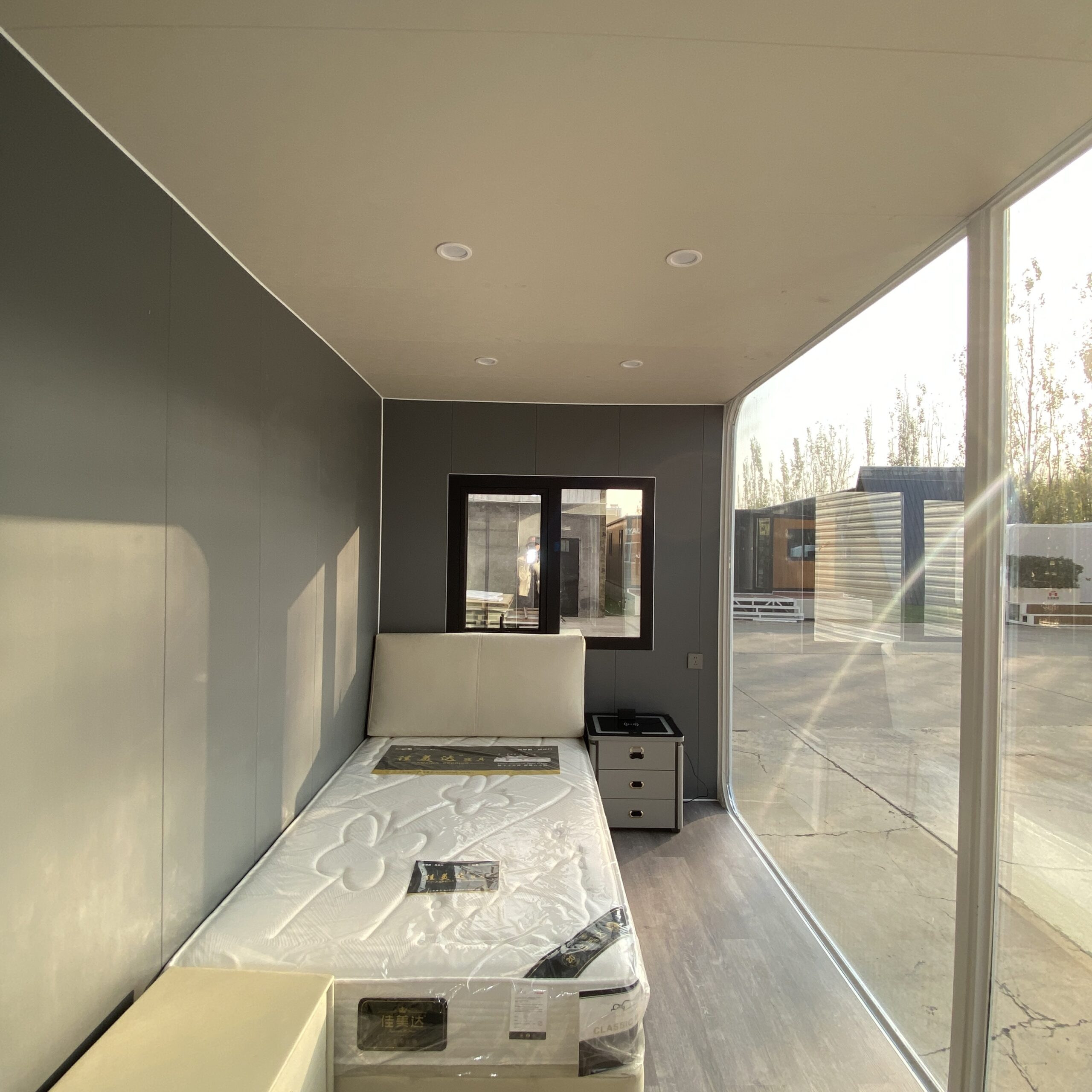
What a backyard container unit actually costs: FOB to landed
The table below uses current factory pricing and freight rates for the three sizes we ship most often. Duty and tax rates are the rates that applied to container housing (HS heading 9406) at the time of writing; we review them against customs sources each quarter. Freight is a 2026 mid-range estimate for a single unit; consolidated shipments and multi-unit orders reduce the per-unit figure.
| Cost component | 10ft expandable | 20ft expandable | 40ft double-wing |
|---|---|---|---|
| FOB price (ex works, Tianjin) | USD 7,400 – 9,500 | USD 11,200 – 15,000 | USD 19,000 – 26,000 |
| Ocean freight (single unit) | USD 1,800 – 3,000 | USD 2,500 – 4,300 | USD 4,300 – 6,200 |
| Marine insurance | USD 90 – 140 | USD 140 – 220 | USD 240 – 380 |
| Import duty — United States (Section 301, HS 9406.90) | 25% of FOB | 25% of FOB | 25% of FOB |
| Import duty — Australia (ChAFTA, HS 9406.90) | 0% | 0% | 0% |
| Import duty — Canada (HS 9406.00) | 0% | 0% | 0% |
| Sales tax / VAT / GST | US varies by state; AU 10% GST; CA 5% GST + provincial | same | same |
| Customs clearance & port charges | USD 350 – 700 | USD 450 – 900 | USD 600 – 1,100 |
| Final-mile delivery (port to site) | USD 300 – 1,200 | USD 400 – 1,800 | USD 600 – 2,600 |
| Foundation (screw piles or slab) | USD 1,200 – 3,000 | USD 1,800 – 4,500 | USD 2,500 – 6,000 |
| On-site assembly & services connection | USD 800 – 2,000 | USD 1,500 – 3,500 | USD 2,000 – 4,500 |
Worked example — a 20ft expandable unit delivered to Sydney, New South Wales: FOB USD 12,800 + freight USD 3,100 + insurance USD 160 + duty USD 0 (ChAFTA) + GST USD 1,606 + clearance USD 550 + final mile USD 900 + screw-pile foundation USD 2,400 + assembly USD 2,000 = USD 23,516 landed and installed, or roughly AUD 35,000 at the exchange rate used here. The same unit delivered to Los Angeles adds a 25% Section 301 duty of USD 3,200, bringing the total to approximately USD 28,216 before California state sales tax.
Two figures in that chain surprise buyers most often. First, duty is charged on the FOB value, not on the retail price, so the Section 301 rate applies to a smaller base than most people assume. Second, the foundation and assembly lines together frequently exceed the freight cost. A cheap freight quote does not compensate for an unsuitable foundation.
Foundation options and what they cost
Container-based units are rigid steel boxes, and that rigidity is useful: the structure will not rack or twist provided it is supported at the correct points. It also means the foundation has one job, which is to keep those points level and stable.
- Screw piles or ground screws. Fastest option, installable in a day, removable, and the standard choice on sloping or tree-rooted sites. Expect USD 1,200 – 4,500 depending on depth and count. They also lift the unit clear of standing water, which matters more than most buyers expect.
- Concrete slab. Best where a permanent footprint is permitted and the ground is level. Expect USD 2,000 – 6,000 including excavation and reinforcement. Slabs need a vapour barrier under the unit and a minimum 150mm clearance or an insulated interface, or the underside will condense.
- Timber bearers on compacted base. Lowest cost, acceptable for storage-only units in dry climates. Not recommended for habitable units or for anything in a frost-heave or expansive-clay region.
Permits: what changes between the United States, Australia and Canada
This is where the sheds comparison stops being useful. A garden shed under a threshold size is exempt in most jurisdictions. A container unit that will be occupied, slept in or connected to services is treated as a building or a structure, and the rules differ by country.
United States
Regulation is set at state and county level, generally by reference to the International Residential Code (IRC). Three points decide most applications: whether the unit is classified as an accessory dwelling unit (in which case a full permit, and in some states a minimum size, applies), whether it meets the local wind and seismic design category for your county, and whether the foundation design is signed off. California additionally requires ADU-specific compliance, including Title 24 energy performance. Texas has no statewide zoning, so the county or city having jurisdiction decides — check before ordering, not after.
Australia
Compliance runs through the National Construction Code (NCC), currently the 2022 edition with the 2025 amendments phasing in. Most states allow a small, non-habitable structure as exempt development below a floor-area and height threshold; a habitable unit needs a development application or a complying development certificate depending on the state. Wind classification matters: a unit sited in a cyclonic region requires a certified cyclone-rated anchorage design, not the standard fixings. Insulation must meet the NCC climate-zone minimum for the location, which for a steel-framed unit means a continuous thermal break, not just bulk insulation between the frames.
Canada
The National Building Code of Canada sets the framework, adopted and modified provincially. Cold-climate performance is the binding constraint: the NBC and provincial codes set effective R-values that in most provinces require a substantially upgraded envelope, and the frost depth determines the foundation type. A container unit in a region with a 1.8m frost depth needs either a below-frost foundation or an engineered alternative; bearers on grade will move with the first thaw.
Thermal bridging and condensation in steel-framed units

Steel is an excellent conductor of heat and an excellent path for moisture. Two failure modes account for most of the complaints we see in cold and wet climates, and both are designed out at the factory rather than fixed on site.
The first is thermal bridging. Insulation placed between steel ribs does not stop heat moving through the ribs themselves. A continuous thermal break between the steel frame and the inner lining raises the effective R-value as much as doubling the insulation thickness in some configurations. It also raises the interior surface temperature of the frame, which is what prevents the second failure mode.
The second is interstitial condensation. Warm moist interior air reaching a cold steel surface condenses, and in a sealed unit that water has nowhere to go. A controlled vapour barrier on the warm side, a ventilated cavity on the cold side, and an accessible moisture path are the three components that prevent it. Ask for the measured U-value, the psi-value for the thermal break detail, and the designed airtightness figure before you order. A supplier who cannot provide those three numbers is not designing for your climate.
Which size for storage, and which for occupation
If the unit is for storage only, the decision is straightforward: match the internal floor area to what you need to store, allow for 300mm of clearance behind and above, and choose the cheapest foundation the site allows. A 10ft expandable unit provides approximately 18.6 m² of internal floor area when deployed, which is more than enough for garden equipment, tools, bicycles and seasonal items, and it does not require a habitable-structure permit in most Australian and Canadian jurisdictions.
If the unit will be occupied — as a studio, an office or a guest room — the requirements change on four axes: permit class, insulation and ventilation, services connection, and egress. Allow a longer planning period and budget for the thermal upgrade. A 20ft expandable unit gives approximately 37 m² deployed, which accommodates a studio or a single-bedroom layout with a bathroom; a 40ft double-wing unit gives approximately 55 m² and can be configured as a two-bedroom unit or a large open studio.
Installation timeline
From confirmed order to usable unit, the realistic sequence is: 3 – 4 weeks production, 3 – 6 weeks ocean transit depending on destination port, 1 – 3 weeks customs clearance and final-mile delivery, and 2 – 5 days on-site for foundation preparation, positioning, deployment and services connection. The critical path is almost always the permit approval, not the shipping. Start the permit application before the order is placed if the unit will be habitable.
Frequently asked questions
Is a container unit cheaper than a garden shed?
No. A garden shed is a lighter structure with fewer compliance requirements, and it will nearly always cost less. A container unit is comparable to a small habitable outbuilding in cost terms, and the comparison that matters is against an equivalent timber-framed studio or annexe, where a container unit is typically 25 – 40% cheaper.
Do I pay import duty on a container house?
It depends on the destination and the tariff treatment. Australia and Canada currently apply a 0% rate to container housing under the relevant free trade arrangements. The United States applies a 25% Section 301 duty to HS 9406.90 from China. EU member states apply 2.7% for the same heading, and the United Kingdom 2.0%. Always confirm the current rate with a customs broker before budgeting.
Can I install it myself?
Positioning and deployment can be done with the right equipment and a competent operator, and many of our customers do it. Services connection, and any work on a habitable structure, will normally require a licensed electrician and plumber to satisfy the local authority. Budget for that separately.
What is the minimum clearance under the unit?
Allow at least 150mm of ventilated clearance under a storage unit, and more in high-rainfall areas. For a habitable unit in a cold climate, the floor must either be insulated with a continuous thermal break or the void must be enclosed and conditioned. Do not place a habitable unit directly on grade.
How long does the unit last?
The steel structure, correctly supported and painted, has a service life measured in decades. The wearing items are the coating, seals and any timber components. On a coastal site, specify a higher-grade coating system and inspect the underside annually.
Can I ship more than one unit together?
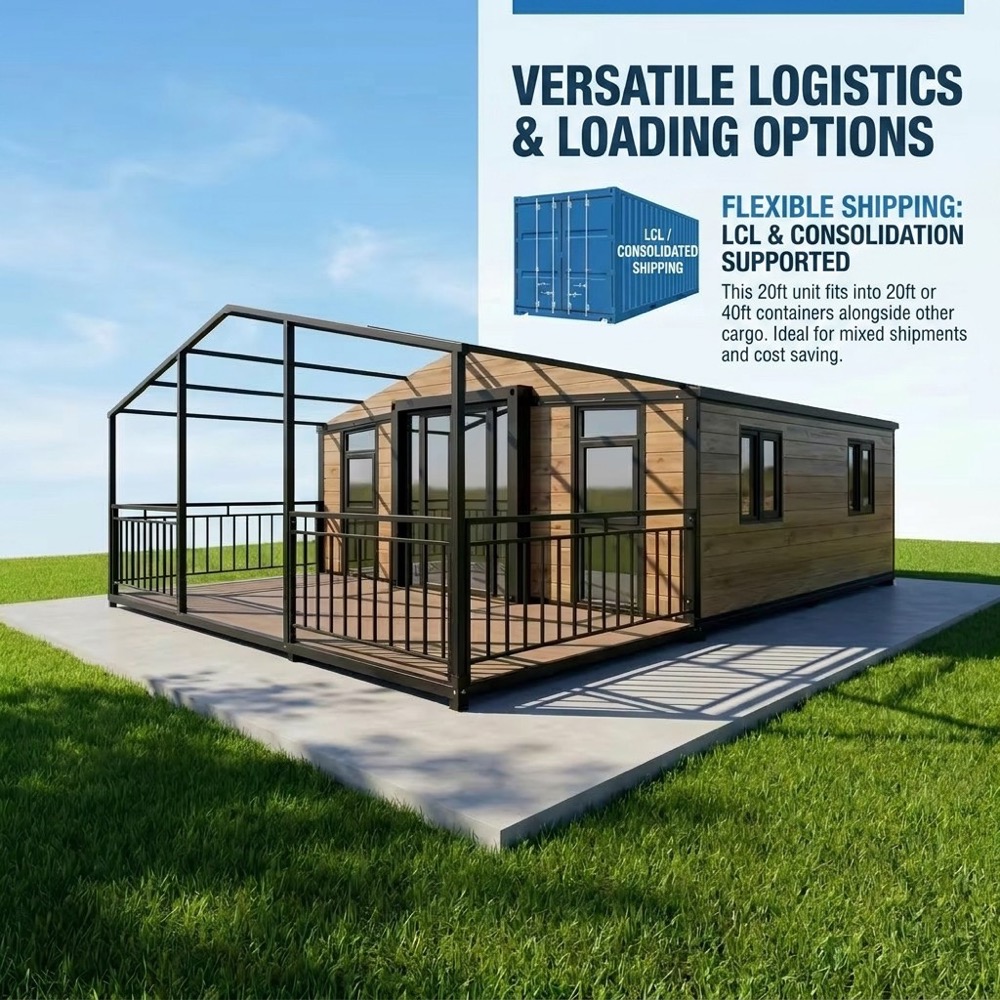
Yes, and it materially reduces the per-unit freight. Two 20ft units can ship in a single 40ft container slot, and we regularly consolidate multi-unit orders to the same destination port. Ask for a consolidated freight quote when you request pricing.
Request pricing for your site
To give you an accurate landed estimate rather than a range, we need four things: the destination port or city, the intended use (storage, studio, office or residential), whether the site is level, and the approximate date you need the unit on site. Send those to jack@huayinghouse.com or message +86 153-0318-4505 on WhatsApp, and we will return a line-by-line landed cost sheet with the current duty and tax rates for your market, plus the foundation drawing for your ground conditions.
Related reading: container houses in Mauritius — complete import and landed cost guide, desert heat design guide for Saudi Arabia and the UAE, and site selection: how to choose land and orient the unit.