
Why Malaysian Developers and Plant Managers Buy Container Guard Houses
Security guard houses are one of the most frequently purchased prefabricated buildings in Malaysia, yet they rarely show up in mainstream container home content. Developers building gated communities, plant managers upgrading factory entrance checkpoints, and logistics operators at ports and depots all need the same thing: a small, durable, code-compliant structure that can be delivered, placed, and occupied quickly.
A 10ft or 20ft container-based guard house solves that need at a fraction of the cost of a brick-and-mortar guard room. This guide covers what a container guard house costs in Malaysia in 2026, what import duty and tax you pay, which building regulations apply, and how to spec one correctly so the unit passes UBBL inspection the first time.
What a Container Guard House Is (and What It Is Not)
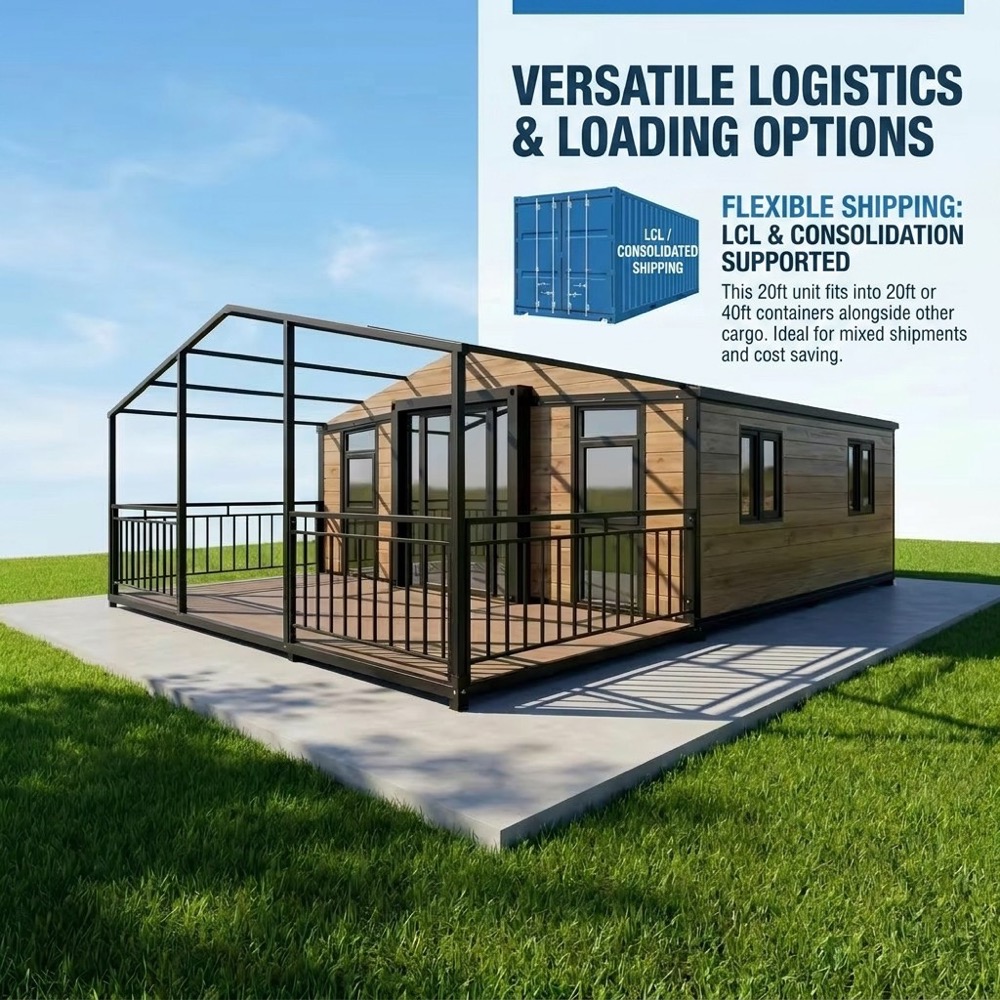
A container guard house is a steel-framed, insulated cabin built on a container footprint — typically 10ft (3m) or 20ft (6m) long — equipped with everything a security post needs: a desk area, air conditioning provision, electrical points, lighting, and windows that give the guard a clear sightline to the gate. It is not a converted ISO shipping container in the sense of a used cargo box; it is a purpose-built prefabricated cabin manufactured in China, shipped as a single unit, and installed on a simple concrete pad.
The 10ft model is the most common choice for a single guard post. The 20ft model suits sites that need a small office behind the checkpoint, a waiting area, or room for CCTV racks and access-control equipment.
2026 Price Guide: FOB to Landed Cost in Malaysia
Quoted prices from Chinese factories are FOB (Free On Board) — they cover the unit at the port of departure but nothing after that. The table below works through the full chain from factory gate in China to an installed guard house in the Klang Valley, so you can budget the real landed cost rather than being surprised by port charges.
| Cost item | 10ft guard house | 20ft guard house | Notes |
|---|---|---|---|
| FOB price (factory gate, China) | USD 3,800–5,200 | USD 6,500–8,800 | Standard spec: steel frame, insulated walls, pre-wired electrics, 2–3 windows |
| Ocean freight (China → Port Klang) | USD 900–1,200 | USD 1,200–1,700 | Shenzhen/Shanghai → Port Klang, 7–10 days transit; 10ft units often grouped 2–4 per 40ft container |
| Marine insurance (0.3–0.5% of CIF) | USD 30–50 | USD 50–80 | Optional but recommended on every shipment |
| Import duty (HS 9406.90) | USD 0 | USD 0 | 0% under the China–ASEAN FTA (ACFTA) when the shipment is covered by a valid Form E |
| Sales tax on import | USD 0 | USD 0 | Prefabricated steel buildings sit outside the taxable sales-tax list (0% band); confirm classification with your forwarder |
| Customs clearance, port handling & delivery to site | USD 600–900 | USD 800–1,200 | Includes customs broker fee and haulage within the Klang Valley; further sites cost more |
| Concrete pad & simple foundation | USD 800–1,500 | USD 1,200–2,000 | 150mm reinforced slab, site prep and rebar; varies with soil condition |
| Crane / forklift placement | USD 200–400 | USD 300–600 | One morning on site; a 10ft unit can often be placed with a forklift |
| Electrical hookup, lighting & minor finishing | USD 400–800 | USD 600–1,000 | Local electrician connects the unit to your distribution board |
| Total landed & installed cost | USD 6,700–10,000 | USD 10,900–15,400 | ≈ RM 29,500–44,000 / RM 48,000–67,800 at 4.40 MYR per USD |
The headline takeaway: a 10ft guard house lands and installs for roughly USD 7,000–10,000 (about RM 30,000–44,000) all-in. That is normally 40–60% below the cost of a comparable masonry guard room once you include labour and construction time.
Import Duty and Taxes: The Form E Advantage
Malaysia classifies prefabricated buildings under HS code 9406.90. The standard most-favoured-nation duty rate is 30%, but imports from China qualify for a 0% rate under the ASEAN–China Free Trade Agreement — provided the shipment is accompanied by a valid Form E certificate of origin. Your supplier in China arranges the Form E through the issuing authority; it must match the consignee, invoice value, and HS code on the customs declaration.
Sales tax: prefabricated steel buildings are generally outside the taxable sales-tax list (0% band). However, the service tax landscape changed in 2025 — a 6% service tax now applies to certain imported services and non-residential construction work. If your contractor bills site installation as a construction service for a commercial property, that portion may attract the 6% service tax. Get a line-item quote so the goods value and the installation service value are separated.
Building Regulations: UBBL 1984 and CIDB Requirements
A guard house is a building, not a machine. Whether it needs a permit depends on where it sits:
- Private gated development (residential): the guard house is part of the development, covered by the developer’s overall planning approval under the Uniform Building By-Laws 1984 (UBBL) and local council guidelines. The developer’s architect submits it as part of the layout plan.
- Industrial / commercial site (plant, warehouse, logistics hub): the owner needs a building plan approval from the local authority (MBPJ, DBKL, MBSA, MBJB, etc.) for a permanent structure. A container guard house placed on a concrete pad is treated as a permanent building for permit purposes in most municipalities.
- Temporary / construction-site security post: if the guard house is on an active construction site and removed when works finish, many councils allow it under the site’s temporary structure approval. Confirm with the project’s accredited person (AP) — do not assume.
Contractor registration: any party carrying out building works above a threshold value must be registered with CIDB (Construction Industry Development Board) and hold the appropriate grade of registration. For a small guard house this is normally handled by your local builder or the developer’s main contractor — verify that the entity doing the pad works and installation carries a valid CIDB registration, otherwise the council may hold up the Certificate of Completion and Compliance (CCC).
What to Specify: Checklist for a Code-Compliant Unit
- Wall insulation: 50–75mm glass wool or EPS core in wall and roof panels — essential in Malaysia’s tropical climate and expected by council reviewers in most jurisdictions.
- Ventilation and AC provision: pre-wired AC point, exhaust fan, and louvered windows for cross-flow. A guard sitting in a steel box without insulation will not last a week.
- Electrical: MS IEC 60364 wiring standard, RCD protection, and a dedicated earth rod. The unit should arrive pre-wired from the factory and only need a final connection by a licensed electrician.
- Security: lockable steel door with two-point locking, anti-pry hinges, and window grilles on units facing public areas.
- Fire safety: non-combustible finishes on the interior lining, a smoke detector, and a clear exit door that opens outward.
- Roof: a pitched canopy or shade roof reduces heat gain substantially. Many buyers add a simple steel canopy over the 10ft unit.
Delivery, Installation and Timeline
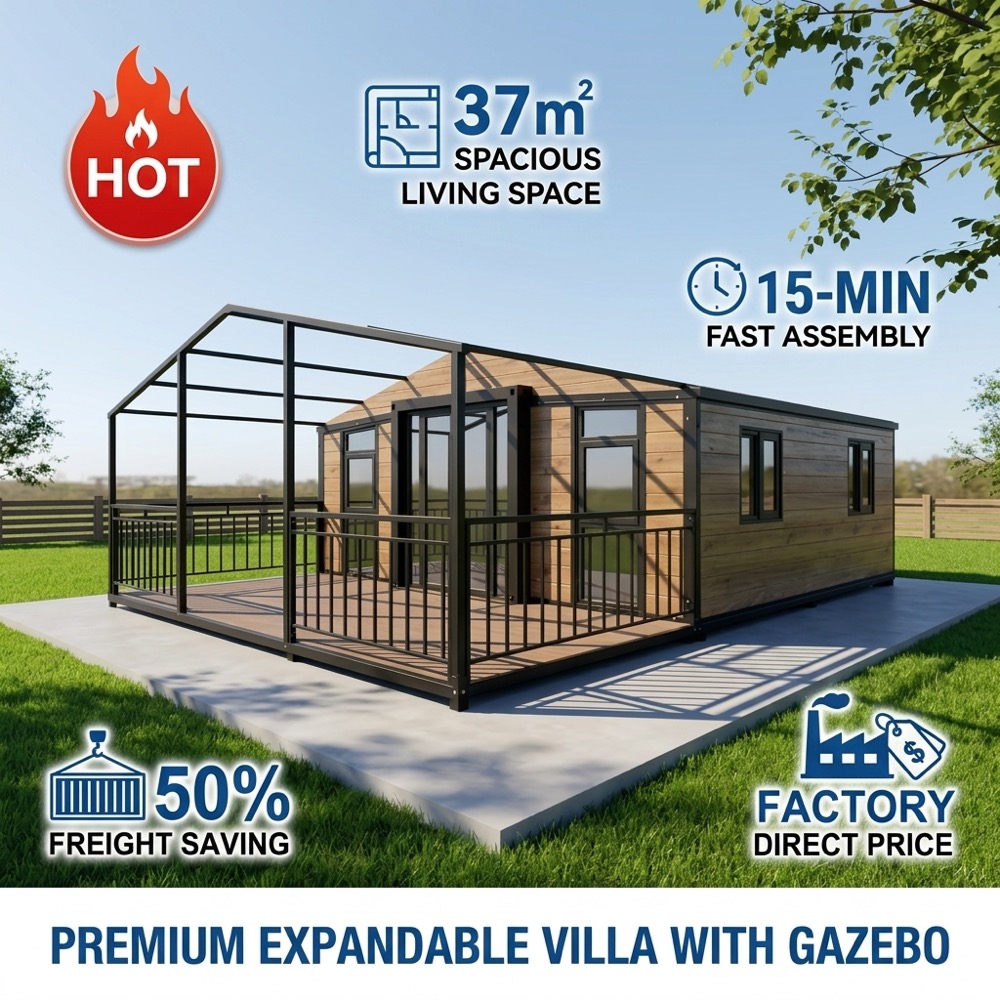
A typical project runs 25–40 days from order to handover:
- Weeks 1–2: factory production of the unit (10–15 days), Form E application in parallel
- Week 3: ocean shipment to Port Klang (7–10 days) plus clearance (2–3 days)
- Week 4: pad construction (site dependent), unit delivery and placement, electrical hookup
Buyers who plan the pad and the purchase in parallel save the most time — the pad cures while the unit is on the water.
Common Mistakes to Avoid
- Skipping the Form E: without a valid Form E, the 30% MFN duty applies. USD 6,000 of goods suddenly costs USD 1,800 more in duty alone.
- Buying a used cargo container: a repurposed ISO box has no insulation, no wiring, no windows, and usually fails council review. A purpose-built unit costs marginally more and is compliant out of the box.
- No permit for a permanent post: placing a guard house without approval on a commercial site can trigger a notice, a fine, or removal under UBBL enforcement.
- Undersized AC planning: for a 10ft unit in direct sun, plan a 0.9–1.2 kW (9,000–12,000 BTU) unit rather than under-specifying.
Frequently Asked Questions
How much does a container guard house cost in Malaysia?
A 10ft container guard house lands and installs for roughly USD 6,700–10,000 (RM 29,500–44,000) all-in including freight, 0% duty under Form E, pad, and installation. A 20ft unit with an office area runs USD 10,900–15,400 (RM 48,000–67,800).
Do I need a building permit for a container guard house?
For a permanent guard post on a commercial or industrial site, yes — building plan approval from the local authority is required under UBBL 1984. Guard houses inside a developer’s approved gated layout are covered by the development approval. Temporary construction-site posts are usually acceptable under the site’s temporary structure approval, but confirm with your AP or architect.
Is import duty really 0% from China?
Yes, for prefabricated buildings under HS 9406.90 shipped from China with a valid Form E certificate of origin under the ASEAN–China FTA. Without Form E, the standard duty rate is 30%.
How long does delivery take?
Factory production takes 10–15 days, ocean transit to Port Klang 7–10 days, and clearance plus installation 4–7 days. Total lead time is typically 25–40 days depending on pad readiness.
Can the guard house be moved later?
Yes. A container guard house is designed to be re-lifted and relocated. If you place it on a compacted gravel bed with corner blocks instead of a permanent slab, relocation is straightforward — but check with the local council whether a mobile (non-permanent) placement changes the permit requirement.
What sizes are available?
The two standard options are 10ft (3m × 2.4m) for a single guard post and 20ft (6m × 2.4m) for a post with an office or waiting area. Custom 15ft units and split designs with two rooms are available on request.
Related: 10ft container guard house in Malaysia — landed cost, 0% import duty and site specification — for security booths at construction sites, residential complexes and industrial buildings.
Get a Landed-Price Quote for Your Site
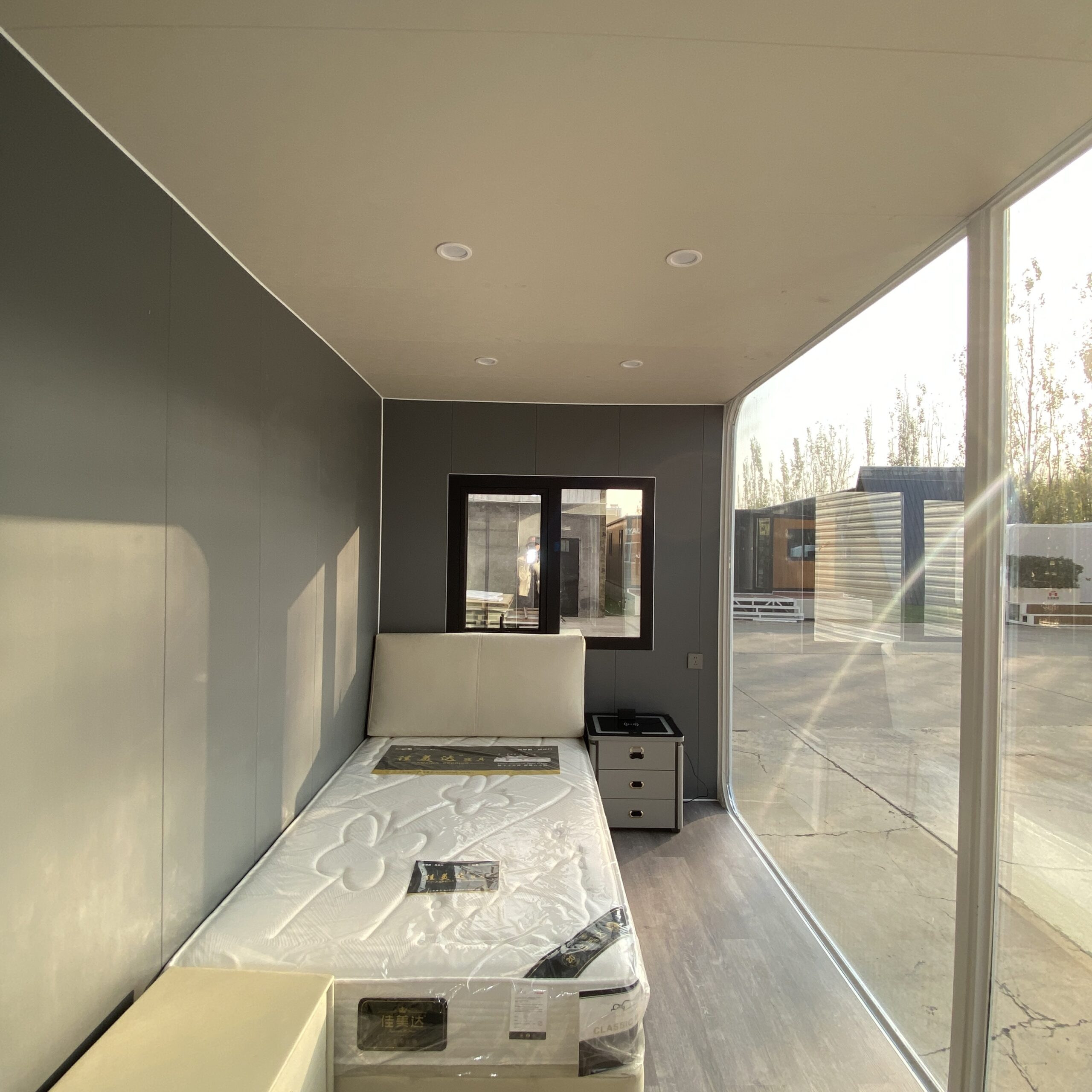
We manufacture container guard houses and export worldwide from our factory in China. Every quote we send breaks down FOB price, freight, duty, tax, delivery, and installation separately — the same structure as the table above — so you can compare like-for-like with local construction quotes.
Email jack@huayinghouse.com or WhatsApp +86 153-0318-4505 with your site location and the number of posts you need, and we will reply with a landed-cost quote for the Klang Valley or your specific delivery address within 24 hours.