
Container houses in Ghana: complete 2026 cost guide with factory (FOB) prices from $11,200 for a 40ft expandable unit, full landed cost to Tema port including freight, 20% import duty and 15% VAT, plus the permit process under the Ghana Building Code. Compare against the true cost of local masonry construction in Accra.
Why Container Houses Are Gaining Traction in Ghana
Ghana’s housing deficit is estimated at roughly 1.8 million units, and conventional construction in Accra and Kumasi remains slow and expensive. Imported prefabricated container houses close part of that gap because they arrive as finished shells, are erected on a concrete pad within days rather than months, and are re-deployable if land tenure changes. For buyers comparing options, the relevant number is not the factory price alone — it is the landed cost: what the unit actually costs once freight, duty, tax and installation are added.
This guide walks through each layer of that cost for a 40ft expandable container house shipped from China to Tema, Ghana’s principal port, and explains the regulatory steps you need to complete before the unit can be occupied.
FOB to Landed Cost Breakdown: 40ft Expandable Container House to Tema
The table below is a working estimate for a single 40ft double-wing expandable unit (approx. 11.8m x 2.4m closed, expanding to roughly 24-28 m² of usable floor space). Prices are in USD and reflect typical mid-2026 rates; freight and duty should be re-quoted at the time of order.
| Cost Component | Estimated Amount (USD) | Notes |
|---|---|---|
| FOB price (40ft expandable, basic spec) | $11,200 – $13,500 | Factory price at Qingdao/Shanghai, incl. standard interior fit-out |
| Ocean freight (40ft HC container, China to Tema) | $3,200 – $4,200 | Per container; subject to peak-season surcharges |
| Insurance (marine, ~0.3% of cargo value) | $60 – $80 | Optional but recommended |
| Import duty (HS 9406.90, 20%) | $2,240 – $2,700 | Ghana Customs applies 20% on prefabricated buildings; confirm HS classification with your clearing agent |
| VAT (15% of CIF + duty) | $2,490 – $3,050 | Standard rate on imported goods; NHIL/GETFund levies may add ~4-5% |
| Port charges, clearing & local haulage (Tema to site, up to 50 km) | $900 – $1,400 | Includes terminal handling, customs broker fee, trucking |
| Foundation & site works (concrete pad, drainage) | $1,500 – $3,000 | Depends on soil conditions and pad size; higher in swampy areas |
| Crane hire & installation (2-3 days) | $700 – $1,500 | Mobile crane rental + crew for erection and expansion |
| Plumbing/electrical connection & finishing | $800 – $1,800 | Hook-ups, fittings, minor interior finishes |
| Total landed & installed cost | $23,000 – $32,000 | Fully installed and connected, ready for occupation |
For comparison, a modest two-bedroom masonry house in the Accra metropolitan area commonly costs between $28,000 and $45,000 in materials and labour alone, before finishing — and takes 8 to 18 months to complete. The 40ft container house delivers comparable usable space at a lower total cost and in a fraction of the time, though it is not a like-for-like substitute in every respect (permanent foundations, resale profile and long-term cladding all differ).
Import Duties, Taxes and the Clearing Process
Container houses fall under HS heading 9406 (prefabricated buildings), which attracts 20% import duty in Ghana. On top of the duty, the Ghana Revenue Authority (GRA) applies:
- 15% VAT on the CIF value plus duty.
- 2.5% NHIL (National Health Insurance Levy) and 2.5% GETFund levy on the same base, in practice bundled into the customs assessment.
- ECOWAS levy (0.5%) on some goods; confirm with your clearing agent.
The practical steps are: obtain a Tax Identification Number (TIN), engage a licensed customs house agent, submit the Bill of Lading, commercial invoice, packing list and Form B (import declaration form), and pay the assessed duties at the port. Allow 3-7 working days for clearing once the vessel arrives at Tema. Buyers importing for personal use in a single shipment typically clear without a special import licence; importing multiple units for resale may require additional trade registrations with the Registrar-General’s Department.
Building Permits and the Ghana Building Code
Before installing a container house, check with the Metropolitan, Municipal and District Assembly (MMDA) where the land sits. The Ghana Building Code (2018) sets requirements for structural safety, fire resistance and siting, and most districts require a building permit for any permanent or semi-permanent structure:
- Permit application: submit site plan, structural drawings and proof of land ownership/title to the District Planning Authority.
- Setbacks and zoning: container houses must respect plot setbacks and land-use zoning in the local development plan.
- Structural certification: a licensed engineer should certify the foundation and anchoring, particularly in coastal zones exposed to high winds.
- Inspections: plan for a pre-installation inspection and a final inspection before occupation.
Permit fees vary by district and are typically GHS 500 – 3,000 (roughly $40 – 240) depending on the value and size of the project. Note that land ownership in Ghana is complex (state, stool and family land); verify your title through the Lands Commission before committing to site works.
Climate Considerations for Ghana
Ghana’s climate ranges from humid coastal conditions in Accra and Tema to the drier savannah in the north, and container houses need to be specified accordingly:
- Ventilation and insulation: specify insulated wall panels and cross-ventilation to manage heat; uninsulated steel shells become uncomfortable in Accra’s daytime temperatures.
- Corrosion protection: coastal salt air accelerates rust on untreated steel; choose galvanised or painted structural steel and stainless/aluminium fittings.
- Roof drainage and flashings: heavy seasonal rains require proper roof drainage, flashings and a damp-proof membrane at the base.
- Anchoring for winds: in coastal and lake zones, engineer the pad and tie-downs to resist local wind loads.
What the 40ft Expandable Unit Includes
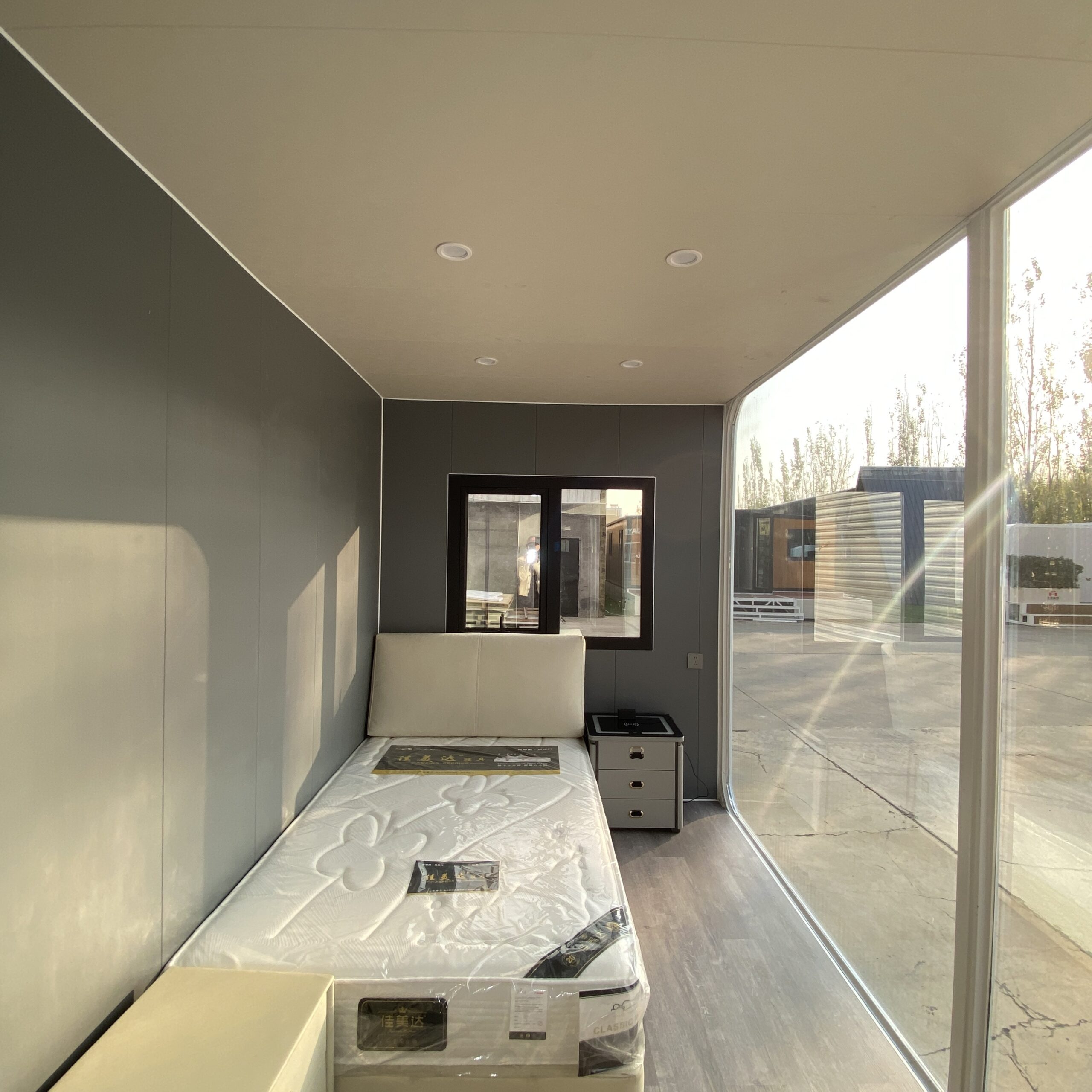
A typical 40ft expandable container house from the factory includes: one bathroom with shower and WC, a kitchen area, two to three bedrooms, PVC or laminate flooring, aluminium doors and windows with insect screens, and pre-wired electrical points. The double-wing expansion mechanism folds out on site to roughly double the usable floor area. Standard delivery from order to port of loading is 20-35 days; sea transit to Tema adds roughly 30-40 days depending on the sailing schedule.
Delivery Timeline: From Factory to Occupied Home
| Stage | Typical Duration |
|---|---|
| Order confirmation and production | 20 – 35 days |
| Ocean transit (China to Tema) | 30 – 40 days |
| Customs clearing | 3 – 7 working days |
| Site preparation and foundation | 1 – 2 weeks |
| Crane installation and expansion | 2 – 3 days |
| Utility connections and finishing | 1 – 2 weeks |
| Total | 10 – 16 weeks |
Frequently Asked Questions
How much does it cost to ship a container house to Ghana?
Ocean freight for a 40ft high-cube container from China to Tema is typically $3,200 – $4,200 at mid-2026 rates. With a 40ft expandable unit you normally need one container for the folded unit plus interior fit-out items, which may share the same container depending on configuration.
Are container houses legal in Ghana?
Yes, provided you obtain the appropriate building permit from the local MMDA and comply with the Ghana Building Code and zoning rules. The structure must be certified by a licensed engineer and pass district inspections.
What is the import duty on container houses in Ghana?
Prefabricated buildings under HS 9406.90 attract 20% import duty. Adding 15% VAT, NHIL/GETFund levies and port charges, expect duties and taxes to add roughly 45-55% on top of the CIF value.
Can a container house withstand Ghana’s rains and humidity?
Yes, when specified correctly: galvanised steel, insulated panels, proper roof drainage, a damp-proof membrane and corrosion-resistant fittings will perform well in Ghana’s climate. Coastal buyers should confirm the steel treatment is suitable for salt air.
How long does a container house last in Ghana?
With a proper foundation, corrosion protection and routine maintenance (repainting exterior steel every few years), a container house typically lasts 20-25 years or more. Cladding and roofing upgrades extend service life further.
Can I finance a container house purchase?
Most Chinese factories require a deposit (typically 30%) and the balance before shipment, or a documentary letter of credit. Local bank financing for prefabricated imports is limited; many buyers self-fund or use supplier credit terms.
Get a Detailed Quotation for Your Project
For a firm landed-cost quotation to Tema or Takoradi, send your project details — unit size, quantity, site location and intended use — to jack@huayinghouse.com or message us on WhatsApp at +86 153-0318-4505. We respond with a full FOB-to-landed breakdown so you know the real cost before you commit.
Frequently Asked Questions
How long does shipping and clearance to Tema take?
Production of a 40ft expandable unit typically runs 25 to 35 days depending on specification, followed by roughly 30 to 35 days of ocean transit to Tema. Customs clearance with correct HS classification and complete documentation usually adds three to seven working days, provided the 20 percent import duty and 15 percent VAT assessments are settled promptly.
Can the unit handle Ghana’s rainy seasons?
Yes, with the drainage specification in place: a roof pitch that sheds the major rainy-season volumes (March to July and September to November), sealed lap joints, gutters discharging away from the foundation, and a raised concrete pad above surrounding grade. The same principles are covered in detail in our tropical-climate design guide below.
Is a container house accepted for building permits in Ghana?
Permits are assessed under the Ghana Building Code on structural adequacy and site compliance rather than construction method. Factory documentation – drawings, steel grades, and connection details – satisfies the structural review; your local architect or consultant submits them with the site plan to the district assembly.
How do I verify the true landed cost before ordering?
Use our step-by-step landed-cost method – how to calculate the real landed cost of an expandable container house – which walks through freight, duty, VAT, port charges and installation line by line.
Related guides: site selection and orientation guide for grading and drainage setout, and designing for tropical humidity for the moisture and corrosion details that apply to Ghana’s coastal belt.