California’s housing crisis remains acute in 2026. With a statewide median home price exceeding $850,000 and a persistent shortage of 2.5 million housing units according to the California Department of Housing and Community Development, accessory dwelling units (ADUs) have become the fastest-growing housing segment. Expandable container houses from Chinese manufacturers like Huaying offer California buyers a compliant, cost-effective pathway to add living space — factory-built in 15-25 days, shipped to the Port of Long Beach in 25-30 days, and installed on-site in 1-2 days. This guide covers the complete cost breakdown, state and local regulations, and the buying process for importing a container house to California.
Why California Buyers Choose Container Houses
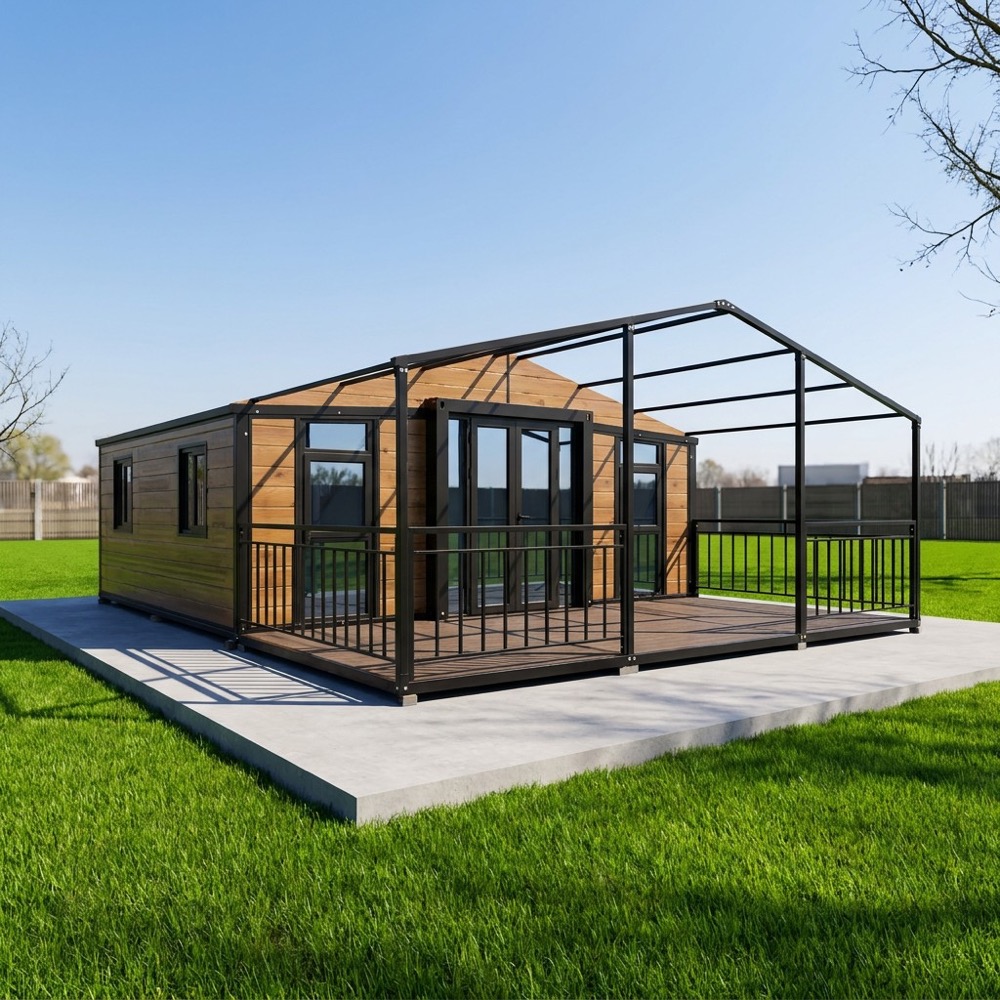
California’s unique combination of high construction costs, streamlined ADU laws, and severe housing shortages makes container houses a pragmatic solution. Traditional construction in California ranges from $250 to $450 per square foot, with permitting adding 6-18 months in cities like San Francisco and Los Angeles. Container houses address several California-specific challenges:
- 40-60% cost reduction versus California stick-built construction at $300+/sq ft
- AB 68 compliant — meets ministerial approval requirements for ADUs under 800 sq ft
- Factory manufacturing in 15-25 days eliminates California’s skilled labor shortage bottleneck
- Shipping to LA/Long Beach in 25-30 days — the closest major US port to China
- Title 24 energy compliance with upgraded insulation and cool roof options
- Seismic Zone 4 rated — steel frame construction performs well in California earthquakes
- HCD pre-approved designs available for faster local permit processing
FOB to Landed Cost Breakdown: California (Port of Long Beach)
The table below shows the full cost chain for importing expandable container houses to California via the Port of Long Beach, the primary entry point for Southern California. All prices in USD. California state sales tax (7.25% base, up to 10.75% with local add-ons) is calculated on the landed value.
| Cost Component | 10ft Expandable | 20ft Expandable | 20ft Apple Capsule | 40ft Expandable |
|---|---|---|---|---|
| FOB Price (China factory) | $9,500 | $12,800 | $15,800 | $18,500 |
| Ocean Freight (China → Long Beach) | $1,800 | $2,400 | $2,400 | $3,200 |
| Marine Insurance (0.5% CIF) | $57 | $76 | $91 | $109 |
| CIF Long Beach Value | $11,357 | $15,276 | $18,291 | $21,809 |
| US Import Duty (HS 9406.00, 0%) | $0 | $0 | $0 | $0 |
| Customs Bond + Broker Fee | $350 | $350 | $350 | $400 |
| Port of Long Beach Fees (THC + Drayage) | $450 | $550 | $550 | $650 |
| California Sales Tax (est. 8.5%) | $965 | $1,298 | $1,555 | $1,854 |
| Inland Transport (Long Beach → LA Metro) | $400 | $500 | $500 | $700 |
| Foundation / Site Prep (concrete pad) | $1,500 | $2,000 | $2,000 | $2,500 |
| Installation & Utility Hookup | $800 | $1,000 | $1,000 | $1,200 |
| Total Landed & Installed Cost | $15,822 | $20,974 | $24,246 | $29,113 |
| Comparable California Stick-Built | $48,000 | $78,000 | $78,000 | $120,000 |
Note: Sales tax rate varies by county — 7.25% in rural areas to 10.75% in parts of Los Angeles County. Inland transport costs increase for destinations beyond 100 miles from Long Beach. The Port of Long Beach is the closest major US port to China, typically 5-7 days faster than East Coast ports.
California ADU Regulations: What You Need to Know
1. AB 68 / AB 881 — Streamlined ADU Approval
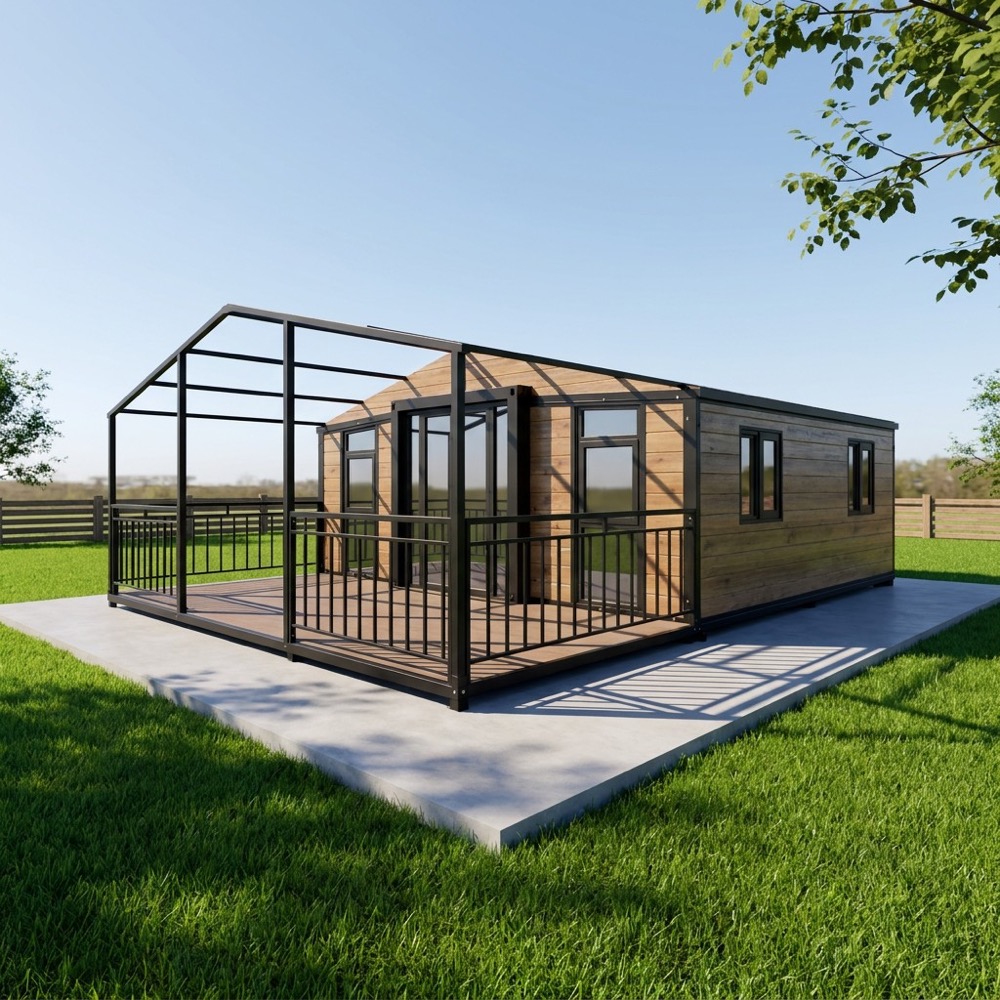
California’s landmark ADU laws (effective 2020, updated 2023) require all cities and counties to approve ADU applications ministerially — meaning no discretionary review, no public hearings, and a 60-day decision deadline. Key provisions that make container houses viable:
- Minimum ADU size: No minimum floor area for efficiency units; 150 sq ft for standard units with bathroom
- Maximum ADU size: 1,200 sq ft for detached ADUs on single-family lots
- Setbacks: 4-foot rear and side yard setbacks (reduced from typical 5-10 ft)
- Parking: No parking required if within 0.5 mile of public transit or historic district
- Owner-occupancy: NOT required for ADUs permitted between 2020-2030
- Impact fees: Waived for ADUs under 750 sq ft; proportional for larger units
2. SB 9 — Lot Splits and Two-Unit Development
SB 9 (effective 2022) allows single-family lots to be split into two parcels and permits up to two units per parcel (total 4 units). Container houses can serve as the additional unit(s) without triggering CEQA review. However, SB 9 projects require compliance with local objective zoning standards — not as streamlined as ADU provisions.
3. Title 24 — California Energy Code
California’s Title 24 Part 6 (2025 update) sets the most stringent energy efficiency requirements in the US. For container houses imported to California:
- Wall U-factor: 0.051 (Climate Zone 6 — LA Basin) or 0.045 (Zone 12 — Inland Empire)
- Roof U-factor: 0.037 mandatory, cool roof (SRI ≥ 75 for low-slope) required in Zones 10-15
- Fenestration: Max 20% window-to-wall ratio or compliance via CEC-approved performance method
- HVAC: Minimum SEER2 15.0 for air conditioning (Climate Zones 2, 4, 6-15)
- Solar: Not required for ADUs under SB 1222 (2023 exemption for small ADUs)
Huaying’s standard 75mm polyurethane insulation meets Title 24 Zone 6-8 requirements. For Zones 10-15 (Inland Empire, Central Valley), upgrading to 100mm panels + cool roof coating brings compliance. We provide HERS verification documentation for Title 24 compliance.
4. Local City Requirements (Major Markets)
| City | ADU Max Size | Height Limit | Key Requirement |
|---|---|---|---|
| Los Angeles | 1,200 sq ft | 25 ft | Pre-approved ADU plans available; 45-day review |
| San Francisco | 750 sq ft | 25 ft | Must meet local Planning Code Section 207 |
| San Diego | 1,200 sq ft | 30 ft | Grading permit for slopes over 25% |
| San Jose | 1,000 sq ft | 30 ft | Pre-approved ADU builder program eligible |
| Sacramento | 1,200 sq ft | 30 ft | Streamlined review, lowest fees in CA |
5. HCD Pre-Approved ADU Plans
The California Department of Housing and Community Development (HCD) maintains a catalog of pre-approved ADU plans that cities must accept within 60 days. Huaying can match container house designs to HCD’s pre-approved specifications, reducing local plan check time by 30-45 days.
Popular California Use Cases
Backyard ADU — Passive Rental Income
A 20ft expandable container house installed as a detached ADU in Los Angeles County can generate $1,500-$2,500 monthly rental income. At a total landed cost of $21,000 for a 20ft unit, the payback period is 9-14 months — one of the fastest ROIs in California real estate. AB 68 ensures approval without neighborhood opposition.
Multi-Generational Housing
With California home prices making it difficult for adult children or aging parents to live independently, a 40ft expandable unit (320 sq ft) serves as a self-contained living space with full kitchen, bathroom, and separate entrance. SB 9 allows this as a second unit on single-family lots statewide.
Vacation Rental (Airbnb/VRBO)
California’s short-term rental market — particularly in San Diego, Palm Springs, Lake Tahoe, and coastal communities — offers strong demand for unique accommodations. Container houses listed on Airbnb average $120-$200/night with 70%+ occupancy in peak seasons. Municipal short-term rental ordinances apply; check local requirements.
Remote Work Office
With 35% of California’s workforce working remotely at least part-time (2026 estimate), a detached container house configured as a home office provides separation from the main residence. Under 150 sq ft, building permits may not be required in many jurisdictions.
Seismic Performance: Why Steel Frames Work in California
California’s Seismic Design Category D (highest) requires structures to resist significant lateral forces. Container houses have inherent advantages over wood-frame construction in seismic events:
- Ductility: Steel can deform without fracturing, absorbing seismic energy
- Light weight: Lower mass means lower seismic base shear (F = ma)
- Monocoque design: The corrugated steel envelope acts as a continuous shear wall
- Corner castings: Standard shipping container corner blocks serve as hold-down anchor points
- ASCE 7-22 compliance: Engineering calculations for Seismic Design Category D available
For sites in liquefaction zones (common in the LA Basin and Bay Area), Huaying recommends a reinforced concrete mat foundation with tie-downs engineered for the site-specific geotechnical report.
Shipping & Timeline: China to California
| Phase | Duration | Details |
|---|---|---|
| Design & Customization | 3-5 days | Floor plan, Title 24 specs, electrical, finishes |
| Factory Manufacturing | 15-25 days | Steel frame, insulation, interior, QC testing |
| Ocean Shipping (Tianjin → Long Beach) | 22-28 days | Direct route, FCL container, tracking provided |
| US Customs Clearance | 2-4 days | CBP Form 7501, ISF filing, HS 9406.00 |
| Port Drayage & Inland Transport | 1-2 days | Chassis pickup or flatbed to site |
| Installation & Final Hookup | 2-3 days | Crane placement, expand, utility connections |
| Total Timeline | 45-67 days | From order to move-in ready |
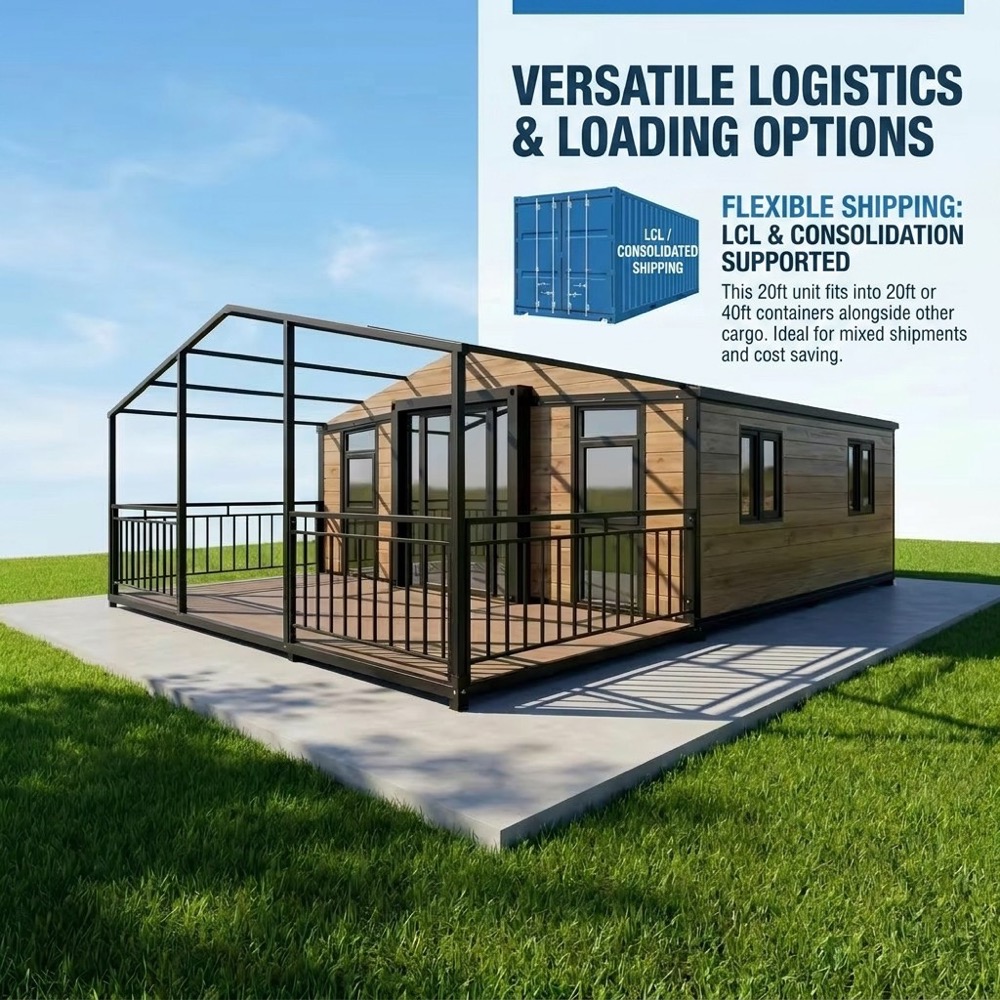
California’s West Coast location means 5-12 days faster shipping versus East Coast ports. The Port of Long Beach is the busiest US container port with excellent rail and truck connections throughout Southern California.
Frequently Asked Questions
Do container houses qualify as ADUs under California law?
Yes. California Health and Safety Code Section 17921 defines manufactured homes and factory-built housing separately from onsite construction. Container houses that meet HCD or local building department standards qualify as ADUs under AB 68 and AB 881. They must comply with the same setback, size, and height limits as any other detached ADU. Huaying provides engineering stamps for California DSA or local jurisdiction acceptance.
How much can I save versus traditional California construction?
At $300-450/sq ft for traditional construction, a 200 sq ft ADU costs $60,000-$90,000 in California. A 20ft expandable container house (160-200 sq ft) lands at $21,000 fully installed — a 65-77% reduction. The savings come from factory labor (no California construction wages), shorter timelines (no weather delays), and AB 68 fee waivers for ADUs under 750 sq ft.
What about California sales tax on the unit?
California sales tax applies to the customs value (CIF) of the imported structure, not the installed cost. The base rate is 7.25%, but most counties have district taxes bringing it to 8.5-10.75%. If the container house is classified as a “mobilehome” under California law, it may be subject to vehicle license fee (VLF) instead of property tax — potentially lower annual cost.
Can I place a container house on a hillside lot?
Yes, with appropriate foundation engineering. Huaying container houses weigh 3,500-8,000 lbs, significantly less than a stick-built ADU. For slopes over 15%, we recommend helical pile foundations which minimize excavation and are SB 326 compliant. A geotechnical report is required for slopes over 25% in most California jurisdictions.
How does wildfire safety work for container houses?
Steel construction is inherently non-combustible, providing a significant advantage in California’s Wildland-Urban Interface (WUI) zones. Huaying offers Class A fire-rated exterior cladding, ember-resistant vents (Chapter 7A compliant), and tempered glass windows as standard for California orders. This eliminates the fire-resistant siding and defensible space concerns that drive up costs for wood-frame construction in WUI areas.
What electrical standard do Huaying container houses use?
All California-bound units are pre-wired for 120V/240V split-phase, 60Hz — the North American standard — with a Square D or Eaton breaker panel. This eliminates the need for step-down transformers or rewiring on site. NEMA 5-15R and 5-20R outlets are standard; 14-50R for EV charging is available as an upgrade.
Are container houses eligible for California property tax assessment?
As an ADU, a container house does not trigger a full property reassessment of the primary residence under Proposition 13. The ADU itself is assessed at its market value and added to the existing assessment. For units valued under $25,000, many counties treat them as personal property rather than real property, potentially reducing tax liability further.
Next Steps
California’s ADU laws make container houses one of the most accessible housing solutions available in 2026. The process is straightforward:
- Contact Huaying — specify your California city, lot type, and intended use (ADU, rental, office)
- Receive detailed quotation — FOB price + shipping + landed cost estimate for your county
- Check local ADU requirements — we provide specification sheets and engineering data for permit submission
- Place order — manufacturing begins within 7 days of deposit confirmation
- Track shipment — real-time container tracking from Chinese port to Long Beach to your property
Email: jack@huayinghouse.com
WhatsApp: +86 153-0318-4505
Factory Address: Fucheng County, Hengshui City, Hebei Province, China
Huaying has shipped over 200 container houses to US buyers, including projects in Los Angeles, San Diego, Sacramento, and the Bay Area. We handle all export documentation, ISF 10+2 filing, and can arrange door-to-door delivery to any California address with our US freight partners.