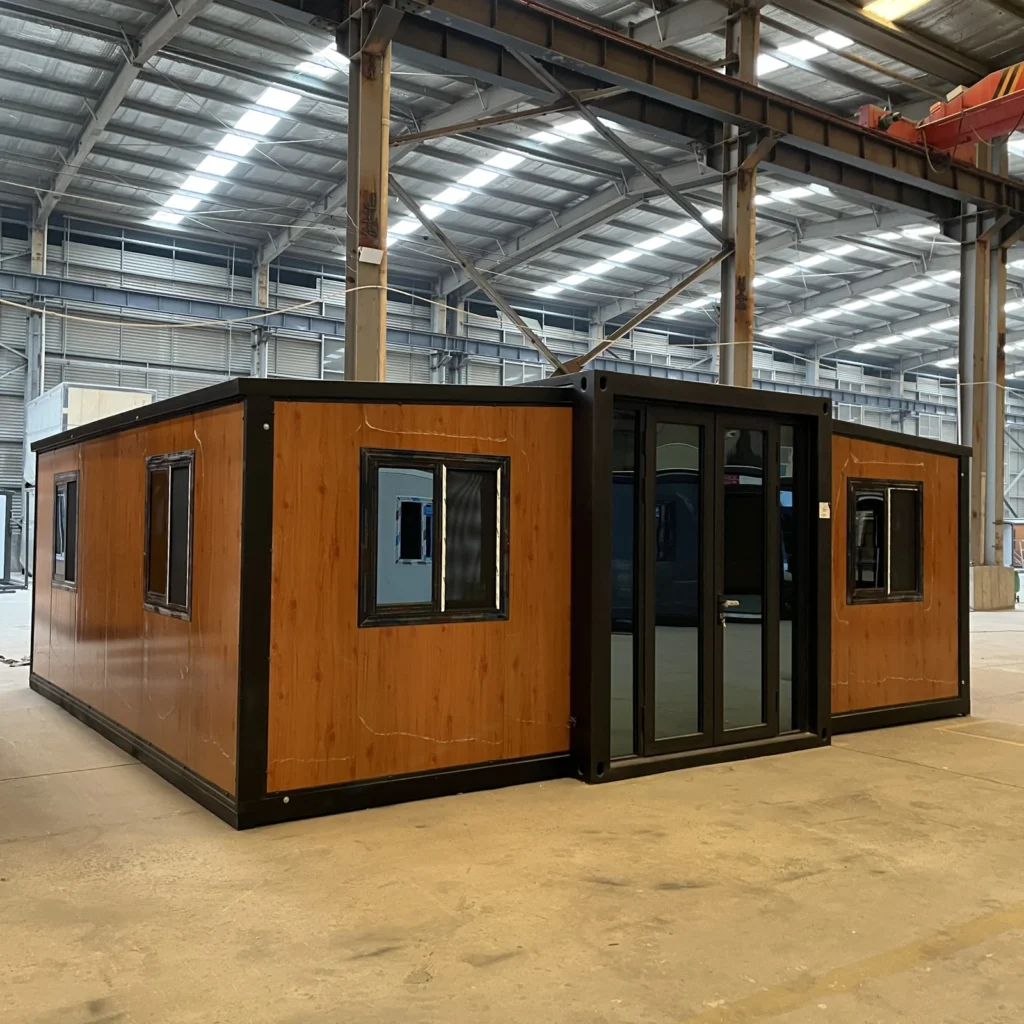
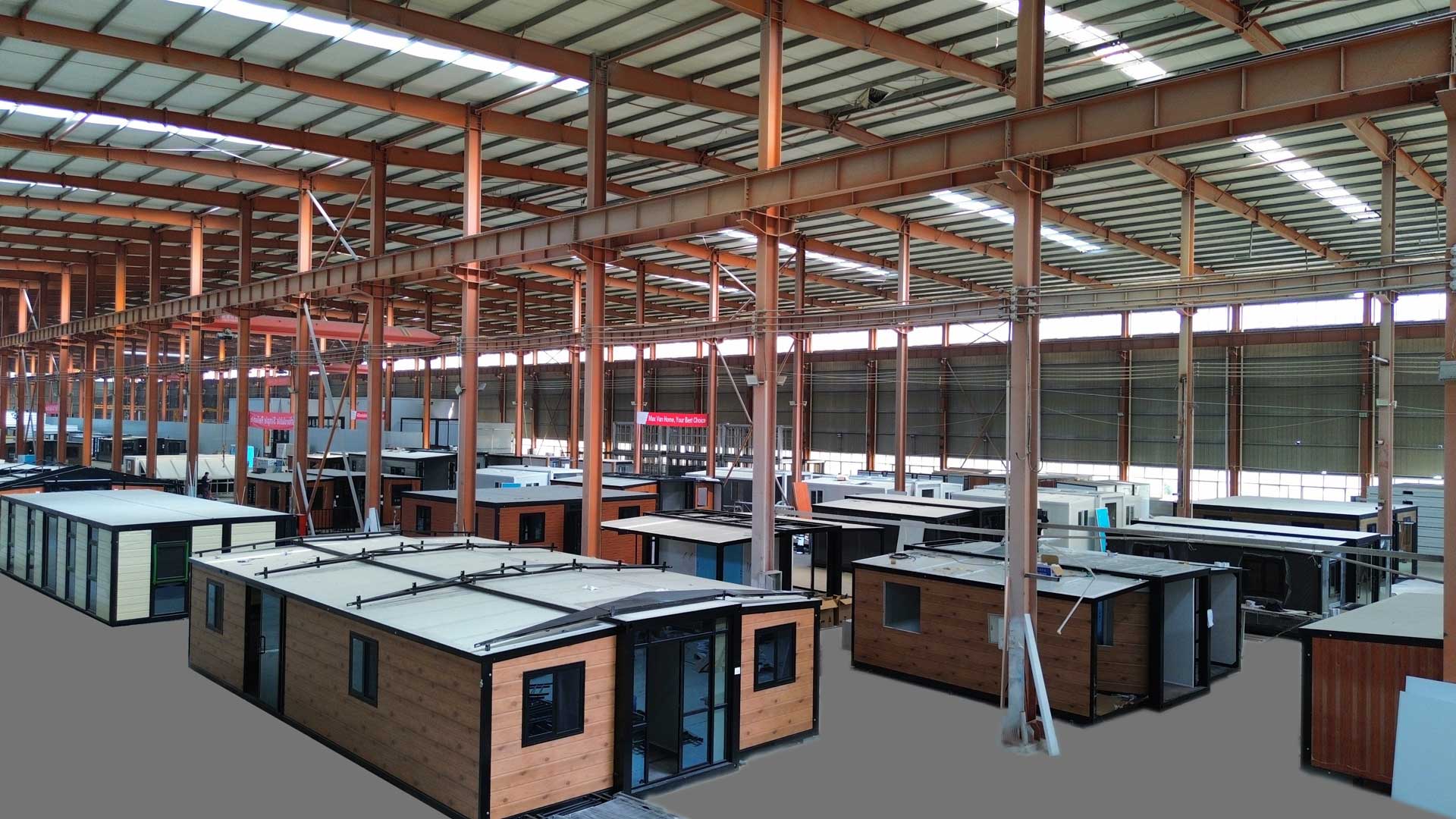
A prefab house price list is only useful if the numbers are comparable. Most lists you will find online quote one of four different things without saying which: a factory price ex-works in China, a price delivered to your port, a price delivered and duty-paid, or a price installed on your plot. Those four numbers can differ by a factor of two on the same building.
This page lists current 2026 prices for the prefab container house models we build, states exactly what each figure includes, and then shows what the same unit costs once freight, duty, foundation and installation are added for the markets our buyers order from most. Every number is in USD and every assumption is stated.
1. The four price levels, and which one you are being quoted
Before comparing two lists, establish which level each one is quoting. This is the single largest source of apparent price differences between suppliers, and it is rarely explained.
| Price level | What is included | What is not | Who controls it |
|---|---|---|---|
| FOB (free on board) | Finished unit packed, delivered to the port of loading, export cleared | Sea freight, insurance, destination duty, inland transport, installation | The factory |
| CFR / CIF | Everything in FOB plus sea freight (CIF adds marine insurance) | Destination duty and tax, port charges, inland transport, installation | Factory plus shipping line |
| DDP (delivered duty paid) | Everything to your site gate, duty and tax paid | Unloading, foundation, assembly, utility connections | Freight forwarder |
| Turnkey installed | Everything above plus foundation, crane, assembly and service connections | Land, permits, site access works | Local contractor |
The gap between the first and last row is not a markup. It is real cost that someone has to pay, and the only question is whether it appears in the quotation or arrives as an invoice later. A buyer who budgets from an FOB figure and then discovers foundation and crane costs on delivery has not been misled by the factory; they were comparing different levels.
Our own list below is quoted FOB Tianjin, because that is the level we control. Everything after the port is priced by your forwarder and your contractor, and we show typical ranges so you can budget it.
2. Current factory price list, 2026
These are the models we build in volume, with the factory price and the deployed dimensions that determine what you are actually getting for the money. All figures are USD, ex-works Tianjin, valid for orders placed in 2026.
| Model | Deployed L × W × H | Building area | FOB Tianjin (USD) | 40HC loading |
|---|---|---|---|---|
| 10 ft single-wing expandable | 2.95 × 6.30 × 2.48 m | 18.6 m² (200 sq ft) | 8,500 – 9,800 | 4 units |
| 20 ft double-wing expandable | 5.90 × 6.30 × 2.48 m | 37.2 m² (400 sq ft) | 12,500 – 14,500 | 2 units |
| 30 ft double-wing expandable | 9.00 × 6.30 × 2.48 m | 56.7 m² (610 sq ft) | 17,800 – 19,800 | 1 unit |
| 40 ft double-wing expandable | 11.80 × 6.30 × 2.48 m | 74.3 m² (800 sq ft) | 22,000 – 24,500 | 1 unit |
| 20 ft flat-pack folding | 5.80 × 2.44 × 2.59 m | 14.2 m² (153 sq ft) | 7,200 – 8,600 | 4 units |
Read the building-area column carefully. Building area is the external footprint once deployed. It is not net usable floor area, because it includes wall thicknesses, and it does not account for the floor area consumed by the bathroom and kitchen pod in the compact models. On the 20 ft double-wing, net usable area after walls and the wet pod typically lands at 31 to 33 m². Ask for the internal dimensioned plan if floor area is what your permit application is based on.
Read the loading column carefully too. Loading capacity assumes the standard configuration without extra roof components, air-conditioning cassettes or loose furniture. A unit ordered with a pitched roof, a solar array or a split-system outdoor unit will not load four to a container. The final packing list has to be confirmed against the actual order before you book freight, because this is where per-unit freight cost changes.

3. What changes the factory price
Two units of the same size can differ by 40 percent on the factory invoice. The difference is in six places, and none of them is the frame.
Wall panel thickness and core. Panels come in 50, 75 and 100 mm, with EPS, polyurethane or rock-wool cores. The step from 50 mm EPS to 75 mm polyurethane is the most common upgrade and the one that moves the U-value most. Rock wool costs more than polyurethane at the same thickness but is specified where a non-combustible core is required.
Window and door specification. Thermally broken aluminium with double glazing costs roughly three times a single-glazed aluminium unit. In hot-climate markets this is the upgrade with the fastest payback on cooling load, and in cold-climate markets it is not optional.
Electrical package. A destination-specific package with the correct voltage, socket type, distribution board and circuit schedule adds cost over a generic package, and a package prepared for inspection by a local authority adds more. Skipping this step is a false economy: rewiring on site costs more than the original package.
Roof configuration. A flat roof is standard. A pitched roof with an overhang and a ventilated cavity adds cost and adds to the shipping volume, and in high-rainfall or high-sun markets it is what makes the difference between a building that lasts and one that needs recoating in three years.
Coating system. A standard paint system is adequate inland. A C4 or C5-M system to ISO 12944, with a zinc-rich primer and a specified dry film thickness, costs more per square metre and is the correct choice within a few kilometres of salt water. This is a line item you should see itemised, not bundled.
Bathroom and kitchen scope. Whether sanitaryware, the shower enclosure, the hot-water unit and kitchen cabinetry are inside the factory scope or supplied locally changes the price substantially. Neither approach is wrong, but the scope boundary must be written down.
4. FOB to landed: the full chain for six destinations
The table below works a 20 ft double-wing expandable module at USD 12,800 FOB through to installed cost in six markets. Freight and site-works figures are 2026 ranges; duty rates were checked against each destination’s current tariff schedule.
| Cost line | USA | Canada | Australia | UK | EU | Malaysia |
|---|---|---|---|---|---|---|
| FOB Tianjin | 12,800 | 12,800 | 12,800 | 12,800 | 12,800 | 12,800 |
| Sea freight, 40HC | 3,200 – 4,100 | 3,400 – 4,200 | 2,600 – 3,400 | 2,900 – 3,800 | 3,000 – 3,900 | 1,100 – 1,700 |
| Marine insurance | 90 – 130 | 90 – 130 | 80 – 120 | 85 – 125 | 85 – 125 | 50 – 80 |
| CIF value (duty base) | 16,090 – 17,030 | 16,290 – 17,130 | 15,480 – 16,320 | 15,785 – 16,725 | 15,885 – 16,825 | 13,950 – 14,580 |
| Import duty | 2.9% + 25% Sec.301 | 6% | 0% (ChAFTA) | 2.0% | 2.7% | 0% (ACFTA) |
| Duty amount | 4,489 – 4,751 | 977 – 1,028 | 0 | 316 – 335 | 429 – 454 | 0 |
| VAT / GST / sales tax | State-dependent | 5% GST | 10% GST | 20% VAT | 17 – 27% | 10% SST |
| Port charges, clearance, delivery | 1,200 – 1,800 | 1,100 – 1,700 | 900 – 1,500 | 800 – 1,300 | 850 – 1,400 | 500 – 900 |
| Foundation | 2,500 – 4,000 | 2,800 – 4,200 | 2,200 – 3,800 | 2,500 – 4,000 | 2,400 – 3,900 | 1,200 – 2,200 |
| Crane and installation | 1,500 – 2,500 | 1,600 – 2,600 | 1,800 – 3,000 | 1,700 – 2,800 | 1,600 – 2,700 | 600 – 1,200 |
| Installed cost before tax | 22,500 – 26,500 | 19,800 – 23,400 | 18,500 – 22,100 | 19,100 – 22,900 | 19,200 – 23,000 | 15,100 – 18,300 |
The US is the outlier, and it is the duty line that makes it one. Section 301 adds 25 percent on top of the 2.9 percent MFN rate, applied to the CIF value, which lifts the duty amount from around USD 500 to around USD 4,600 on the same unit. That single line is roughly a third of the entire factory price. No amount of negotiation on freight recovers it.
Freight is the least predictable line but not the largest. Trans-Pacific rates on a 40HC have moved between USD 2,000 and USD 8,000 within a single year. Any quotation that fixes a freight number for longer than 30 days is either absorbing the risk or will revise it. Ask for the validity period in writing.
VAT and GST are recoverable for a business buyer in most of these markets. For a registered business importing for a rental or commercial project, the VAT line is a cash-flow item rather than a cost. For a private buyer it is a real cost. This distinction changes the comparison between markets substantially and is usually left out of price lists.
5. Where the price actually lands, by order size
Freight cost per unit falls sharply with order size, and this is the lever most buyers underestimate. A single module pays a full 40HC freight bill for one unit; four modules share it four ways.
| Order | Containers | Freight per unit, USA | Duty per unit, USA | Installed per unit |
|---|---|---|---|---|
| 1 × 20 ft module | 1 × 40HC (part-loaded) | 3,200 – 4,100 | 4,489 – 4,751 | 22,500 – 26,500 |
| 2 × 20 ft modules | 1 × 40HC (full) | 1,600 – 2,050 | 4,489 – 4,751 | 20,700 – 24,400 |
| 4 × 20 ft modules | 2 × 40HC | 1,600 – 2,050 | 4,379 – 4,636 | 20,400 – 24,000 |
| 4 × 10 ft modules | 1 × 40HC (full) | 800 – 1,025 | 2,979 – 3,153 | 13,900 – 16,600 |
Two things happen as volume increases. Freight per unit drops because containers are filled, and the duty per unit drops slightly because a higher FOB value with a lower freight share reduces the CIF base that duty is charged on. Neither effect is dramatic, but together they move the installed cost by 8 to 12 percent between a single unit and a four-unit order.
For a project above around ten units, the conversation changes: the factory can ship on a schedule that lets your contractor install in parallel rather than sequentially, and the site-works cost per unit falls as the crane and crew are already mobilised. This is worth pricing as a programme rather than as repeat orders.
Browse the full range of expandable container house models with their deployed dimensions and loading capacities before deciding on sizes.

6. Six checks that reveal a price list you should not trust
Most misleading lists fail more than one of these. Running through them takes a few minutes and saves more than any negotiation will.
One: no stated price level. If the page does not say FOB, CIF, DDP or installed, the number cannot be compared with anything. Ask directly, in writing.
Two: no model dimensions. A price without the deployed length, width and height is not a price for a building, it is a price for an idea. A 20 ft unit at 37 m² and a 20 ft unit at 14 m² can both be called “20 ft”.
Three: no loading capacity. Units per container determines your real freight cost per unit. A list that omits it may be quoting a price that cannot be shipped at the stated rate.
Four: no scope boundary. What is excluded matters as much as what is included. Foundation, crane, electrical connection and sanitaryware are the four lines most often left unstated, and together they can add 30 to 40 percent.
Five: no validity date. Steel, insulation and freight all move. A price with no date is unfalsifiable and will be revised at order.
Six: a price range so wide it says nothing. A list quoting USD 15,000 to 120,000 for “prefab houses” is describing an entire industry rather than a product. Wide ranges usually indicate the supplier does not build the item and is brokering it.
Our own list fails none of these, which is why it is longer than most. The objection we hear is that a price range of 12,500 to 14,500 is less satisfying than a single number. It is also honest: the range reflects real configuration differences, and a quotation against your specification will land at a specific figure inside it.
7. What the price does not include, and what it costs
Four items sit outside every factory price we quote, and they are the four that most often blow a project budget. Putting numbers against them now is better than discovering them at delivery.
Foundation. A container house needs a level, engineered base. Options run from ground screws or screw piles for a demountable unit to a reinforced concrete raft for a permanent dwelling. Cost depends on soil, slope and frost depth: allow USD 2,200 to 4,200 for a typical single unit, more on sloping or poor ground. A site investigation is cheaper than a failed foundation.
Crane and access. A deployed 40 ft unit weighs several tonnes and needs a crane to place it. Crane hire runs USD 1,500 to 3,000 for a half-day including mobilisation, and rises sharply if the truck cannot reach the placement point. Check the access route for width, overhead clearance and surface strength before ordering, not after.
Service connections. Bringing water, power and drainage to the unit is local work at local prices. A short connection to existing services might cost USD 1,500; a rural site needing a new supply, a septic system and a transformer can exceed USD 15,000. This line has the widest variance of any in the budget and is entirely site-specific.
Permits and professional fees. Building consent, engineering sign-off and energy certification are charged by your local authority and your appointed professionals. Budget 1 to 3 percent of project value in most markets, more where a full planning application is required.
8. Deposit, payment and what protects you
Payment terms on an imported prefab house carry more risk than the price itself, because the money leaves before the goods arrive and the supplier is in another jurisdiction.
Standard terms in this industry are 30 percent deposit on order and 70 percent before shipment, released against photographs or a pre-shipment inspection. That structure protects the factory’s cash flow and leaves the buyer exposed for the balance. Three things reduce that exposure without changing the headline price.
A pre-shipment inspection. An independent inspector confirming dimensions, panel specification, electrical package and finish before the balance is released costs a few hundred dollars and is worth it on any first order. Specify that the balance release is conditional on the inspection report.
A letter of credit or an escrow arrangement. For orders above roughly USD 50,000 the cost of an L/C is small relative to the protection. Not every factory will accept one, and a factory that refuses without discussion is telling you something.
A written specification annex. The single most effective protection is not financial. It is a specification document that lists panel thickness and core, window glazing, electrical standard, coating system and scope boundary, attached to the contract and referenced in the invoice. Disputes in this trade are almost always about an unstated assumption rather than a broken promise.
We supply a specification annex with every order and will accept inspection as a condition of the balance. Ask for both in your first reply.
9. Country guides with verified duty rates
Duty and compliance are destination-specific, and a generic percentage is worse than no percentage. These guides carry the tariff line, the applicable rate and the approval process for each market.
- United States: FOB price guide by state — Section 301 treatment and state-level code differences
- 40ft container homes in the USA: cost guide — larger-format landed costs
- Canada: cost guide — provincial codes and 6 percent duty
- United Kingdom: cost guide — 2 percent duty, 20 percent VAT, building regulations
- Portugal: cost guide — 2.7 percent duty and licensing route
- Australia: price guide — ChAFTA zero duty and AS compliance
- Malaysia: cost guide — zero duty under ACFTA and UBBL compliance
If your market is not listed, the two figures to establish first are the tariff classification for a prefabricated steel building in your schedule and whether your country has a trade agreement with China that covers it. Those two answers move the landed cost more than any other variable outside the factory gate.
Pre-built houses prices: why no factory quotes them from stock
Buyers searching for pre-built houses prices usually expect the opposite of what this
industry actually sells. The phrase implies a finished unit sitting in a yard, priced and
ready to hand over. Almost nothing in the container and expandable category works that way,
and the gap between the expectation and the reality is where most deposit disputes begin.
A 20 ft expandable unit is manufactured after the order is confirmed, not before. The
production slot is typically four to six weeks, because the panel set, the wet core
position, the window schedule and the electrical layout are all decided per order. A factory
that holds finished stock is holding a specification nobody chose, which is why stock units
tend to be the least adaptable product in the catalogue.
| What the buyer is quoted | What it actually covers | Typical 20 ft figure |
|---|---|---|
| Pre-built from stock | Rarely available; fixed specification, no layout changes | Not normally offered |
| Made to order, standard layout | Factory build after deposit, standard panel set | USD 12,500 to 14,500 FOB |
| Made to order, custom layout | Non-standard wet core, glazing or cladding | Quoted against drawings |
| Display or demo unit | Built for exhibition, then sold at a discount | Case by case, no warranty parity |
The practical consequence is that a pre-built price cannot be compared with a made-to-order
price, because the first number usually excludes the changes the second one includes. When a
quote is described as pre-built and the price looks 15 to 20 per cent below every other
supplier, the difference is normally a smaller panel set or a thinner insulation grade rather
than a genuine stock discount.
Three questions separate the two products before any money moves. Ask for the panel
thickness in millimetres, not the insulation type. Ask whether the wet core is factory-fitted
or site-built, because site-built plumbing changes the commissioning sequence. Ask what the
production slot is in calendar weeks from deposit, since a supplier who cannot name a slot is
not scheduling production at all.
The full factory price list for every model is set out in section 2 of this guide, and the
delivered cost for six destinations is worked through in section 4.
Frequently asked questions
How much does a prefab house cost in 2026?
A 20 ft double-wing expandable container house is USD 12,500 to 14,500 FOB Tianjin, which becomes roughly USD 18,500 to 26,500 installed depending on destination. The spread is driven mainly by import duty and site works, not by the factory price.
Why is a prefab house in the US so much more expensive than in Australia?
Import duty. The same unit pays about 27.9 percent effective duty into the United States once Section 301 is applied, against zero into Australia under ChAFTA. On a CIF value near USD 16,000 that is a difference of roughly USD 4,500 per unit, which is more than the factory’s entire margin on the order.
Is the quoted price per unit or per square metre?
Per unit, and this matters when comparing suppliers. Converting to a per-square-metre rate reveals that larger modules are cheaper per square metre: a 40 ft unit at 74 m² costs about USD 300 per square metre FOB against about USD 380 for a 20 ft unit at 37 m². The reason is that doors, windows, the electrical package and the bathroom pod are largely fixed costs per unit regardless of size.
Can I get a price for a model that is not on the list?
Yes. Custom layouts, extensions and combined units are quoted individually. Send a sketch or a dimensioned requirement and you will get a price with the same scope boundaries stated in this list.
Does the price include shipping to my country?
No. The list is FOB Tianjin. We provide CIF and CFR quotations on request, and we will state the freight validity period in writing. We do not quote DDP because the duty and clearance are handled by a forwarder in your country, and a DDP figure from a Chinese supplier usually conceals an assumption about classification.
How long is a quotation valid?
Thirty days for the factory element. The freight element is usually valid for 14 to 30 days depending on the carrier. Steel and insulation costs move with commodity prices, so a quotation older than a month will be reissued rather than honoured.
What deposit is normal?
Thirty percent on order, seventy percent before shipment, released against a pre-shipment inspection. We accept inspection as a condition of the balance and supply a specification annex with every order.
Do prices fall if I order more units?
The factory price falls modestly, typically 3 to 6 percent at ten units and more beyond that. The larger saving is in freight per unit, which can halve when containers are filled, and in site works per unit once a contractor is mobilised for a programme rather than a single placement.
Get a quotation against your specification
Send your site location, the model you are considering and the intended use. You will receive a quotation that states the price level, the model dimensions, the container loading, the scope boundary and the validity period — the six things this page argues you should insist on.
Email: jack@huayinghouse.com | WhatsApp: +86 153-0318-4505
Related reading: how to calculate the real landed cost of an expandable container house | container house price comparison: seven checks before you order | expandable container house models and specifications