
Why Container Houses Are Gaining Traction in Malaysia
Malaysia’s construction sector grew more than 20% in 2024, and modular building methods are moving from novelty to mainstream. For buyers weighing a container house in Malaysia, the two questions that matter most are what it will actually cost delivered and whether the local council will approve it. This guide covers both in practical terms, using 2026 import and tax data.
Because Malaysia is part of the ASEAN-China Free Trade Area (ACFTA), prefabricated steel buildings imported from China under HS code 9406.90 enter at 0% import duty when accompanied by a valid Form E Certificate of Origin. That single fact changes the cost picture more than any other variable — it is the difference between a project that pencils out and one that quietly dies in the shipping quote.
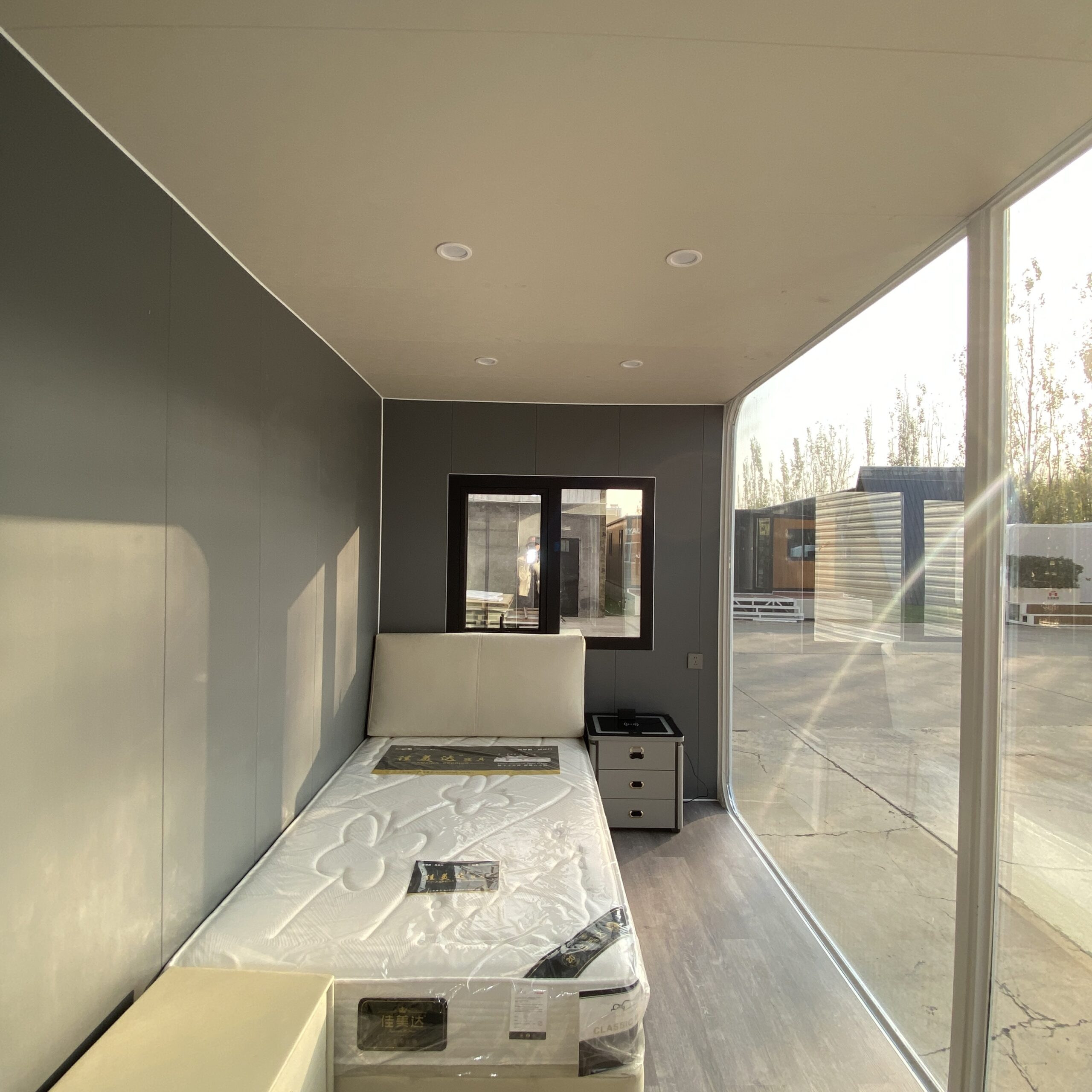
FOB to Landed Cost: Full Breakdown for Malaysia (2026)
Below is a transparent, item-by-item cost build-up for a 20ft and a 40ft expandable container house delivered to Port Klang (the main gateway for the Klang Valley), based on 2026 factory pricing from Huaying. All figures are estimates in USD and MYR (exchange rate assumption: USD 1 = RM 4.40); your quotation will vary with specification, steel grade, and interior fit-out.
| Cost item | 20ft expandable | 40ft expandable | Notes |
|---|---|---|---|
| FOB price (factory gate, China) | $8,500 (≈ RM 37,400) | $13,800 (≈ RM 60,700) | Standard spec: steel frame, insulation, electrical pre-wired |
| Ocean freight (China → Port Klang, 40ft HQ container) | $1,100–1,400 | $1,800–2,300 | Shanghai/Shenzhen → Port Klang, 7–10 days transit |
| Marine insurance (≈ 0.3–0.5% of CIF) | $40–60 | $80–120 | Optional but recommended |
| Import duty (HS 9406.90) | $0 | $0 | 0% under ACFTA with Form E — no duty if certificate valid |
| Sales tax on import (construction materials) | $0 | $0 | Prefabricated steel buildings are not in the taxable sales-tax list (0% band) |
| Customs clearance, port handling & delivery to site (Klang Valley) | $700–1,000 | $1,000–1,500 | Freight forwarder + haulage, includes customs broker fee |
| Crane hire & offloading (per unit) | $300–500 | $400–700 | Expandable units need a mobile crane on site |
| Foundation (pile cap or concrete slab) | $1,500–2,500 | $2,000–3,500 | Depends on soil — consult a registered engineer (BEM) |
| Utility connections (TNB electricity, water, sewer) | $800–1,500 | $1,000–2,000 | TNB supply application + Syarikat Air connection fees |
| Installed total (rough estimate) | $12,940–15,460 | $20,080–24,120 | ≈ RM 57,000–68,000 / RM 88,000–106,000 |
Key takeaway: with the 0% duty in place, the single biggest controllable cost is the foundation and site works — typically 12–20% of the total. Budget for it properly and get a local engineer’s sign-off rather than guessing.
Import Duties and Taxes: What You Actually Pay
1. Import duty — 0% with Form E
HS code 9406.90 (prefabricated buildings of steel) is covered by the ASEAN-China FTA. Malaysia’s customs applies 0% duty on qualifying Chinese-origin goods when you present a Form E Certificate of Origin issued by the exporter. Without Form E, the general MFN rate on steel prefab structures applies (5–20% depending on the specific tariff line), so insisting on Form E from your supplier is not optional — it is the difference between a 0% and a 5–20% bill.
2. Sales tax on imported goods
Malaysia replaced GST with the Sales and Service Tax (SST) in 2018. Imported goods attract sales tax at the point of import. Crucially, construction materials and prefabricated building components sit in the 0% sales-tax band, so the structure itself is not subject to sales tax on import. Under the SST expansion effective 1 July 2025, rates remain 0%/5%/10%, and steel building components continue to fall outside the taxable list.
3. Service tax — new from 1 July 2025
Since 1 July 2025, construction services for non-residential buildings are subject to a 6% service tax (registered contractors with turnover above RM 1.5 million). This affects your site works: if you engage a CIDB-registered contractor for foundation, utilities, or assembly, their invoice may carry 6% service tax. Residential buildings are excluded. Factor this into your installed-cost estimate — it is a 2025 change that many first-time importers miss.

Building Permits and Compliance: UBBL 1984, CIDB and the Council Process
This is where container-house projects in Malaysia most often stall. The rules are not national — they are enforced by the local council (Pihak Berkuasa Tempatan, PBT) where the land sits. The legal backbone is consistent, however:
- Uniform Building By-Laws (UBBL) 1984, made under the Street, Drainage and Building Act 1974 (Act 133) — sets structural, fire, and ventilation requirements for all buildings in Peninsular Malaysia.
- Town and Country Planning Act 1976 (Act 172) — governs land use and zoning; you may need planning permission or a Development Order before a building plan is accepted.
- Section 70, Act 133 — erecting or altering a building without prior written permission of the local authority is an offence. Penalties: fines up to RM 10,000 and/or up to two years’ imprisonment, plus stop-work orders and possible demolition.
The approval path, step by step
- Land check: confirm the land title and zoning with the state land office. If the lot is Malay Reserve Land (Tanah Rizab Melayu) or agricultural land, a container house for residential use may require conversion or a state exemption — get this in writing before buying anything.
- Engage a registered professional: UBBL requires building plans to be submitted by a qualified person (registered architect or engineer, BEM/LAM registered). This is not optional; councils reject unsigned plans.
- Planning permission / Development Order: apply to the municipal council (e.g. DBKL for Kuala Lumpur, MBPJ for Petaling Jaya).
- Building plan submission: structural calculations, layout, fire safety, drainage, and setbacks per UBBL. Because the unit is factory-built, you can submit the manufacturer’s structural documentation (steel grade, welding certificates, load tests) to speed up review.
- IBS score: since 2024, private projects must achieve a minimum IBS (Industrialised Building System) score of 70 at building-plan stage — a factory-made container house naturally scores high, which works in your favour.
- CIDB registration: any project with a contract value of RM 500,000 and above must be registered with CIDB. Smaller installs still need a licensed contractor for site work.
- Occupancy: obtain the Certificate of Completion and Compliance (CCC) or Certificate of Fitness for Occupation (CFO) from the council before moving in.
Can you place one without a permit?
Strictly, no. A permanent container house is a building under Act 133. In practice, some owners use shipping containers as temporary site offices (guard houses, site canteens) under a simplified notification — but the moment it is served with utilities or used as a residence, councils treat it as a building. Plan for the permit from day one. It adds 6–10 weeks to the timeline but removes the risk of demolition orders.
Land Ownership and Foreign Buyers
Foreign nationals can own property in Malaysia under certain conditions, but the rules on land are strict:
- Malay Reserve Land cannot be owned or occupied by non-Malaysians.
- Most states set a minimum purchase price for foreign buyers (commonly RM 1,000,000 for landed residential property in urban areas, varying by state — check the current threshold, several states adjusted theirs in 2024–2025).
- A cheaper alternative for foreign buyers: leasehold land, or placing the container house on land you lease (e.g. a farm or industrial site) for a defined term.
- Businesses: a foreign-owned company may buy land only with state approval, and typically only for commercial/industrial use.
If you are an expatriate or a foreign investor, engage a Malaysian lawyer before signing anything — the state-level rules change and are enforced unevenly.
Use Cases That Fit the Malaysian Market
1. Site offices and guard houses
Construction, plantation, and logistics operators use 10ft and 20ft expandable units as offices, canteens, and security posts. Fast to deploy, relocatable, and they do not disturb the land title — the most permit-friendly use case.
2. Farm stays and eco-lodges
Agro-tourism operators in Cameron Highlands, Johor, and Kedah use container lodges for guest accommodation. The UBBL residential/fire requirements apply, but the modular form shortens construction dramatically.
3. Backyard granny flats and home offices
Suburban homeowners add a 20ft unit as a study, studio, or guest room. Needs full council approval as an extension; allow 8–12 weeks.
4. Remote camp accommodation
Mining, timber, and energy projects in Sarawak and Sabah use 40ft expandable units for worker housing — the units arrive pre-wired and need only a slab.

Guard Houses and Security Posts
If your project needs a security checkpoint rather than a residence, see our dedicated guide: Guard House Container Malaysia 2026: Landed Cost, Import Duty & Building Permits, which covers 10ft and 20ft security posts, Form E duty treatment and UBBL permit requirements for commercial and residential sites.
Climate Design for Malaysia: Humidity, Monsoon and Corrosion
Malaysia sits in an equatorial climate with year-round humidity above 80 percent, two monsoon seasons and 2,400–2,900 mm of annual rainfall. Those conditions change the required wall build-up, roof pitch, corrosion class and foundation strategy — the measures are explained in full in our container house design guide for tropical humidity. Buyers in coastal or island locations should confirm a C5 corrosion system before ordering.
FAQ
Is it legal to live in a container house in Malaysia?
Yes, if the unit is installed on land where residential use is permitted, the building plans are approved by the local council under UBBL 1984, and a CCC is issued. Living in an unapproved unit risks stop-work orders, fines up to RM 10,000, and demolition.
What is the import duty on container houses from China?
0% under the ASEAN-China FTA when the supplier provides a valid Form E Certificate of Origin for HS code 9406.90. Without Form E, the standard duty applies (5–20% depending on the tariff line), so always request Form E.
Do I pay GST on a container house in Malaysia?
No. Malaysia abolished GST in 2018 and uses the Sales and Service Tax (SST). Imported steel building components are in the 0% sales-tax band. Note that from 1 July 2025, non-residential construction services attract 6% service tax.
How long does council approval take?
Typically 6–10 weeks for a straightforward single-unit application, longer if the land needs a zoning change or the project is large. The factory-built nature of the unit helps because structural documentation is already complete.
Can foreigners buy land for a container house?
Not on Malay Reserve Land, and most states apply a minimum purchase price for foreign buyers (commonly around RM 1,000,000 for landed residential property). Leasing land or using commercial/industrial land through a local company are common workarounds — get legal advice first.
Does the unit need a foundation?
Yes. A container house sits on concrete pile caps or a slab, sized by a registered engineer based on soil conditions. In Klang Valley and coastal areas, pile foundations are common because of soft clay and flood risk; budget RM 1,500–3,500 depending on size.
How much does a container house cost in Malaysia, all-in?
For a 20ft expandable unit delivered and installed in the Klang Valley, budget approximately RM 57,000–68,000 all-in (FOB, freight, clearance, foundation, crane, utilities). A 40ft unit lands around RM 88,000–106,000 depending on specification and site conditions.
Next Steps: Get a Fixed Landed-Cost Quote
Huaying (Fucheng Huaying Integrated Housing) manufactures expandable container houses in China and ships to Malaysia on a regular basis. To get a firm FOB price plus a realistic landed-cost estimate for your site — including the Form E paperwork, freight to Port Klang, and a breakdown you can hand to your architect — send your land location and intended use to jack@huayinghouse.com or WhatsApp +86 153-0318-4505.
We supply the structural documentation (steel grade, load test reports, welding certificates) that Malaysian councils require at building-plan stage, which shortens the approval path.