Container Houses in Nepal 2026: Factory Prices, Kathmandu Delivery, Import Duties & Seismic Building Rules
Nepal’s housing market is under sustained pressure. The 2015 Gorkha earthquake destroyed or damaged more than 900,000 buildings, and reconstruction has moved slowly against a backdrop of high material costs, skilled-labour shortages and strict new seismic standards. For buyers weighing a container house in Nepal, the numbers matter more than the novelty: this guide breaks down the full landed cost of importing an expandable steel container house from China, the customs duty and VAT payable at the Nepal border, the NBC 105:2020 seismic requirements that apply, and the practical route from factory gate to site in Kathmandu or the Terai.
Types of Expandable Container Houses for the Nepali Market
10ft Expandable Model (Approx. 14–20 m² expanded)
Ideal for: guard posts, site offices, single-room worker accommodation, small shops.
Dimensions: 3 m × 6 m folded, expanding to 3 m × 8 m.
Useful floor area: approximately 14–20 m².
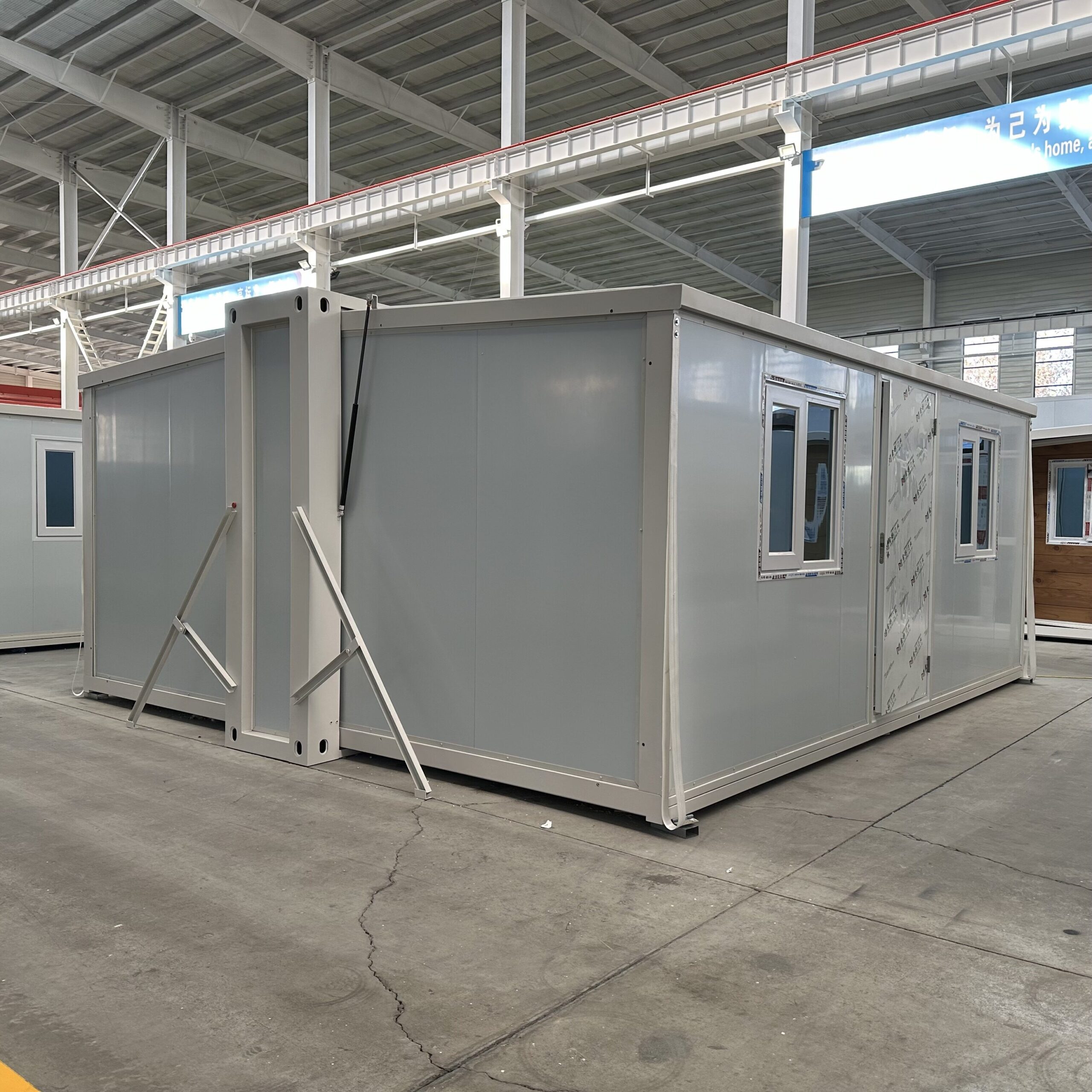
20ft Expandable Model (Approx. 35–40 m² expanded)
Ideal for: one-bedroom family homes, guest rooms, rental cabins, clinic rooms.
Dimensions: 6 m × 3 m folded, expanding to 6 m × 6 m.
Useful floor area: approximately 35–40 m².
40ft Expandable Model (Approx. 70–74 m² expanded)
Ideal for: two-bedroom family homes, worker camps for hydropower or road projects, school classrooms, small commercial units.
Dimensions: 12 m × 3 m folded, expanding to 12 m × 6 m.
Useful floor area: approximately 70–74 m².
2026 Full Landed Cost Breakdown for Nepal
Nepal is landlocked. The two practical import routes are: (1) sea freight from Tianjin or Shanghai to Kolkata (India), then overland via the Raxaul–Birgunj border crossing into Nepal; or (2) direct road freight through the Tibet border, via Kerung (Gyirong) or Zhangmu, into Kathmandu Valley. The table below uses the Kolkata + Birgunj route, the most common for containerised cargo. All figures in USD.
| Cost Item | 10ft Model | 20ft Model | 40ft Model |
|---|---|---|---|
| FOB Price (China, Tianjin) | $8,500 | $12,500 | $18,500 |
| Ocean Freight (Tianjin to Kolkata) | $1,100 | $1,700 | $2,300 |
| Marine Insurance (approx. 0.3% of CIF) | $30 | $45 | $65 |
| CIF Value (customs basis) | $9,630 | $14,245 | $20,865 |
| Basic Customs Duty (10% on CIF, HS 9406) | $963 | $1,425 | $2,087 |
| VAT (13% on CIF + duty) | $1,377 | $2,037 | $2,984 |
| Port Handling + Kolkata ICD Charges | $350 | $450 | $550 |
| Overland Freight (Kolkata to Birgunj, then onward) | $1,100 | $1,400 | $1,700 |
| Customs Brokerage + Import Permits | $250 | $250 | $300 |
| Foundation (shallow raft, seismic tie-downs) | $900 | $1,300 | $1,900 |
| On-site Assembly, Utilities Connection & Finishing | $1,500 | $2,200 | $3,200 |
| Total Landed Cost (approx.) | $16,070 | $23,307 | $33,586 |
| Indicative in NPR (approx. NPR 134/USD) | NPR 21.5 lakh | NPR 31.2 lakh | NPR 45.0 lakh |
The Tibet road option can cut ocean transit time but raises overland freight per kilometre; for a single 20ft unit the Kolkata route is usually cheaper. For project-scale orders (10+ units), Huaying quotes CIF Birgunj or CIF Kerung directly and can include customs clearing in the package.
Import Duties, Taxes and Documentation in Nepal
Nepal applies customs duty on the CIF value under the Integrated Customs Tariff (FY 2082/83). Prefabricated buildings fall under HS heading 9406, and the standard MFN rate for steel modular building units (9406.20) is 10%.
- Basic Customs Duty: 10% on CIF value for HS 9406.20 steel modular units.
- VAT: 13%, calculated on the base of CIF value plus customs duty (plus any applicable excise).
- Tibet-origin concession: goods imported from the Tibet Autonomous Region of China may receive a duty rebate of up to 4% on the applicable rate. This requires a Certificate of Origin from the Chinese customs authority and is verified at the point of entry.
- Customs service fee: a small percentage of the assessable value charged by the Department of Customs.
Documents typically required: commercial invoice, packing list, bill of lading or airway bill, Certificate of Origin (for the Tibet rebate), insurance certificate, and the importer’s PAN (tax) registration. Working with a Nepali customs broker familiar with prefabricated-building classification avoids mis-declaration penalties, which are strictly enforced under the Customs Act.
Seismic Requirements: NBC 105:2020 and Nepal’s Building Code
Nepal sits in one of the highest seismic-risk zones in the world. Since the 2015 Gorkha earthquake, all residential construction must comply with the Nepal National Building Code, in particular NBC 105:2020 (Seismic Design of Buildings in Nepal), which replaced the 1994 edition and incorporates lessons from the earthquake.
- NBC 105:2020 governs seismic design loads and detailing for buildings in Kathmandu Valley and across the country’s seismic zones.
- NBC 101:2020 covers planning of towns and building sites, including plot setbacks and siting constraints.
- NBC 103/107:2020 cover fire safety; NBC 110:2020 covers plain and reinforced concrete for foundations and tie-beams.
For a container house, the structure itself is steel, which is inherently lighter than masonry. The key compliance points are: a properly engineered foundation anchored with seismic tie-downs (steel base frames bolted to a reinforced concrete raft), correct anchorage of the unit to the foundation, and connections between stacked units where a two-storey configuration is used. A licensed Nepali structural engineer should stamp the foundation design for municipal approval (Naksha Pass).

Land Ownership and Legal Considerations for Foreign Buyers
Foreign nationals cannot directly own land in Nepal. Options for a non-Nepali buyer are limited and should be reviewed with a local lawyer:
- Nepali company: register a company in Nepal (foreign investment is permitted in construction and housing sectors under FDI rules) and hold the land in the company’s name.
- Long-term lease: lease land from a Nepali citizen or institution. Container houses, being relocatable, fit lease scenarios well because the structure can be moved at the end of the term.
- Joint venture: partner with a Nepali national who holds land title.
For humanitarian and reconstruction projects (earthquake-affected districts), non-profit and donor-funded programmes follow separate approval channels through the National Reconstruction Authority and local municipalities. Container houses have been used in transitional shelter programmes precisely because they can be deployed fast and relocated.
Best Applications in Nepal
Worker Camps for Hydropower and Road Projects
Nepal’s hydropower expansion and road corridor projects need fast, repeatable accommodation for engineers and labour. A 40ft expandable unit sleeping 6–8 people, or paired 20ft units, can be deployed within days of arrival.
Earthquake-Resistant Family Homes
Steel-framed container homes are lighter and better suited to high seismic zones than unreinforced masonry. NBC 105-compliant anchoring gives buyers a documented safety case.
Hotels, Glamping and Tourist Cabins
From Kathmandu Valley to Pokhara and Chitwan, boutique operators use expandable units as guest cabins with faster build times and lower site labour costs than concrete.
Site Offices and Storage
Construction companies and agricultural ventures use 10ft and 20ft units as secure offices, tool stores and seasonal accommodation.

Frequently Asked Questions
How much does a container house cost in Nepal in 2026?
Based on the landed-cost model above, a 10ft expandable unit lands at approximately $16,000 (NPR 21.5 lakh), a 20ft at $23,300 (NPR 31.2 lakh) and a 40ft at $33,600 (NPR 45.0 lakh), including freight via Kolkata, customs duty, VAT, foundation and on-site assembly. Excluding land.
What import duty applies to container houses in Nepal?
Prefabricated steel buildings (HS 9406.20) attract 10% basic customs duty on CIF value, plus 13% VAT on the CIF + duty base. Goods imported from the Tibet Autonomous Region of China may qualify for a duty rebate of up to 4% with the correct Certificate of Origin.
Can a foreigner build a container house in Nepal?
Foreign nationals cannot directly own land in Nepal. The practical routes are a Nepali-registered company holding the land, a long-term lease from a Nepali citizen, or a joint venture with a Nepali landowner. The container house itself can be relocated if the lease ends.
Are container houses earthquake safe in Nepal?
Steel container houses are lighter and more ductile than traditional masonry, which is an advantage in seismic zones. The critical requirement is a properly engineered foundation anchored with seismic tie-downs, stamped by a licensed Nepali structural engineer and compliant with NBC 105:2020.
What is the delivery time from China to Nepal?
A typical timeline is: production 15–25 days, sea freight Tianjin to Kolkata 12–18 days, customs and overland transit to Birgunj 5–10 days, then foundation and assembly 7–14 days. Total factory-to-occupancy is roughly 6–10 weeks.
Can container houses be used for hydropower worker camps?
Yes. 20ft and 40ft expandable units are widely used for project accommodation because they arrive fully fitted (electric, plumbing, insulation) and can be repositioned between project sites.
Get a CIF Quote for Your Nepal Project
Huaying manufactures expandable and folding container houses for export to Nepal and quotes CIF Birgunj or CIF Kerung including customs coordination. Send your site location, unit quantity and intended use for a landed-cost quotation with a full cost breakdown like the table above.
Email: jack@huayinghouse.com
WhatsApp: +86 153-0318-4505
Factory pick-up: Shijiazhuang Zhengding Airport or Hengshui North Railway Station