
A 40-foot container home is one of the most common sizes buyers in the United States evaluate, largely because the 40-foot footprint delivers usable floor area comparable to a small conventional dwelling while still shipping as a single standard container. This guide explains what a 40-foot container home actually costs to import, permit, and install in the United States in 2026, and where the money goes between the factory gate and a finished site.
The figures below are based on real FOB (free-on-board) factory pricing from Chinese manufacturers, published ocean-freight rates, and current U.S. import charges. They are intended as planning numbers rather than a quote; your final cost will depend on configuration, port, and local site conditions.
How Much Does a 40-Foot Container Home Cost in the USA?
Most buyers look at the FOB price first and miss roughly half the total. A 40-foot expandable container home with a factory FOB price around USD 14,500 to USD 21,000 typically lands turnkey at USD 35,000 to USD 50,000 after freight, duty, foundation, and installation. The table below breaks down a single-wing unit delivered to the West Coast and a double-wing unit delivered to the East Coast.
| Cost component | Single-wing (West Coast) | Double-wing (East Coast) |
|---|---|---|
| FOB factory price (40ft) | USD 14,500 | USD 21,000 |
| Ocean freight (China to U.S. port) | USD 4,000 | USD 6,000 |
| Marine insurance (approx. 0.3%) | USD 55 | USD 80 |
| Section 301 duty (25% of CIF value) | USD 4,640 | USD 6,770 |
| MPF + Harbor Maintenance Fee | USD 80 | USD 130 |
| Customs bond and broker fee | USD 450 | USD 500 |
| Port handling and terminal charges | USD 650 | USD 750 |
| Drayage (port to site, 50 miles) | USD 800 | USD 1,000 |
| Foundation (slab or piers) | USD 4,500 | USD 6,000 |
| Crane and installation | USD 1,800 | USD 2,500 |
| Utility connections (electric, water, sewer) | USD 2,500 | USD 3,000 |
| State sales tax (6% average on materials) | USD 1,500 | USD 2,200 |
| Total turnkey (landed and installed) | USD 35,475 | USD 49,930 |
The largest single variable is the Section 301 duty. Because it is calculated on the customs value (FOB plus freight), it adds roughly 25% on top of your already-landed cost before any U.S. construction work begins. Buyers who compare only factory prices between suppliers will systematically underestimate the delivered cost of a Chinese-built unit.
40-Foot Container Home Sizes and Configurations
Not all 40-foot container homes are alike. The two configurations most relevant to U.S. buyers are:
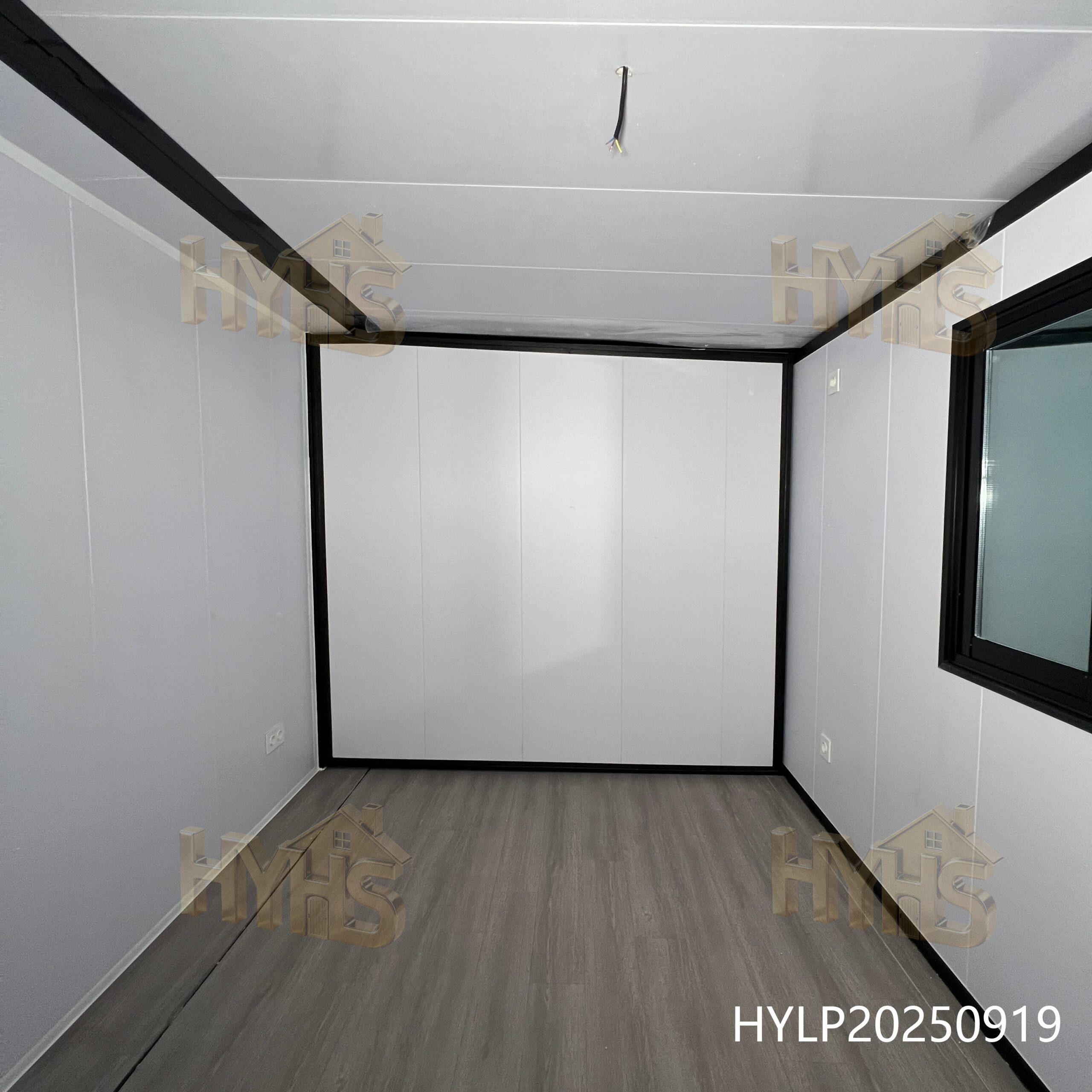
- Single-wing: one side folds out to expand the living area, typically to around 40 m² (about 430 sq ft) when open. It is the more affordable option and simpler to install.
- Double-wing: both sides fold out, roughly doubling the closed footprint to about 60–70 m² (640–750 sq ft). It costs more at the factory and in freight handling but is often preferred for two-bedroom layouts.
Folded, both units return to standard 40-foot container dimensions, which keeps ocean freight at a single-container rate and allows transport on standard chassis. Open, the wings are bolted and weather-sealed on site, so installation does not require the extended permit process of stick-built construction in most jurisdictions.

Import Duties and Tariffs (HTSUS 9406)
Container homes are classified under HTSUS 9406.00, prefabricated buildings. For units manufactured in China, the relevant charges in 2026 are:
- Section 301 List 3 duty: 25% ad valorem on the customs value (FOB plus freight).
- Merchandise Processing Fee (MPF): 0.3464% of cargo value, with a minimum of USD 29.66 and a maximum of USD 575.35.
- Harbor Maintenance Fee (HMF): 0.125% of cargo value on seaborne imports.
A licensed customs broker can confirm the exact classification and whether any tariff exclusion currently applies. Because Section 301 status has changed several times since 2018, verify the current rate against your HTSUS line at the time of import rather than relying on older guidance.
U.S. Building Codes and Permits for Container Homes
There is no single federal rule for container homes; authority sits with states and local municipalities, most of which adopt the International Building Code (IBC) or the International Residential Code (IRC) with local amendments. In practice this means:
- Structural: the steel frame must be engineered for the local wind and seismic zone. Coastal Florida and the Gulf Coast (high-velocity hurricane zones) and California (seismic) impose the strictest requirements.
- Energy: California enforces Title 24 energy standards; most other states require insulation to meet the adopted IECC version.
- Permits: expect a building permit, and in unincorporated or county areas sometimes only a site permit and inspection. The unit should arrive with engineer-stamped drawings to speed review.
Working with a local engineer or contractor who has done container projects before is the most reliable way to avoid rework. Ask for a stamped foundation and connection design before ordering, not after the unit arrives.
State-by-State Turnkey Cost Comparison
| State | Key differentiator | Approx. turnkey (40ft expandable) |
|---|---|---|
| Florida (Miami) | High-velocity hurricane zone wind code, impact-rated openings | USD 42,650 |
| Texas (Houston) | IRC-based, fewer mandates outside incorporated areas | USD 36,800 |
| California | CBC seismic requirements, Title 24 energy code | USD 45,000+ |
| Arizona | IBC 2018, no hurricane or seismic exposure | USD 33,500 |
The spread is driven almost entirely by wind, seismic, and energy requirements, not by the container itself. A unit that costs USD 14,500 at the factory can land at USD 33,500 in Arizona or USD 45,000 in California for the same reason a stick-built house costs more in San Francisco than in Phoenix: local engineering and labor.
Foundation and Site Preparation
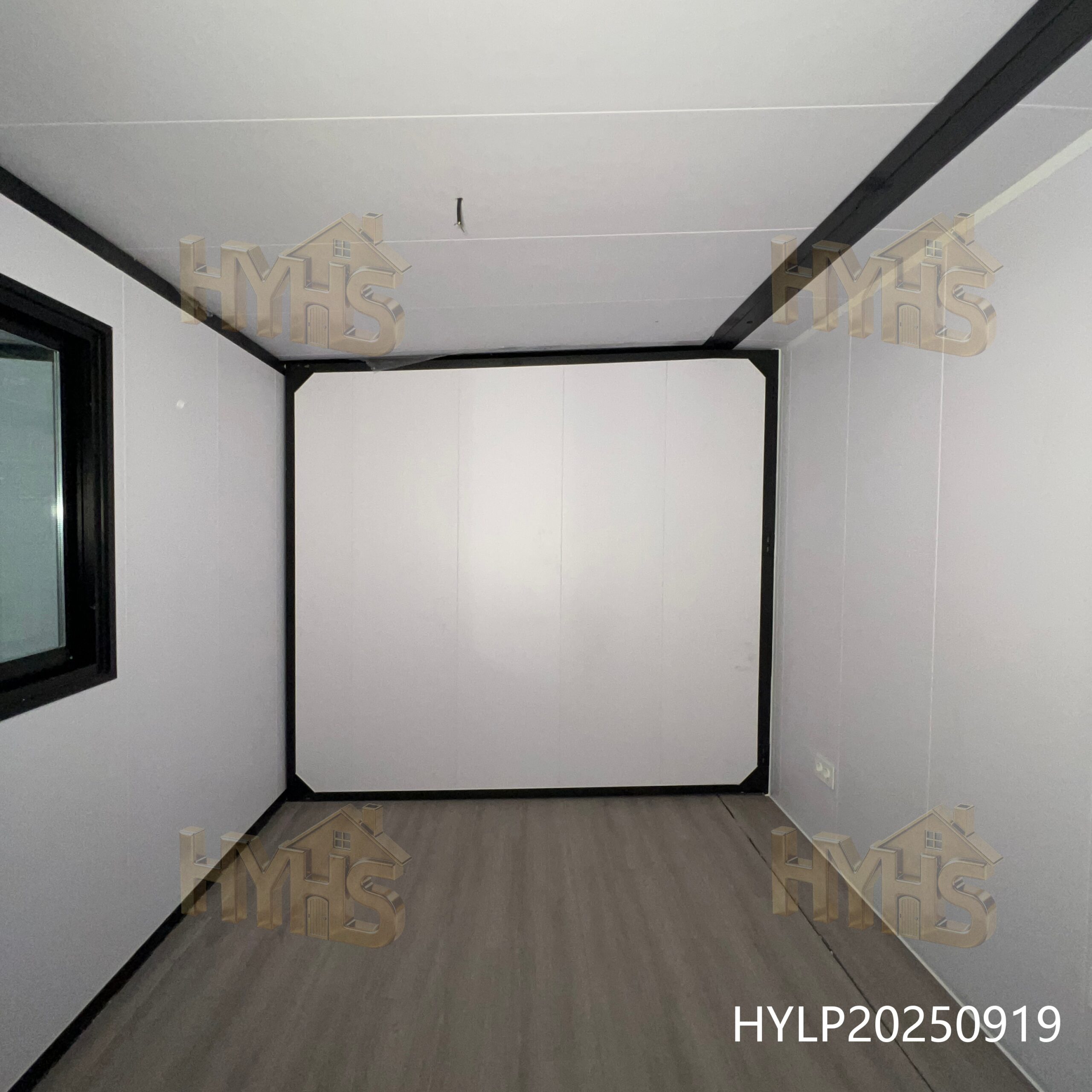
The 40-foot footprint needs a level, load-bearing foundation. Common options are a concrete slab, concrete piers, or screw piles. A slab is the most durable and runs USD 4,000 to USD 6,000 for this size; piers or screw piles can be less expensive on sloped sites and allow the unit to be relocated later. Budget separately for site access, grading, and crane hire, which are frequently the hidden line items that push projects over budget.
Frequently Asked Questions
Are 40-foot container homes legal in the United States?
Yes, in most areas, provided the structure meets the locally adopted building code and you obtain the required permits. A few municipalities restrict shipping-container construction, so confirm with your local building department before committing.
How long does it take to import and install a 40-foot container home?
Factory production is typically 3 to 5 weeks, ocean freight 3 to 6 weeks depending on port, and site installation 1 to 2 weeks. Expect a total timeline of roughly 10 to 14 weeks from order to move-in, excluding permitting.
Do I pay import duty on a 40-foot container home from China?
Yes. Under HTSUS 9406.00 a 25% Section 301 duty applies to Chinese-built prefabricated buildings, plus the MPF and Harbor Maintenance Fee. Your customs broker will calculate the exact amount on the declared customs value.
Is a 40-foot container home cheaper than traditional construction?
On a cost-per-square-foot basis it is often comparable to or lower than conventional building: a 40-foot unit typically lands around USD 65 to USD 80 per square foot, versus USD 200 to USD 350 per square foot for traditional U.S. construction in many markets. The advantage is speed and predictability, not always price.
Can I finance a 40-foot container home?
Financing is available but more limited than for conventional homes. Options include personal loans, construction or renovation loans, and in some cases chattel loans for units on owned land. Conventional mortgages rarely apply until the structure is permanently affixed and titled.
What size is a 40-foot container home when expanded?
A single-wing 40-foot unit opens to roughly 40 m² (about 430 sq ft), and a double-wing unit to about 60 to 70 m² (640 to 750 sq ft). Closed, both return to standard 40-foot container dimensions for shipping.
Related US Container Home Guides
- 40ft Expandable Container House — factory FOB price and complete specification guide
- Container Houses in Florida 2026 — hurricane code compliance and cost breakdown
- Container Houses in Texas 2026 — FOB price guide and landed costs
- Container Houses in California 2026 — ADU guide and Title 24 compliance
Get an Accurate Delivered Quote
Factory prices are only the first number. To compare suppliers fairly, ask for a DDP (delivered duty paid) or landed quote to your nearest port, and request engineer-stamped drawings and a written breakdown of foundation and installation scope. For a factory-direct FOB-to-landed quotation for a 40-foot expandable container home, contact our team at jack@huayinghouse.com or on WhatsApp at +86 153-0318-4505, and include your delivery city so we can price freight and duty accurately.