
Why Florida Buyers Are Turning to Container Houses
Florida’s housing market presents a unique challenge: high demand, rising construction costs, and one of the toughest building code environments in the United States. Traditional stick-built homes in Florida now average $150–$250 per square foot, with coastal areas pushing past $350/sq ft. Container houses offer a structural alternative that aligns with Florida’s core requirements — welded steel frames that handle wind loads, modular construction that reduces on-site labor, and factory-controlled quality that meets stringent inspection standards.
This guide walks through the complete cost picture for importing a container house to Florida in 2026: FOB factory pricing, ocean freight to Florida ports, US tariffs, Florida-specific building code requirements, site preparation costs, and installation. Every figure is based on real freight quotes and current regulatory requirements — no estimates pulled from thin air.
FOB Factory Pricing: What You Pay Before Shipping
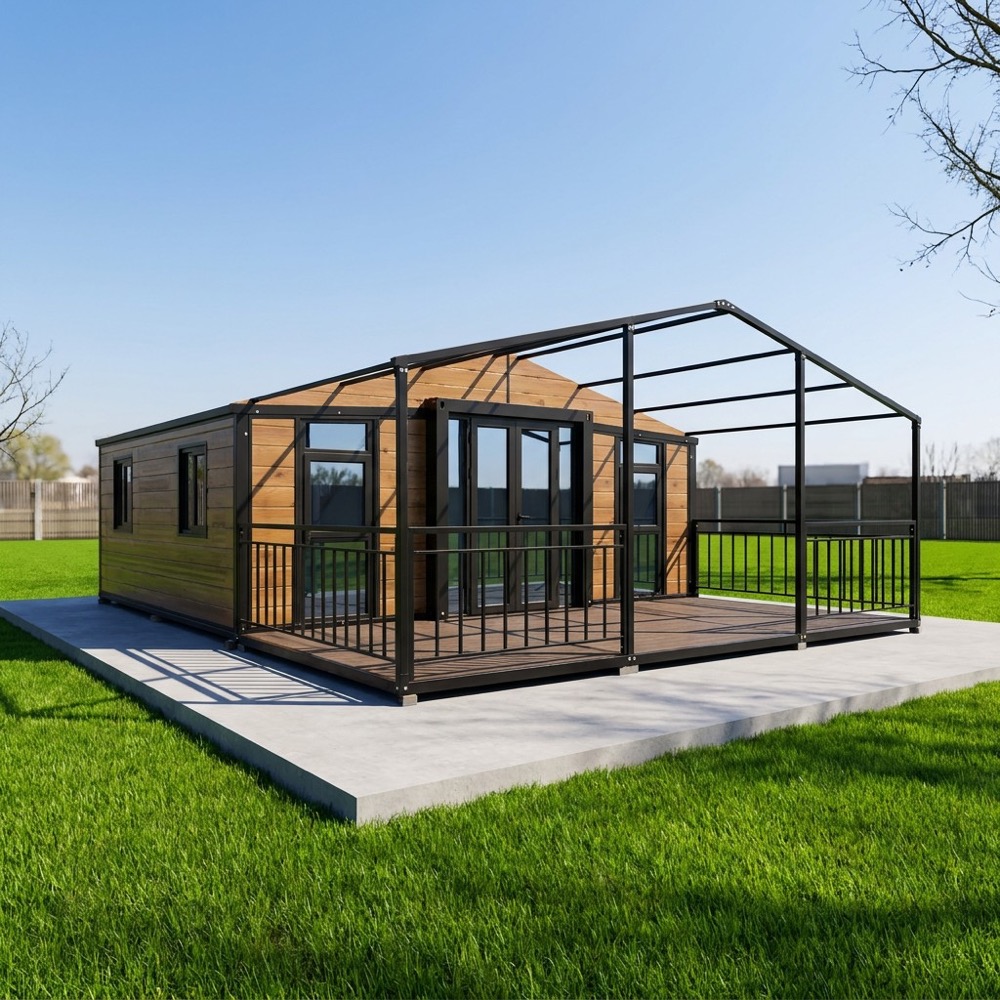
HUAYING’s container houses ship as fully fabricated units from the factory in Hebei, China. The FOB (Free On Board) price covers the completed unit loaded into a shipping container at Tianjin Port — all manufacturing, interior finishing, electrical, plumbing, and quality inspection included.
| Model | Size | FOB Price (USD) | Living Area |
|---|---|---|---|
| 10ft Expandable | 10′ x 8′ x 8′ | $8,500 | 160 sq ft (expanded) |
| 20ft Standard | 20′ x 8′ x 8’5″ | $11,500 | 160 sq ft |
| 20ft Apple Capsule | 20′ x 8′ x 8’5″ | $13,500 | 200 sq ft |
| 40ft Expandable | 40′ x 8′ x 8’5″ | $17,500 | 640 sq ft (expanded) |
| 40ft Double-Wing | 40′ x 8′ x 8’5″ | $22,500 | 800 sq ft (expanded) |
Prices valid Q3 2026. All units include: insulated walls/ceiling, electrical wiring with breaker panel, plumbing rough-in, flooring, windows, door, bathroom fixtures, kitchenette cabinets. Excludes: furniture, appliances, HVAC equipment.
Complete Landed Cost: PortMiami vs. Port Tampa Bay
The landed cost of a container house in Florida depends primarily on which port you use and how far inland your site is located. Florida has three major container ports suitable for this cargo:
- PortMiami — Largest container port in Florida, direct Asia services via Panama Canal. Fastest transit but highest port fees.
- Port Everglades (Fort Lauderdale) — Second-largest, good for Broward/Palm Beach counties. Similar transit time to Miami.
- Port Tampa Bay — Best for Central Florida / Gulf Coast. Slightly longer transit from Asia but lower drayage costs for Orlando/Tampa metro.
| Cost Component | 10ft Expandable (Miami) | 20ft Standard (Miami) | 40ft Expandable (Miami) | 40ft Expandable (Tampa) |
|---|---|---|---|---|
| FOB Factory Price | $8,500 | $11,500 | $17,500 | $17,500 |
| Ocean Freight (Tianjin to Florida) | $2,800 | $3,200 | $4,500 | $4,800 |
| Marine Insurance (1.5% CIF) | $170 | $220 | $330 | $335 |
| CIF Port Value | $11,470 | $14,920 | $22,330 | $22,635 |
| US Customs Duty (Section 301, 25%) | $2,868 | $3,730 | $5,583 | $5,659 |
| Customs Bond & Broker Fee | $350 | $350 | $450 | $450 |
| Port Handling & THC | $450 | $550 | $700 | $650 |
| ISF Filing (10+2) | $45 | $45 | $45 | $45 |
| DDP Landed at Port | $15,183 | $19,595 | $29,108 | $29,439 |
| Drayage (Port to Site, 50 miles) | $800 | $800 | $1,200 | $700 |
| Concrete Slab Foundation | $2,500 | $3,500 | $5,000 | $4,500 |
| Site Prep & Permits | $1,500 | $1,500 | $2,000 | $1,800 |
| Crane/Installation | $1,200 | $1,200 | $1,800 | $1,600 |
| Utility Hookups (Elec/Water/Sewer) | $2,000 | $2,000 | $2,500 | $2,200 |
| Florida Sales Tax (6% on materials) | $510 | $690 | $1,050 | $1,050 |
| TOTAL TURNKEY COST | $23,693 | $29,285 | $42,658 | $41,289 |
Cost per square foot (turnkey): $148/sq ft (10ft) / $183/sq ft (20ft) / $67/sq ft (40ft) — compared to $200–$350/sq ft for traditional Florida construction.
Florida Building Code Compliance: What You Must Know
The Florida Building Code (FBC) — 8th Edition (2023)
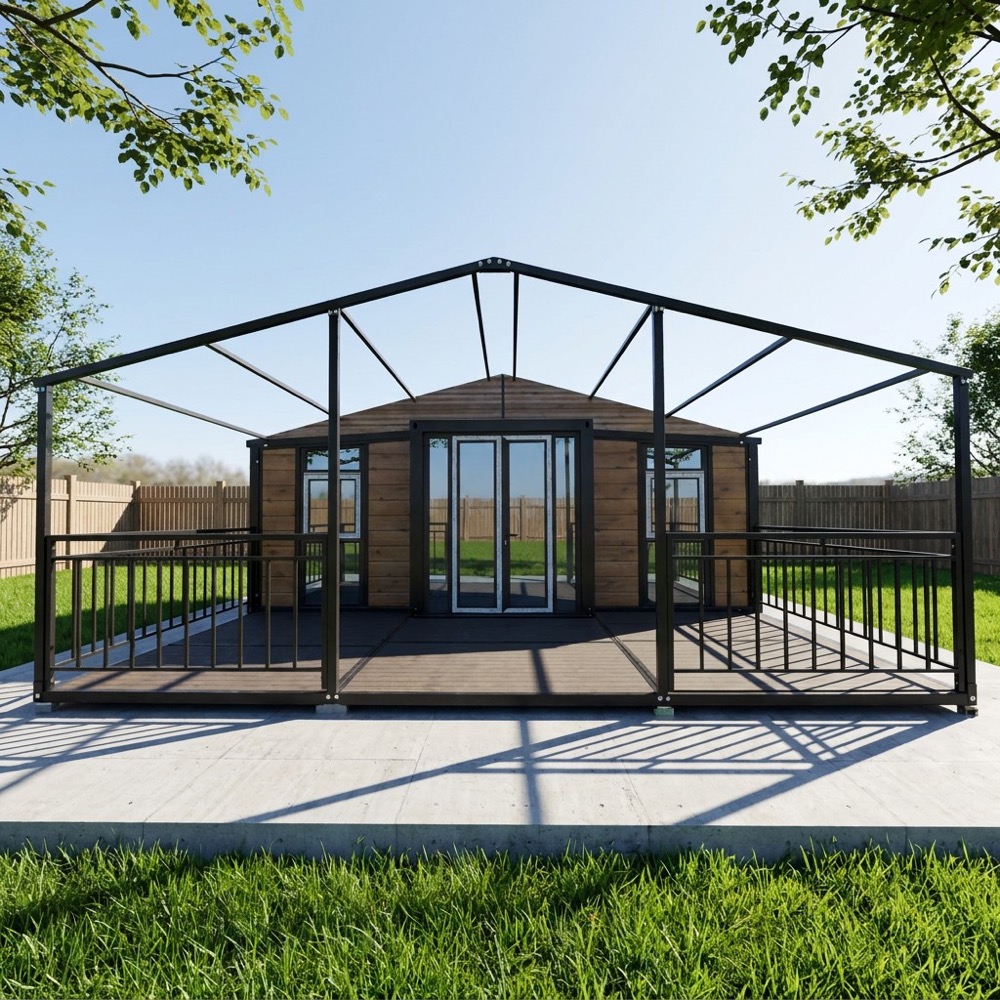
Florida adopted the FBC 8th Edition effective December 31, 2023, based on the 2021 International Building Code (IBC) with Florida-specific amendments. Container houses fall under the Florida Residential Code (FRC) for single-family dwellings or the Florida Building Code (FBC) for commercial use.
1. Wind Load Requirements (Chapter 16, FBC)
Florida is divided into wind speed zones. The design wind speeds per ASCE 7-22:
- Miami-Dade & Broward Counties (HVHZ): 180 mph (Risk Category II) — the highest requirement in the continental US.
- Coastal Palm Beach to Volusia: 160–170 mph
- Tampa Bay Area: 150–160 mph
- Orlando / Inland Central Florida: 130–140 mph
- Panhandle: 140–150 mph
Container houses constructed from Corten steel shipping containers have an inherent advantage: the welded steel frame provides continuous load paths from roof to foundation. However, you still need:
- Product Approval (FBC Chapter 9): All structural components must have Florida Product Approval or Miami-Dade NOA (Notice of Acceptance). HUAYING provides structural calculations stamped by a licensed engineer for Florida submittal.
- Anchoring system: Engineered tie-downs rated for the site-specific wind zone. In HVHZ, this means embedment into a reinforced concrete slab with anchor bolts at 24″ spacing maximum.
- Impact-resistant glazing or shutters (HVHZ only): Windows and doors must meet ASTM E1996/E1886 missile impact standards in Miami-Dade and Broward. Standard container house windows can be upgraded to impact-rated units for approximately $800–$1,200 per unit.
2. Flood Zone Requirements
Much of coastal Florida lies within FEMA Special Flood Hazard Areas (SFHA). If your site is in Zone AE or VE:
- The finished floor must be elevated above the Base Flood Elevation (BFE). For a container house on a concrete slab, this typically means raising the slab or using stem wall construction.
- In Zone VE (coastal high hazard), the structure must be elevated on piles or piers — slab-on-grade is not permitted. This adds approximately $5,000–$15,000 depending on elevation height.
- Always check your FIRM (Flood Insurance Rate Map) panel before purchasing land. This is the single most expensive variable in Florida site work.
3. Energy Code Compliance (Chapter 13, FRC)
Florida’s climate zones (1A and 2A per IECC) require:
- Insulation: R-13 walls / R-30 ceiling minimum. HUAYING standard insulation meets or exceeds this with 50mm polyurethane foam panels (R-15 equivalent).
- Cooling equipment: AHRI-rated HVAC system sized per Manual J load calculation. A mini-split heat pump (12,000–24,000 BTU) is typical for container houses and costs approximately $1,500–$3,000 installed.
- Duct leakage testing and blower door test may be required depending on local jurisdiction.
4. Foundation Requirements
Florida’s sandy soils and high water table mean foundation design must address:
- Soil bearing capacity: Typically 2,000 psf for undisturbed sandy soils. A geotechnical report is recommended before foundation design.
- Termite protection: Florida Building Code requires termite-resistant treatment. Concrete slab with physical barrier (stainless steel mesh or treated soil) is standard.
- Expansive soil: Generally not an issue in Florida, unlike Texas or other clay-heavy regions.
Permitting Timeline for Florida Container Houses
| Phase | Duration | Notes |
|---|---|---|
| Site evaluation & survey | 1–2 weeks | Required for permit application |
| Structural engineering review | 2–3 weeks | Florida PE stamp on foundation and anchoring |
| Permit application & review | 3–6 weeks | Varies by jurisdiction; Miami-Dade typically 4–6 weeks |
| Manufacturing (factory) | 25–35 days | Runs in parallel with permitting |
| Ocean freight Tianjin to Florida | 28–35 days | Via Panama Canal |
| Customs clearance | 3–5 days | Requires customs broker |
| Site work & foundation | 1–2 weeks | Weather-dependent |
| Delivery & installation | 2–3 days | Crane placement + utility connections |
| Total (parallel) | 10–14 weeks | From order to occupancy |
Import Process: Step by Step
- Select your model and confirm specifications — Work with HUAYING to finalize layout, finishes, and any Hurricane Zone upgrades.
- Engage a Florida-licensed engineer — They will prepare foundation plans and anchoring details stamped for your county’s building department.
- Apply for building permit — Submit structural calculations, site plan, and foundation design to your local building department.
- Hire a US customs broker — Required for entry filing. The broker handles ISF (Importer Security Filing) 48 hours before vessel departure and formal entry upon arrival.
- Production begins — 25–35 day manufacturing timeline runs concurrently with permitting.
- Prepare your site — Clear, grade, pour foundation per engineer’s plans. Coordinate with utility companies for connections.
- Receive and install — Container arrives at port, clears customs, is trucked to your site, and placed by crane. Final utility hookups and finish work complete the installation.
Florida vs. Other States: Cost Comparison
| State | Key Differentiator | Turnkey Cost (40ft Expandable) |
|---|---|---|
| Florida (Miami) | HVHZ wind code, impact windows | $42,658 |
| Florida (Tampa) | Lower wind zone, same building code | $41,289 |
| Texas (Houston) | IRC-based, no state mandate outside incorporated areas | $36,800 |
| Texas (Dallas) | IRC enforced, expansive clay soil | $37,900 |
| California | CBC seismic requirements, Title 24 energy | $45,000+ |
| Arizona | IBC 2018, no hurricane/seismic | $33,500 |
Tariff & Tax Summary
- HTSUS Code: 9406.90.0000 (Prefabricated buildings)
- Section 301 China Tariff (List 3): 25% ad valorem on CIF value
- MPF (Merchandise Processing Fee): 0.3464% of CIF value (min $29.66, max $575.35)
- HMF (Harbor Maintenance Fee): 0.125% of CIF value (seaborne imports only)
- Florida Sales Tax: 6% state rate on materials value only
- No Florida state income tax
FAQ: Container Houses in Florida
Are container houses legal in Florida?
Yes. Container houses are legal throughout Florida provided they meet the Florida Building Code requirements for structural, wind, energy, and life safety. Some municipalities have additional aesthetic or neighborhood compatibility requirements, but these apply to all construction types — not specifically container houses. Always check with your local planning and zoning department for any HOA or deed restrictions that may apply.
Can a container house survive a Category 5 hurricane?
A properly engineered and anchored container house can meet the wind load requirements for all Florida wind zones, including the 180 mph design wind speed in Miami-Dade HVHZ — equivalent to a Category 5 storm. The key is not the container itself (which is inherently strong) but the foundation anchoring system. An engineered tie-down system embedded in a reinforced concrete slab is what prevents uplift. Impact-rated windows or shutters are required in HVHZ to prevent wind-driven debris penetration.
How much does flood insurance cost for a container house in Florida?
Flood insurance premiums depend entirely on your FEMA flood zone and the elevation of your finished floor relative to BFE. A container house on an elevated slab in Zone AE typically costs $800–$2,000/year through NFIP. In Zone X (low-to-moderate risk), flood insurance is optional and costs $400–$600/year. Private flood insurance is increasingly competitive and may offer lower rates than NFIP.
Do I need a Florida-licensed contractor for installation?
Yes. Florida law requires a licensed contractor for any construction valued over $2,500. The contractor must hold a Certified General Contractor (CGC), Certified Building Contractor (CBC), or Certified Residential Contractor (CRC) license. The contractor pulls the permit, coordinates subcontractors (electrician, plumber, HVAC), and schedules inspections. HUAYING provides all necessary documentation for the contractor to work with, including structural calculations and installation manuals.
What about homeowners insurance for container houses in Florida?
Florida’s property insurance market has been challenging since 2022, but container houses may qualify for coverage under several paths: (1) standard HO-3 homeowners policy if the structure meets FBC and has a wind mitigation inspection, (2) surplus lines carriers that specialize in non-traditional construction, or (3) Citizens Property Insurance (the state-backed insurer of last resort). A wind mitigation inspection that documents the continuous load path from roof to foundation, impact-rated openings, and secondary water barrier can significantly reduce premiums.
Can I finance a container house in Florida?
Financing for non-traditional homes is more limited but improving. Options include: (1) personal loans (LightStream, SoFi) for amounts up to $50,000, (2) construction-to-permanent loans from local credit unions if the container house is on a permanent foundation, (3) home equity loans if you already own the land, and (4) seller financing through some container house manufacturers. Traditional FHA/VA/conventional mortgages generally require the home to be affixed to a permanent foundation, which a container house on a concrete slab satisfies.
Next Steps: Getting a Quote for Your Florida Container House
Every container house project in Florida starts with three data points: your county (determines wind zone and building department), your site conditions (flood zone, soil, access), and your model preference. Contact HUAYING for a detailed quote specific to your location — we provide FOB pricing, freight estimates to your nearest Florida port, and the structural documentation your engineer will need for permit submittal.
Contact HUAYING Container House Factory:
Email: jack@huayinghouse.com
WhatsApp: +86 153-0318-4505
Factory pickup available from Shijiazhuang Zhengding Airport or Hengshui North Railway Station
All prices in this guide are estimates based on Q3 2026 market rates. Actual costs vary depending on specific site conditions, local jurisdiction requirements, freight rates at time of shipment, and selected options/upgrades. Always confirm with your licensed contractor and customs broker.
Engineering guides that pair with this guide:
– Container house wind & hurricane design — Florida and US Gulf Coast (anchorage, roof perimeter, impact glazing)
– Humidity, condensation and corrosion design principles
– Site selection, drainage and orientation guide