
The UK housing market in 2026 presents a formidable challenge: average house prices in England have reached £298,000 (ONS, Q1 2026), with London averaging £535,000. For first-time buyers, the deposit alone often exceeds £50,000. Against this backdrop, container houses shipped from China are emerging as a credible, cost-effective alternative — delivering modern, fully-finished homes at a fraction of traditional construction costs.
This comprehensive 2026 guide covers everything UK buyers need to know: FOB factory pricing, shipping costs to Southampton and Felixstowe, UK customs duty and VAT, Building Regulations compliance, planning permission, and total landed cost. Whether you are looking for a granny annexe, holiday let, site cabin, or a primary residence, expandable container homes from Huaying offer a proven path to affordable home ownership.
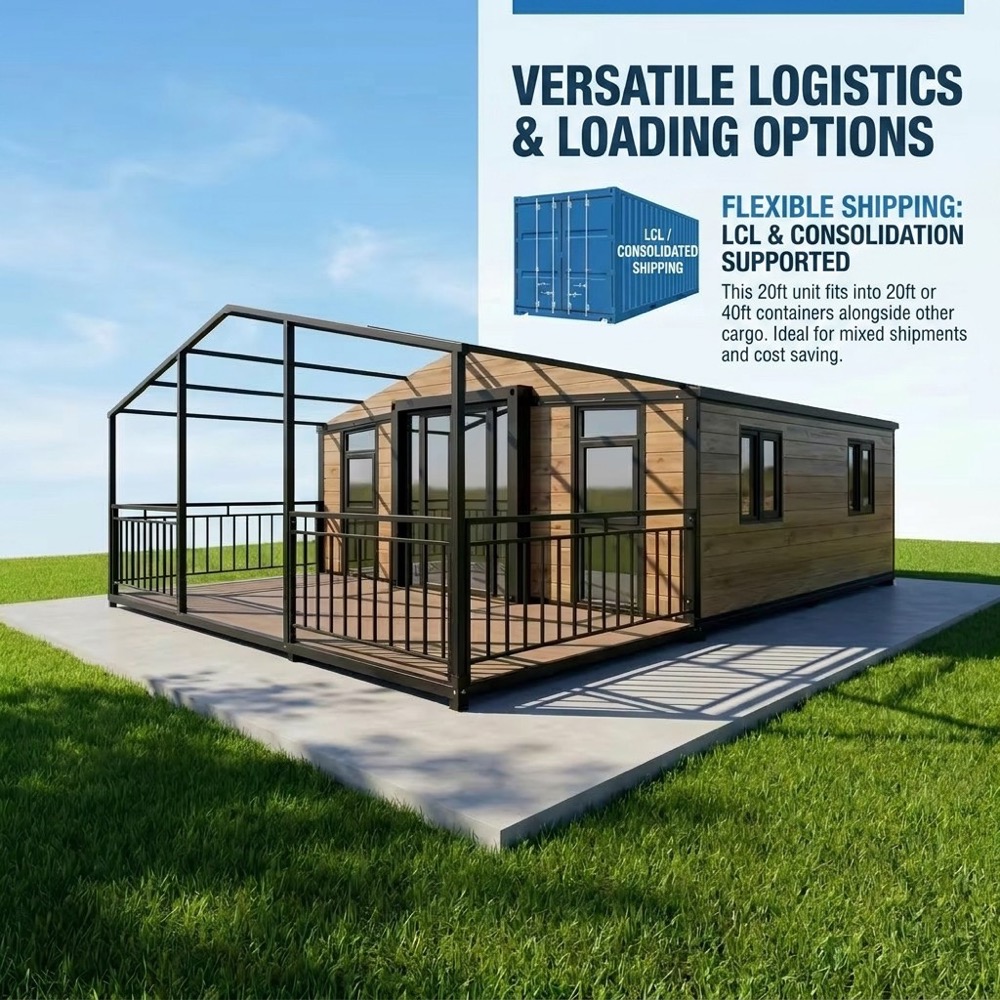
Why Container Houses Make Sense in the UK
The UK has one of the most constrained housing markets in Europe. Several structural factors make container-based modular homes particularly attractive:
- Construction costs: Traditional UK build costs average £1,800–£2,500/m². A 60m² container home landed at £35,000–£45,000 delivers equivalent living space at 70–80% less.
- Build speed: Factory production in China (2–3 weeks) + shipping (30–35 days) means your home arrives in 7–8 weeks. Traditional UK construction takes 6–12 months minimum.
- Planning flexibility: Under permitted development rights, certain container homes may not require full planning permission (see regulations section below).
- Sustainability: Container homes reuse shipping container steel frames, aligning with the UK’s embodied carbon reduction targets and the Future Homes Standard 2025.
- Granny annexe boom: The UK’s ageing population has driven demand for self-contained annexes — a 20ft expandable container house is ideal for this purpose at under £50,000 turnkey.
2026 FOB Price Guide: Container Houses for the UK Market
All prices below are FOB China (factory-direct) — exclusive of shipping to the UK, customs clearance, VAT, and local installation. These are 2026 wholesale prices from Huaying Container House Factory.
| Model | Size (Expanded) | Bedrooms | Bathrooms | FOB Price (USD) | Best For |
|---|---|---|---|---|---|
| 10ft Expandable | 20m² | 1 | 1 | $8,500 | Studio, site office, garden room |
| 20ft Expandable | 40m² | 2 | 1 | $12,500 | Granny annexe, holiday let, small home |
| 30ft Expandable | 60m² | 2–3 | 1 | $17,500 | Family home, two-generation living |
| 40ft Expandable | 80m² | 3 | 2 | $22,800 | Large family home |
| 20ft Apple Capsule | 29.7m² | 1 | 1 | $11,500 | Premium tiny home, Airbnb let |
| Folding Container House | Variable | 1–2 | 1 | $9,500–$15,500 | Quick-deploy housing, site accommodation |
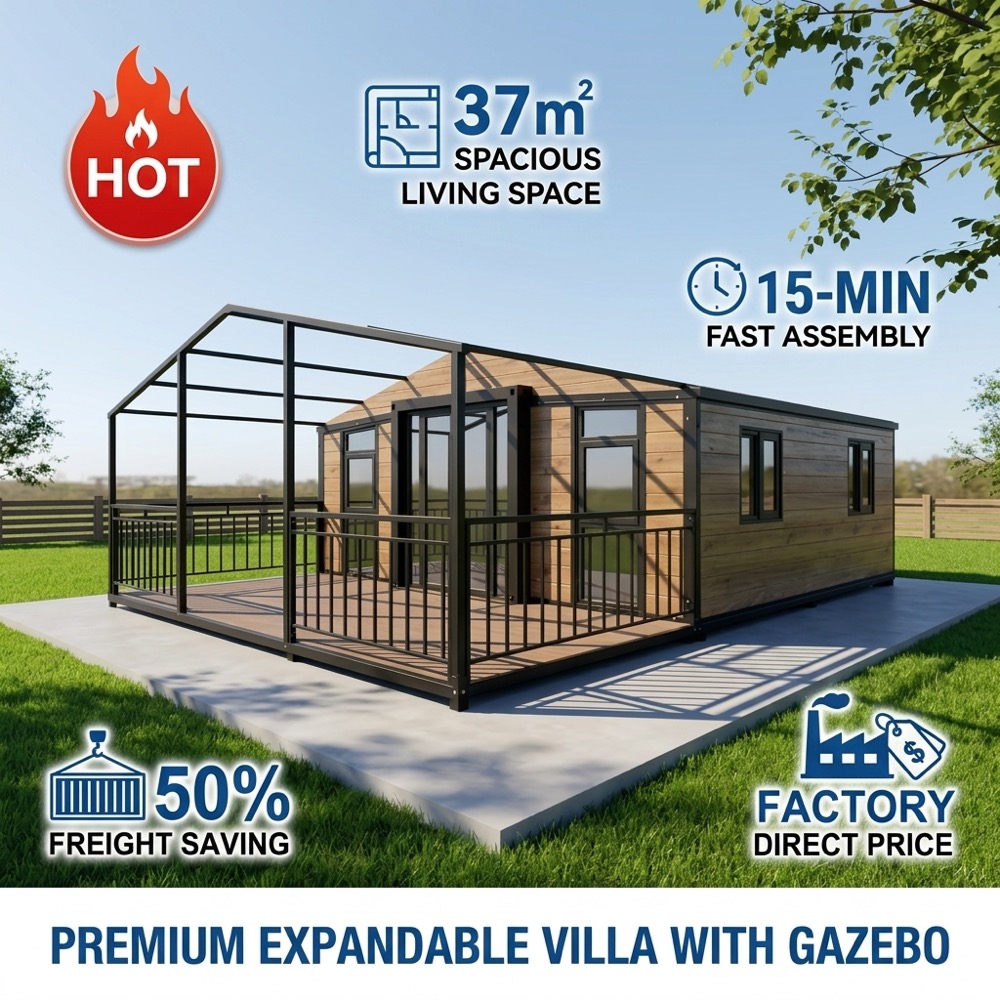
FOB to Landed Cost Breakdown — United Kingdom
Understanding the total landed cost is essential before committing to a purchase. The table below breaks down the full cost chain from Huaying’s factory in China to your prepared site in the UK — including sea freight, UK customs duty, VAT, foundation, and on-site assembly. The UK applies a 2.0% customs duty on prefabricated buildings under HS 9406.20 (third-country rate for imports from China).00, which significantly reduces the total landed cost compared to many other markets.
| Cost Component | 10ft (20m²) | 20ft (40m²) | 40ft (80m²) | Notes |
|---|---|---|---|---|
| FOB China Price | $8,500 | $12,500 | $22,800 | Factory-direct, ISO 9001 |
| Sea Freight to Southampton / Felixstowe | $1,800–$2,300 | $2,200–$2,800 | $3,200–$3,800 | 30–35 days transit |
| Marine Insurance | $85–$115 | $125–$155 | $228–$268 | ~1% of FOB value |
| CIF Value | $10,385–$10,915 | $14,825–$15,455 | $26,228–$26,868 | Cost + Insurance + Freight |
| UK Customs Duty (2.0%) | $208 | $297 | $525 | 2.0% UK Global Tariff on CIF |
| UK VAT (20%) | $2,077–$2,183 | $2,965–$3,091 | $5,246–$5,374 | Applied on CIF + Duty. Recoverable if VAT-registered. |
| UK Customs Clearance & Broker | $350–$500 | $450–$600 | $600–$800 | CHIEF/CDS declaration, port handling |
| Inland Transport | $400–$1,200 | $600–$1,800 | $800–$2,500 | Port to your site (varies by distance) |
| Foundation (Concrete Pad or Ground Screws) | $2,500–$4,000 | $3,500–$5,500 | $5,000–$8,000 | Per Building Regs Part A, frost-depth ≥ 450mm |
| On-Site Assembly & Services Hookup | $2,000–$3,500 | $3,000–$5,000 | $4,500–$7,000 | Unfolding, electric, water, drainage, finishing |
| Building Control Fees | $800–$1,200 | $900–$1,500 | $1,200–$2,000 | Local authority or approved inspector |
| TOTAL LANDED COST (USD) | $18,512–$23,498 | $26,240–$32,946 | $43,574–$52,542 | Turnkey — ready to occupy |
| TOTAL LANDED COST (£) | £14,440–£18,328 | £20,467–£25,698 | £33,987–£40,983 | 1 USD ≈ 0.78 GBP |
Shipping from China to the UK
Container houses ship via standard 40ft high-cube containers from major Chinese ports to two primary UK destinations:
| Route | Transit Time | Est. Freight Cost | Best For |
|---|---|---|---|
| Tianjin (Xingang) → Southampton | 32–38 days | $1,800–$2,500 | Southern England, London, South West |
| Tianjin (Xingang) → Felixstowe | 30–35 days | $1,700–$2,300 | East Anglia, Midlands, North of England |
| Shanghai → Southampton | 28–33 days | $2,200–$2,800 | Southern England, Wales |
| Guangzhou (Nansha) → Felixstowe | 32–40 days | $2,000–$2,600 | Midlands, Scotland, Northern England |
UK Building Regulations Compliance — What You Need to Know
Container homes in the UK must comply with the Building Regulations 2010 (as amended) and relevant Approved Documents. Huaying container homes are engineered to meet or exceed the following requirements:
Part A — Structure
The Corten steel frame provides inherent structural integrity exceeding Part A requirements for wind load (BS EN 1991-1-4) and imposed loads. Our expandable models include certified structural calculations suitable for submission to Building Control. Foundation design (typically a 150mm reinforced concrete slab on 150mm hardcore with DPM) must be site-specific and designed by a UK structural engineer.
Part B — Fire Safety
Wall and ceiling panels are fire-rated to 30 minutes (BS 476 Part 22), meeting the requirements for two-storey dwellings. Smoke alarms (mains-powered, interlinked per BS 5839-6 Grade D1, LD2) are pre-installed. Escape windows to first-floor bedrooms are provided as standard on 40ft models.
Part L — Conservation of Fuel and Power
The UK’s 2025 uplift to Part L (Future Homes Standard interim) requires significantly improved thermal performance. Our standard 100mm PIR insulation (R-value 4.5 m²K/W for walls) meets the U-value targets of 0.18 W/m²K for walls and 0.13 W/m²K for roofs. For Scotland, where Section 6 (Energy) demands even tighter standards, we offer a cold-climate upgrade package with 150mm insulation achieving U-values of 0.15 W/m²K.
Part F — Ventilation
Background ventilation via trickle vents (5,000mm² equivalent area per habitable room) and intermittent extract fans in kitchens (30 l/s) and bathrooms (15 l/s) are standard, meeting Approved Document F requirements for dwellings.
Part G — Sanitation & Water Efficiency
Bathrooms include water-efficient fittings achieving the 125 litres/person/day target under Part G. Dual-flush WCs (4/2.6 litre), flow-restricted taps (5 l/min), and thermostatic shower mixers come as standard.
Planning Permission for Container Homes in the UK
The planning status of a container home depends on its intended use and location:
- Permitted Development (No Planning Permission): Under Class E of the Town and Country Planning (General Permitted Development) (England) Order 2015, outbuildings incidental to the enjoyment of a dwellinghouse do not require planning permission if they meet specific criteria — maximum height 2.5m within 2m of a boundary, no more than 50% of the curtilage covered, not forward of the principal elevation. A 10ft or 20ft container house used as a home office, gym, or garden room would typically qualify.
- Caravan Act Exemption (Twin-Unit Mobile Homes): Under the Caravan Sites and Control of Development Act 1960, a structure that meets the statutory definition of a “caravan” (maximum 20m long x 6.8m wide x 3.05m internal height) may be classified as a caravan rather than a building. 10ft and 20ft expandable models can meet this definition, potentially simplifying the consent process, particularly for holiday lets and temporary accommodation.
- Full Planning Permission: A container house used as a primary permanent dwelling on a new plot will require full planning permission. The application must address design, access, landscaping, ecology, drainage (including SuDS), and highways considerations. Engaging a planning consultant is recommended.
- Article 4 Directions and Conservation Areas: Permitted development rights may be restricted or removed in Conservation Areas, National Parks, AONBs, and areas subject to Article 4 Directions. Always check with your local planning authority.
- Scotland, Wales, and Northern Ireland: Planning legislation differs. Scotland operates under the Town and Country Planning (Scotland) Act 1997. Wales follows the Town and Country Planning Act 1990 with Welsh-specific permitted development rights. Northern Ireland operates under the Planning Act (Northern Ireland) 2011. Consult a local planning advisor in your nation.
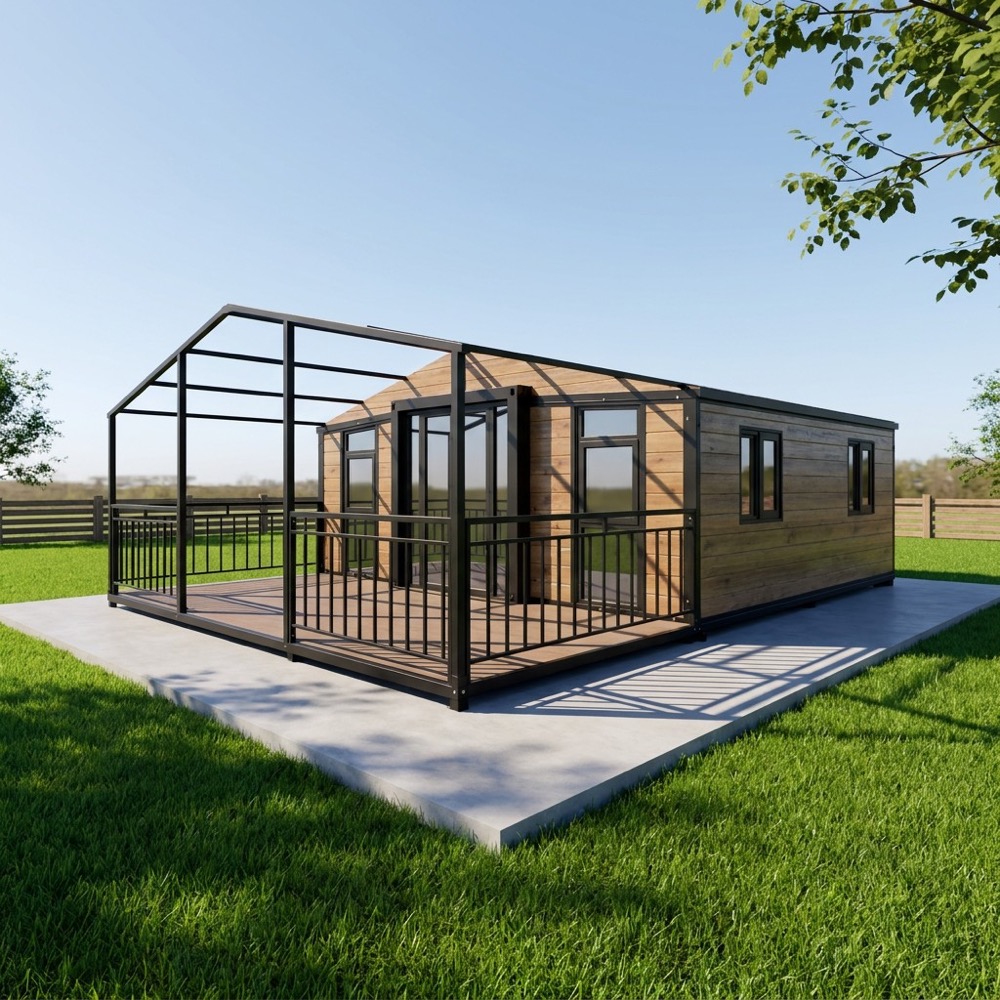
Best Uses for Container Houses in the UK
1. Granny Annexes and Multi-Generational Living
The UK’s growing elderly population has created strong demand for self-contained ancillary accommodation. A 20ft expandable container house (40m²) provides a full one-bedroom annexe with kitchen, bathroom, and living area for under £26,000 landed. Planning permission may not be required if the annexe is within the curtilage of the main dwelling and used by family members. This avoids the cost and stress of care home placement while keeping families together.
2. Holiday Lets (Airbnb and Booking.com)
The UK holiday let market generates average nightly rates of £85–£180 depending on location. A 20ft Apple Capsule container house placed on rural land in Cornwall, the Lake District, or the Scottish Highlands can generate £20,000–£35,000 annual gross income with a capital investment of under £40,000 — an ROI exceeding 50% in year one. The unique design of container homes also provides a marketing advantage on booking platforms where distinctiveness drives clicks.
3. Site Accommodation and Welfare Units
Construction companies across the UK use container houses as site offices, canteens, drying rooms, and overnight accommodation. A 10ft or 20ft folding container house deploys in under 2 hours and meets HSE welfare requirements (SI 2015/51). Cost: under £15,000 landed for a fully-equipped unit versus £25,000+ for a traditional static welfare cabin.
4. Starter Homes for First-Time Buyers
A 40ft expandable container house (80m², 3 bedrooms) landed for £34,000–£41,000 plus a plot of land offers a genuine route to home ownership for young Britons priced out of the conventional market. While mortgage availability remains limited, several specialist lenders (Ecology Building Society, Suffolk Building Society) now offer self-build mortgages that cover modular and prefabricated construction methods.
5. Garden Offices and Home Studios
Post-pandemic hybrid working has made garden offices a sought-after home improvement. A 10ft expandable container house provides a 20m² fully-insulated, heated, and powered workspace for under £19,000 landed. Under permitted development, planning permission is usually not required for this use case.
Frequently Asked Questions
Are container homes legal in the UK?
Yes. Container homes are legal in all parts of the UK provided they meet Building Regulations and have the necessary planning consent (or fall under permitted development). Thousands of container-based structures are already in use across the UK as homes, offices, classrooms, and commercial spaces. The key is ensuring your specific project complies with local planning policy and building standards.
Can I get a mortgage for a container home in the UK?
High-street lenders (Barclays, HSBC, NatWest) typically do not offer mortgages for non-traditional construction. However, specialist lenders including Ecology Building Society, Suffolk Building Society, and BuildStore offer self-build mortgages for modular and prefabricated homes, including container-based construction. These typically require a 25–35% deposit and release funds in stages aligned with the build programme. Personal loans, bridging finance, and cash remain the most common funding routes for smaller container home projects.
How long does a container home last in the UK climate?
With proper maintenance, a Corten steel container home has a 50+ year structural lifespan. The key factors for UK longevity are: (1) adequate ventilation to prevent interstitial condensation, (2) a raised foundation with DPC to prevent rising damp, (3) periodic inspection and repainting of external steel surfaces (every 5–7 years in coastal areas, 10+ years inland). The UK’s wet but temperate climate is generally less aggressive to steel than tropical or coastal-marine environments.
What about UK electrical regulations (BS 7671)?
Huaying pre-wires all units for 230V/50Hz single-phase electricity to UK specifications. All circuits are protected by RCBOs in a consumer unit compliant with BS 7671 (18th Edition, Amendment 2). A UK-qualified electrician must complete the final connection to the mains supply, test the installation, and issue an Electrical Installation Certificate (EIC) and Part P compliance notification where applicable.
How long from order to delivery in the UK?
Typical timeline: 2–3 weeks factory production, 30–35 days sea freight to Southampton or Felixstowe, 3–5 days customs clearance, 1–3 days inland transport to your site, 2–5 days on-site assembly and utility connection. Total: 8–10 weeks from order to completed home. Weather and port congestion can add 1–2 weeks.
Do container homes need SAP calculations and an EPC?
Yes. A new dwelling in the UK requires a Standard Assessment Procedure (SAP) calculation to demonstrate compliance with Part L (conservation of fuel and power) and to produce an Energy Performance Certificate (EPC). Huaying provides the thermal performance data (U-values, air permeability, thermal bridging) that your SAP assessor needs to complete the calculation. Our standard insulation package typically achieves an EPC rating of C, with the cold-climate upgrade package achieving B.
Do I need to pay the Community Infrastructure Levy (CIL)?
New dwellings in England and Wales may be liable for CIL, though self-build housing is exempt if you claim the exemption before commencing work (Form 7: Self Build Exemption Claim). The exemption requires you to live in the property as your main residence for at least 3 years. Self-contained annexes within the curtilage of an existing dwelling are typically exempt from CIL. Check with your local authority’s CIL charging schedule.
Related Guides
Considering the neighbouring market? Read our complete Ireland cost guide covering planning permission, EU import duties and Irish VAT.
Why Choose Huaying for Your UK Container Home?
Huaying (Fucheng Huaying Integrated Housing Co., Ltd.) is an ISO 9001-certified Chinese manufacturer with over 10 years of export experience. We have delivered container homes to over 80 countries, including multiple UK projects. Every unit undergoes factory quality inspection, and we provide full documentation for UK Building Control submissions:
- Structural calculations to BS EN 1990 and BS EN 1991
- Fire resistance test certificates (BS 476 Part 22)
- Thermal performance data (U-values, Psi-values) for SAP assessment
- Electrical installation specification to BS 7671
- Factory production control certificate (ISO 9001)
- 10-year structural warranty
We ship to all major UK ports — Southampton, Felixstowe, London Gateway, Liverpool, and Grangemouth — with full customs documentation including Certificate of Origin, packing list, commercial invoice, and bill of lading.
Ready to explore container house options for your UK project? Contact our team for a free quotation including shipping to your preferred UK port, customs duty assessment, and a detailed specification sheet.
Email: jack@huayinghouse.com — mention “UK container house” for priority response
WhatsApp: +86 153-0318-4505 — send your plot size and requirements for instant pricing
Website: www.huaying1.com — browse our complete range of expandable, folding, and capsule models
Factory Visit: We welcome video factory tours via WhatsApp — see your home being built before it ships
Disclaimer: This guide provides general information about UK building regulations and costs as of July 2026. Always consult a qualified UK architect, planning consultant, or building control surveyor for project-specific advice. Prices are estimates and subject to exchange rate fluctuations (GBP/USD).