
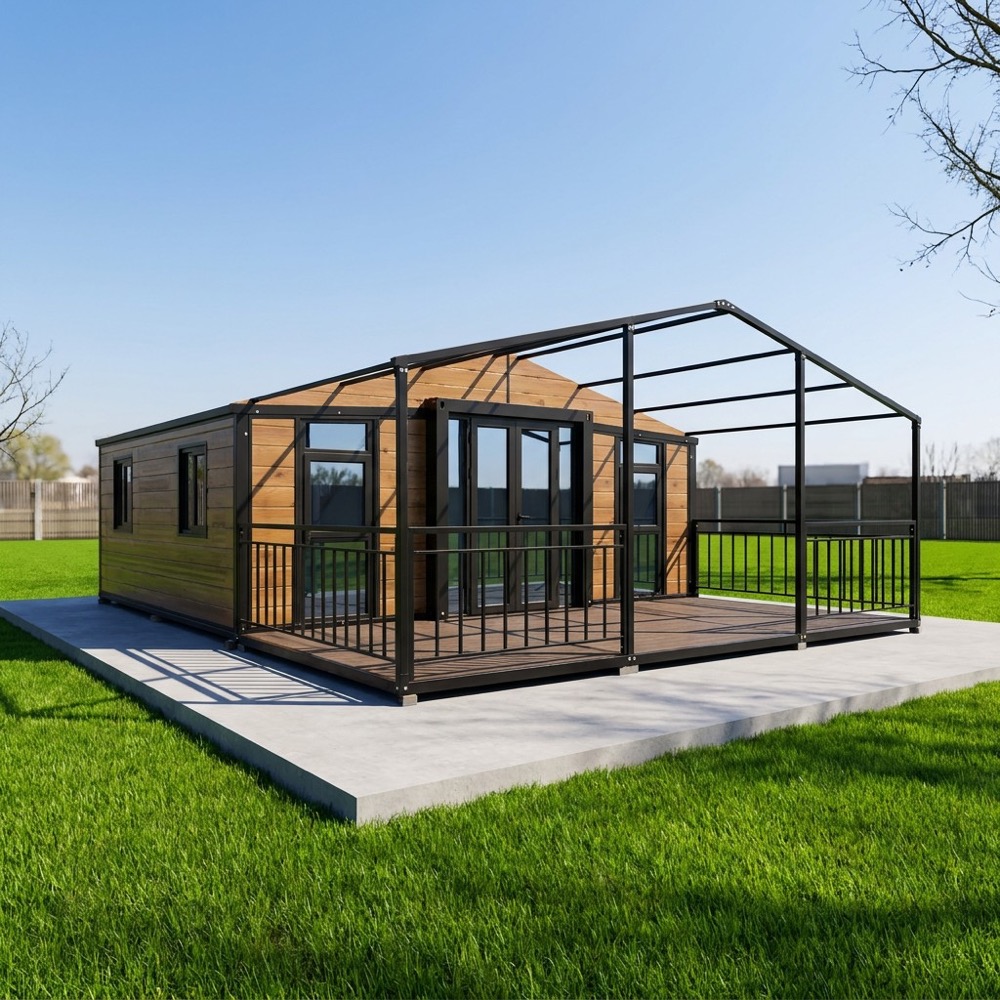
Italy’s construction sector faces mounting pressures in 2026: material costs up 18% since 2023, skilled labor shortages across northern regions, and seismic retrofitting mandates that push traditional build timelines to 18-24 months. Expandable container houses from Chinese manufacturers like Huaying offer a practical alternative — factory-built to specification, shipped to Italian ports in 30-40 days, and installed on-site in 1-2 days. This guide breaks down the real costs, regulatory requirements, and buying process for importing a container house to Italy.
Why Italian Buyers Choose Expandable Container Houses
Italy’s housing landscape varies dramatically between the industrial north (Milan, Turin, Bologna) and the coastal south (Naples, Bari, Palermo). Traditional construction costs range from 1,500 to 2,500 EUR per square meter, with permitting alone taking 6-12 months in regions like Lombardy and Tuscany. Container houses address several pain points:
- Cost reduction of 40-60% versus traditional Italian construction
- Factory manufacturing in 15-25 days with quality control at the source
- Shipping to Genoa or Trieste in 30-40 days from Chinese ports
- Seismic-resistant design engineered to Italian NTC 2008 standards
- Energy compliance with DL 192/05 and EU EPBD requirements
- Flexible placement — suitable for residential, hospitality (agriturismo), and commercial use
FOB to Landed Cost Breakdown: Italy
The table below shows the full cost chain for importing expandable container houses to Italy via the Port of Genoa, the primary entry point for northern Italy. All prices are in USD; Italian IVA (VAT) is calculated on the CIF value.
| Cost Component | 10ft Expandable | 20ft Expandable | 20ft Apple Capsule | 40ft Expandable |
|---|---|---|---|---|
| FOB Price (China factory) | $9,500 | $12,800 | $15,800 | $18,500 |
| Ocean Freight (China to Genoa) | $2,200 | $2,800 | $2,800 | $3,500 |
| Marine Insurance | $150 | $200 | $240 | $280 |
| CIF Value | $11,850 | $15,800 | $18,840 | $22,280 |
| EU Import Duty (HS 9406.20, 2.7%) | $270 | $364 | $622 | $730 |
| Italian IVA (22% on CIF) | $2,607 | $3,476 | $4,145 | $4,902 |
| Customs Clearance & Documentation | $350 | $350 | $350 | $400 |
| Inland Transport (Genoa to Milan) | $500 | $600 | $600 | $800 |
| Foundation / Site Preparation | $1,500 | $2,000 | $2,000 | $2,500 |
| Installation & Hookup | $500 | $700 | $700 | $1,000 |
| Total Landed Cost (USD) | $17,307 | $22,926 | $26,635 | $31,882 |
| Total Landed Cost (EUR approx.) | ~EUR 15,900 | ~EUR 21,100 | ~EUR 24,500 | ~EUR 29,300 |
Note: Exchange rate calculated at 1 USD = 0.92 EUR (August 2026). IVA is recoverable for businesses registered for VAT in Italy. Freight rates fluctuate seasonally — Q3 rates are typically 10-15% lower than Q1 peak season.
Italian Building Regulations & Compliance
1. Norme Tecniche per le Costruzioni (NTC 2008, updated 2018)
Italy’s national building code (D.M. 14/01/2008, updated 2018) governs all structural construction. Italy is divided into four seismic zones:
- Zone 1 (high): Friuli, parts of Calabria and Sicily — requires seismic-resistant structural design
- Zone 2 (medium-high): Umbria, Marche, parts of Campania and Abruzzo
- Zone 3 (medium): Tuscany, Lazio, parts of Lombardy
- Zone 4 (low): Piedmont, Valle d’Aosta, parts of Veneto
Container houses destined for Zones 1-2 require additional structural reinforcement (corner castings, cross-bracing, and anchoring systems rated for the local seismic coefficient). Huaying engineers can calculate the required seismic load capacity based on the destination province.
2. Testo Unico dell’Edilizia (D.P.R. 380/01)
This unified construction code defines permitting categories. Container houses under 70 sqm typically qualify as:
- CILA (Comunicazione di Inizio Lavori Asseverata) — for minor construction, no full permit required
- SCIA (Segnalazione Certificata di Inizio Attivita) — for larger units or those requiring utility connections
Always confirm with the local Comune (municipality), as regions implement D.P.R. 380/01 with variations. Some southern regions offer streamlined permitting for prefabricated structures.
3. Energy Performance (DL 192/05 & EU EPBD)
Italy implements the EU Energy Performance of Buildings Directive through DL 192/05. Key requirements for container houses:
- Minimum wall U-value: 0.26 W/m2K (northern climate zones E-F)
- Minimum roof U-value: 0.22 W/m2K
- HVAC system efficiency certification
- Attestato di Prestazione Energetica (APE) — energy performance certificate required before occupancy
Huaying’s standard 75mm polyurethane sandwich panel insulation achieves U-values of 0.28-0.32 W/m2K. For northern Italy (climate zones E-F), upgrading to 100mm panels brings U-values to 0.21-0.24 W/m2K, meeting the strictest regional requirements.
4. Import Duty & Tax
Under the EU Common Customs Tariff, HS code 9406.00 (prefabricated buildings) carries a 2.7% duty rate (erga omnes / third-country rate). This means a modest import tariff applies when shipping from China to Italy. However, Italian IVA (VAT) at 22% — the highest standard rate in the EU — applies to the CIF value. Businesses with an Italian VAT number can recover the IVA through their periodic VAT return.
Common Use Cases in Italy
Agriturismo & Rural Tourism
Italy’s agriturismo sector benefits from modular container units that can be placed on agricultural land with simplified permitting. A 20ft expandable unit provides 28-33 sqm of living space — suitable for guest accommodation that meets regional agriturismo minimum standards.
Residential Annexes (Dependenze)
In regions like Lombardy and Veneto, container houses under 70 sqm can be permitted as residential annexes to existing properties, bypassing the full building permit process.
Construction Site Offices
Italian construction firms use 10ft and 20ft container units as on-site offices and worker accommodation, especially for infrastructure projects in southern Italy.
Coastal Properties
For coastal areas in Puglia, Calabria, and Sicily, container houses offer a fast-deploy solution for seasonal accommodation. Galvanized steel frames and marine-grade coatings are recommended for salt-air environments.
Shipping & Timeline
| Phase | Duration | Details |
|---|---|---|
| Design & Customization | 3-5 days | Floor plan, electrical, plumbing, finishes |
| Factory Manufacturing | 15-25 days | Steel frame, welding, insulation, interior fit-out |
| Quality Control & Packing | 2-3 days | Water testing, electrical testing, flat-pack |
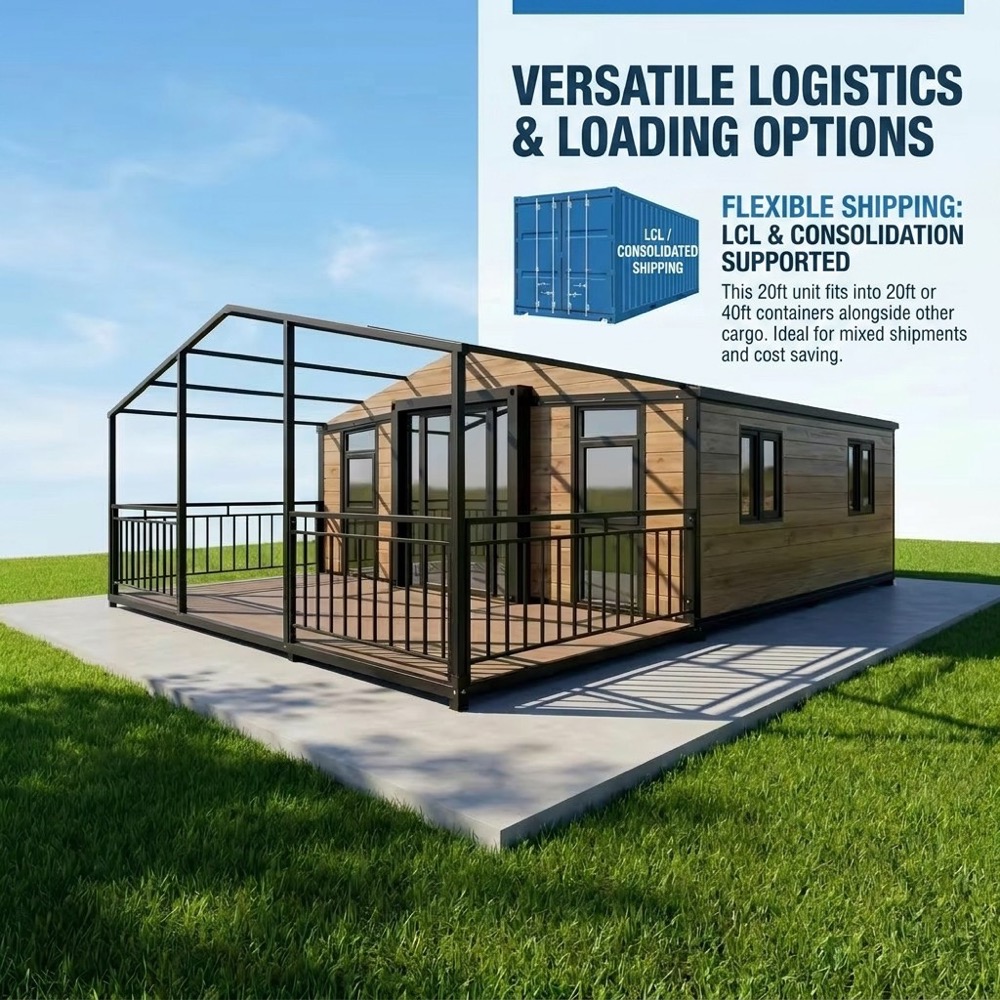
| Ocean Shipping (China to Genoa) | 30-40 days | FCL shipment, tracking provided |
| Customs Clearance | 3-5 days | HS 9406.00 documentation, IVA payment |
| Inland Transport & Installation | 2-3 days | Truck to site, crane lift, expand & connect |
| Total Timeline | 55-76 days | From order to move-in ready |
Frequently Asked Questions
Do I need a building permit for a container house in Italy?
It depends on the size and intended use. Units under 70 sqm typically require a CILA (simplified notification) rather than a full building permit. However, requirements vary by municipality. Always consult your local Comune before ordering.
Can container houses withstand Italian earthquakes?
Yes. Huaying’s steel-frame container houses can be engineered to meet NTC 2008 seismic requirements for all four zones. For Zones 1-2 (high seismic), additional corner reinforcement and anchoring systems are included at no extra cost. The inherent flexibility of steel construction performs well in seismic events.
How does the 22% IVA work for imports?
Italian IVA at 22% is calculated on the CIF value (FOB + freight + insurance) at customs. If you have a registered Italian VAT number, the IVA is recoverable through your periodic VAT return. Individuals without a VAT number must pay the IVA as a final cost.
Which Italian port is best for container house imports?
Genoa (Genova) serves northern Italy (Milan, Turin, Bologna) with excellent rail and road connections. Trieste serves northeastern Italy (Veneto, Friuli) and offers Free Zone benefits. For southern Italy, Naples or Gioia Tauro may reduce inland transport costs.
Are container houses legal for permanent residence in Italy?
Yes, provided they meet NTC 2008 structural standards, DL 192/05 energy requirements, and obtain the appropriate municipal permit (CILA or SCIA). Several regions have updated their building codes to explicitly accommodate prefabricated and modular construction.
What insulation is needed for Italian winters?
For northern Italy (climate zones E-F), we recommend upgrading from standard 75mm to 100mm polyurethane panels, achieving U-values of 0.21-0.24 W/m2K. This meets the strictest regional energy requirements and qualifies for potential eco-bonus tax incentives.
Can I customize the interior layout?
Yes. Huaying offers full customization including bedroom/bathroom/kitchen configurations, electrical layouts (220V/50Hz Italian standard), plumbing, flooring, and exterior colors. Customization adds 3-5 days to the manufacturing timeline.
Next Steps
If you are considering a container house for Italy, the most efficient path is:
- Contact Huaying with your requirements — size, destination city, intended use, and any customization needs
- Receive a detailed quotation including FOB price, shipping, and estimated landed cost in EUR
- Confirm local permitting with your Comune (we can provide technical drawings for submission)
- Place order — manufacturing begins within 7 days of deposit
- Track shipment — full visibility from factory to Italian port
Email: jack@huayinghouse.com
WhatsApp: +86 153-0318-4505
Factory Address: Fucheng County, Hengshui City, Hebei Province, China
Our team has shipped over 200 container houses to EU markets and can provide references from buyers in Germany, France, and the Netherlands. We handle all export documentation, HS 9406.00 customs paperwork, and can arrange door-to-door delivery to any Italian address.